
Among these electric bike chargers, I rank the Hyleton 54.6V 3A UL-certified charger as the best overall for riders who want faster charging and a stated safety certification. The 48V charger with five interchangeable plugs stands out for connector flexibility, while the EVAPLUS 42V 2A charger with three connectors is a useful option for compatible 36V batteries. The main tradeoffs are battery-voltage compatibility, charging speed, connector fit, and whether a charger has a stated certification. A plug that fits physically does not prove that the charger matches your battery’s electrical requirements. Read on for the full breakdown of all 15 picks and how I’d choose between them.

Get bike and ride gear delivered free with Prime
- Fast, free delivery on millions of items
- Prime Video, Amazon Music and more included
- Member-only deals all year
Key Takeaways
- Voltage matching comes before plug count: the 42V chargers in this roundup target compatible 36V lithium batteries, while the 54.6V models target compatible 48V lithium batteries.
- Charging current separates speed from gentler pacing: the Hyleton 3A option is the only listed 3A pick; the other chargers range from 1.5A to 2A.
- Connector flexibility varies widely: listed options offer three, five, six, or seven tips, but more tips do not guarantee compatibility with a particular bike.
- Certification is a meaningful differentiator: three listings explicitly identify UL certification, while the remaining product names do not make that claim.
- Brand- and model-specific listings serve a narrower role: the Jetson-compatible VHBW charger may suit owners of supported Jetson bikes or scooters better than a general-purpose charger.
| VHBW 42V 2A Charger for 36V Lithium-Ion Scooter and E-Bike Batteries |  | Best for 36V Buyers | Output: 42V DC, 2A | Input: 100–240V AC, 50/60Hz | Compatible battery: 36V lithium-ion | VIEW LATEST PRICE | See Our Full Breakdown |
| 48V Electric Bike Charger, 54.6V 2A, with 5 Interchangeable Plugs |  | Best for Plug Flexibility | Output: 54.6V, 2A | Input: 110V | Battery compatibility: 13S 48V lithium battery packs | VIEW LATEST PRICE | See Our Full Breakdown |
| 54.6V 2A Charger for 48V Electric Bike Batteries |  | Best for Charging Feedback | Output: 54.6V, 2A | Input: 100–240V, 50/60Hz | Compatible battery: 48V 13S lithium-ion | VIEW LATEST PRICE | See Our Full Breakdown |
| EVAPLUS 54.6V Charger for 48V Lithium Batteries |  | Best for Lower-Current Charging | Output: 54.6V, 1.5A | Input: 100–240V AC | Battery compatibility: 48V (13S) lithium batteries | VIEW LATEST PRICE | See Our Full Breakdown |
| 7-in-1 54.6V 2A Charger for 48V 13S Li-ion Batteries |  | Best for Broad Connector Coverage | Output: 54.6V, 2A | Input: 100–120V | Compatible battery: 48V 13S lithium-ion | VIEW LATEST PRICE | See Our Full Breakdown |
| Hyleton 54.6V 3A UL-Certified Charger for 48V Lithium E-Bike Batteries |  | Best for Faster Charging | Output voltage: 54.6V | Input voltage: 110V | Output current: 3A | VIEW LATEST PRICE | See Our Full Breakdown |
| EVAPLUS 42V 2A Charger for 36V Lithium Batteries with 3 Connectors |  | Best Compact Option for Select 36V Systems | Model: HK-42-2000 | Output voltage: 42V | Input voltage: 240V | VIEW LATEST PRICE | See Our Full Breakdown |
| UL-Certified 54.6V 2A Charger for 48V E-Bike Batteries |  | Best for International Voltage Flexibility | Model: JY-546200 | Certification: UL | Compatible battery: 48V lithium | VIEW LATEST PRICE | See Our Full Breakdown |
| VHBW 42V 2A Charger for Compatible Jetson Electric Bikes and Scooters |  | Best for Listed Jetson Models | Output: 42V DC, 2A | Input voltage: 100V AC | Connector: 5.5 × 2.5mm barrel plug | VIEW LATEST PRICE | See Our Full Breakdown |
| 54.6V 2A Electric Bike Charger for 48V Lithium-Ion Batteries |  | Best for Connector Choice | Model: YLT-546200 | Output: 54.6V, 2A | Input: 100–120V, 50/60Hz | VIEW LATEST PRICE | See Our Full Breakdown |
| EVAPLUS 54.6V 1.5A Charger for 48V 13S Lithium-Ion Batteries with 5 Connector Plugs | 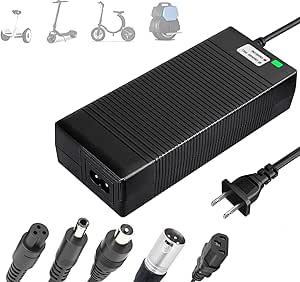 | Best for a Slower, Safety-Focused Charge | Output: 54.6V, 1.5A; 81.9W | Battery compatibility: 48V 13S lithium-ion | Input: 100–240V AC, 50/60Hz | VIEW LATEST PRICE | See Our Full Breakdown |
| 54.6V 2A 48V Lithium Battery Charger with 6 Interchangeable Plugs |  | Best for Heat-Conscious Charging | Output voltage: 54.6V | Output current: 2A | Input: 100–240V AC | VIEW LATEST PRICE | See Our Full Breakdown |
| 42V 2A Electric Scooter Charger with 5 Adapters and Smart Display |  | Best for Riders Who Want Charging Readouts | Output options: 42V or 54.6V at 2A | Input: 110V | Compatible devices: Electric scooters and e-bikes with matching battery systems and connectors | VIEW LATEST PRICE | See Our Full Breakdown |
| Hyleton 48V E-Bike Battery Charger, 54.6V 2A, UL Certified |  | Best Overall for a Confirmed 48V E-Bike | Output: 54.6V, 2A | Battery compatibility: 48V lithium-ion e-bike batteries | Input: 100–240V | VIEW LATEST PRICE | See Our Full Breakdown |
| QKIIP 54.6V 2A Charger for 48V E-Bike and Scooter Lithium Batteries with 7 Plug Tips |  | Best for the Widest Connector Selection | Output: 54.6V DC, 2A; 109.2W | Battery compatibility: 48V lithium-ion batteries, 13S | Input: 100–240V AC | VIEW LATEST PRICE | See Our Full Breakdown |
| electric bike charger | Input | Output |
|---|---|---|
| VHBW 42V 2A Charger for 36V Li | 100–240V AC, 50/60Hz | 42V DC, 2A |
| 48V Electric Bike Charger | 110V | 54.6V, 2A |
| 54.6V 2A Charger for 48V Elect | 100–240V, 50/60Hz | 54.6V, 2A |
| EVAPLUS 54.6V Charger for 48V | 100–240V AC | 54.6V, 1.5A |
| 7-in-1 54.6V 2A Charger for 48 | 100–120V | 54.6V, 2A |
| Hyleton 54.6V 3A UL-Certified | — | — |
| EVAPLUS 42V 2A Charger for 36V | — | — |
| UL-Certified 54.6V 2A Charger | 100–240V, 50/60Hz | 54.6V, 2A |
| VHBW 42V 2A Charger for Compat | — | 42V DC, 2A |
| 54.6V 2A Electric Bike Charger | 100–120V, 50/60Hz | 54.6V, 2A |
| EVAPLUS 54.6V 1.5A Charger for | 100–240V AC, 50/60Hz | 54.6V, 1.5A; 81.9W |
| 54.6V 2A 48V Lithium Battery C | 100–240V AC | — |
| 42V 2A Electric Scooter Charge | 110V | — |
| Hyleton 48V E-Bike Battery Cha | 100–240V | 54.6V, 2A |
| QKIIP 54.6V 2A Charger for 48V | 100–240V AC | 54.6V DC, 2A; 109.2W |
More Details on Our Top Picks
VHBW 42V 2A Charger for 36V Lithium-Ion Scooter and E-Bike Batteries
I’d choose this VHBW when the bike or scooter uses a compatible 36V lithium-ion battery and a 5.5mm barrel port. Its 8.8-foot cord offers more reach than the EVAPLUS 54.6V Charger, which targets 48V batteries, so it can be easier to place the charger near an outlet without moving the vehicle. Overvoltage, overcurrent, and short-circuit protection add useful safeguards, while ETL and SGS certifications are listed in the product data. The main limitation is a narrow fit: it won’t work with 24V, 25.2V, or 29.4V packs, or with three-prong connectors. I’d verify the battery voltage and plug before buying, especially since compatibility is model-specific.
Pros:- Long 8.8-foot cord provides flexible placement near an outlet.
- Designed for compatible 36V lithium-ion batteries.
- Includes overvoltage, overcurrent, and short-circuit protection.
- ETL and SGS certifications are listed.
Cons:- 5.5mm barrel connector does not fit three-prong charging ports.
- Not compatible with 24V, 25.2V, or 29.4V battery versions.
- Model and connector compatibility need checking before purchase.
Best for: Owners of listed GoTrax, Jetson, Hiboy, or Hover-1 models with a 36V lithium-ion battery and 5.5mm barrel charging port.
Not ideal for: Riders with 48V, 24V, 25.2V, or 29.4V batteries, or bikes that use a three-prong charging connector.
- Output:42V DC, 2A
- Input:100–240V AC, 50/60Hz
- Compatible battery:36V lithium-ion
- Connector:5.5mm round barrel plug
- Power cord:8.8 ft
- Protections:Overvoltage, overcurrent, short circuit
- Certifications:ETL, SGS
- Listed compatibility:Selected GoTrax, Jetson, Hiboy, and Hover-1 models
Our verdict“Choose this VHBW for a listed 36V model with a matching barrel port, but skip it if your battery voltage or connector differs.”
48V Electric Bike Charger, 54.6V 2A, with 5 Interchangeable Plugs
The strongest reason to pick this charger is its five interchangeable plugs, which may suit riders who know their bike uses a 48V 13S pack but need to match a less familiar connector. Its 54.6V, 2A output is in line with the IJCUIJM 54.6V 2A Charger; that option adds six converters, automatic shutoff, and charging indicators, while this model emphasizes a compact design and overheating protection. Those extra plug choices don’t make it universal: the battery must still be a compatible 13S 48V lithium pack, and the plug must match the port. The listed 110V input is also narrower than the 100–240V range on several alternatives, so I’d favor it for domestic use rather than broad international travel.
Pros:- Five interchangeable plugs accommodate several connector types.
- Includes overvoltage, overcurrent, short-circuit, and overheating protections.
- Compact form is suited to storage and transport.
- Designed for compatible e-bikes, scooters, and other electric mobility devices.
Cons:- Compatibility is limited to suitable 13S 48V lithium battery packs.
- The 2A output may charge more slowly than higher-current options.
- Listed input is 110V rather than a wider 100–240V range.
Best for: Riders with a compatible 13S 48V lithium battery who need one of five included connector plugs and plan to charge from 110V power.
Not ideal for: Owners of other battery voltages or chemistries, and international travelers who need a charger specified for 100–240V input.
- Output:54.6V, 2A
- Input:110V
- Battery compatibility:13S 48V lithium battery packs
- Connector plugs:5 interchangeable plugs
- Safety protections:Overvoltage, overcurrent, short circuit, overheating
- Dimensions:7 x 3 x 4 in
- Weight:15.04 oz
- Specification listed:UL
Our verdict“Pick this model if one of its five plugs matches your 13S 48V battery and you want a compact 2A charger for 110V use.”
54.6V 2A Charger for 48V Electric Bike Batteries
I’d rank this IJCUIJM as the clearest choice for riders who want to see charging progress and have the charger stop automatically. Its red/green status lights and automatic shutoff give more direct feedback than the RQTFZ 54.6V 2A Charger, whose supplied details focus on interchangeable plugs and protection features. Six converters add useful connector flexibility, and the flame-retardant V-0 enclosure plus temperature protection make its safety package a notable part of the offer. The tradeoff is that it remains a 48V 13S lithium-ion-only charger; adapters cannot make it suitable for lead-acid batteries or other voltage configurations. I’d also check the actual charging port, since a supplied converter is helpful only when it matches the bike.
Pros:- Six converters support a range of connector types.
- Automatic shutoff and red/green indicators make charging status easier to follow.
- Includes overvoltage, overcurrent, short-circuit, and temperature protection.
- Flame-retardant V-0 rated enclosure.
Cons:- Works only with compatible 48V 13S lithium-ion batteries.
- Not suitable for lead-acid batteries or other voltage configurations.
- Connector fit still needs confirmation before use.
Best for: 48V 13S e-bike owners who want visible charging status, automatic shutoff, and several connector converters.
Not ideal for: Riders with lead-acid batteries, non-13S battery configurations, or a connector not covered by the included plug and converters.
- Output:54.6V, 2A
- Input:100–240V, 50/60Hz
- Compatible battery:48V 13S lithium-ion
- Connector:5.5 x 2.1mm DC plug with six converters
- Protection features:Overvoltage, overcurrent, short circuit, temperature protection
- Charging indicators:Red during charging; green when complete
- Automatic shutoff:Yes
- Enclosure:Flame-retardant V-0 rated
- Certification:SGS
Our verdict“Choose the IJCUIJM if status indicators and automatic shutoff matter more to you than a charger with a different plug selection.”
EVAPLUS 54.6V Charger for 48V Lithium Batteries
This EVAPLUS is the lower-current option in this group: its 54.6V, 1.5A output favors a measured charging pace over the 2A output of the 7-in-1 54.6V Charger. That can suit buyers who specifically want this output and a straightforward connector, rather than a bundle of interchangeable heads. The listed 5.5mm x 2.5/2.1mm connector, red/green indicators, automatic shutoff, and UL certification make the core setup easy to understand. Its wide 100–240V input is also more travel-friendly than the RQTFZ model’s listed 110V input. The compromises are limited connector flexibility and a restricted battery fit: it is for compatible 48V (13S) lithium packs, and buyers must confirm the connector size before connecting it.
Pros:- UL-certified, with overvoltage, overcurrent, and short-circuit protection.
- Automatic shutoff and red/green lights clarify charging status.
- 100–240V AC input supports a wide range of mains voltages.
- Lightweight 11.2-ounce design.
Cons:- 1.5A output is lower than the 2A output of several alternatives.
- Connector size must match the battery port.
- Limited to compatible 48V (13S) lithium batteries.
Best for: Owners of compatible 48V (13S) lithium batteries who prefer a 1.5A charger with status lights, automatic shutoff, and broad AC input.
Not ideal for: Riders who need a faster 2A output, multiple plug adapters, or a charger for battery voltages or chemistries other than compatible 48V lithium.
- Output:54.6V, 1.5A
- Input:100–240V AC
- Battery compatibility:48V (13S) lithium batteries
- Connector:DC 5.5mm x 2.5/2.1mm
- Safety features:Overvoltage, overcurrent, short-circuit protection; automatic shutoff
- Charging indicators:Red: charging; green: fully charged
- Weight:11.2 oz
- Certification:UL
- Warranty:12 months
Our verdict“Pick this EVAPLUS if you want a lower-current 48V charger with status lights and wide AC input, and your port matches its connector.”
7-in-1 54.6V 2A Charger for 48V 13S Li-ion Batteries
The seven-head kit gives this charger the broadest stated connector selection among these five picks, making it a practical option when a compatible bike uses one of several less-common plugs. Its 54.6V, 2A output matches the IJCUIJM charger, but this model adds seven connector heads and an 8.2-foot cable; the IJCUIJM instead lists automatic shutoff and a flame-retardant enclosure. Four protection types and charging lights round out the feature set, though the green light is described as indicating either a full charge or a fault, so it is less definitive than a simple “complete” signal. This is still not a universal charger: it is for 48V 13S lithium-ion batteries, not 36V or lead-acid packs, and its fan may be audible during operation.
Pros:- Seven interchangeable connector heads cover several plug formats.
- 8.2-foot cable offers extra reach from the outlet.
- Overvoltage, overcurrent, over-temperature, and short-circuit protections are listed.
- Red and green indicators provide charging information.
Cons:- Not compatible with 36V batteries or lead-acid batteries.
- Fan noise may be noticeable during charging.
- Green indicator is described as showing either full charge or a fault.
Best for: Owners of compatible 48V 13S lithium-ion batteries who need one of the seven listed connector heads and value a longer cable.
Not ideal for: Riders with 36V or lead-acid batteries, anyone whose connector is not included, or those who need quiet charging.
- Output:54.6V, 2A
- Input:100–120V
- Compatible battery:48V 13S lithium-ion
- Connector heads:7
- Listed connector types:5.5 x 2.1mm, RCA, 3P-GX12, 3P-GX16, 3P-XLR, 3P plug
- Cable length:8.2 ft
- Safety features:Overvoltage, overcurrent, over-temperature, short circuit
- Indicator lights:Red: charging; green: full charge or fault
- Certification:UL
Our verdict“Choose this 7-in-1 charger when one of its listed heads fits your 48V 13S battery and connector range matters more than quiet operation.”
Hyleton 54.6V 3A UL-Certified Charger for 48V Lithium E-Bike Batteries
I’d put the Hyleton 3A ahead of the 2A options here for riders whose compatible battery can accept the higher charging current. That extra output may shorten charging time compared with the ONICYC 54.6V 2A, while its five adapter formats make it easier to match several common ports. UL certification, a fire-resistant case, and protections for over-current, over-voltage, short circuits, and heat add reassurance; the LED changes from red to green at completion, with automatic trickle charging or shutoff described.
The tradeoff is strict compatibility: this is for 48V lithium-ion batteries only, not other voltages, LiFePO4, or lead-acid packs. Its 110V input is less flexible than the Brokeir charger’s 100–240V range, and a battery left unused for more than 12 months may not activate it. I’d verify battery chemistry, voltage, and plug before choosing the faster output.
Pros:- 3A output offers a higher charging current than the 2A Hyleton alternatives in this roundup.
- Five adapter formats cover several common e-bike charging connectors.
- UL certification, a fire-resistant case, and multiple electrical and temperature protections.
- Red/green status light and automatic trickle charging or shutoff help indicate charge completion.
Cons:- Limited to 48V lithium-ion batteries; it does not support LiFePO4 or lead-acid chemistry.
- 110V input is less broadly adaptable than chargers with 100–240V input.
- Batteries unused for more than 12 months may be damaged and may not activate the charger.
Best for: Riders with a confirmed 48V lithium-ion battery and matching connector who want a 3A option rather than a standard 2A charger.
Not ideal for: Owners of LiFePO4, lead-acid, or non-48V batteries, and riders who need a charger with 100–240V input.
- Output voltage:54.6V
- Input voltage:110V
- Output current:3A
- Compatible battery:48V lithium-ion
- Connector adapters:5.5 × 2.5/2.1mm DC, 8mm Junlei 3015, 12mm 3-pin, 18mm XLR
- Protection:Over-voltage, over-current, short-circuit, and over-temperature
- Indicator:Red while charging; green when fully charged or on standby
- Dimensions:6.8 × 3.3 × 1.7 in
- Safety certification:UL
Our verdict“Choose the Hyleton if your 48V lithium-ion battery supports 3A charging and you want a faster-output, UL-certified option.”
EVAPLUS 42V 2A Charger for 36V Lithium Batteries with 3 Connectors
Among the chargers in this batch, the EVAPLUS 42V 2A is the compact pick for a specific 36V lithium setup—not a substitute for the 48V chargers. Its three connector types and small 5.03 × 2.16 × 1.57-inch body suit owners of compatible scooters and Pocket Mod or Sports Mod devices who want a spare that is easy to carry. Built-in short-circuit, over-current, and over-voltage protection are useful safeguards for a travel charger.
Compared with the VHBW 42V 2A, EVAPLUS supplies multiple connector options, while VHBW is aimed at a long list of Jetson models and uses one specified barrel plug. The fit still depends on exact voltage and port: this unit excludes 24V and lead-acid batteries, as well as Hover-1 Ranger and Jetson devices using a 3-pin XLR. Warranty details also conflict between the description and item details, so I would confirm coverage before buying.
Pros:- Three connector types support several compatible device ports.
- Compact dimensions and 9.12-ounce weight make it convenient to carry.
- Built-in short-circuit, over-current, and over-voltage protection.
- 2A output suits compatible 36V lithium battery systems.
Cons:- Not compatible with 24V or lead-acid batteries.
- Explicitly excludes Hover-1 Ranger and Jetson devices using a 3-pin XLR connector.
- Warranty duration is inconsistent in the supplied information.
Best for: Owners of a compatible 36V lithium scooter, Pocket Mod, or Sports Mod who need a small charger with multiple connector choices.
Not ideal for: Jetson 3-pin XLR or Hover-1 Ranger owners, and anyone charging a 24V, lead-acid, or 48V battery.
- Model:HK-42-2000
- Output voltage:42V
- Input voltage:240V
- Output current:2A
- Compatible battery:36V lithium
- Connector types:0.31-inch one-prong; 0.31-inch mini 3-prong; 5.5 × 2.5/2.1mm DC female
- Dimensions:5.03 × 2.16 × 1.57 in
- Weight:9.12 oz
- Safety certification:SGS
Our verdict“Pick this compact EVAPLUS charger only if your device uses a compatible 36V lithium battery and one of its three connectors.”
UL-Certified 54.6V 2A Charger for 48V E-Bike Batteries
The Brokeir 54.6V 2A charger stands out for riders who need a 48V lithium charger that can accept a wide range of mains input. Its 100–240V input is more travel-friendly than the Hyleton 3A’s 110V input, while five connector types broaden the chance of matching a bike or scooter port. CC-CV charging stops automatically at full charge, and the stated protections cover reverse connection as well as heat, shorts, and excess current or voltage.
Compared with the ONICYC 54.6V 2A, Brokeir lists a broader input range and reverse-connection protection; ONICYC instead supplies six adapters and names several compatible bike examples. Neither connector count nor certification guarantees fit, so I’d verify the battery’s chemistry and port before ordering. This charger is not for lead-acid batteries, and its 2A output is a measured, standard-current choice rather than the faster 3A Hyleton.
Pros:- 100–240V input supports a wider range of mains voltages than the 110V Hyleton 3A.
- Five connector types cover several common e-bike and scooter ports.
- UL-certified with protections that include reverse connection and a fuse.
- CC-CV charging mode automatically stops when the battery is full.
Cons:- Not compatible with lead-acid batteries.
- Compatibility still depends on matching the specific battery and connector.
- 2A output is lower than the Hyleton charger’s 3A output.
Best for: Owners of compatible 48V lithium e-bikes or scooters who need broad mains-voltage input and several connector formats.
Not ideal for: Lead-acid battery owners, riders seeking a 3A charger, or anyone unable to confirm a match between battery and connector.
- Model:JY-546200
- Certification:UL
- Compatible battery:48V lithium
- Output:54.6V, 2A
- Input:100–240V, 50/60Hz
- Wattage:109.2W
- Connector types:Five, including DC 5.5mm (2.1/2.5mm), 12mm aviation plug, and Cannon
- Charging mode:CC-CV with automatic shutoff at full charge
- Protection:Overvoltage, overcurrent, short circuit, overtemperature, reverse connection, and fuse
Our verdict“Choose Brokeir if your 48V lithium battery matches its connectors and you value 100–240V input over faster charging.”
VHBW 42V 2A Charger for Compatible Jetson Electric Bikes and Scooters
For a Jetson owner whose device is explicitly listed, the VHBW 42V 2A is a focused replacement rather than a universal charger. Its single 5.5 × 2.5mm center-positive barrel plug keeps the connection straightforward when it matches, and the roughly 8.9-foot combined cable length gives more room to reach an outlet than the compact EVAPLUS charger’s listed body dimensions suggest. Over-voltage, over-current, short-circuit, and overheating protections add practical safeguards.
Unlike the EVAPLUS 42V 2A, which offers three connector types for select devices, VHBW relies on one exact plug and polarity; its advantage is a broad named list of Jetson models. That list has firm limits: Haze, Warren, Omega, and Canyon are excluded, as are 3-prong ports and devices needing another voltage. I’d treat connector size and center-positive polarity as mandatory checks, not assumptions.
Pros:- Names a broad range of compatible Jetson models.
- Approximately 8.9 feet of combined AC and DC cable offers placement flexibility.
- Includes over-voltage, over-current, short-circuit, and overheating protection.
- CE, ETL, and SGS certifications are listed.
Cons:- One barrel-plug type means it is less adaptable than the three-connector EVAPLUS charger.
- Not compatible with several named Jetson models, including Haze, Warren, Omega, and Canyon.
- Requires an exact 42V, connector-size, and center-positive polarity match.
Best for: Owners of a listed Jetson bike or scooter with a 42V requirement and a 5.5 × 2.5mm center-positive charging port.
Not ideal for: Jetson Haze, Warren, Omega, or Canyon owners, and riders whose device has a 3-prong port or needs a different voltage.
- Output:42V DC, 2A
- Input voltage:100V AC
- Connector:5.5 × 2.5mm barrel plug
- Polarity:Center positive
- Combined cord length:Approximately 8.9 ft
- Compatible devices:Listed Jetson models, including Bolt, Bolt Pro, Bolt Up, Shadow, Journey, and Atlas
- Certifications:CE, ETL, SGS
- Included items:Charger with attached DC cable and AC power cord
Our verdict“Choose VHBW for a listed Jetson model only after confirming its 42V requirement and center-positive barrel connector.”
54.6V 2A Electric Bike Charger for 48V Lithium-Ion Batteries
The ONICYC is a practical match for riders who want a 54.6V, 2A charger with many ways to connect to a 48V battery. Its six adapters give it one more listed connector option than the Brokeir charger, and the examples include Lectric XP 2.0/3.0, Ecotric City/Beach, and Evercross H5/H7. Automatic shutoff, red/green charging lights, a flame-retardant V-0 enclosure, and protections for current, voltage, short circuits, and temperature make its charging status and safeguards easy to understand.
Compared with the Hyleton 54.6V 3A, ONICYC trades charging current for a broader adapter set and a 2A output; that makes it a more conventional replacement, not the faster-output pick. Its input is 100–120V, narrower than Brokeir’s 100–240V range. Compatibility is still limited to 48V 13S lithium-ion packs: other battery voltages and lead-acid batteries are excluded, so I’d confirm the pack specification before use.
Pros:- Six adapters offer broad connector choice for compatible 48V devices.
- Red/green indicators and automatic shutoff show when charging is complete.
- UL testing and a flame-retardant V-0 enclosure are listed.
- Over-voltage, over-current, short-circuit, and temperature protections are included.
Cons:- Compatible only with 48V 13S lithium-ion battery packs.
- 100–120V input is narrower than the Brokeir charger’s 100–240V range.
- 2A output is lower than the 3A Hyleton option.
Best for: Riders with a compatible 48V 13S lithium-ion battery who need multiple connector adapters and a clearly indicated charge status.
Not ideal for: Owners of other-voltage or lead-acid batteries, or riders who need a 100–240V input range or 3A output.
- Model:YLT-546200
- Output:54.6V, 2A
- Input:100–120V, 50/60Hz
- Compatible battery:48V 13S lithium-ion
- Connectors:5.5 × 2.1mm DC plug plus six adapters
- Safety features:Over-voltage, over-current, short-circuit, and temperature protection; V-0 flame-retardant enclosure
- Charging indicators:Red while charging; green when complete
- Dimensions:6.5 × 1.5 × 2.5 in
- Certification:UL testing
Our verdict“Pick ONICYC if your 48V 13S lithium battery matches one of its adapters and connector flexibility matters more than 3A output.”
EVAPLUS 54.6V 1.5A Charger for 48V 13S Lithium-Ion Batteries with 5 Connector Plugs
I’d choose this EVAPLUS model when broad connector coverage and built-in protections matter more than charging speed. Its 1.5A output is lower than the 2A options here, including the Hyleton 48V E-Bike Battery Charger, so it may suit overnight charging better than riders who need a quick top-up. Five connector options help with compatible 48V 13S lithium-ion devices, while the UL certification and overvoltage, overcurrent, short-circuit, and temperature protections add useful safeguards. The red-to-green indicator gives a simple status check without a display. The main tradeoff is strict compatibility: this is not for other battery voltages, lead-acid packs, or mismatched ports. I’d verify the battery label and connector before buying.
Pros:- Five connector options broaden fit across compatible devices.
- UL certification and multiple electrical and temperature protections.
- Simple red-while-charging, green-when-full indicator.
- 100–240V AC input supports a wide range of mains voltages.
Cons:- 1.5A output is slower than the 2A chargers in this group.
- Limited to compatible 48V 13S lithium-ion batteries; not for lead-acid or other voltages.
Best for: Owners of a compatible 48V 13S lithium-ion e-bike or scooter who charge overnight and want several connector options with UL certification.
Not ideal for: Riders who need faster charging than 1.5A, or anyone with a battery other than a compatible 48V 13S lithium-ion pack.
- Output:54.6V, 1.5A; 81.9W
- Battery compatibility:48V 13S lithium-ion
- Input:100–240V AC, 50/60Hz
- Connectors:5.5 × 2.5/2.1 mm plug plus four adapters
- Protection:Overvoltage, overcurrent, short-circuit, and temperature protection
- Certification:UL
- Indicator:Red while charging; green when fully charged
- Warranty:12 months
Our verdict“Pick this EVAPLUS charger for a compatible 48V 13S pack when safety features and connector variety matter more than charge speed.”
54.6V 2A 48V Lithium Battery Charger with 6 Interchangeable Plugs
This 2A charger stands out for its aluminum alloy housing, designed to dissipate heat, and six interchangeable plugs for compatible 48V lithium-ion devices. That makes it a more focused alternative to the display-equipped 42V 2A Electric Scooter Charger: it prioritizes a simpler charging setup over on-screen battery information. It also accepts 100–240V AC and includes protection against over-voltage, over-current, short circuits, and excessive temperature. When the battery is full, it switches to trickle charging. Those features make it appealing for regular home charging, but they don’t remove the need to check the battery system and connector carefully. The supplied description does not specify output current beyond the product title, and this charger is not identified as compatible with other battery chemistries or voltages.
Pros:- Six interchangeable plugs offer several connection options.
- Aluminum alloy housing is designed to dissipate heat.
- Multiple electrical and temperature protection features.
- 100–240V AC input and automatic trickle charging when full.
Cons:- Compatibility still depends on matching both the battery system and connector.
- Specified for 48V lithium-ion devices; other battery types and voltages are not listed.
Best for: Owners of a confirmed 48V lithium-ion e-bike, scooter, or hoverboard who want a 2A charger with multiple plug options and a heat-dissipating housing.
Not ideal for: Riders who need a charger for another battery voltage or chemistry, or who want a screen showing charge information.
- Output voltage:54.6V
- Output current:2A
- Input:100–240V AC
- Compatible devices:48V lithium-ion electric bikes, scooters, and hoverboards
- Connectors:6 interchangeable plugs
- Housing:Aluminum alloy
- Protection:Over-voltage, over-current, short-circuit, and over-temperature protection
- Charging mode:Automatic trickle charging when the battery is full
- Dimensions:1.7 × 1.8 × 4.8 in
Our verdict“Choose this model if your device is confirmed compatible and you value a 2A charge, six plugs, and a heat-dissipating case over a display.”
42V 2A Electric Scooter Charger with 5 Adapters and Smart Display
The main reason I’d shortlist this charger is its display, which shows voltage and battery percentage alongside an automatic-shutdown countdown. That gives more visible feedback than the basic LED on the Hyleton 48V E-Bike Battery Charger, though the countdown is not an estimate of time until fully charged. This model offers 42V or 54.6V output at 2A and includes five adapters, but that flexibility makes checking the battery system especially important: the selected output must match the device. An aluminum alloy casing and cooling fan support heat management, while automatic shutdown and temperature protection add safeguards. The stated 110V input is less flexible than the 100–240V input on several other picks. Also, a timed shutdown can stop charging before the battery is full.
Pros:- Display shows voltage and battery percentage.
- Two stated output voltage options and five adapters.
- Automatic shutdown and temperature sensing provide protective controls.
- Aluminum alloy casing and cooling fan support heat management.
Cons:- 110V input is narrower than the 100–240V range offered by several alternatives.
- Countdown indicates shutdown timing, not time remaining to a full charge.
- Timed shutdown may occur before charging is complete.
Best for: E-bike and scooter owners whose compatible battery system calls for 42V or 54.6V output and who want voltage and battery-percentage readouts.
Not ideal for: Riders who need universal 100–240V input, a clear remaining-charge-time estimate, or a charger that does not require careful output matching.
- Output options:42V or 54.6V at 2A
- Input:110V
- Compatible devices:Electric scooters and e-bikes with matching battery systems and connectors
- Connector:XLR
- Adapters:5
- Display:Voltage, battery percentage, and automatic-shutdown countdown
- Safety features:Automatic shutdown, temperature sensor, and voltage detection
- Construction:Aluminum alloy casing with cooling fan
- Certification:CE
Our verdict“Choose this charger for compatible systems if visible charging readouts are more useful to you than a wider input-voltage range or a simpler setup.”
Hyleton 48V E-Bike Battery Charger, 54.6V 2A, UL Certified
For a rider with a confirmed 48V lithium-ion e-bike, this Hyleton is the most balanced pick in this group: it combines 54.6V, 2A output, three connector types, broad input voltage, and multiple listed certifications. Compared with the EVAPLUS 1.5A charger, the 2A output is the better fit for riders who want a quicker charge, while its simpler LED is less informative than the display on the 42V 2A Electric Scooter Charger. The charger indicates charging in red and a plugged-in or fully charged state in green, and it stops or switches to trickle charging when full. A flame-retardant casing and electrical and heat protections add reassurance. Its narrower connector selection than some multi-tip rivals makes port verification a must; it is not for other voltages or battery chemistries.
Pros:- 2A output is faster than the 1.5A EVAPLUS option.
- Three connector types cover several common charging ports.
- UL, TUV, SGS, CE, FCC, and RoHS standards are listed.
- Charging indicator and automatic full-battery control simplify routine use.
Cons:- Restricted to compatible 48V lithium-ion batteries.
- Only three connector types are included, so some ports may not fit.
- LED status is less detailed than the display on the 42V 2A charger.
Best for: E-bike owners with a compatible 48V lithium-ion battery who want a 2A charger, common connector options, and listed safety certifications.
Not ideal for: Owners of lead-acid, LiFePO4, or other-voltage batteries, and riders whose charging port does not match one of the three included connectors.
- Output:54.6V, 2A
- Battery compatibility:48V lithium-ion e-bike batteries
- Input:100–240V
- Connectors:DC 5.5 × 2.5/2.1mm, 12mm 3-pin aviation, 18mm 3-pin XLR
- Protection:Overvoltage, overcurrent, short-circuit, and overheat protection
- Housing:V0-rated flame-retardant casing
- Charging behavior:Automatic shutoff or trickle charging when full
- Indicator:Red while charging; green when plugged in or fully charged
- Certifications and standards:UL, TUV, SGS, CE, FCC, RoHS
Our verdict“This is my best-balanced choice for a confirmed 48V lithium-ion e-bike if its connector matches your port.”
QKIIP 54.6V 2A Charger for 48V E-Bike and Scooter Lithium Batteries with 7 Plug Tips
QKIIP is the connector-heavy choice: its seven plug tips give it more stated options than the Hyleton charger’s three connectors, which may help owners of compatible 48V bikes and scooters with less common ports. It delivers 54.6V at 2A and uses a CC/CV three-stage charging method, with protections for over-voltage, overload, over-current, overheating, and short circuits. The red/green indicator is straightforward, though its green light can mean fully charged, disconnected, or simply not charging, so it is less specific than a display. The tradeoff is strict battery compatibility: QKIIP lists 48V lithium-ion 13S packs only and excludes lead-acid and other voltages. I’d compare the battery label, original charger output, and physical port before relying on the broad tip selection.
Pros:- Seven connector tips provide the broadest stated selection in this batch.
- 2A output and CC/CV three-stage charging method.
- Multiple protections cover electrical faults and overheating.
- 100–240V AC input supports a range of mains voltages.
Cons:- Compatible only with 48V lithium-ion 13S batteries.
- Green indicator can mean full, disconnected, or not charging, so it is not a precise status readout.
- The correct tip and battery specifications must be verified before use.
Best for: Owners of a confirmed 48V 13S lithium-ion e-bike or scooter whose charging port may need one of several connector-tip options.
Not ideal for: Anyone with a 24V, 36V, 42V, 52V, or lead-acid battery, or a port that does not match one of the seven tips.
- Output:54.6V DC, 2A; 109.2W
- Battery compatibility:48V lithium-ion batteries, 13S
- Input:100–240V AC
- Connector tips:7
- Charging method:CC/CV 3-stage charging
- Protection:Over-voltage, overload, over-current, over-temperature, and short-circuit protection
- Indicator:Red while charging; green when full, disconnected, or not charging
- Compatible devices:Electric bikes and electric scooters
- Not compatible with:Lead-acid, 24V, 36V, 42V, or 52V batteries
Our verdict“Choose QKIIP when connector choice is your priority and your battery is confirmed as a compatible 48V 13S lithium-ion pack.”
How We Picked
I ranked these electric bike chargers around the checks that matter before connecting anything to a battery: output voltage and battery match, stated charging current, connector options, and clearly identified certification. A charger’s voltage must match the battery system and its charging requirements; a connector that appears to fit is not enough to establish compatibility. I also distinguished chargers with explicitly named UL certification from listings that make no such claim, without assuming that missing details prove a product is unsafe.
The order reflects how clearly each option serves a practical buyer need, not a claim of hands-on testing or performance beyond the supplied product information. The Hyleton 3A model ranks first for combining a stated 54.6V output, higher listed current, and UL certification. Multi-tip chargers rank well for riders who need connector flexibility, while simpler 2A models remain sensible when the buyer already knows the exact battery and plug match. Model-specific and lower-current options have narrower use cases, so I place them where their stated features are most relevant.
Factors to Consider When Choosing Electric Bike Chargers
Before choosing a charger, I’d treat compatibility as a chain of checks rather than a search for a universal accessory. Start with the battery label or the bike maker’s documentation, then compare the electrical output and connector details. These broader checks can prevent a mismatched purchase even when a listing advertises several adapters.
Match the Charger’s Output to the Battery
Read the battery label or manufacturer documentation for the required charger output; do not choose by the bike’s advertised voltage alone. In this roundup, 42V chargers are listed for compatible 36V lithium batteries, while 54.6V chargers are listed for compatible 48V batteries. Those output figures describe charging voltage, not interchangeable battery categories. A common mistake is to treat “36V” or “48V” as enough information without checking the battery chemistry and charger specification. If the label is missing or unclear, ask the bike or battery maker before buying. Matching the specified output matters more than choosing extra adapters or a faster current rating.
Confirm the Connector Beyond Its Appearance
Compare the battery’s charging port with the charger plug by shape, size, polarity, and pin arrangement where that information is available. Interchangeable tips expand the range of possible fits, but they do not confirm that every tip is electrically suitable for every bike. Take a clear photo of the original charger label and plug, then compare it with the replacement listing and your battery documentation. Avoid forcing a connector that feels loose or resists insertion. If the listing does not identify the plug standard or polarity, ask the seller or manufacturer rather than guessing. A single confirmed connector match is more useful than a large adapter set with uncertain specifications.
Choose Current With Battery Guidance in Mind
Amperage affects how much current a charger can supply, but a higher number is not automatically the right choice for every battery. This roundup ranges from the EVAPLUS 1.5A model to the Hyleton 3A model, with many listings at 2A. A higher-current charger may reduce charging time only when the battery and its charging system support that rate. Using a rate that the battery maker does not approve can create compatibility and safety concerns. Check the recommended charging current in the battery documentation, and compare charge-time expectations only after voltage and current compatibility are confirmed. If that information is unavailable, do not assume the fastest-listed charger is the best match.
Treat Certification Claims as One Part of the Safety Check
Some listings explicitly state UL certification, including two Hyleton options and one general 54.6V 2A charger. A named certification gives buyers a clearer claim to verify, but it does not replace checking output, connector fit, or battery guidance. Look for certification details on the product label and documentation, and confirm that the claim applies to the charger itself. Do not infer certification from a product’s brand, design, or protective-feature wording. If certification is a priority, favor listings with specific documentation over those that leave the point unstated. Also inspect the charger and cable for damage before use and follow the battery maker’s charging instructions.
Decide Whether Multi-Tip Flexibility Is Worth the Tradeoff
Chargers with five to seven tips can be useful if you own more than one compatible device or have misplaced an original connector. Their advantage is convenience, but more tips also mean more ways to select the wrong plug if the listing is vague. A dedicated charger with one confirmed connector can be the simpler choice for a single bike. For a household with several bikes, first check whether their batteries share the same required voltage and charging specifications; matching plugs alone is not enough. Keep unused tips organized and label the one verified for each device. Choose versatility only when the electrical and physical matches are documented.
Check the Use Case and Support Details Before Replacing a Charger
A replacement for a named bike or scooter family can be a better starting point than a generic listing, but confirm the exact model is supported. The VHBW Jetson charger, for example, is described for compatible Jetson electric bikes and scooters; that wording still calls for a model-by-model check. For any charger, review the included cable, indicator behavior, operating instructions, and warranty or support information where available. These details matter if you charge at work, travel with the charger, or need help identifying a connector. Keep the original charger’s label as a reference even after replacing it. If the replacement listing omits key specifications, contact the seller before ordering.
Frequently Asked Questions
Can I use a 54.6V charger with any 48V e-bike battery?
No. The 54.6V figure appears on chargers listed for compatible 48V lithium batteries, but a battery’s voltage label alone does not confirm that a specific charger is suitable. Check the battery maker’s required charging voltage, chemistry, current limit, and connector details. If any of those differ or are missing, ask the manufacturer before connecting the charger. Do not rely on a matching plug as proof of compatibility.
Will a 3A charger charge my e-bike faster than a 2A charger?
It may, but only if the battery and its charging system support the higher current. The Hyleton 3A model has a higher stated current than the 2A options in this roundup, while the EVAPLUS 1.5A model is a lower-current alternative. Actual charging time also depends on battery capacity, charge level, and the battery’s charging controls. Check the manufacturer’s approved current before choosing based on speed. A faster-rated charger is not a safe upgrade when the battery is not rated for it.
Are chargers with several interchangeable plugs compatible with more e-bikes?
They offer more connector possibilities, not universal compatibility. A tip must match the port’s size and configuration, and the charger must also match the battery’s required voltage, current, and polarity. The five-, six-, and seven-tip options in this roundup may help when the correct connector is among the included adapters, but the listing should identify what each tip supports. Check the original charger or bike documentation rather than testing tips by force. If the electrical details are unclear, ask the seller or battery maker first.
Should I choose a UL-certified charger over one without a stated certification?
A clearly identified certification can make a listing easier to evaluate, especially if verified documentation is available. In this roundup, several products explicitly name UL certification, while others do not state it in their product names. That difference should not be treated as proof that every unmarked charger lacks safety features or that a certified charger will fit your battery. Verify that the certification applies to the charger and check its label and documentation. Compatibility with the battery remains a separate requirement.
What should I do if my original charger is lost and I cannot identify the connector?
Start with the battery label, bike manual, or manufacturer support, and ask for the required charger output and connector specification. If possible, use a clear photo of the charging port and battery label when requesting help. Do not choose a charger just because one adapter looks close or the plug can be inserted. The wrong voltage, polarity, or connector arrangement can make a replacement unsuitable. Once the specifications are confirmed, compare them against the replacement’s label and listing before use.
Conclusion
For the strongest combination of stated charging current and certification, I’d choose the Hyleton 54.6V 3A UL-certified charger as best overall, provided the battery maker approves 3A charging. For best value in practical versatility, I’d look first at the 48V charger with five interchangeable plugs if its output and one included tip are confirmed for the bike. Beginners should favor a clearly documented, certified charger that matches the original specifications rather than choosing by adapter count. For a premium-oriented pick, the Hyleton 54.6V 2A UL-certified model offers a lower-current alternative with a stated certification. Riders with compatible Jetson models should check the VHBW Jetson-specific charger, while owners of compatible 36V batteries can compare the 42V options, including the EVAPLUS model with three connectors. In every case, let the battery documentation—not the number of included tips—make the final call.