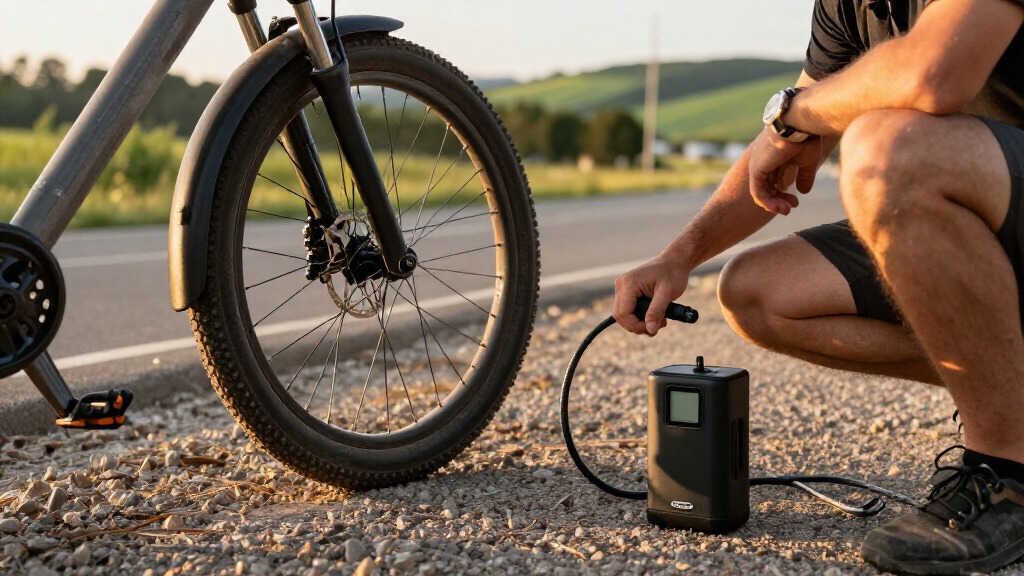
Portable electric bike pumps make roadside inflation easier, but the best choice depends on how much weight you’ll carry, how quickly you need to inflate, and which valves and tires you use. My best overall pick is the CYCPLUS AS2Pro, which pairs a very light 120 g design with a practical pressure ceiling for riders who value packability. The CYCPLUS AS2Ultra stands out for riders chasing an even lighter setup, while the Fanttik X11 Ace offers a higher stated pressure ceiling for those prioritizing pressure range. The tradeoffs are clear: smaller pumps save space but can demand more patience, while larger cordless inflators may be easier to handle but take up more room. Read on for the full comparison and help matching a pump to your bike and riding style.

Get bike and ride gear delivered free with Prime
- Fast, free delivery on millions of items
- Prime Video, Amazon Music and more included
- Member-only deals all year
Key Takeaways
- Weight separates the most ride-focused options: the CYCPLUS AS2Ultra is listed at 90 g and the AS2Pro at 120 g, making them especially appealing when every gram matters.
- A higher PSI ceiling is not the same as faster inflation: the 150 PSI models provide more stated headroom, but tire volume, starting pressure, and battery capacity also shape roadside usefulness.
- The lineup splits between compact bike pumps and broader cordless inflators: models such as the AstroAI L7 and OlarHike may suit multi-purpose use, while the smallest CYCPLUS and Lamicall options prioritize carry size.
- Digital pressure readouts are a practical differentiator: the ETENWOLF S0 and DSUY models foreground gauge functions, which can help riders avoid guessing when setting a target pressure.
- Repeated model listings do not create meaningful variety: the two Fanttik X10 Ace entries and two ETENWOLF S0 entries share model names, so buyers should compare exact specifications and included accessories rather than treat them as separate pump designs.
| ETENWOLF S0 Mini Electric Bike Pump with Pressure Gauge |  | Best for Fast Road-Tire Inflation | Maximum pressure: 150 PSI | Airflow: 18 L/min | Battery capacity: 2,400 mAh lithium | VIEW LATEST PRICE | See Our Full Breakdown |
| AstroAI L7 Cordless Tire Inflator, 150 PSI |  | Best Multi-Purpose Carry Pump | Maximum pressure: 150 PSI | Battery capacity: 4,000 mAh | Weight: 15.36 oz | VIEW LATEST PRICE | See Our Full Breakdown |
| CYCPLUS Portable Electric Tire Inflator, 150 PSI |  | Best for Bottle-Cage Carry | Maximum pressure: 150 PSI (10.3 bar) | Airflow: 12 L/min | Battery capacity: 2,600 mAh | VIEW LATEST PRICE | See Our Full Breakdown |
| Fanttik X9 Ace Mini Electric Bike Pump, 150 PSI | 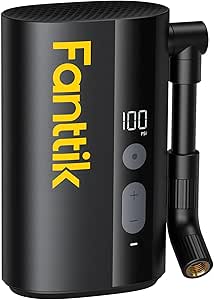 | Best for Longer Battery Capacity | Maximum pressure: 150 PSI | Airflow: 10 L/min | Battery capacity: 5,000 mAh LiPo | VIEW LATEST PRICE | See Our Full Breakdown |
| OlarHike Cordless Portable Tire Inflator |  | Best for Riders Who Also Need USB Power | Model: L3V2 | Battery capacity: 2 × 2,000 mAh | Weight: 15.52 oz | VIEW LATEST PRICE | See Our Full Breakdown |
| CYCPLUS AS2Pro Mini Electric Bike Pump, 120 g, Black |  | Best Overall for Road-Ride Carrying | Maximum pressure: 120 PSI | Weight: 120 g (4.23 oz) | Dimensions: 2.76 × 1.1 × 1.69 in | VIEW LATEST PRICE | See Our Full Breakdown |
| DSUY Mini Electric Bike Tire Pump with Digital Gauge, 120 PSI |  | Best for Angled or Hard-to-Reach Valves | Maximum pressure: 120 PSI | Pressure range: 2–120 PSI | Airflow capacity: 27 liters per minute | VIEW LATEST PRICE | See Our Full Breakdown |
| CYCPLUS AS2Ultra Mini Electric Bike Pump, 90 g, Magnesium Alloy |  | Best Ultra-Light Pick | Maximum pressure: 120 PSI | Weight: 90 g | Dimensions: 2.55 × 1.10 × 1.87 in | VIEW LATEST PRICE | See Our Full Breakdown |
| Fanttik X10 Ace Mini Electric Bike Pump, 120 PSI |  | Best for Fast Road-Tire Top-Ups | Maximum pressure: 120 PSI | Inflation time: About 22 seconds, 700×25C tire from 80 to 100 PSI | Pressure accuracy: Within 1 PSI | VIEW LATEST PRICE | See Our Full Breakdown |
| Fanttik X10 Ace Mini Electric Bike Pump, 120 PSI |  | Best for Simple Preset Operation | Maximum pressure: 120 PSI | Pressure accuracy: ±1 PSI | Weight: 4.16 oz | VIEW LATEST PRICE | See Our Full Breakdown |
| Fanttik X11 Ace Mini Electric Bike Pump, 150 PSI |  | Best for Fast Road-Tire Top-Ups | Maximum pressure: 150 PSI | Battery capacity: 2500 mAh lithium-ion | Stated inflation time: About 21 seconds from 80 to 100 PSI on a 700×23C road tire | VIEW LATEST PRICE | See Our Full Breakdown |
| TOPUMP TB2PRO Mini Electric Bike Pump, 120 PSI |  | Best Lightweight Pick for Mixed-Valve Bikes | Maximum pressure: 120 PSI | Airflow: 15 L/min | Stated inflation time: About 50 seconds to reach 80 PSI | VIEW LATEST PRICE | See Our Full Breakdown |
| ETENWOLF S0 Mini Electric Bike Pump with Gauge |  | Best Multi-Purpose Mini Pump | Maximum pressure: 150 PSI | Airflow: 18 L/min | Battery capacity: 2400 mAh lithium-ion | VIEW LATEST PRICE | See Our Full Breakdown |
| Lamicall Ultra Mini Electric Bike Pump, 120 PSI |  | Best Ultra-Light Pick for Pocket Carry | Maximum pressure: 120 PSI | Airflow: Up to 32 L/min | Weight: 5 ounces | VIEW LATEST PRICE | See Our Full Breakdown |
| portable electric bike pump | Weight | Maximum pressure | Valve compatibility | Warranty |
|---|---|---|---|---|
| ETENWOLF S0 Mini Electric Bike | 0.34 kg (listed as 0.54 lb in the description) | 150 PSI | Presta and Schrader | 2 years |
| AstroAI L7 Cordless Tire Infla | 15.36 oz | 150 PSI | — | — |
| CYCPLUS Portable Electric Tire | 380 g (13.28 oz) | 150 PSI (10.3 bar) | Presta and Schrader adapters included | 2 years |
| Fanttik X9 Ace Mini Electric B | 384 g | 150 PSI | Presta and Schrader | 1 year |
| OlarHike Cordless Portable Tir | 15.52 oz | — | — | — |
| CYCPLUS AS2Pro Mini Electric B | 120 g (4.23 oz) | 120 PSI | Presta and Schrader | — |
| DSUY Mini Electric Bike Tire P | 136 g | 120 PSI | Presta and Schrader | 24 months |
| CYCPLUS AS2Ultra Mini Electric | 90 g | 120 PSI | Presta and Schrader | Two years |
| Fanttik X10 Ace Mini Electric | 0.29 lb (4.58 oz) | 120 PSI | Presta and Schrader | 1 year |
| Fanttik X10 Ace Mini Electric | 4.16 oz | 120 PSI | Presta and Schrader | 1 year |
| Fanttik X11 Ace Mini Electric | 10.08 ounces | 150 PSI | Presta and Schrader | 1 year |
| TOPUMP TB2PRO Mini Electric Bi | 0.29 lb (130 g) | 120 PSI | Presta and Schrader | 2 years |
| ETENWOLF S0 Mini Electric Bike | 0.54 lb (8.64 oz) | 150 PSI | Presta and Schrader with adapters | 2 years |
| Lamicall Ultra Mini Electric B | 5 ounces | 120 PSI | Presta and Schrader | — |
More Details on Our Top Picks
ETENWOLF S0 Mini Electric Bike Pump with Pressure Gauge
The ETENWOLF S0 suits riders who want high-pressure top-ups without spending long beside the bike. Its stated airflow of 18 liters per minute is higher than the CYCPLUS Portable Electric Tire Inflator’s 12 liters per minute, and the supplied data says it can bring a 700×23C tire to 80–100 PSI in about 20 seconds. The LED gauge, pressure memory, and automatic shutoff also make repeat inflation less fiddly. At 0.34 kg, it remains portable, though the CYCPLUS is lighter at 380 g only marginally by the listed weights, while some roundup options are designed to be far smaller. The main compromise is its 2,400 mAh battery, which limits how many tires it can handle per charge, and road riders must attach the Presta adapter separately.
Pros:- Stated 18 L/min airflow supports quick inflation.
- LED pressure gauge, memory function, and automatic shutoff aid controlled repeat top-ups.
- Supports Presta and Schrader valves with included adapter, plus sports-ball inflation.
- Includes a 360° rotation hose and drawstring carry bag.
Cons:- The 2,400 mAh battery limits the number of tires per charge.
- Presta use requires attaching the separate adapter.
- At 0.34 kg, it is not among the lightest options for weight-focused riders.
Best for: Road cyclists who prioritize quick high-pressure tire top-ups and want a gauge with automatic shutoff.
Not ideal for: Riders who need to inflate several tires on one outing or want a directly compatible Presta connection without attaching an adapter.
- Maximum pressure:150 PSI
- Airflow:18 L/min
- Battery capacity:2,400 mAh lithium
- Weight:0.34 kg (listed as 0.54 lb in the description)
- Valve compatibility:Presta and Schrader
- Gauge:LED digital display; ±1 PSI stated precision
- Controls:Automatic shutoff and pressure memory
- Warranty:2 years
Our verdict“Choose the ETENWOLF S0 for fast road-tire inflation and controlled pressure, but skip it if battery capacity or minimum carry weight matters most.”
AstroAI L7 Cordless Tire Inflator, 150 PSI
The AstroAI L7 makes more sense for a rider who also wants one inflator for the car, motorcycle, and sports balls than for someone focused only on bike weight. Its 4,000 mAh battery, preset modes, four pressure units, and automatic shutoff offer broader flexibility than the bike-oriented CYCPLUS Portable Electric Tire Inflator. The L7 also adds a flashlight and USB power output, which can be handy on a roadside stop. At 15.36 ounces, it is still carryable, but it is heavier than the CYCPLUS’s listed 13.28 ounces. Its 150 PSI ceiling suits bicycle use, while the stated 15-minute continuous-use limit followed by a 10-minute rest makes long inflation sessions less convenient. It is also not suitable for tires larger than 25 inches, so this is a general-purpose companion rather than a heavy-vehicle inflator.
Pros:- 4,000 mAh battery and presets cover several inflation tasks.
- Automatic shutoff and four pressure units simplify setting a target.
- Flashlight offers flashlight, SOS, and strobe modes.
- USB input and output add charging flexibility.
Cons:- Heavier than the CYCPLUS Portable Electric Tire Inflator by the listed weights.
- Requires a 10-minute rest after 15 minutes of continuous use.
- Not suitable for tires larger than 25 inches, including heavy-duty truck tires.
Best for: Cyclists who want a portable pump that can also handle household car tires, motorcycles, and sports balls.
Not ideal for: Minimalist riders seeking a bike-first pump, or owners of tires larger than 25 inches and anyone expecting extended continuous inflation.
- Maximum pressure:150 PSI
- Battery capacity:4,000 mAh
- Weight:15.36 oz
- Pressure units:PSI, bar, kPa, kg/cm²
- Preset modes:Car, motorcycle, bicycle, ball, and custom
- Custom pressure range:3–150 PSI
- Continuous-use limit:15 minutes, then rest for 10 minutes
- Additional features:Automatic shutoff, digital display, three-mode flashlight, USB-C and USB input/output
Our verdict“Pick the AstroAI L7 if bike inflation is only one of several jobs you need a cordless inflator to handle.”
CYCPLUS Portable Electric Tire Inflator, 150 PSI
The CYCPLUS Portable Electric Tire Inflator is the most bike-oriented choice here for riders who want the pump to travel on the frame: its mount is water-bottle-cage compatible, and its built-in hose keeps the setup self-contained. Compared with the AstroAI L7, it is lighter by the listed weights and less focused on car-oriented extras; compared with the ETENWOLF S0, its stated airflow is lower at 12 L/min versus 18 L/min. The 150 PSI ceiling and automatic operation cover road-bike pressure needs, while included Presta and Schrader adapters broaden its use beyond one valve type. At 380 g, though, it is still noticeable to riders trying to minimize carried weight. The 2,600 mAh battery specification does not give a clear runtime, so riders planning repeated inflations should not assume it will match larger-capacity alternatives.
Pros:- Bottle-cage-compatible mount makes it practical to carry on the bike.
- Built-in hose and automatic operation keep setup straightforward.
- Includes Presta and Schrader adapters and a ball needle.
- LED light can help with roadside inflation in low light.
Cons:- The 380 g listed weight may be noticeable on weight-focused rides.
- The 2,600 mAh capacity is not paired with a stated inflation count or runtime.
- Its 12 L/min airflow is lower than the ETENWOLF S0’s stated 18 L/min.
Best for: Road and commuter cyclists who want a self-contained electric pump mounted at the bottle cage rather than carried loose.
Not ideal for: Weight-conscious riders seeking an ultralight pump, or riders who need a clear estimate of how many inflations one charge will provide.
- Maximum pressure:150 PSI (10.3 bar)
- Airflow:12 L/min
- Battery capacity:2,600 mAh
- Weight:380 g (13.28 oz)
- Dimensions:2.09 × 2.09 × 7.09 in
- Valve compatibility:Presta and Schrader adapters included
- Charging connector:Type-C
- Warranty:2 years
Our verdict“Choose the CYCPLUS if you want a dedicated pump that mounts on your bike, not the lightest or fastest option in this group.”
Fanttik X9 Ace Mini Electric Bike Pump, 150 PSI
The Fanttik X9 Ace is a sensible pick for riders who value fewer charging interruptions more than maximum airflow. Its 5,000 mAh battery is stated to inflate up to eight tires per charge, giving it a clearer capacity advantage over the ETENWOLF S0’s 2,400 mAh battery. The integrated Presta and Schrader connection and 360° rotating hose also remove the separate-adapter step required for Presta use on the ETENWOLF. Pressure control is straightforward: set a target and automatic shutoff stops the pump when it is reached. The tradeoff is its 10 L/min airflow, below both the ETENWOLF S0 and CYCPLUS Portable Electric Tire Inflator, so it is not the speed-focused choice. Its plastic construction and 25-minute continuous-operation limit also make it less appealing for demanding repeated sessions.
Pros:- 5,000 mAh battery is stated to inflate up to eight tires per charge.
- Automatic shutoff stops inflation at the selected pressure.
- Integrated Presta and Schrader connections avoid a separate valve adapter.
- 360° rotating hose helps with awkward valve positions.
Cons:- 10 L/min airflow is lower than the ETENWOLF S0 and CYCPLUS models listed here.
- Plastic construction may be less reassuring to buyers seeking a more robust body.
- Continuous operation is limited to 25 minutes.
Best for: Cyclists who want a stated higher-capacity battery and integrated Presta/Schrader connections for routine rides and multi-tire use.
Not ideal for: Riders prioritizing rapid inflation, a metal-bodied pump, or long continuous inflation sessions.
- Maximum pressure:150 PSI
- Airflow:10 L/min
- Battery capacity:5,000 mAh LiPo
- Stated inflation capacity:Up to 8 tires per charge
- Weight:384 g
- Valve compatibility:Presta and Schrader
- Operation:Automatic shutoff at selected pressure
- Continuous-use limit:25 minutes
- Warranty:1 year
Our verdict“Choose the Fanttik X9 Ace for its stated battery capacity and integrated valve setup, not for the fastest inflation or longest continuous sessions.”
OlarHike Cordless Portable Tire Inflator
The OlarHike L3V2 earns a place for riders who want a compact general-purpose inflator with a useful extra: USB output for charging another device. Its LED display, pressure sensor, and automatic shutoff give it basic control features similar to the AstroAI L7, while its supplied Presta adapter makes bicycle use part of the package. OlarHike states capacity for up to 13 passenger-car tires per charge under specified conditions, but that figure does not establish how many bicycle tires it can inflate. The 15.52 oz body is portable, though slightly heavier than the AstroAI L7’s 15.36 oz listing. Unlike the bike-focused CYCPLUS, the supplied description does not specify a maximum PSI or a bicycle-specific mount, so riders choosing strictly for bike performance have less to compare. Its plastic body and limits with large inflatables also narrow its range.
Pros:- USB output can provide backup power to another device.
- LED display, pressure sensor, and automatic shutoff support controlled inflation.
- Includes a Presta adapter alongside adapters for other inflatables.
- Compact cordless form weighs 15.52 oz.
Cons:- The supplied product data does not state a maximum pressure or airflow rate.
- The stated capacity of up to 13 car tires does not specify bicycle-tire capacity.
- Not recommended for large commercial truck tires or large inflatable pool toys.
Best for: Commuters and recreational cyclists who want a compact inflator for bike tires, car tires, and occasional device charging.
Not ideal for: Road cyclists who need a stated maximum pressure or bike-mounting details, and users inflating large commercial tires or pool toys.
- Model:L3V2
- Battery capacity:2 × 2,000 mAh
- Weight:15.52 oz
- Dimensions:5.91 × 2.76 × 1.97 in
- Pressure units:PSI, bar, kPa, kg/cm²
- Controls:LED display, pressure sensor, automatic shutoff
- Included bicycle adapter:Presta valve adapter
- Additional feature:USB output
Our verdict“Pick the OlarHike if USB backup power and mixed-use inflation matter more than bike-specific performance details.”
CYCPLUS AS2Pro Mini Electric Bike Pump, 120 g, Black
The CYCPLUS AS2Pro is my best all-around choice for riders who want accurate, preset inflation without carrying a bulky pump. At 120 g, it is lighter than the Fanttik X10 Ace and still offers a clear pressure display, automatic shutoff, and support for both Presta and Schrader valves. Its 120 PSI ceiling suits typical road-bike needs, while the included hose and adapters make it more adaptable than a bare-bones pocket inflator. The tradeoff is its 420 mAh battery: this is a compact emergency and ride-support tool, not a high-capacity pump for repeated inflations. It is also focused on bicycle tires, unlike larger portable inflators in the roundup. I’d choose it for everyday carry, but not for frequent multi-bike use.
Pros:- 120 g weight is easy to carry in a jersey pocket or pack.
- LED display shows preset and real-time pressure, with ±1 PSI stated accuracy.
- Automatic shutoff helps prevent inflation beyond the selected pressure.
- Includes a hose and adapters for Presta and Schrader valves.
Cons:- The 420 mAh battery limits its appeal for repeated inflations.
- Designed primarily for bicycle tires rather than broader household inflation tasks.
Best for: Road cyclists who want a light, pocketable pump with measured pressure and automatic shutoff for ride-day top-ups or emergencies.
Not ideal for: Riders who regularly inflate several tires in one outing or want one inflator for bikes and larger items; its 420 mAh battery and bicycle-focused design are limiting.
- Maximum pressure:120 PSI
- Weight:120 g (4.23 oz)
- Dimensions:2.76 × 1.1 × 1.69 in
- Battery capacity:420 mAh
- Charging connector:USB Type-C
- Valve compatibility:Presta and Schrader
- Pressure accuracy:±1 PSI
- Included accessories:Air hose, Presta adapter, ball needle, silicone case, waterproof bag, USB charging cable
Our verdict“Choose the AS2Pro if you want a light, accurate bike pump for individual rides rather than a high-capacity inflator for repeated use.”
DSUY Mini Electric Bike Tire Pump with Digital Gauge, 120 PSI
The DSUY Mini earns its place through its heat-resistant extension hose, a practical advantage when a valve sits awkwardly between spokes or is difficult to reach directly. Like the CYCPLUS AS2Pro, it provides a digital gauge, preset pressure, automatic shutoff, and support for Presta and Schrader; at 136 g, it remains suitable for a saddle bag or jersey pocket. Its stated 27 liters-per-minute airflow is a useful specification, though it does not change the central limitation shared by these tiny pumps: battery capacity restricts repeated use. Compared with the AS2Pro’s aluminum construction, the DSUY uses plastic, so buyers prioritizing a metal-bodied carry pump may prefer the CYCPLUS. The 24-month warranty and included storage bag add practical support, but the battery is still best treated as ride backup.
Pros:- Heat-resistant extension hose helps reach angled or obstructed valves.
- Preset pressure, digital readout, and automatic shutoff simplify inflation.
- Supports both Presta and Schrader valves and includes connectors.
- 136 g body and storage bag suit portable bike-kit use.
Cons:- Plastic construction is less reassuring to buyers seeking the AS2Pro’s aluminum housing.
- Battery supports only a limited number of inflations per charge.
Best for: Cyclists whose valve access is awkward, especially riders who want a hose between the pump and valve during roadside inflation.
Not ideal for: Riders who prioritize a metal housing or need to inflate several tires repeatedly without recharging; its plastic body and limited battery endurance may disappoint.
- Maximum pressure:120 PSI
- Pressure range:2–120 PSI
- Airflow capacity:27 liters per minute
- Gauge accuracy:±1 PSI
- Weight:136 g
- Dimensions:1.98 × 1.98 × 1.35 in
- Charging connector:USB-C
- Valve compatibility:Presta and Schrader
- Warranty:24 months
Our verdict“Pick the DSUY Mini if an extension hose matters more to you than a metal shell or longer multi-tire capacity.”
CYCPLUS AS2Ultra Mini Electric Bike Pump, 90 g, Magnesium Alloy
At a stated 90 g, the CYCPLUS AS2Ultra is the clearest choice here for riders who count every gram in a jersey pocket or compact repair kit. It keeps the features that matter on the road—an LED pressure display, automatic shutoff, ±1 PSI accuracy, and Presta/Schrader compatibility—while weighing less than the 120 g AS2Pro and 136 g DSUY Mini. The included hose also helps with awkward valve angles. That weight saving comes with a capacity compromise: the product data says a full charge inflates at least two 700 × 25 tires from 0 to 110 PSI, so it is better suited to solo ride support than repeated group repairs. Its stated 25-minute charging time and two-year warranty are welcome, but buyers needing more inflations per charge should look beyond this ultralight design.
Pros:- At 90 g, it is lighter than the AS2Pro and DSUY Mini in this group.
- LED display and automatic shutoff support controlled inflation.
- ±1 PSI stated accuracy and 120 PSI maximum suit road-bike pressure needs.
- Includes a hose and supports Presta and Schrader valves.
Cons:- A full charge is listed to inflate at least two 700 × 25 tires from 0 to 110 PSI, limiting repeated use.
- Its compact, bike-focused design is not a substitute for a higher-capacity general inflator.
Best for: Weight-conscious road cyclists who want an electronic backup for their own tires and value minimal kit weight over repeated-use capacity.
Not ideal for: Group ride leaders or multi-bike households that need to inflate several tires in one session; the listed full-charge capacity is limited.
- Maximum pressure:120 PSI
- Weight:90 g
- Dimensions:2.55 × 1.10 × 1.87 in
- Pressure accuracy:±1 PSI
- Charging connector:USB-C
- Charging time:25 minutes
- Valve compatibility:Presta and Schrader
- Material:Aluminum listed; magnesium alloy shell stated in title
- Warranty:Two years
Our verdict“Choose the AS2Ultra when minimum carry weight matters most and two high-pressure tire inflations per charge are enough for your rides.”
Fanttik X10 Ace Mini Electric Bike Pump, 120 PSI
The Fanttik X10 Ace makes the strongest case for riders who want a quick pressure adjustment rather than the lightest possible pump. Its stated benchmark—raising a 700×25C tire from 80 to 100 PSI in about 22 seconds—gives buyers a useful sense of its top-up role. The display, automatic shutoff, remembered pressure setting, and PSI/bar options make repeat adjustments straightforward. At 4.58 oz, it is heavier than the 90 g CYCPLUS AS2Ultra and the 120 g AS2Pro, so it is not my pick for gram-focused carry. It also needs a cooldown if the high-temperature alert appears. Riders with TPU tubes and resin valves should use the extension hose to avoid valve overheating, making this model less carefree than the simpler CYCPLUS choices.
Pros:- Stated 22-second inflation time for a 700×25C tire from 80 to 100 PSI.
- Automatic shutoff and last-setting memory simplify repeat pressure adjustments.
- Bright digital display supports PSI and bar readings.
- Works with Presta and Schrader valves.
Cons:- At 4.58 oz, it weighs more than the CYCPLUS AS2Ultra and AS2Pro.
- May require cooldown after a high-temperature alert.
- TPU tubes with resin valves require an extension hose to reduce valve overheating risk.
Best for: Road cyclists who value quick, accurately controlled pressure top-ups and are willing to manage heat and hose setup.
Not ideal for: Weight-conscious riders or anyone seeking a pump that can run repeatedly without cooldowns; TPU-tube users with resin valves also need the extension hose.
- Maximum pressure:120 PSI
- Inflation time:About 22 seconds, 700×25C tire from 80 to 100 PSI
- Pressure accuracy:Within 1 PSI
- Weight:0.29 lb (4.58 oz)
- Dimensions:2.83 × 2.09 × 1.18 in
- Valve compatibility:Presta and Schrader
- Charging connector:USB
- Included components:Air hose, charging cable, Presta adapter, pump, manual
- Warranty:1 year
Our verdict“Choose the X10 Ace if fast road-tire top-ups matter more than minimum weight and you can accommodate its heat and hose precautions.”
Fanttik X10 Ace Mini Electric Bike Pump, 120 PSI
This Fanttik X10 Ace is the straightforward pick for riders who want a preset, readable pressure target without moving up to a larger 150 PSI model such as the Fanttik X9 Ace. Its real-time LED display, automatic shutoff, and ±1 PSI stated accuracy help reduce guesswork when topping up either Presta or Schrader tires. At 4.16 oz, it is still pocketable, though the 90 g CYCPLUS AS2Ultra is a better fit for riders chasing the lowest carry weight. The main compromises are practical: this pump is not waterproof, and prolonged use may trigger a temporary overheat shutdown. Its valve also cannot be disassembled, which limits service flexibility. I’d treat it as a dry-weather ride accessory for occasional inflation, not a pump for wet conditions or back-to-back jobs.
Pros:- LED display, preset pressure, and automatic shutoff make inflation easy to control.
- ±1 PSI stated accuracy supports more consistent pressure setting.
- Compatible with both Presta and Schrader valves.
- Compact 4.16 oz form fits a jersey pocket, saddle bag, or bottle cage.
Cons:- Not waterproof, so it needs protection from rain and moisture.
- May shut down temporarily to cool during prolonged use.
- Pump valve cannot be disassembled.
Best for: Dry-weather cyclists who want an easy-to-read preset pump for occasional roadside pressure adjustments on either common bicycle valve type.
Not ideal for: Riders who frequently cycle in rain, need repeated inflations without pauses, or want a pump that can be serviced by disassembling its valve.
- Maximum pressure:120 PSI
- Pressure accuracy:±1 PSI
- Weight:4.16 oz
- Dimensions:2.09 × 1.18 × 2.83 in
- Hose length:3.94 in
- Valve compatibility:Presta and Schrader
- Battery type:Lithium-ion
- Charging connector:USB
- Warranty:1 year
Our verdict“Choose this X10 Ace for simple, dry-weather bike-tire top-ups, but pick the lighter AS2Ultra if carry weight is your main priority.”
Fanttik X11 Ace Mini Electric Bike Pump, 150 PSI
The Fanttik X11 Ace is a strong fit for road cyclists who want quick, controlled pressure corrections without carrying a floor pump. Its stated 21-second inflation time applies specifically to a 700×23C tire moving from 80 to 100 PSI, so it gives a useful speed reference for that narrow task—not a promise for every tire or starting pressure. The 4.5-inch color screen shows live and target pressure, while automatic shutoff and stated accuracy within 1 PSI help limit guesswork. Compared with the TOPUMP TB2PRO, it offers a higher 150 PSI ceiling and a larger display, but weighs more and has plastic construction. The built-in hose helps with handling, though this is still a small battery pump with capacity for up to six road tires per charge, not a substitute for repeated workshop use.
Pros:- Stated 21-second inflation from 80 to 100 PSI on a 700×23C road tire
- Automatic shutoff and stated pressure accuracy within 1 PSI
- Large color screen shows real-time and target pressure
- Built-in hose and support for Presta and Schrader valves
Cons:- Plastic construction may be less reassuring for rough, frequent use
- The 21-second figure applies only to a specific tire size and pressure range
- Capacity is stated as up to six 700×23C road tires per charge
Best for: Road cyclists who want a portable pump for precise, fast pressure top-ups on high-pressure tires and value an easy-to-read display.
Not ideal for: Riders who prioritize rugged metal construction or need to inflate many tires between charges; its plastic body and stated capacity of up to six road tires may not suit those needs.
- Maximum pressure:150 PSI
- Battery capacity:2500 mAh lithium-ion
- Stated inflation time:About 21 seconds from 80 to 100 PSI on a 700×23C road tire
- Capacity per charge:Up to six 700×23C road tires
- Pressure accuracy:Within 1 PSI
- Display:4.5-inch color LED
- Valve compatibility:Presta and Schrader
- Weight:10.08 ounces
- Warranty:1 year
Our verdict“Choose the X11 Ace for speedy, high-pressure road-tire top-ups and a large display; skip it if durability or extensive inflation capacity matters more.”
TOPUMP TB2PRO Mini Electric Bike Pump, 120 PSI
At 0.29 lb, the TOPUMP TB2PRO is the carry-friendly choice here for riders who want a rechargeable pump that takes up little room and works with both common bike valves. Its digital gauge displays preset and live pressure, and automatic operation stops inflation at the target, which makes roadside top-ups easier to manage. The 15 L/min airflow and stated time of about 50 seconds to reach 80 PSI make it less focused on rapid high-pressure road corrections than the Fanttik X11 Ace, but its smaller, lighter format is easier to keep on a ride. The 120 PSI ceiling covers many bike tires, with an important handling caveat: use the hose above 100 PSI, and use an extension hose with TPU tubes that have resin valves to help prevent valve overheating. USB-C charging is specified at about 30 minutes.
Pros:- Lightweight at 0.29 lb and compact enough for a small ride kit
- Digital preset and real-time pressure display with automatic shutoff
- Supports Presta and Schrader valves and includes a Presta converter
- USB-C full charge is specified at about 30 minutes
Cons:- 120 PSI maximum is lower than the Fanttik X11 Ace and ETENWOLF S0, both rated to 150 PSI
- An air hose is recommended above 100 PSI to reduce air leakage at the nozzle
- TPU tubes with resin valves call for an extension hose to help limit valve heating
Best for: Weight-conscious commuters and road or gravel riders who want a compact pump for occasional tire corrections and carry bikes with Presta or Schrader valves.
Not ideal for: Riders seeking the fastest high-pressure inflation or a tool-free setup for every valve arrangement; the hose guidance above 100 PSI and extension-hose advice for resin-valve TPU tubes require extra care.
- Maximum pressure:120 PSI
- Airflow:15 L/min
- Stated inflation time:About 50 seconds to reach 80 PSI
- Weight:0.29 lb (130 g)
- Dimensions:2.09 × 1.26 × 3.03 inches
- Valve compatibility:Presta and Schrader
- Charging:USB Type-C; about 30 minutes for a full charge
- Included accessories:Air hose and Presta valve converter
- Warranty:2 years
Our verdict“Pick the TB2PRO if low carry weight and quick USB-C charging matter most, but choose a higher-pressure model for frequent high-PSI road-tire work.”
ETENWOLF S0 Mini Electric Bike Pump with Gauge
The ETENWOLF S0 is the most versatile pick in this group for riders who want one compact inflator for bike tires and small extras such as sports balls or balloons. Its included adapters make those secondary uses practical, while the 18 L/min airflow, 150 PSI ceiling, and stated 20-second inflation from 80 to 100 PSI on a 700×23C tire give it a road-bike focus too. The digital gauge has a memory function and automatic shutoff, and the 360° rotating hose can make awkward valve angles easier to reach. Against the Fanttik X11 Ace, the S0 adds accessory versatility and a stated two-year warranty, while the Fanttik has a much larger 4.5-inch screen. The S0’s Presta adapter attaches separately, and its charge capacity differs by starting condition: up to eight fully flat tires or eighteen low-pressure tires.
Pros:- 150 PSI maximum and 18 L/min airflow for road-tire use
- Automatic shutoff, real-time gauge, and pressure memory
- 360° rotating hose helps reach valves from different angles
- Includes adapters for Presta and Schrader valves, balls, and balloons
Cons:- Presta valve adapter must be attached separately for road-bike tires
- Specified capacity is up to eight fully flat tires or eighteen low-pressure tires, depending on starting condition
- Plastic construction may not appeal to riders seeking a metal-bodied pump
Best for: Cyclists who want a small ride-kit pump that can also inflate sports balls or balloons, and who value a rotating hose and pressure memory.
Not ideal for: Road cyclists who want the simplest direct Presta connection or a large display; the S0 needs a separate Presta adapter, and its screen is specified only as a digital gauge.
- Maximum pressure:150 PSI
- Airflow:18 L/min
- Battery capacity:2400 mAh lithium-ion
- Stated inflation time:About 20 seconds from 80 to 100 PSI on a 700×23C tire
- Gauge precision:±1 PSI
- Weight:0.54 lb (8.64 oz)
- Valve compatibility:Presta and Schrader with adapters
- Included accessories:Presta adapter, air chuck, ball needle, balloon valve, and drawstring bag
- Warranty:2 years
Our verdict“Choose the S0 if you want a capable bike pump with useful non-bike adapters, but opt for the X11 Ace if a large screen is your priority.”
Lamicall Ultra Mini Electric Bike Pump, 120 PSI
Weighing just 5 ounces, the Lamicall is the easiest choice here for riders who put pocket or jersey carry ahead of a 150 PSI ceiling. It pairs its low weight with up to 32 L/min airflow, a real-time LED pressure display, pressure memory, and preset automatic shutoff. That combination makes quick corrections straightforward, while the stated ability to inflate at least two 700×25C tires from flat to 110 PSI per charge gives a concrete reference for road use. Compared with the TOPUMP TB2PRO, the Lamicall is lighter and lists more airflow, but the TOPUMP has a lower stated 0.29 lb weight than most compact pumps in this lineup only if its spec is read literally; at 130 g, it is still substantially heavier than Lamicall. The Lamicall’s 120 PSI limit is below the X11 Ace and ETENWOLF S0, and overheating protection can pause use until the pump cools.
Pros:- Very light at 5 ounces for pocket or jersey carry
- Up to 32 L/min airflow and a stated capacity of at least two 700×25C tires from 0 to 110 PSI
- LED pressure display, pressure memory, and automatic shutoff
- Presta and Schrader compatibility with USB-C charging
Cons:- 120 PSI maximum is below the 150 PSI Fanttik X11 Ace and ETENWOLF S0
- Overheat protection can stop inflation until the pump cools
- Requires periodic recharging during long-term storage
Best for: Road and city cyclists who want the lightest listed option for a jersey pocket or small saddle bag and need pressure presets for routine tire top-ups.
Not ideal for: Riders who regularly need pressures above 120 PSI or plan repeated back-to-back inflations; it can shut down to cool and needs periodic recharging during storage.
- Maximum pressure:120 PSI
- Airflow:Up to 32 L/min
- Weight:5 ounces
- Inflation capacity:At least two 700×25C tires from 0 to 110 PSI per full charge
- Valve compatibility:Presta and Schrader
- Charging port:USB-C
- Charge time:30 minutes
- Features:LED pressure display, preset pressure, automatic shutoff, pressure memory, and overheat protection
- Materials:Metal and plastic
Our verdict“Choose the Lamicall for minimal carry weight and preset-controlled top-ups, but look to a 150 PSI model for higher-pressure needs.”
How We Picked
I ranked these portable electric bike pumps around the needs that matter on a ride: carry weight and bulk, stated pressure range, how clearly the controls and gauge communicate pressure, and whether the design appears suited to quick bike-tire use or broader inflating tasks. I also weighed versatility, battery and charging details where provided, valve and accessory compatibility, and the practical value of a compact form. A high PSI figure alone did not earn a leading place; the pump also needed to make sense as something a cyclist would actually carry.
The ranking favors ride-ready portability and useful pressure control over maximum stated pressure or general-purpose features. That puts the lightweight CYCPLUS AS2Pro and AS2Ultra near the front for riders who pack a pump on every ride, while the 150 PSI Fanttik X11 Ace and AstroAI L7 appeal to buyers who want more pressure headroom or wider utility. Models with less distinguishing information sit lower, and duplicate X10 Ace and S0 listings are treated as the same basic model rather than separate innovations. Before buying, confirm the exact version, included valve fittings, charging method, and performance claims for the listing you plan to purchase.
| portable electric bike pump | Valve compatibility |
|---|---|
| ETENWOLF S0 Mini Electric Bike | Presta and Schrader |
| AstroAI L7 Cordless Tire Infla | — |
| CYCPLUS Portable Electric Tire | Presta and Schrader adapters included |
| Fanttik X9 Ace Mini Electric B | Presta and Schrader |
| OlarHike Cordless Portable Tir | — |
| CYCPLUS AS2Pro Mini Electric B | Presta and Schrader |
| DSUY Mini Electric Bike Tire P | Presta and Schrader |
| CYCPLUS AS2Ultra Mini Electric | Presta and Schrader |
| Fanttik X10 Ace Mini Electric | Presta and Schrader |
| Fanttik X10 Ace Mini Electric | Presta and Schrader |
| Fanttik X11 Ace Mini Electric | Presta and Schrader |
| TOPUMP TB2PRO Mini Electric Bi | Presta and Schrader |
| ETENWOLF S0 Mini Electric Bike | Presta and Schrader with adapters |
| Lamicall Ultra Mini Electric B | Presta and Schrader |
Factors to Consider When Choosing Portable Electric Bike Pumps
Choosing a portable pump is less about chasing the biggest number and more about matching its job to your rides. I’d start with how often you’ll carry it, the tires you need to inflate, and whether you want a precise pressure target or a backup for emergencies.
Match Pressure Range to Your Tire and Riding
Use your tire’s sidewall and the bike or tire maker’s guidance to identify the pressure range you actually need. A 150 PSI rating can be useful for riders with higher-pressure setups, but it does not mean the pump will reach that figure quickly or suit every tire. Mountain and many gravel tires need more air volume at lower pressures, so a compact pump’s ability to deliver air efficiently may matter more than its maximum rating. Avoid inflating to the maximum printed on a pump simply because it is available. Choose a model with enough headroom for your intended pressure, then rely on a readable gauge or a separate gauge for accurate setup.
Think About Tire Volume, Not Just PSI
A small road tire and a wide mountain-bike tire place different demands on a battery-powered pump. Higher-volume tires need more air, which can make a tiny pump slower and use more of its charge per inflation. Buyers often compare pumps only by maximum PSI, but that number says little about how long a real tire will take to inflate. If you ride tubeless, plan for a portable pump to handle pressure checks or modest top-ups rather than assume it will seat every tire bead. For frequent large-tire inflation, a bigger unit may be a better compromise than the lightest model in your pocket.
Set a Realistic Carry-Weight Limit
The lightest pump is attractive for road and gravel riders who notice every item in a jersey pocket or saddle bag. But lower weight can come with a smaller battery, shorter run time, or a less comfortable grip during use. Decide where the pump will live before choosing: a 90 g unit may make sense in a minimal kit, while a larger cordless inflator can be easier to store in a car or pannier. Also account for the hose, cable, adapters, and case, not just the pump body. A compact pump you leave at home because it is awkward to pack is less useful than a slightly heavier one that fits your routine.
Check Valve Fit and Hose Design
Confirm that the pump works with the valves on your bike and that any needed adapters come with the exact version you are buying. Presta and Schrader compatibility can vary by model or require a fitting, and small loose adapters are easy to misplace on a roadside stop. A hose can make it easier to connect the pump without putting leverage on a valve stem, particularly with deep rims or tight spokes. Direct attachment can reduce extra parts but may feel awkward in cramped spaces. If you run multiple bikes, prioritize a clear, secure connection over assuming every electric pump handles every valve in the same way.
Treat the Gauge as a Control, Not a Guarantee
A digital display can make it easier to stop at a chosen pressure, but gauge accuracy and readability still matter. Check whether the display shows your preferred unit and whether the controls let you set a target without cycling through confusing modes. Small screens may be harder to read in bright sun or with gloves, so think about when and where you usually ride. For precise pressure tuning, compare the pump reading with a trusted standalone gauge before relying on it for regular setup. On the trail, a simple display you can read quickly may be more useful than extra modes you rarely use.
Plan Around Battery and Charging
Battery capacity affects how many tires a pump can handle between charges, but advertised capacity or inflation counts may use conditions unlike your own tires. Cold weather, a low starting battery, and repeated high-pressure inflations can reduce practical run time. Check the charging connector and whether you can recharge it from the power sources you already carry. Riders on long routes should think of an electric pump as one part of a repair kit, not a reason to leave a backup plan behind. For occasional commuting, easy charging at home may matter more than squeezing the last possible inflation out of a charge.
Frequently Asked Questions
Is a 150 PSI portable pump a better choice than a 120 PSI model?
Not automatically. The higher ceiling offers more pressure headroom, which may suit a road-bike setup that calls for higher pressure, but it does not tell you how quickly the pump inflates a tire or how many inflations its battery can manage. A 120 PSI model can be a sensible fit when your target pressure sits comfortably below its limit. Check your tire maker’s recommended range rather than selecting a pump by its largest number. For most buyers, pressure control, tire volume, and carry size matter alongside the ceiling.
Can I use one of these pumps for both a road bike and a mountain bike?
Often, but the experience may differ substantially between the two bikes. A road tire usually needs less air volume but may require a higher target pressure, while a wide mountain tire can take longer to fill even at lower pressure. Confirm that the pump supports both valve types on your bikes, either directly or with included fittings. If you regularly inflate large tires, check for real-world guidance on inflation time and battery use rather than relying on PSI alone. A versatile pump is convenient, but frequent high-volume use may favor a larger unit.
Should I choose a pump with a digital gauge or carry a separate gauge?
A built-in digital gauge is convenient for roadside repairs because it reduces the number of items in your kit and helps you set a repeatable target. Its usefulness depends on screen readability, controls, and gauge accuracy, so a display by itself is not proof of precision. Riders who tune tire pressure closely can compare the pump with a trusted standalone gauge at home. If you mostly need emergency inflation, a readable on-pump display may be enough. Either way, follow the tire maker’s pressure guidance instead of treating the pump’s maximum rating as a target.
Will a portable electric pump seat a tubeless tire after a repair?
Do not assume it will. Seating a tubeless bead can call for a fast burst of air, while many compact electric pumps are designed for steady inflation and pressure top-ups. Results depend on the tire, rim, sealant, and pump design, so confirm the manufacturer’s stated use before relying on one for bead seating. Carry plugs or other repair supplies suited to your tire setup, and know what backup option is available if the tire will not seal. For routine tubeless rides, view a mini electric pump primarily as an inflation tool after a repair, not a guaranteed bead-seating device.
Are the repeated Fanttik X10 Ace and ETENWOLF S0 listings different models?
The roundup includes each name twice, but the names alone do not establish that the entries have different pump designs. They may reflect separate listings, bundles, or version details, so compare the exact model identifier and what is included before choosing. Check the stated pressure range, gauge, fittings, charging accessories, and warranty terms on the specific listing. Do not pay attention to a duplicate entry as if it were a distinct performance option. If the specifications match, treat the two listings as alternatives for the same basic pump rather than separate picks.
Conclusion
For most cyclists who want a pump they can carry on every ride, I’d choose the CYCPLUS AS2Pro as the best overall: its listed 120 g weight puts portability first without limiting the choice to the absolute lightest model. The CYCPLUS AS2Ultra is my best premium-style pick for weight-conscious riders who put a 90 g carry weight ahead of broader utility, while the AstroAI L7 is my value-oriented choice for buyers who want a more general-purpose cordless inflator rather than a narrowly bike-focused pocket pump. Beginners should start with a model that has a clear digital gauge, such as the ETENWOLF S0, and verify the valve fittings in the exact package. If your priority is a higher stated pressure ceiling, compare the Fanttik X11 Ace and 150 PSI alternatives; if you carry the pump in a minimal kit, favor the smallest dedicated models. Choose based on your tire volume, target pressure, and likely carrying spot—not PSI alone.