
TL;DR
Listen free for 30 days with Audible
Thousands of audiobooks and originals — cancel anytime.
Start your free trialAs an affiliate, we earn on qualifying purchases.
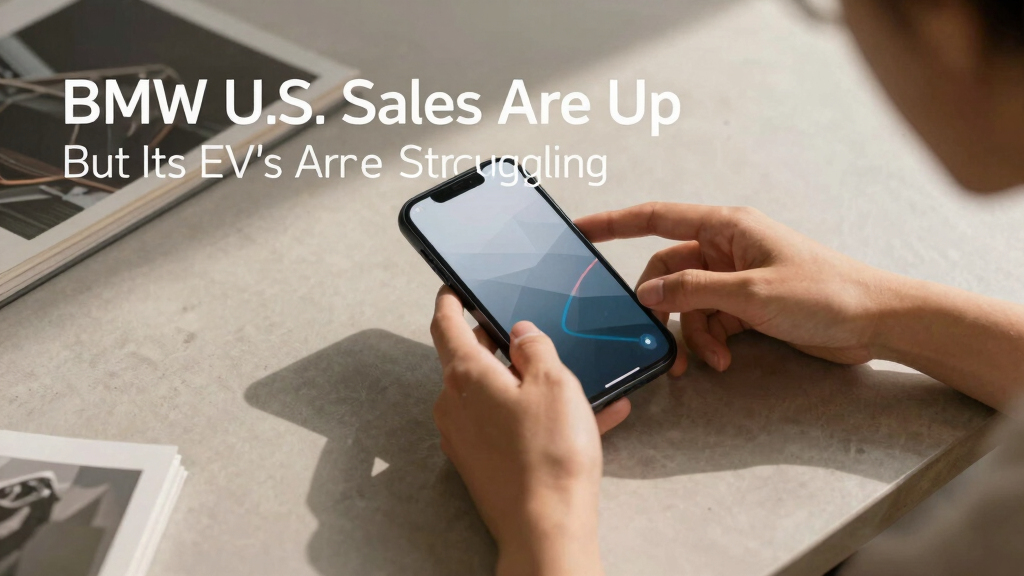
BMW’s overall sales in the U.S. have increased, driven by traditional models. However, its electric vehicle segment continues to face sales challenges, indicating slower EV adoption despite overall growth.
BMW’s U.S. vehicle sales have increased in recent months, according to company reports, but its electric vehicle sales have not kept pace, highlighting ongoing challenges in EV adoption despite overall growth in the brand’s market share.
BMW reported a 15% increase in total vehicle sales in the U.S. during the last quarter, driven primarily by demand for traditional internal combustion engine models and hybrids. However, electric vehicle sales accounted for only 8% of total sales, a figure that remains below the company’s expectations and industry targets.
According to BMW of North America, the overall sales growth reflects strong consumer demand for their traditional lineup, but EV sales have faced hurdles such as limited charging infrastructure, higher prices, and consumer hesitation, despite the brand’s push into electrification.
Industry analysts note that BMW’s EV sales are still a small fraction of their total, with models like the i4 and iX experiencing slower uptake compared to competitors like Tesla and Ford.
Impact of BMW’s Sales Trends on EV Market Competition
The sales performance indicates that, while BMW is maintaining overall growth, the challenge of increasing EV adoption remains significant for traditional automakers, especially as competitors accelerate their electrification strategies. This situation underscores the broader industry shift, where consumer preferences and infrastructure limitations continue to influence EV sales.
BMW i4 electric vehicle charging cable
As an affiliate, we earn on qualifying purchases.
As an affiliate, we earn on qualifying purchases.
Recent Industry Trends and BMW’s EV Strategy
Over the past year, automakers have reported mixed results in EV sales, with Tesla leading the U.S. market and many traditional brands struggling to meet targets. BMW has announced plans to expand its EV lineup and invest heavily in battery technology, but sales figures suggest that consumer adoption is slower than anticipated, partly due to higher vehicle prices and limited charging options. Prior to this, BMW had set ambitious EV sales goals for 2025, aiming for EVs to comprise 15-20% of total sales, but recent data shows they remain below that threshold.
“Our overall sales growth demonstrates strong consumer interest in our traditional models, but EV adoption remains a challenge due to infrastructure and market factors.”
— BMW North America spokesperson
As an affiliate, we earn on qualifying purchases.
Unclear Factors Behind Slow EV Sales Growth
It is not yet clear how much of BMW’s EV sales shortfall is due to consumer preferences versus external factors like charging infrastructure or pricing strategies. Additionally, the impact of upcoming model releases and potential incentives remains uncertain.
As an affiliate, we earn on qualifying purchases.
Upcoming BMW EV Launches and Market Strategies
BMW plans to introduce new EV models in the coming year, including updates to existing models and new offerings aimed at increasing market share. The company also intends to expand charging infrastructure partnerships and adjust pricing strategies to boost EV sales. Monitoring these efforts will be key to assessing whether BMW can meet its electrification targets.
EV charging infrastructure adapter
As an affiliate, we earn on qualifying purchases.
As an affiliate, we earn on qualifying purchases.
Key Questions
Why are BMW’s EV sales lagging behind expectations?
Factors include high vehicle prices, limited charging infrastructure, and consumer hesitation about EV adoption, despite BMW’s expanding lineup.
How does BMW’s EV performance compare to competitors?
BMW’s EV sales are significantly lower than Tesla’s and lag behind other traditional automakers like Ford and GM, which have seen faster growth in EV market share.
What is BMW doing to improve EV sales?
The company plans to launch new models, expand charging partnerships, and offer incentives to encourage EV adoption among U.S. consumers.
Will BMW meet its EV sales targets?
It remains uncertain; much depends on upcoming model releases, infrastructure improvements, and market conditions over the next year.
Source: rss
Back to school Picks
back to school
As an affiliate, we earn on qualifying purchases.