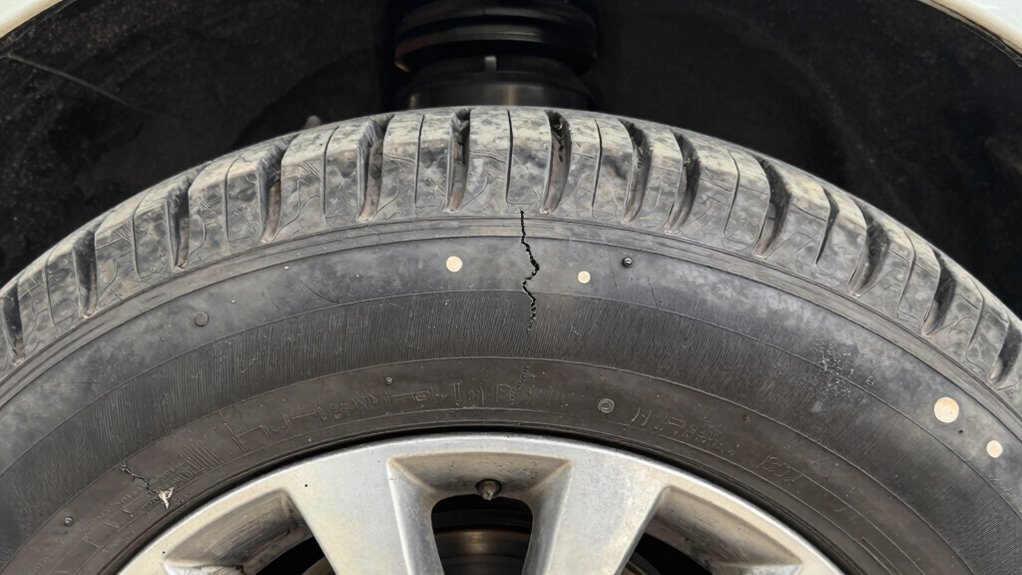

To spot tire wear before it ruins your ride, regularly check for uneven tread patterns, which indicate alignment issues, and look for cracks, bulges, or cuts on the sidewalls that signal structural damage. Pay attention to low tread depth using the penny test or wear indicators. Listen for unusual noises like thumping or squealing, which can reveal internal problems. Staying alert to these signs helps prevent ride quality issues; continue, and you’ll discover how to keep your tires in top shape.

Get bike and ride gear delivered free with Prime
- Fast, free delivery on millions of items
- Prime Video, Amazon Music and more included
- Member-only deals all year
Key Takeaways
- Regularly check tread depth using the penny test or wear indicators to identify early signs of wear.
- Look for uneven or specific wear patterns that indicate alignment or suspension issues.
- Inspect sidewalls for cracks, cuts, bulges, or other structural damage.
- Monitor tire noise, such as thumping or squealing, which signals internal or tread problems.
- Ensure proper tire inflation to prevent uneven wear and maintain optimal ride quality.
Ever wondered how to tell if your tires are wearing out? Recognizing early signs of tire wear can save you from a rough ride, expensive repairs, or even dangerous blowouts. One of the best ways to keep an eye on your tires’ health is by understanding the importance of regular tire rotation and checking tread depth. Tire rotation involves moving your tires from one position to another, ensuring even wear across all four. If you neglect this simple maintenance step, some tires may wear faster than others, leading to uneven contact with the road. This uneven wear not only shortens the lifespan of your tires but also impacts your vehicle’s stability and handling. So, make it a habit to rotate your tires every 5,000 to 8,000 miles, or as recommended in your vehicle’s owner’s manual.
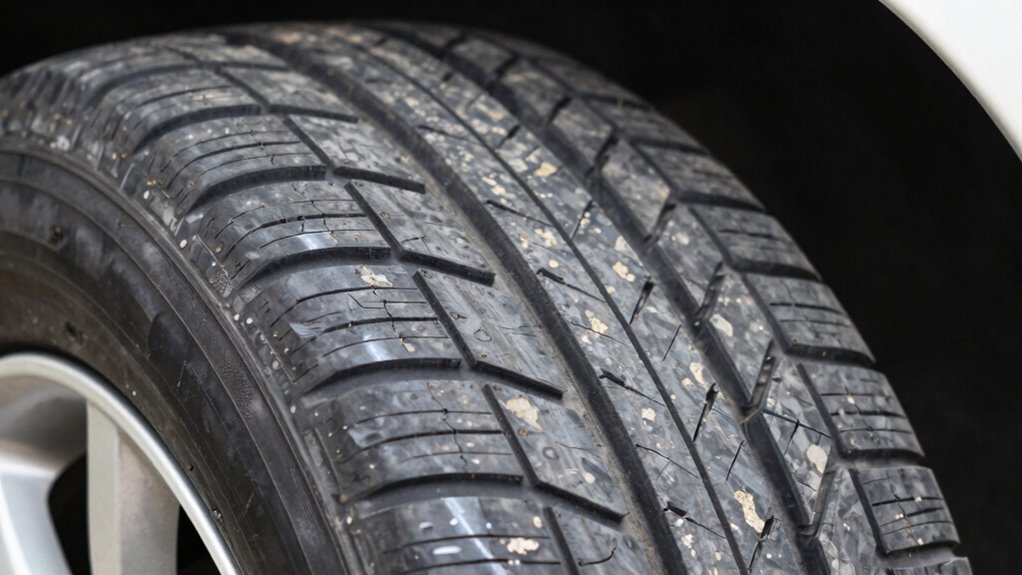
Next, you should regularly assess your tires’ tread depth. Tread depth is vital because it determines how well your tires grip the road, especially in wet or slippery conditions. If the tread wears down too much, your tires won’t be able to effectively channel water away, increasing the risk of hydroplaning. To check the tread depth, you can use a simple penny test: insert a penny into the tread grooves with Lincoln’s head upside down. If you can see the top of Lincoln’s head, your tread is too shallow, and it’s time to replace the tire. Many tires also have tread wear indicators built into the grooves, which become flush with the tread when it’s worn out. Regularly inspecting these indicators can help you catch early signs of tire wear before they become serious issues. Additionally, understanding the tire wear patterns can help you identify underlying mechanical problems early on, such as misalignment or suspension issues. Paying attention to proper inflation is equally essential, as it directly affects tire wear and overall safety. Maintaining correct tire pressure can also prevent premature tire damage, extending the overall lifespan of your tires.
In addition, look for uneven wear patterns across your tires. These patterns can reveal specific problems, such as misalignment, improper inflation, or suspension issues. For example, excessive wear on the inner or outer edges indicates misalignment, while bald spots or smooth areas suggest under-inflation or over-inflation. Pay attention to any cracks, cuts, or bulges on the sidewalls, as these are signs of structural damage that could lead to tire failure. Also, listen for unusual noises while driving, like thumping or squealing, which may indicate uneven tread or internal damage. Regular inspections and understanding tire maintenance can help extend the life of your tires and ensure safer driving conditions.
As an affiliate, we earn on qualifying purchases.
Frequently Asked Questions
How Often Should I Check My Tire Tread for Wear?
You should check your tire tread for wear at least once a month. Regularly inspect the tread depth and look for uneven wear patterns, which could indicate the need for a tire rotation. Use a tread depth gauge or the penny test to verify your tires maintain proper grip. Staying attentive helps you catch early signs of wear, prolonging tire life and ensuring a smooth, safe ride.
Are There Specific Signs of Uneven Tire Wear?
Yes, you’ll notice signs of uneven tire wear like cupping, feathering, or one side wearing faster than the other. These issues often stem from improper tire rotation or wheel alignment problems. Regularly rotating your tires helps guarantee even wear, while checking and correcting wheel alignment prevents uneven patterns. Stay attentive to these signs to maintain smooth ride quality and extend your tires’ lifespan.
Can Tire Wear Be Prevented With Regular Maintenance?
Regular maintenance can indeed prevent excessive tire wear. You might think it’s unnecessary, but tire rotation guarantees even wear, extending your tires’ lifespan. Also, a brake inspection helps catch issues like sticking calipers or uneven braking that can cause uneven tire wear. Staying proactive with these checks keeps your ride smooth, saves money, and enhances safety, proving consistent maintenance is a smart investment in your vehicle’s health.
What Tools Are Best for Inspecting Tire Tread at Home?
You can inspect your tire tread at home effectively with simple tools like a tread depth gauge or a penny. Use a visual inspection to look for uneven wear, cracks, or embedded objects. Check the tread depth regularly, ensuring it stays above the legal minimum (usually 2/32 inch). These tools and techniques help you catch early signs of wear, maintaining safe, smooth rides and preventing more serious tire issues.
How Does Tire Pressure Affect Wear Patterns?
A stitch in time saves nine, so maintaining proper tire pressure is essential. When tire pressure is too low or too high, it causes uneven wear patterns, leading to premature tire wear and compromised ride quality. Correct tire pressure guarantees even contact with the road, promoting uniform wear patterns. Regularly check and adjust your tire pressure to extend tire life and enjoy a smoother, safer ride.
As an affiliate, we earn on qualifying purchases.
Conclusion
Think of your tires as the heartbeat of your car—if they’re worn out, your ride suffers. Spotting early signs of wear is like catching a small crack in a mirror before it shatters your reflection. Stay vigilant, check tread depths, and look for uneven wear patterns. By doing so, you’re nurturing the lifeblood of your vehicle, ensuring smooth journeys ahead. Keep your tires healthy, and your driving will always stay on the right path.
As an affiliate, we earn on qualifying purchases.
As an affiliate, we earn on qualifying purchases.
Halloween Picks
halloween
As an affiliate, we earn on qualifying purchases.