
TL;DR
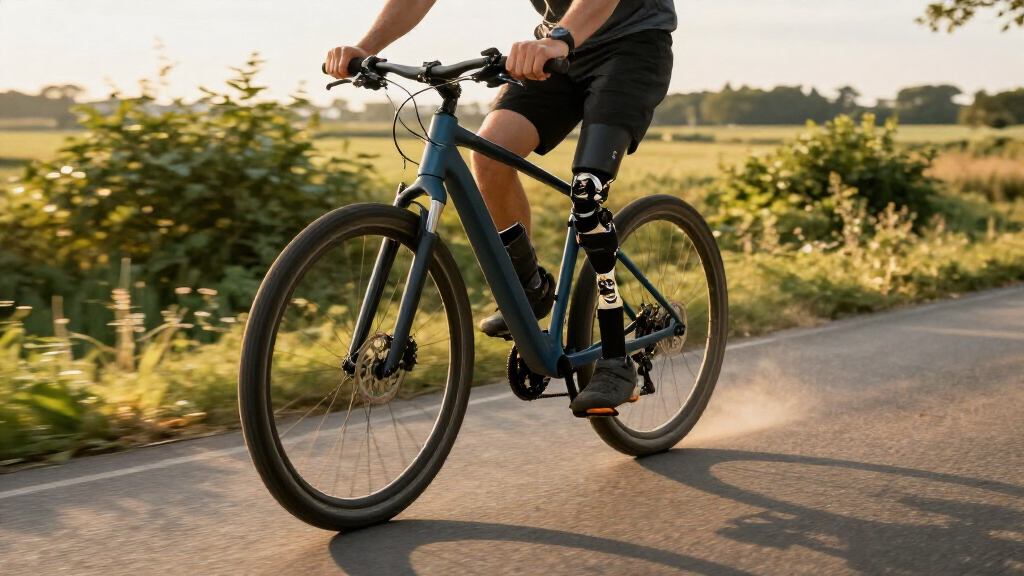
Former British para-cycling champion Tom Staniford had both legs amputated below the knee in 2025 because complications linked to his rare MDP syndrome had made walking painful and his feet prone to infection. He says the operations went to plan and has since received prosthetics, begun learning to walk and attempted a Parkrun; a return to racing remains uncertain.
Former British para-cycling champion Tom Staniford had both legs amputated below the knee in 2025 after complications from a rare genetic condition left his feet deteriorating and walking increasingly difficult. In an interview with Cycling Weekly, the 37-year-old said both operations went to plan; he has since received prosthetics and started learning to walk again, while whether he can return to racing remains an open question.

Get bike and ride gear delivered free with Prime
- Fast, free delivery on millions of items
- Prime Video, Amazon Music and more included
- Member-only deals all year
Staniford has MDP syndrome, short for mandibular dysplasia with deafness and progeroid features. The condition prevents the body from storing fat beneath the skin and is thought to affect around 20 people worldwide. In Staniford’s case, he told Cycling Weekly, the condition contributed to tight ligaments and tendons, changes to the bones in his legs and feet without protective fat on their soles. His feet had deteriorated and were prone to infection, and he had spent much of the previous three years in a wheelchair.
His first operation, on his right leg, took place on May 21, 2025. He had the same surgery on the left leg five months later. Staniford said clinicians had warned that his rare condition could make healing difficult, and a plastic surgeon was on standby in case an emergency skin graft was needed. He said the surgeons were able to carry out straightforward below-knee amputations without that complication.
After the second surgery, he faced questions about wound healing, learning to use prosthetics and whether he could cycle again. Staniford received both prosthetics in May, seven months after the second operation, and began learning to walk. He also set himself a nine-week goal to complete a local Parkrun, calling the effort “Ouch to 5k.” The report describes him attempting the event in hot weather, but does not establish whether he completed the course.
A New Route Back to Movement
Staniford’s experience shows how an amputation can be considered not only after an accident, but also when a progressive medical condition causes severe pain, infection risk and loss of mobility. For him, the operations followed a period in which walking had become difficult and he had spent substantial time using a wheelchair. He described the decision as a trade-off between grief over losing a leg and the possibility of a better quality of life.
The story also makes clear that recovery is not the same as returning to sport. Staniford has started walking with prosthetics, but the report does not confirm that he has resumed racing or establish what level of cycling will be possible. His case involved a rare condition, so the reported surgical outcome should not be treated as a prediction for other patients. Decisions about amputation and rehabilitation depend on individual medical circumstances.
Popular right now

Apple AirPods Pro 3 Wireless Earbuds

Breville Barista Pro Espresso Machine with Built-In Grinder, Brushed Stainless Steel

Dyson V9 Motorbar Cordless Vacuum
As an affiliate, we earn on qualifying purchases.
Why Staniford Chose Surgery
MDP syndrome is an extremely rare genetic condition caused by a single gene mutation, according to the source report. It was first described in research in 2010, and published research remains limited. The report says the condition is not known to affect life expectancy. Its effects on Staniford’s legs, however, had become a direct obstacle to daily movement and cycling.
Before the first operation, Staniford took part in a symbolic “Goodbye Legs Ride” in May 2025, attended by about 50 people. The ride raised £16,000 for four charities, the report says. He had also told Cycling Weekly that he had made peace with the possibility of being unable to cycle much after surgery. His decision came despite doctors warning that healing could be difficult and that the amputations could not be reversed.
“There’s an element of shock.”
— Tom Staniford, speaking to Cycling Weekly about seeing his leg after surgery
Healing, Prosthetics and Racing
The source report does not provide a full account of Staniford’s longer-term healing, how much support he needs to walk or whether he completed the Parkrun. It also does not confirm when, or whether, he will return to competitive cycling. Although he has begun using prosthetics, the report presents racing as a question rather than a confirmed goal or outcome.
The details of his individual medical care should not be read as general advice. The report does not offer clinical guidance on amputation for people with MDP syndrome, and the condition’s rarity means the evidence base is limited.
His Rehabilitation and Cycling Goals
The immediate next stage described in the report is continued rehabilitation with prosthetics, following the start of walking practice in May. Staniford’s Parkrun project set a personal milestone for building up to a 5-kilometre event, but the article does not confirm the result. Further progress will help clarify how his mobility develops and what cycling may be possible.
No timetable for a return to racing is given. Staniford’s own account leaves that outcome open: the operations addressed severe problems with his legs and feet, while recovery and adapting to prosthetics remain ongoing.
Key Questions
Why did Tom Staniford have both legs amputated?
Staniford told Cycling Weekly that complications associated with MDP syndrome had left his feet deteriorated and prone to infection, with tight ligaments and tendons and changes to the bones in his legs. He had also spent much of the previous three years in a wheelchair.
When did Staniford have the operations?
His right leg was amputated below the knee on May 21, 2025. He had the same operation on his left leg five months later, according to the report.
Has he returned to competitive cycling?
The report does not confirm a return to racing. Staniford has received prosthetics and begun learning to walk, but his longer-term cycling prospects remain uncertain.
What is MDP syndrome?
MDP stands for mandibular dysplasia with deafness and progeroid features. The report describes it as a very rare genetic condition that prevents the body from storing fat beneath the skin and says it is thought to affect around 20 people worldwide.
Source: cyclingweekly.com