
TL;DR

Get bike and ride gear delivered free with Prime
- Fast, free delivery on millions of items
- Prime Video, Amazon Music and more included
- Member-only deals all year
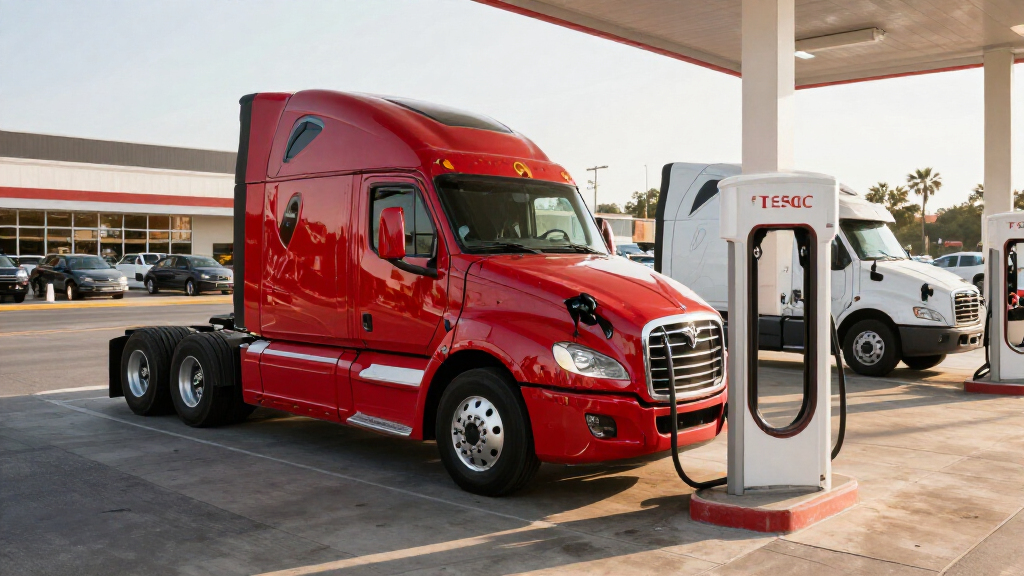
Pilot has switched on six 1.2-megawatt Megacharger stalls at a truck stop in Ellabell, Georgia, and a Flying J location in Tulare, California, came online the following day. The sites bring Tesla Semi charging to established truck stops beyond California, but the chargers currently serve Tesla trucks only and the broader network remains small.
Pilot has opened its first 1.2-megawatt Megachargers for Tesla Semis at a truck stop in Ellabell, Georgia, while a Flying J site in Tulare, California, came online the next day. The openings place Tesla’s high-power truck chargers at mainstream truck stops and mark the Semi’s first public charging access outside California, though the network is still limited and the stalls currently work only with Tesla trucks.
The Ellabell location has six charging stalls, each rated at 1.2 megawatts, according to The Drive’s report. The Tulare Flying J site followed a day later. Sites in Fort Stockton, Texas, and North Las Vegas are next, while Pilot has 12 additional Megacharger locations under construction.
Tesla says the chargers can restore 60% of a Semi’s charge in 30 minutes. That duration matches the rest break required under federal rules after eight hours of driving. The charging claim comes from Tesla; the report does not provide independent testing or details about the conditions needed to reach that rate.
The installations add to a small customer-facing network. Electrek counted four public-facing sites and 26 stalls after Ellabell opened. Before this rollout, Semi charging was concentrated at Tesla facilities, a fleet depot near the Port of Long Beach and a handful of California sites. A TA truck stop in Ontario, California, has offered Semi charging since March, but its chargers top out at 750 kilowatts.
Truck-Stop Access Expands Semi Routes
Adding chargers at established truck stops could make electric trucks more practical for fleets whose operations depend on familiar highway routes. A charging point at a location already used by truck drivers may reduce the need to build a separate charging stop into a route, although the report does not say how many routes can now be served or whether the new sites are spaced closely enough for long-distance trips.
The rollout addresses one side of electric trucking’s vehicle-and-charger dependency: fleet managers may hesitate to buy trucks without reliable charging on their routes, while charging operators need vehicles to make their investments worthwhile. Pilot’s footprint of more than 900 locations across the United States and Canada gives the partnership room to grow. But the current sites alone do not establish a broad, nationwide charging network.
Access is also restricted for now. Although the stalls use the Megawatt Charging System (MCS) connector being adopted by other truck makers, only Tesla Semis can use them at present. That limits the immediate benefit to fleets operating Tesla’s truck and makes future access for competing vehicles a key question.
Popular right now

Dyson Ball Animal 3 Corded Upright Vacuum

Ninja Specialty Coffee Maker CM401, 10-Cup Carafe, Fold-Away Frother, Black

Bose QuietComfort True Wireless Earbuds with Active Noise Cancellation, Black
As an affiliate, we earn on qualifying purchases.
A Small Network With More Sites Planned
Tesla has been building out Semi charging from a limited base. In addition to private or fleet-focused locations, customer-facing charging had been concentrated in California before the Georgia opening. The Ellabell site and a separate eight-stall Megacharger near Atlanta, which opened around the same period, give the truck public charging outside California.
Tesla said it planned about 37 Megacharger sites for 2026, and Semi program lead Dan Priestley has stated a goal of 46 sites by early 2027. As of February, Tesla’s map showed 64 more locations marked “coming soon” across 15 states, including 19 in Texas and 17 in California. Those map listings and targets describe planned expansion, not completed or operating stations.
The Pilot openings were expected in the summer, according to The Drive, making the launch a couple of months later than anticipated. The report says Pilot is the largest truck-stop operator in the United States and also runs Flying J. Its locations could become a substantial part of Tesla’s charging network if the planned sites are completed.
“The 1.2-megawatt stalls can restore 60% of a Semi’s charge in 30 minutes.”
— Tesla
Access and Network Scale Remain Open
When other truck brands can plug in is not clear. The MCS connector is shared with the charging approach of manufacturers including Daimler and Volvo, but compatibility of the connector does not mean the Pilot stalls are currently open to their trucks. Neither Tesla nor Pilot has said when non-Tesla vehicles may be allowed to charge.
The number of Semis currently operating on public routes is also not specified in the report. That leaves unanswered how heavily the new stations will be used and whether their locations will meet the needs of fleets running longer routes. Planned sites on Tesla’s map could change, and the source does not confirm opening dates for the Texas or Nevada locations.
More Pilot Sites Await Opening
The next reported Pilot Megacharger locations are in Fort Stockton and North Las Vegas. Pilot has 12 more sites under construction, while Tesla’s stated network targets point to continued additions through 2026 and into early 2027. Those figures are plans; the pace and final number of operating locations remain to be seen.
Fleet operators will also be watching for clarity on cross-brand access, site spacing and real-world charging performance. Until Tesla and Pilot announce access rules and further openings, the current development is a limited but tangible expansion of charging options for Tesla Semi fleets.
Key Questions
Where are the new Tesla Semi chargers?
The first reported Pilot site is in Ellabell, Georgia, with six stalls. A Flying J location in Tulare, California, came online the following day.
How powerful are the Pilot Megachargers?
Each stall is rated at 1.2 megawatts. Tesla says a Semi can regain 60% of its charge in 30 minutes, though the report does not cite independent testing of that figure.
Can trucks from other manufacturers use the chargers?
Not at present. The stalls use the MCS connector, but the report says only Tesla vehicles can plug in now. Tesla Semi program lead Dan Priestley has said other trucks may be able to use them later; no date has been announced.
Where are more Pilot charging sites planned?
The next reported locations are in Fort Stockton, Texas, and North Las Vegas. Pilot also has 12 more Megacharger sites under construction, but opening dates were not provided for those locations.
Source: thedrive.com