TL;DR

Get bike and ride gear delivered free with Prime
- Fast, free delivery on millions of items
- Prime Video, Amazon Music and more included
- Member-only deals all year
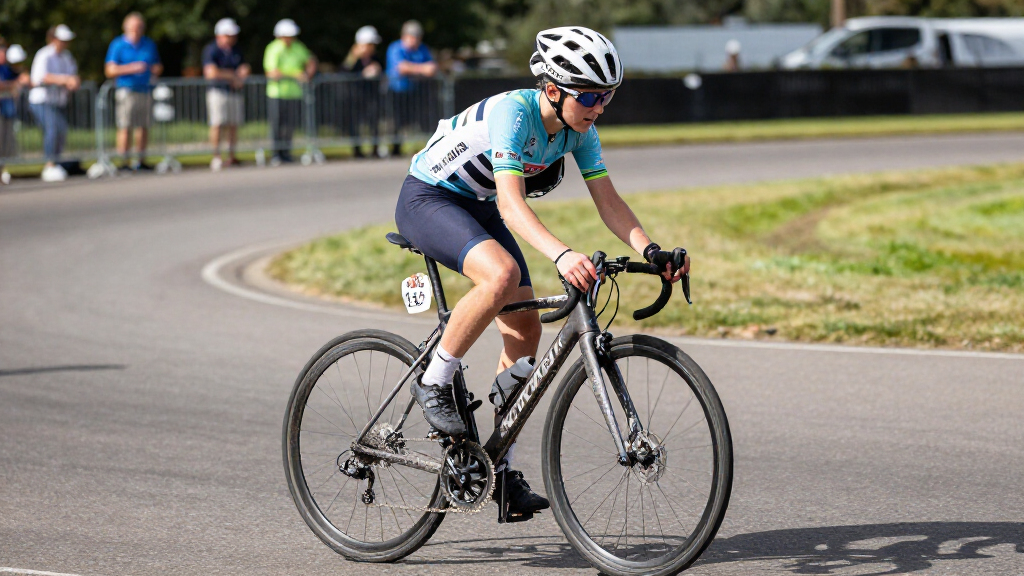
Sixteen-year-old Ezra Bateman won the junior boys’ title and recorded the fastest time of the day at the British National Hill Climb Championships, riding a Van Rysel RCR-R Pro. His father told Cycling Weekly the team-issue bike weighed 6.9kg and used a largely stock SRAM Force AXS and Swiss Side wheel setup.
Sixteen-year-old Ezra Bateman won the junior boys’ title and recorded the fastest time of the day at the British National Hill Climb Championships, riding a team-issue Van Rysel RCR-R Pro. His time was reported as 14:31:08, fractions of a second ahead of senior men’s champion Ed Laverack and runner-up Andrew Feather, according to Cycling Weekly.
The championships took place on Porlock Toll Road in Somerset, a 6.6-kilometre climb averaging 5.5% gradient. Unlike steeper hill-climb courses where riders commonly focus on reducing weight, the longer, less severe ascent placed more emphasis on aerodynamics. A strong headwind in the closing kilometres also shaped equipment choices, with some competitors opting for time trial or aero bikes and deep-section wheels.
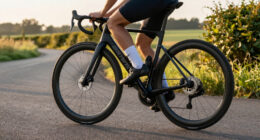
Bateman’s father, Jon, told Cycling Weekly that the bike weighed 6.9kg. The report described it as close to a stock build, with bottle cages removed. Bateman used a SRAM Force AXS groupset with 54/41-tooth chainrings and an integrated power meter, rather than the single-chainring setups some rivals chose to save weight and gain a small aerodynamic benefit.
At the rear, the bike appeared to have a 10-33-tooth cassette, though Cycling Weekly qualified that identification as probable. The wheels were 50mm-deep Swiss Side Hadron rims fitted with Continental GP5000 S TR tyres. The report said the wheel depth could reduce drag at Bateman’s average speed of about 27 km/h. Wet conditions and storm debris on the road were factors in the tyre choice; the lower-rolling-resistance GP5000 TT TR was not used.
A Fast Time on a Near-Stock Bike
Bateman’s result puts the attention on both an emerging junior rider and the practical equipment choices behind a standout performance. His 6.9kg bike was light, but the setup was not a stripped-down, single-chainring build designed solely around saving grams. The combination of standard-sized chainrings, deep-section wheels and road tyres reflected the particular demands of Porlock’s longer climb and its windy final kilometres.
The result also shows why bike specifications at hill-climb events are not simply a contest in minimum weight. Riders and teams must weigh climbing efficiency against aerodynamic drag, gearing, road conditions and control. Bateman’s time does not establish that one configuration is best for every course; it offers a specific example of how a young rider and his team approached this route.
For readers following British road racing, the performance adds to Bateman’s reported season of strong climbing results. It also gives a concrete snapshot of the equipment used by a junior champion competing alongside senior specialists. The bike details are useful, but they do not explain the result on their own: the source gives no verified power figures, and Bateman declined to share his data.
Popular right now

Bose QuietComfort True Wireless Earbuds with Active Noise Cancellation, Black

Vitamix Propel Series 510 Professional-Grade Blender, 3 Programs, Black

De'Longhi Rivelia Automatic Espresso Machine with Milk Frother – White
As an affiliate, we earn on qualifying purchases.
Porlock’s Course Shaped the Setup
British national hill climbs often reward a high power-to-weight ratio, encouraging competitors to remove components or select lighter equipment. Cycling Weekly reported that Porlock Toll Road differed from the steeper courses more commonly associated with the discipline: its 6.6km length and 5.5% average gradient made aerodynamics more relevant than they might be on a short, sharply pitched ascent.
That course profile, together with the headwind near the finish, helps explain the presence of aero bikes and deep wheels. Bateman’s own 50mm rims were not an unusual choice for those conditions, while his tyre selection reflected a wet, debris-strewn road. The source says he averaged about 27 km/h, but does not provide a full equipment comparison or measured aerodynamic data.
The result followed other reported performances in Bateman’s season. Cycling Weekly said he came within seconds of beating Laverack on Snake Pass and matched Tom Bell’s 2021 course record on Prospect Hill. The Decathlon CMA CGM U19 rider also raced at Liège-Bastogne-Liège during his road season. These details provide context for his championship result without determining how he would perform on other courses.
“The SRAM Force AXS build weighs 6.9kg.”
— Jon Bateman, Ezra Bateman’s father, as quoted by Cycling Weekly
Power Figures and Exact Parts
Bateman’s power data has not been disclosed in the cited reporting, so it is not possible to assess his output or compare it directly with other riders. Cycling Weekly said he declined to provide the figures in an interview with Monument HQ and suggested, without confirmation, that team instructions may have been involved.
Some component details are also not certain. The cassette was identified as probably a 10-33T, and the source’s description of the bike as close to stock does not provide a full parts inventory or independent weight measurement. The report does not give a precise event date, full timing records for all competitors, or the exact time gap between Bateman and the senior riders beyond saying it was a fraction of a second.
The equipment report is a description of the photographed race bike and information supplied by Bateman’s father, not a controlled test of the bike’s performance. It does not establish how much any particular component contributed to the winning time.
Results and Rider Progression
The immediate next reference point is the official championship result and timing record, which would confirm the exact time format and gaps between the leading riders. Cycling Weekly’s report identifies Bateman as the junior winner and fastest rider on the day, but the supplied material does not include a link to a full results table or a further event announcement.
Bateman’s future race schedule and whether Van Rysel will replace the RCR-R Pro with a newer model are not specified. Cycling Weekly noted that the current bike could soon be superseded by a more aerodynamic-looking prototype ridden by Paul Seixas at the Tour de France; that was the publication’s expectation, not a confirmed launch or replacement announcement. Further reporting could clarify Bateman’s upcoming races, the bike’s exact specification and whether he later releases his power data.
Key Questions
What bike did Ezra Bateman ride?
He rode a team-issue Van Rysel RCR-R Pro, described by Cycling Weekly as the brand’s lightweight climbing bike at the time of the report.
How heavy was Bateman’s bike?
His father, Jon Bateman, told Cycling Weekly the SRAM Force AXS build weighed 6.9kg. The report said the bike was close to stock, apart from the removal of bottle cages.
What was Bateman’s time at the championships?
Cycling Weekly reported his time as 14:31:08, the fastest of the day and fractions of a second quicker than senior men’s champion Ed Laverack and runner-up Andrew Feather.
Why did the course make aerodynamics relevant?
Porlock Toll Road was a 6.6km climb averaging 5.5%, less steep than many hill-climb courses. A strong headwind near the finish also encouraged some riders to use aero bikes and deep-section wheels.
Did Bateman share his power figures?
No. Cycling Weekly said he declined to disclose his power data in a post-race interview with Monument HQ. The reason was not confirmed.
Source: cyclingweekly.com