
If your headlights flicker or your engine cranks slowly, your battery might be failing. Unusual electrical issues, dashboard warning lights, or frequent jump-starts are also signs you should check your battery. Corrosion, swelling, or strange odors at the terminals indicate damage that could turn unsafe. An aging battery with little maintenance can pose safety risks. Keep an eye out for these signs—continue on to learn how to address them before it’s too late.
Key Takeaways
- Dim or flickering headlights indicate the battery is struggling to supply consistent power.
- Corrosion, swelling, or damage on terminals signal potential battery failure or safety hazards.
- Dashboard warning lights related to the battery or charging system warn of impending issues.
- Difficulty starting the engine or slow cranking points to a weakening or failing battery.
- Frequent jump-starts and unusual odors suggest the battery may be leaking or overheating.
Dim or Flickering Headlights

Dim or flickering headlights often indicate your car’s battery is struggling to supply consistent power. This issue can signal that your battery’s lifespan is nearing its end or that there’s a problem within your electrical system. When the battery weakens, it can’t provide steady voltage, causing headlights to dim or flicker as the electrical demand fluctuates. Over time, a failing battery may not hold a charge properly, putting extra strain on other electrical components. Recognizing battery performance issues early can prevent more serious problems, including complete electrical failure. Regularly checking your battery’s condition and ensuring your electrical system functions correctly can help prevent unexpected breakdowns. Understanding electrical system maintenance and how it impacts your vehicle’s performance is also crucial. Addressing these warning signs early keeps your vehicle running smoothly and extends your battery’s lifespan. Additionally, staying aware of signs of electrical issues can help you identify potential problems before they become costly repairs. Properly diagnosing battery health can save you time and money in the long run.
Slow Engine Crank or Difficulty Starting

Have you noticed your engine turns over slowly or struggles to start? This is often a sign your battery is nearing the end of its lifespan or facing charging problems. When your battery can’t deliver enough power, the starter motor struggles, leading to slow cranks or failed starts. This issue can worsen over time, risking a complete failure. To understand the cause, consider these factors:
| Symptom | Possible Cause |
|---|---|
| Slow engine crank | Diminished battery capacity |
| Difficulty starting | Charging system malfunction |
| Frequent jump-starts | Shortened battery lifespan |
Monitoring these signs helps you catch issues early before they become a safety concern. Additionally, understanding battery maintenance can extend the life of your vehicle’s power source and prevent unexpected breakdowns. Regularly inspecting the alternator’s performance ensures your charging system functions properly, reducing the risk of battery failure. Being aware of signs of battery failure and preventive maintenance allows for timely intervention and safer driving conditions.
Unusual Electrical Issues or Accessories Malfunctioning

When your vehicle’s electrical systems start acting up unexpectedly, it’s often a sign that your battery isn’t providing reliable power. A decrease in battery capacity can cause flickering or dimming headlights, malfunctioning dashboard lights, or erratic behavior of electronic accessories. If you notice your radio cutting out, power windows moving slowly, or other electrical components failing intermittently, it points to the electrical system struggling to draw consistent power. These issues aren’t just annoying—they signal your battery may be weakening and unable to meet the demands of your vehicle’s electrical load. Addressing these symptoms early helps prevent further damage and ensures your battery can sustain the electrical system’s needs, keeping your vehicle running smoothly and safely. Additionally, energy-efficient batteries and charging systems found in modern vehicles can help mitigate these issues and improve overall electrical reliability. Regularly checking your battery’s condition can help identify potential problems before they become serious, especially as advancements in modern electrical systems continue to evolve.
Corrosion or Swelling on the Battery Terminals

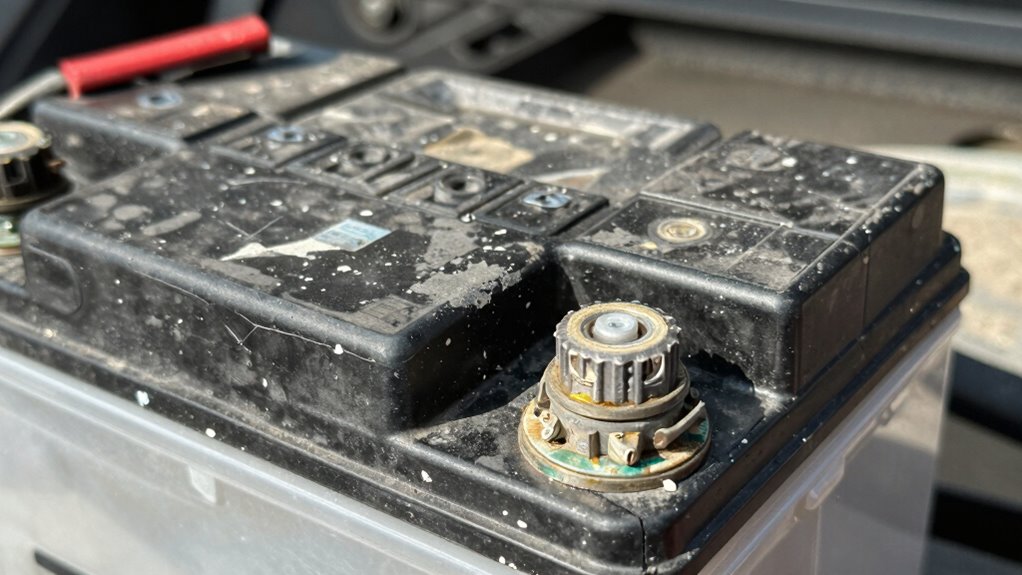
You may notice white or green residue on your battery terminals, indicating corrosion. Swelling or cracking of the terminals suggests possible damage or overheating. Additionally, strange odors emanating from the battery could signal leaks or internal issues that need attention. Recognizing these signs early can prevent further damage and ensure safe operation, especially since Free Floating systems are sensitive to electrical issues. Proper maintenance and periodic inspection can help identify these warning signs before they lead to more serious problems. Regularly inspecting your battery with load‑planning tools can help prevent unexpected failures and maintain safe operation. Being aware of battery deterioration signs allows for timely intervention and reduces the risk of safety hazards, as understanding battery chemistry can help anticipate potential issues before they occur.
Visible White or Green Residue
Visible white or green residue on your battery terminals is a clear sign of corrosion, which can impair electrical flow and reduce battery efficiency. This buildup often appears as a crusty or fuzzy deposit that can hinder proper connection. To address this, perform battery cleaning by carefully removing the corrosion. Use a mixture of baking soda and water or a commercial corrosion remover to neutralize and loosen the deposits. Wear gloves and safety glasses for protection. After corrosion removal, scrub the terminals gently with a wire brush or toothbrush, then rinse with clean water and dry thoroughly. Regularly inspecting and cleaning your battery terminals helps prevent corrosion from worsening and keeps your battery functioning smoothly. Proper battery maintenance can extend your battery’s lifespan and ensure reliable performance. Incorporating routine battery inspection into your maintenance schedule is an effective way to catch issues early and maintain optimal performance. Additionally, understanding battery chemistry can help you choose the right type of battery for your needs and improve its longevity. Being aware of electrochemical reactions in batteries allows you to better understand how corrosion occurs and how to prevent it.
Terminal Deformation or Cracking
Deformation or cracking of your battery terminals indicates serious issues like corrosion or swelling, which can disrupt electrical connections and compromise your battery’s performance. Physical battery cracks or damaged terminals reduce the effectiveness of power transfer, risking sudden failure. Look closely for signs of terminal deformation, such as swelling or uneven surfaces, and cracks that expose internal components. Addressing battery terminal damage early prevents safety hazards and costly repairs. Here’s a quick overview:
| Issue | Cause | Warning Signs |
|---|---|---|
| Corrosion | Acid leaks or moisture buildup | Greenish or white residue |
| Swelling | Overcharging or internal damage | Bulging or deformation |
| Cracks | Physical damage or stress | Visible cracks on terminals |
Stay vigilant to avoid battery failure or safety risks. Regular inspection of your batteries ensures security zone info and prevents unexpected malfunctions.
Unusual Battery Odors
Unusual odors emanating from your battery can be a clear sign of underlying problems like corrosion or swelling at the terminals. You might notice a strong chemical odor, indicating that the battery is venting gases prematurely. This venting can cause buildup of corrosive deposits or swelling, which affects the battery’s performance and safety. If you detect a foul smell or see white, bluish, or greenish corrosion around the terminals, it’s a warning sign you shouldn’t ignore. These odors often result from electrolyte leakage or excessive heat causing chemical reactions. Addressing these issues early can prevent more serious damage or safety hazards. Regular inspection for unusual smells, combined with cleaning and proper maintenance, helps keep your battery functioning safely and efficiently.
Frequent Need for Jump-Starts
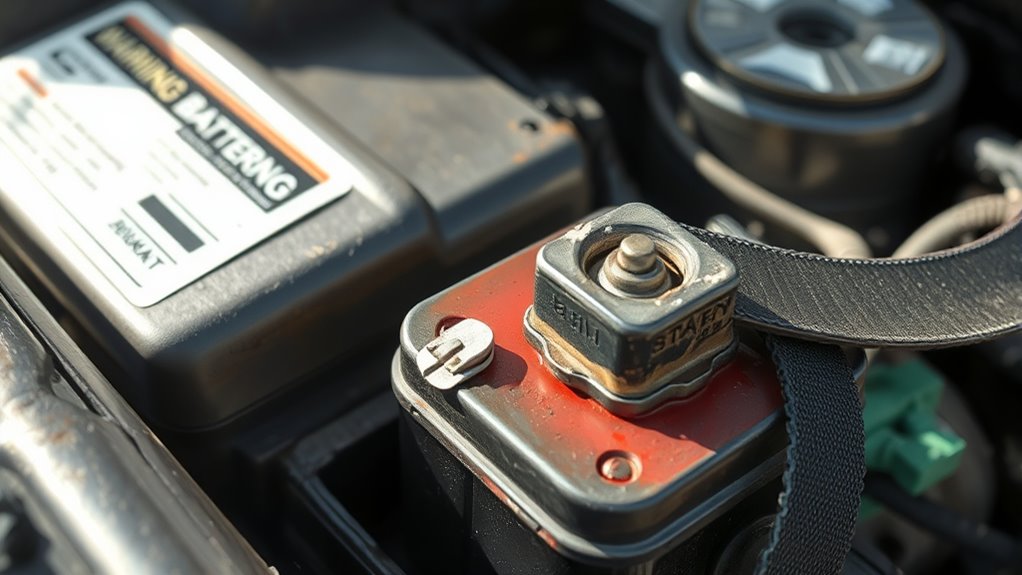
If your car frequently needs jump-starts, it’s a clear sign that your battery may be failing. This issue often indicates that your battery can’t hold a proper charge, which you can confirm with a battery test. Additionally, a weak battery might be a symptom of an underlying problem with your charging system, such as a faulty alternator. When your charging system isn’t functioning correctly, it can’t recharge the battery properly, causing frequent dead batteries. Don’t ignore these signs; repeated jump-starts can strain your vehicle’s electrical components and lead to more serious issues. Regularly testing your battery and inspecting your charging system can prevent unexpected breakdowns and ensure your car starts reliably every time.
Warning Lights on the Dashboard
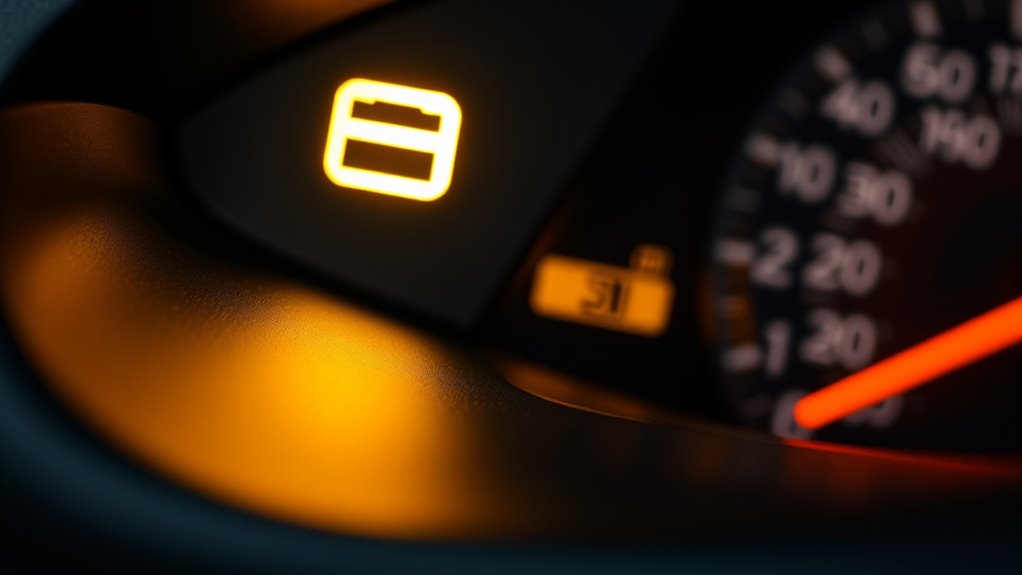
Have you noticed warning lights suddenly illuminating your dashboard? These signals often indicate an issue with your vehicle’s battery capacity or charging system. The battery warning light, usually shaped like a battery icon, signals that your battery isn’t charging properly or its power is diminishing. If this light comes on, it can mean your alternator isn’t functioning correctly, impacting the charging system. Ignoring these warnings can lead to your battery losing its charge quickly, leaving you stranded. Always pay attention to dashboard alerts and get your vehicle checked promptly. A fluctuating or weak battery can cause starting problems or electrical failures, so addressing warning lights early helps prevent safety issues and costly repairs down the line.
Old Age and Lack of Maintenance
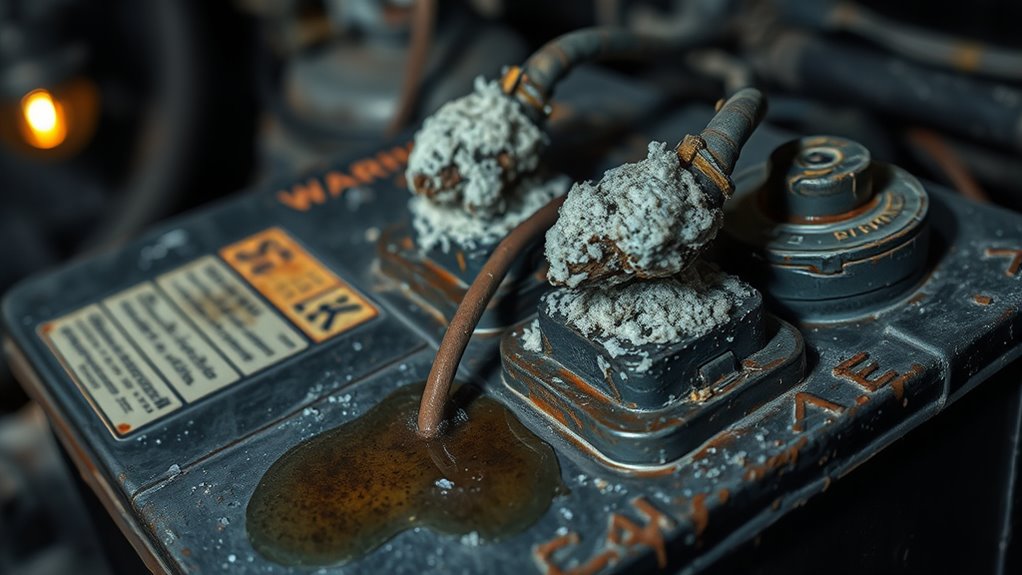
As your vehicle ages, its battery naturally loses capacity and becomes more prone to failure, especially if you neglect regular maintenance. Over time, the battery’s lifespan shortens, increasing the risk of unexpected breakdowns. Without proper care, corrosion and dirt can accumulate, reducing efficiency and lifespan. To avoid these issues, follow essential maintenance tips such as checking terminals, keeping the battery clean, and ensuring it’s securely mounted. Regular inspections can catch early signs of deterioration before failure occurs. Remember, a well-maintained battery lasts longer and performs more reliably. Neglecting maintenance accelerates aging and can lead to safety problems. Staying proactive about battery care helps extend its lifespan and keeps your vehicle running smoothly.
- Check terminals for corrosion
- Keep the battery clean
- Ensure proper secure mounting
- Regularly test battery health
Frequently Asked Questions
How Often Should I Check My Car Battery’s Health?
You should check your car battery’s health every three to six months to guarantee proper battery maintenance. Regular checks help you monitor the charging frequency and catch issues early. If you notice slow engine cranking or dim lights, it’s time for a closer inspection. Keeping tabs on your battery’s condition prevents unexpected breakdowns and extends its lifespan. Don’t wait until it’s too late—make routine checks part of your vehicle’s care.
Can a Weak Battery Cause Engine Performance Issues?
A weak battery can cause engine performance issues because it struggles to provide consistent power. Battery corrosion can worsen this problem by hindering electrical connections, while alternator failure means your battery isn’t charging properly. If your engine stalls, has trouble starting, or runs rough, check for these issues. Addressing corrosion and ensuring the alternator works can restore proper engine function and prevent further damage.
What Safety Precautions Should I Take When Inspecting a Battery?
Prioritize safety by preparing properly before inspecting your battery. Always wear protective gear—gloves, goggles, and long sleeves—to guard against harmful leaks or sparks. Handle the battery carefully, avoiding sudden shocks or drops that could cause spills or damage. Keep a clear workspace free of clutter, and work in a well-ventilated area to prevent inhaling fumes. Taking these precautions guarantees you stay safe while maintaining your vehicle’s essential power source.
How Does Temperature Affect My Car Battery’s Lifespan?
Temperature impacts your car battery’s lifespan considerably. Cold weather can cause the electrolyte to thicken, reducing its efficiency and making it harder to start your car. Conversely, high temperatures accelerate battery corrosion, damaging internal components and shortening its service life. To keep your battery healthy, check for corrosion regularly, especially in extreme weather, and consider insulation or a battery warmer in cold climates to extend its lifespan.
When Is the Best Time to Replace My Vehicle’s Battery?
You should replace your vehicle’s battery when you notice signs like frequent starting issues, dim headlights, or corrosion around the terminals. If your charging system isn’t maintaining proper voltage, it strains the battery, leading to deterioration. Regularly check for battery corrosion and guarantee your charging system functions correctly. Replacing your battery proactively helps prevent breakdowns and keeps your vehicle running smoothly, especially before extreme temperatures or increased electrical demands.
Conclusion
Pay attention to these signs, just like a gardener notices when a plant needs care before it wilts. Addressing battery issues early keeps your car running smoothly and prevents safety risks. Don’t wait until your battery leaves you stranded; a small check now can save you from bigger problems later. Stay vigilant, because a healthy battery is the heartbeat of a reliable vehicle—keeping you moving safely and confidently every day.