
When charging multiple batteries at home, you often overload circuits by connecting too many devices to a single outlet or power strip, risking tripped breakers or fires. Ignoring your circuit’s capacity or using inadequate protection can lead to overheating and damage. To keep safe, spread out your chargers across multiple outlets, use dedicated circuits for high-current setups, and install proper circuit protection devices. If you keep these mistakes in mind, you’ll discover how to prevent overloads and protect your home.

Get bike and ride gear delivered free — and shop member deals
- Fast, free delivery on millions of items
- Access to Prime Big Deal Days deals on October 6–7
- Prime Video, Amazon Music and more included
Key Takeaways
- Connecting multiple chargers to a single outlet or power strip can overload circuits and cause trips or fires.
- Failing to assess circuit capacity before charging multiple batteries risks exceeding load limits.
- Ignoring proper circuit protection devices like breakers increases the chance of damage and safety hazards.
- Using incompatible chargers or charging batteries at high rates can generate excessive heat and overload wiring.
- Not distributing charging across multiple outlets or consulting an electrician may lead to persistent circuit overloads.
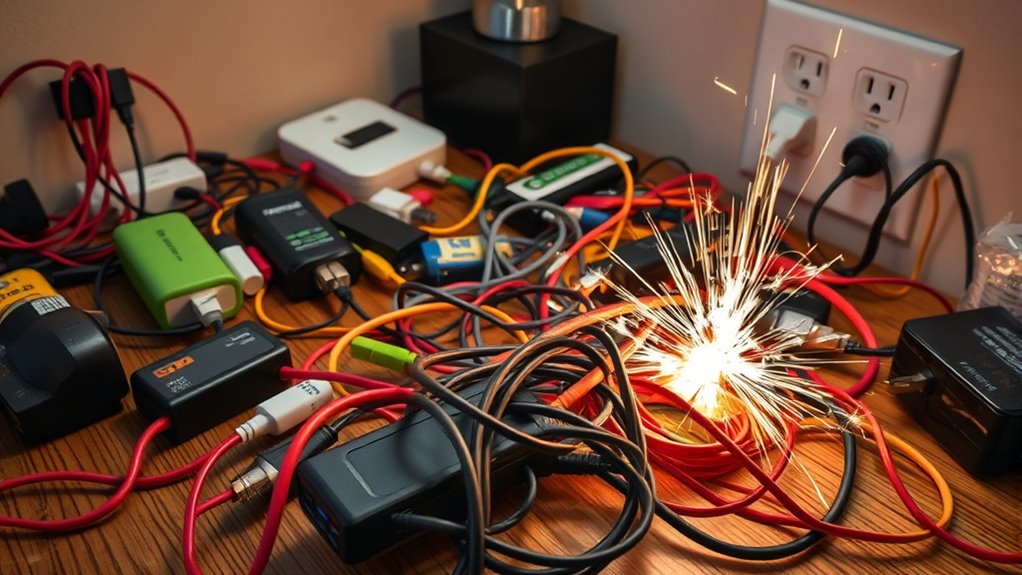
Have you ever plugged in your device only to find the circuit trips or the charger gets unusually hot? If so, you’re not alone. Many people overlook the significance of proper battery management and circuit protection when charging multiple batteries at home. Overloading circuits is a common mistake that can lead to blown fuses, damaged devices, or even electrical fires. The key is understanding how to safely manage your charging setup to prevent these hazards.
Overloading circuits during battery charging can cause fires and damage—manage your setup safely to protect your home.
When you’re charging multiple batteries simultaneously, it’s tempting to connect everything to a single outlet or power strip. However, this can easily overload your circuit, especially if your devices draw high current. Your first step should be to evaluate your power capacity and avoid exceeding the circuit’s rated load. Using a dedicated circuit or spreading out your charging across multiple outlets helps maintain a safe load and prevents trips. Proper circuit protection devices like circuit breakers or surge protectors are essential—they act as safeguards that shut off power when currents exceed safe levels, preventing damage or fire hazards.
Another critical aspect is battery management. If you ignore the battery’s specifications or use incompatible chargers, you risk overloading the circuit or damaging the batteries. Always use chargers designed for your batteries and stick to recommended charging rates. Overcharging or fast charging multiple batteries at once can cause excessive heat, putting stress on your electrical system and increasing the risk of circuit overload. Monitoring your charging setup and avoiding overuse of power strips with multiple devices plugged in also helps keep everything within safe limits.
When setting up your home charging station, consider investing in smart chargers or multi-battery chargers with built-in protections. These devices often come with features like automatic shutoff, temperature monitoring, and circuit protection, which help prevent overloads. Also, keep an eye on the temperature of your chargers and batteries—they shouldn’t feel hot to touch. If they do, it’s a sign you need to disconnect and reassess your setup.
Finally, know your limits. If you’re regularly charging several batteries, it might be worth consulting an electrician to verify your circuits can handle the load. Proper battery management combined with effective circuit protection isn’t just about convenience; it’s about safety. Overloading circuits can be dangerous, and taking steps to prevent it protects your home and your devices. Understanding these principles, including the importance of home electrical systems, will help you avoid unnecessary trips to the breaker box and extend the lifespan of your batteries and chargers.
multi-battery smart charger with circuit protection
As an affiliate, we earn on qualifying purchases.
As an affiliate, we earn on qualifying purchases.
Frequently Asked Questions
Can Using Different Battery Types Cause Circuit Overloads?
Yes, using different battery types can cause circuit overloads. When batteries aren’t compatible regarding battery compatibility and charging voltage, the charger may deliver uneven power, leading to overloads. Mixing batteries with varying capacities or chemistries can strain your circuit, potentially damaging components or tripping circuit breakers. Always guarantee your batteries have matching specifications and proper charging voltage to prevent overloads and protect your home setup.
How Do Temperature Changes Affect Circuit Safety When Charging Multiple Batteries?
Did you know that temperature effects can diminish circuit safety by up to 50%? When charging multiple batteries, temperature fluctuations can cause overheating or thermal runaway, increasing the risk of circuit overloads. High temperatures make components less efficient and more prone to failure, while cold temperatures can hinder proper charging. Always monitor ambient and battery temperatures, and guarantee your setup includes adequate cooling to maintain circuit safety.
Are There Specific Circuit Breakers for Multi-Battery Charging Setups?
Yes, there are specific circuit breaker selection options for multi-battery charging setups. You should choose a breaker rated for your wiring configuration and the total current load. Proper wiring configuration guarantees safety and prevents overloads. Always match your circuit breaker’s amperage with your system’s requirements, and consider consulting a professional to ensure your setup complies with electrical codes, avoiding potential hazards when charging multiple batteries simultaneously.
What Signs Indicate a Circuit Is Overloaded During Charging?
You’ll notice a circuit is overloaded during charging if you experience voltage fluctuations or frequent circuit tripping. These signs indicate the circuit can’t handle the combined power load. When multiple batteries charge simultaneously, the increased current may cause the breaker to trip to prevent damage. Keep an eye on these warning signs, and consider redistributing the load or upgrading your circuit to avoid overloads.
How Long Should I Wait Between Charging Multiple Batteries?
Like a careful conductor, you should wait at least 1-2 hours between charging multiple batteries, depending on their capacity and number of charging cycles. This pause allows batteries to cool and prevents overloads, mirroring the patience needed in a symphony. Rushing can lead to overheating or damage, so listen to your batteries’ needs and give them enough time to recover before the next charge, ensuring longevity and safety.
home circuit overload protection devices
As an affiliate, we earn on qualifying purchases.
As an affiliate, we earn on qualifying purchases.
Conclusion
If you keep charging multiple batteries on the same circuit, you’re risking a disaster that could blow your entire home’s electrical system. Imagine sparks flying, circuit breakers tripping nonstop, and your home turning into a blackout zone overnight. Don’t let a simple mistake turn into a catastrophe—spread out your charging, upgrade your circuits, and stay safe. Otherwise, you might wake up to a house that’s more chaos than comfort!
dedicated circuit breaker for battery charging
As an affiliate, we earn on qualifying purchases.
As an affiliate, we earn on qualifying purchases.
surge protector for multiple chargers
As an affiliate, we earn on qualifying purchases.
As an affiliate, we earn on qualifying purchases.
Fall Picks
fall essentials
As an affiliate, we earn on qualifying purchases.