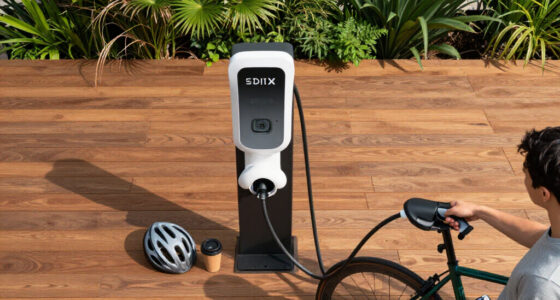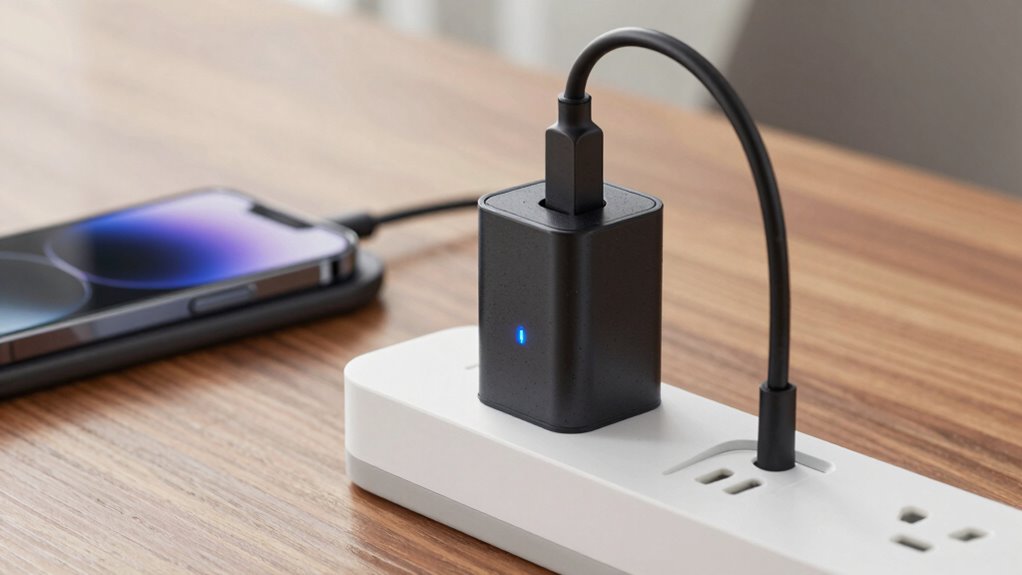

As a daily commuter, choosing between a fast or standard charger depends on your priorities. Fast chargers quickly top up your device, saving time during busy mornings, but they can generate heat that may slowly impact your battery’s lifespan. Standard chargers charge more gradually, helping preserve your battery’s health over time. Your decision hinges on balancing convenience with long-term device life—stay with us to discover tips on making the best choice for your routine.

Get bike and ride gear delivered free with Prime
- Fast, free delivery on millions of items
- Prime Video, Amazon Music and more included
- Member-only deals all year
Key Takeaways
- Fast chargers reduce charging time but may generate more heat, potentially impacting long-term battery health.
- Standard chargers charge slowly, helping preserve battery lifespan through less heat and chemical stress.
- For daily commuting, fast chargers are convenient for quick top-ups, while standard chargers suit overnight, long-term use.
- Using reputable, certified chargers ensures safety, efficiency, and minimizes potential damage regardless of charging speed.
- Balancing convenience and sustainability involves choosing chargers based on your routine and prioritizing long-term battery health.
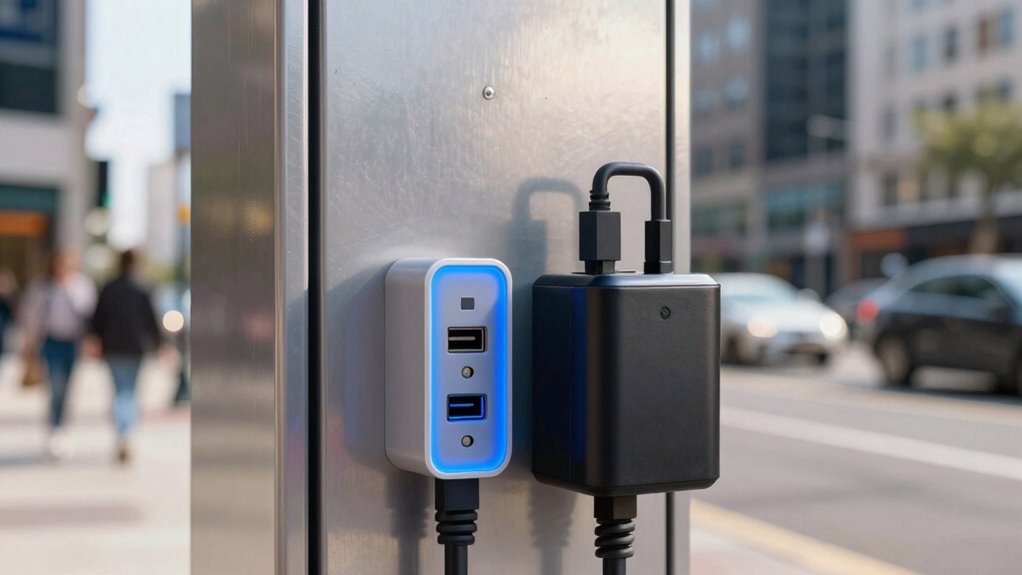
When choosing a charger for your device, understanding the difference between a fast charger and a standard charger is essential. This choice directly impacts not only how quickly your device powers up but also how it affects your battery’s overall health over time. If you’re a daily commuter relying heavily on your smartphone or tablet, knowing these differences can help you make smarter decisions that balance convenience and longevity. Fast chargers are designed to deliver higher power levels, significantly reducing the time it takes to reach a full charge. This charging speed can be a game-changer during busy mornings or long commutes when every minute counts. However, the rapid influx of power can generate more heat, which, over time, could impact your battery’s lifespan if not managed properly. On the other hand, standard chargers provide a more gradual charge, often taking longer but offering a gentler process that can help preserve your battery’s health in the long run. If you prioritize preserving your device’s battery lifespan, a standard charger might be a better option, especially if you’re not in a rush and prefer a more sustainable approach.
The trade-off between charging speed and battery lifespan is crucial to understand. Fast charging is convenient, but it’s not without its risks. The increased heat and rapid power transfer can cause minor wear to your battery’s chemical composition, potentially shortening its usable life. Conversely, slower charging methods generate less heat and reduce stress on the battery, helping maintain its capacity over time. As a daily commuter, consider how often you need quick top-ups versus long-term battery health. If you frequently need to recharge quickly between meetings or during busy days, a fast charger may serve you well, but always use quality chargers and cables to minimize potential damage. If you mostly have time to plug in your device overnight, a standard charger might be more suitable, allowing your battery to stay healthier over years of use. Additionally, understanding the battery chemistry involved can help you make more informed choices about charging practices. Knowing how different charging technologies interact with your device’s components can further enhance your understanding of optimal charging habits. It’s also helpful to be aware that charging habits can influence the overall longevity of your device’s battery. Moreover, selecting the right charging method can contribute to more sustainable device usage and reduce electronic waste over time. Furthermore, choosing chargers with built-in thermal management features can mitigate heat buildup during fast charging sessions, helping protect your battery’s health.
Ultimately, the decision hinges on your daily routine and priorities. If speed is more important, a fast charger offers undeniable convenience, but be aware of the potential impact on your battery’s lifespan. If longevity and maintaining optimal battery health matter more to you, sticking with a standard charger is a sensible choice. Regardless of which you pick, always opt for reputable brands and certified chargers to ensure safety and efficiency. Balancing these factors helps you get the most out of your device, whether you need quick power-ups or want to extend your battery’s life for the long haul.
As an affiliate, we earn on qualifying purchases.
Frequently Asked Questions
Do Fast Chargers Harm Battery Longevity Over Time?
Fast chargers can slightly accelerate battery degradation if used excessively because they increase heat and stress during charging. Over time, this can reduce your battery’s lifespan through more frequent charging cycles and potential capacity loss. However, occasional use of fast chargers is unlikely to cause significant harm. To preserve battery longevity, it’s best to reserve fast charging for urgent needs and use standard chargers for regular, everyday top-ups.
Are Fast Chargers Compatible With All Electric Vehicle Models?
Fast chargers aren’t compatible with all electric vehicle models because of differences in charging standards and power compatibility. When you look for a charging station, check if it supports your EV’s specific connector type and power requirements. Some vehicles need special adapters or only work with certain fast chargers. Always verify your car’s compatibility before using a fast charger to avoid damage and guarantee safe, efficient charging.
How Does Charging Speed Affect Overall Energy Efficiency?
Charging speed impacts your energy efficiency by influencing energy consumption and overall charging efficiency. Faster chargers deliver power quickly, but they can increase energy use due to heat loss and reduced charging precision. Slower chargers optimize energy consumption, ensuring more efficient energy transfer. As a daily commuter, you benefit from balancing charging speed with energy efficiency, choosing a method that minimizes energy waste while meeting your schedule needs.
Can Using a Standard Charger Delay Daily Commuting Plans?
Using a standard charger might delay your daily commuting plans if your battery isn’t sufficiently charged, especially during tight schedules. Relying on slow charging can lead to battery overheating if you rush or overuse it, which can damage your vehicle’s health. Limited charging infrastructure in some areas also means you might face longer wait times. To avoid delays, plan ahead and make certain your charging options are reliable and suited for your daily needs.
Are Fast Chargers More Expensive to Install at Home?
Fast chargers are generally more expensive to install than standard chargers due to higher equipment costs and more complex installation challenges. You’ll face a higher initial investment, increased electrical system upgrades, and potential permit requirements. The cost comparison shows fast chargers demand more upfront, but they offer faster charging times. Weigh these factors against your daily needs, and consider whether quicker charges justify the added expenses and installation challenges for your home.
As an affiliate, we earn on qualifying purchases.
Conclusion
Choosing between a fast charger and a standard charger depends on your daily routine. If you’re often on the go and need quick power boosts, a fast charger can save you time—just like Sarah, who charged her phone during her 15-minute coffee break and was back on the road quickly. However, if you prefer gentle, everyday charging and want to prolong your battery’s lifespan, a standard charger might be better. Consider your schedule and needs to make the best choice.
As an affiliate, we earn on qualifying purchases.
As an affiliate, we earn on qualifying purchases.
Halloween Picks
halloween
As an affiliate, we earn on qualifying purchases.