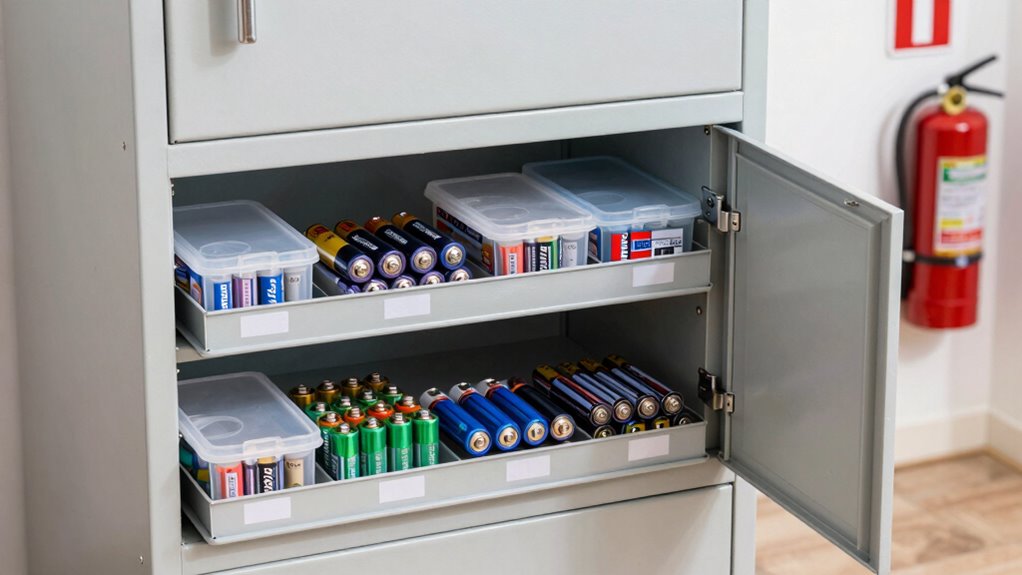

To store batteries safely indoors, keep them in a cool, dry place away from flammable materials and direct sunlight. Avoid stacking or damaging batteries, and regularly inspect them for swelling, corrosion, or discoloration. Use the right fire extinguisher, like CO2 or dry chemical, in case of a fire. Proper disposal at recycling centers is essential for safety. Continuing to learn about these precautions can help you prevent potential fire hazards effectively.

Get bike and ride gear delivered free — and shop member deals
- Fast, free delivery on millions of items
- Access to Prime Big Deal Days deals on October 6–7
- Prime Video, Amazon Music and more included
Key Takeaways
- Store batteries in a cool, dry, well-ventilated area away from flammable materials and direct sunlight.
- Regularly inspect batteries for damage, swelling, or corrosion, and dispose of damaged ones promptly.
- Use appropriate fire extinguishers, such as CO2 or dry chemical, designed for electrical and battery fires.
- Avoid stacking batteries to prevent punctures and damage, and never store near gasoline or paper.
- Educate yourself on battery chemistry and hazards to recognize risks early and prevent fires.
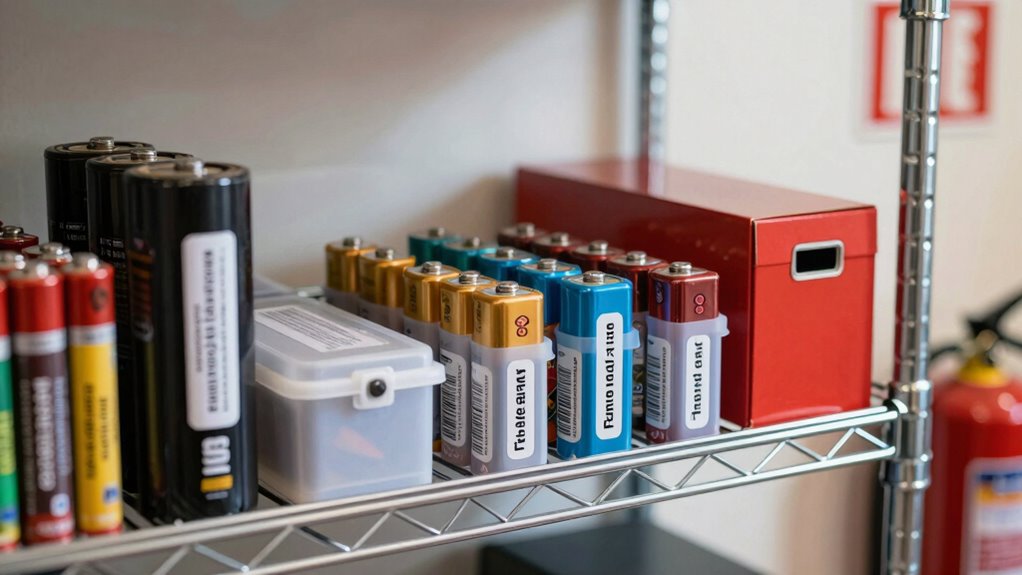
Have you ever considered the fire risks associated with storing batteries indoors? Many people overlook how dangerous improperly stored batteries can be, especially when they’re kept in places like garages, basements, or closets. Batteries, particularly lithium-ion types, can overheat, leak, or even catch fire if damaged or mishandled. To minimize these risks, it’s essential to follow proper storage practices and understand how to respond if a fire starts. One critical step is ensuring you’re aware of fire extinguisher types suitable for battery fires. Unlike standard extinguishers, which might spread the flames or cause a chemical reaction, specialized fire extinguishers for electrical fires use agents like CO2 or dry chemical powders. These extinguishers cut off the oxygen supply and suppress the fire without reacting with the batteries’ chemicals, making them indispensable safety tools in any battery storage area.
In addition to having the right fire extinguisher, you should also prioritize safe battery recycling. Many batteries, especially older or damaged ones, shouldn’t be thrown in the trash or left lying around. Instead, you need to find designated recycling centers that accept batteries. Proper battery recycling prevents potential leaks, reduces the chance of fire, and ensures that hazardous materials are handled safely. When storing batteries at home, keep them in a cool, dry place away from direct sunlight and heat sources. Avoid stacking batteries in a way that could cause punctures or damage to their casing, which can lead to leaks and fires. Also, never store batteries near flammable materials like paper, cloth, or gasoline, as these can ignite more easily if the battery malfunctions or leaks. Educating yourself on battery chemistry can help you recognize potential hazards early and take preventive measures.
It’s equally important to regularly inspect your batteries for signs of damage or swelling. If you notice any corrosion, discoloration, or deformation, safely dispose of the battery by taking it to a recycling center. Never attempt to repair or force a damaged battery back into use, as doing so increases the fire risk. Keeping a well-stocked fire extinguisher nearby is an essential safety measure, but prevention is always better. Educate yourself on the various types of fire extinguishers and their appropriate use, so you’re prepared in case of an emergency. Additionally, understanding chemical reactions that cause batteries to overheat or malfunction can help prevent dangerous situations before they escalate. Maintaining awareness of hazardous materials involved in batteries is critical for safety. By understanding battery recycling procedures, storing batteries properly, and having the right fire extinguisher on hand, you considerably reduce the chances of a dangerous fire occurring indoors. Remember, safety starts with awareness and proactive measures.
fire extinguisher for electrical fires
As an affiliate, we earn on qualifying purchases.
As an affiliate, we earn on qualifying purchases.
Frequently Asked Questions
Can Batteries Be Stored in a Refrigerator or Freezer Safely?
Storing batteries in a refrigerator or freezer isn’t safe due to refrigerator hazards and freezer risks. Extreme cold can cause batteries to leak, rupture, or lose their ability to hold a charge. Condensation from temperature changes can also damage battery components and increase fire hazards. Instead, keep batteries in a cool, dry, and well-ventilated area away from direct sunlight and heat sources for safe storage.
What Are Signs of a Battery Nearing Failure or Potential Fire Risk?
Like a warning light flashing on your dashboard, signs of a battery nearing failure include swelling, leakage, or unusual heat. You might notice a foul smell or discoloration, indicating potential battery failure and increased fire risk. If your battery’s performance drops or it becomes hot to the touch, replace it immediately. Staying alert to these signs helps prevent fire risk and keeps your environment safe.
How Should Expired or Damaged Batteries Be Disposed of Properly?
You should dispose of expired or damaged batteries through battery recycling programs, which safely handle hazardous waste. Never throw them in the trash, as they can leak harmful chemicals or cause fires. Find local collection sites or hazardous waste disposal events. Proper recycling prevents environmental contamination and reduces fire risks, ensuring your safety and the safety of others. Always follow manufacturer or local guidelines for disposing of batteries responsibly.
Are There Specific Storage Guidelines for Lithium-Ion Batteries?
Yes, there are specific storage guidelines for lithium-ion batteries. You should store them in cool, dry places away from direct sunlight, and use designated storage containers that prevent short circuits and contain potential leaks. Keep batteries upright to avoid damage, and avoid storing multiple batteries together unless they’re in individual, non-conductive containers. Following these guidelines helps manage battery chemistry risks and reduces fire hazards.
What Are the Legal Regulations for Indoor Battery Storage?
You need to follow strict legal regulations when storing batteries indoors, especially concerning battery shelf life and storage containers. Authorities require that batteries be kept in fire-resistant storage containers, away from heat or flammable materials. Failing to comply can lead to dangerous situations and hefty fines. Keep a close eye on battery shelf life, and always store batteries in approved containers to guarantee safety and legal adherence. The risk is real—don’t take chances.
battery storage safety containers
As an affiliate, we earn on qualifying purchases.
As an affiliate, we earn on qualifying purchases.
Conclusion
Storing batteries indoors is like walking a tightrope—you need balance, caution, and awareness. When you follow fire safety basics, you’re the steady hand guiding the delicate dance of power and protection. Keep batteries cool, dry, and away from sparks, and you’ll prevent small sparks from igniting a raging fire. Remember, your vigilance is the spark that keeps your home safe—turning potential chaos into calm, one careful step at a time.
rechargeable battery recycling kit
As an affiliate, we earn on qualifying purchases.
As an affiliate, we earn on qualifying purchases.
As an affiliate, we earn on qualifying purchases.
Fall Picks
fall essentials
As an affiliate, we earn on qualifying purchases.