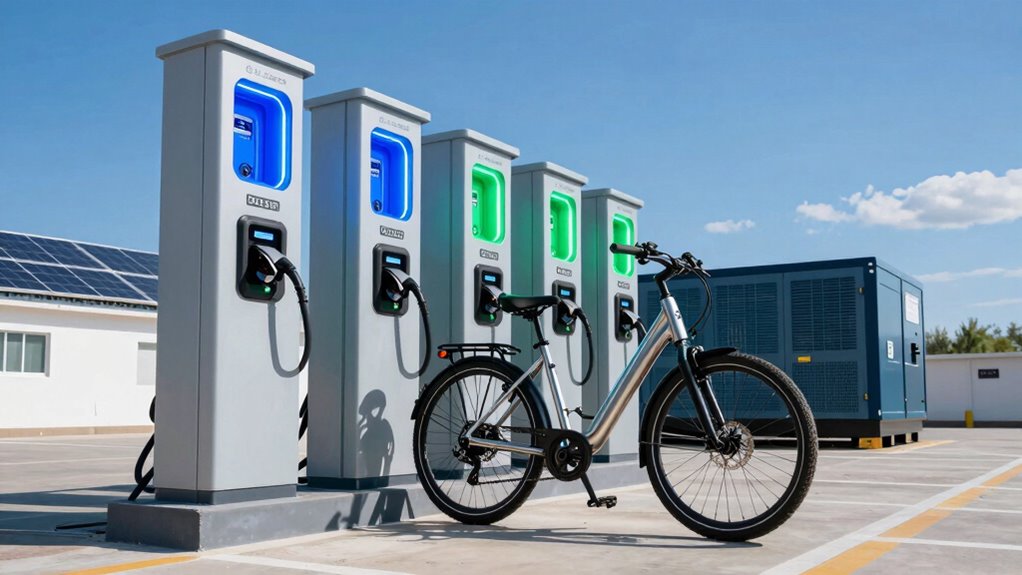

Power stations can give you emergency or portable charging for your e-bike, but they have limits. They can top off smaller batteries or provide some backup power during trips, but they usually can’t fully charge large batteries quickly or match the speed of dedicated chargers. They’re great for short-term needs or remote adventures, but you’ll need proper infrastructure for regular, fast charging. If you want to explore this further, more details await.

Get bike and ride gear delivered free with Prime
- Fast, free delivery on millions of items
- Prime Video, Amazon Music and more included
- Member-only deals all year
Key Takeaways
- Power stations can charge e-bike batteries but are limited by their energy capacity and may require multiple sessions.
- They provide slower, steady charging compared to dedicated wall chargers, making quick recharges impractical.
- Power stations are ideal for emergency, remote, or short-term charging needs, not for regular daily recharging.
- Compatibility of charging ports affects ease of use; not all power stations are universally compatible with e-bike chargers.
- Once depleted, power stations need time to recharge, limiting their ability to support continuous or frequent charging.

As e-bikes become more popular, the need for accessible and reliable charging options grows. Power stations can seem like a convenient solution, but understanding what they can and cannot do for your e-bike’s charging needs is essential. One of the key factors to consider is battery capacity. Power stations generally offer a fixed amount of energy, measured in watt-hours, which determines how many times they can recharge your e-bike or how long they can power your ride. If your e-bike has a large battery capacity, a portable power station might not be sufficient to fully charge it in one go. On the other hand, smaller batteries might be topped off quickly, making power stations an efficient option for short trips or emergencies.
Charging speed is another vital aspect. Power stations typically deliver a steady, sometimes slower, charging rate compared to wall outlets. This means that even if a power station can supply enough energy to charge your e-bike’s battery, it might take considerably longer than plugging into a conventional charger. If you’re in a hurry, relying solely on a power station might not be practical, especially for larger batteries that demand higher charging currents. Some power stations are equipped with fast-charging capabilities, but these are often more expensive and might still not match the rapid charging speeds of dedicated home chargers. Additionally, charging infrastructure plays a significant role in how effectively you can utilize portable power sources for your e-bike needs. It’s also worth noting that the compatibility of your e-bike’s charging port with portable power stations can influence the ease of use.
Despite their benefits, power stations do have limitations. They cannot replace a reliable, high-capacity wall socket for everyday charging, especially if you ride frequently or have a long commute. Their portability makes them ideal for remote adventures, camping trips, or backup power, but they aren’t designed to sustain regular, high-volume charging routines. Additionally, power stations are limited by their own energy storage; once depleted, they need time to recharge themselves, which can be a hassle if you rely on them regularly. The efficiency of converting stored energy into usable power for your e-bike can also vary, affecting overall charging effectiveness. Moreover, the energy capacity of power stations influences how many charges you can get from a single unit, which is an important consideration for planning trips. Furthermore, the cost of a power station can be a deciding factor for many users, especially when choosing between different models and features.
Furthermore, advancements in battery technology could enhance the potential of power stations in the future, making them more adaptable to different e-bike models. In essence, power stations serve as a handy backup or supplementary option rather than a full replacement for traditional charging stations. They’re excellent for extending your rides when no power outlet is available, but they won’t match the convenience or speed of dedicated chargers for daily use. To optimize your e-bike’s performance and longevity, it’s best to understand their capabilities and plan your charging strategy accordingly. This way, you can enjoy riding without worrying about running out of power, whether you’re on the road or exploring remote trails.
portable power station for e-bike charging
As an affiliate, we earn on qualifying purchases.
As an affiliate, we earn on qualifying purchases.
Frequently Asked Questions
Can Power Stations Fully Charge All Types of E-Bikes?
Power stations can’t fully charge all types of e-bikes because battery compatibility varies. Some power stations have enough capacity to charge small batteries, but may struggle with larger ones. You need to check your e-bike’s battery specifications and match them with the power station’s capacity. If the capacity aligns, you’ll likely get a full charge; if not, you may only get a partial boost.
How Long Does It Take to Charge an E-Bike Using a Power Station?
Imagine the sun setting as you plug your e-bike into a power station; the charging speed depends on your bike’s battery capacity. Typically, it takes about 3 to 6 hours to fully charge an e-bike using a portable power station. Larger batteries demand more time, while smaller ones charge faster. You feel relief knowing you’ll be back riding soon, energized by the steady, reliable power source.
Are Power Stations Portable Enough for On-The-Go E-Bike Charging?
Yes, many power stations are portable enough for on-the-go e-bike charging, especially those with a smaller battery capacity. You can easily carry them in a backpack or car trunk, making outdoor adventures more convenient. However, consider portability concerns like weight and size, which vary between models. If you’re planning frequent trips, choose a lightweight, compact power station to guarantee you can recharge your e-bike without hassle anytime, anywhere.
What Safety Precautions Should I Take When Using Power Stations for Charging?
Think of your power station as a trusted friend, but one that needs respect. Always check the battery safety guidelines and guarantee your power station is in good condition before charging. Use appropriate cables and avoid overloading outlets. Keep the power station in a dry, ventilated area, and never leave it unattended during charging. These safety precautions protect your gear and prevent accidents, turning your charging experience safer and more reliable.
Do Power Stations Provide Enough Power for Quick E-Bike Recharges?
Power stations can provide enough power for quick e-bike recharges, but it depends on the battery capacity and charging speed of your e-bike. If your bike has a high battery capacity, it might take longer to recharge fully, even with a powerful station. However, many stations support fast charging, allowing you to top up your battery quickly. Always check your e-bike’s specifications to verify compatibility for efficient recharging.
emergency power bank for electric bike
As an affiliate, we earn on qualifying purchases.
As an affiliate, we earn on qualifying purchases.
Conclusion
So, next time you pull up to a power station with your e-bike, remember—your trusty station might charge your battery, but don’t expect it to be a magic fix for all your riding needs. It’s great for a quick boost, yet it can’t turn your bike into an endless adventure machine. Irony’s got a way of reminding us that even power stations have their limits—just like us, they’re only human after all.
high capacity portable battery for e-bike
As an affiliate, we earn on qualifying purchases.
As an affiliate, we earn on qualifying purchases.
fast charging portable power station
As an affiliate, we earn on qualifying purchases.
As an affiliate, we earn on qualifying purchases.
Halloween Picks
halloween
As an affiliate, we earn on qualifying purchases.