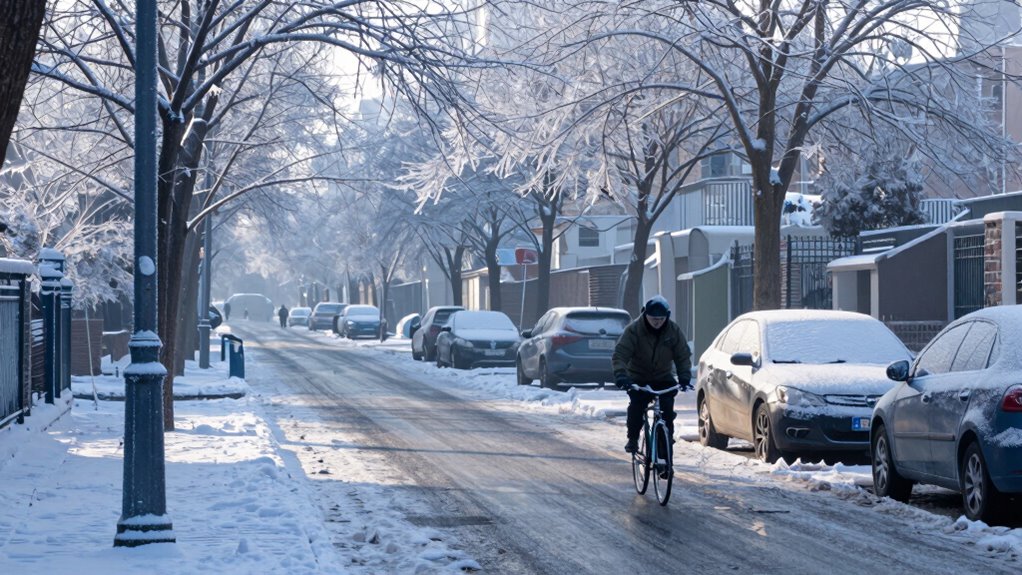

Cold weather slowly affects your vehicle’s range and efficiency without obvious signs. It causes batteries to perform less effectively, reducing power and range, especially in electric vehicles. Gas engines take longer to warm up, increasing fuel use. Cold air hardens rubber tires, lowering traction and making braking longer. These changes happen gradually, so you might not notice until your commute feels more challenging. Keep going to discover how to better manage these quiet winter effects on your drive.

Get bike and ride gear delivered free — and shop member deals
- Fast, free delivery on millions of items
- Access to Prime Big Deal Days deals on October 6–7
- Prime Video, Amazon Music and more included
Key Takeaways
- Cold temperatures slow chemical reactions in batteries, reducing their ability to hold and deliver power, decreasing vehicle range.
- Engine warm-up takes longer in cold weather, leading to increased fuel consumption and reduced efficiency.
- Cold air hardens tires, decreasing traction and increasing braking distances, which can impact driving range and safety.
- Gradual performance declines in vehicles may go unnoticed but can cumulatively shorten commute distances.
- Proper vehicle maintenance, like checking battery health and winter tire suitability, helps mitigate cold weather effects on range.

When temperatures drop, your daily commute can feel substantially more challenging. Cold weather affects your vehicle in subtle but significant ways, especially when it comes to battery performance and tire traction. You might not notice these changes immediately, but they can quietly chip away at your range and safety every time you hit the road.
As temperatures fall, your car’s battery performance decreases. Cold weather slows down the chemical reactions inside the battery, reducing its ability to hold and deliver power efficiently. This means your vehicle’s starting power drops, and the overall range you get from a full charge or tank shrinks. If you drive an electric vehicle, you’ll notice a more pronounced drop in range during winter months because the battery’s capacity is compromised in the cold. Traditional gas-powered cars also see reduced efficiency; the engine takes longer to warm up, and the fuel consumption increases, which means you might have to fill up sooner than usual. This decrease in battery performance is subtle but persistent, quietly impacting how far you can go between charges or fill-ups. Regularly monitoring your battery health can help you catch these issues early and maintain optimal performance.
Cold weather reduces battery performance, decreasing range and efficiency in both electric and gas-powered vehicles.
Tire traction also takes a hit when the temperature drops. Cold air causes the rubber in your tires to become less pliable and harder, reducing grip on icy or snow-covered roads. If your tires aren’t equipped for winter conditions, you might feel less confident steering or braking, especially in slick areas. This loss of traction makes your driving less predictable and may cause you to slow down more than usual, extending your commute time. Even with winter tires, the cold can reduce their effectiveness temporarily, although they are designed to maintain better grip in low temperatures. The decreased traction not only affects safety but also means you may need to brake earlier and accelerate more gently, which can further impact your overall commute efficiency. Additionally, battery health can be impacted by cold temperatures, further decreasing performance and range. Cold weather can also accelerate battery degradation, making it even more important to monitor and maintain your vehicle’s power sources. Being aware of these effects allows you to adjust your driving habits and vehicle maintenance routines proactively.
Altogether, these changes happen gradually, often unnoticed until you feel the effects firsthand—like a shorter range or a less stable ride. Your vehicle’s performance dips as a result of cold weather’s subtle influence on battery health and tire grip. To keep your commute as smooth as possible, it helps to prepare your vehicle for winter conditions by checking your battery’s health, ensuring your tires are suitable for cold weather, and adjusting your driving habits accordingly. Recognizing these quiet, routine shifts can help you better plan your trips and avoid surprises on chilly mornings.
As an affiliate, we earn on qualifying purchases.
Frequently Asked Questions
Does Cold Weather Affect Electric Vehicle Battery Longevity?
Cold weather can accelerate battery degradation in your electric vehicle over time, mainly because low temperatures impact the battery’s chemical processes. Thermal management systems work to keep the battery at ideal temperatures, but extreme cold can still reduce performance and longevity. You might notice reduced range in winter, and long-term exposure to cold could slightly shorten your battery’s lifespan. Proper thermal management helps mitigate some of these effects, preserving your battery’s health.
How Do Tire Pressure Changes Impact Range in Cold Weather?
When tire pressure drops in cold weather, your electric vehicle’s range decreases because underinflated tires create more rolling resistance. This affects your road grip, making driving less stable and efficient. To maintain ideal range, check and inflate your tires to the recommended pressure regularly. Properly inflated tires improve road grip, reduce energy consumption, and help you get the most out of your vehicle during chilly commutes.
Can Cold Temperatures Cause Charging Delays?
Cold temperatures can cause charging delays because battery insulation slows down heat buildup, making charging less efficient. You might think your charger or station is faulty, but it’s the cold weather adaptations at play. When batteries are cold, they take longer to reach ideal charging temperature. To reduce delays, keep your vehicle parked in a warmer spot or use preconditioning. This helps maintain battery warmth and guarantees quicker, more dependable charging sessions.
Do Heated Seats Improve Overall Energy Efficiency?
Heated seats can improve your overall energy efficiency by reducing the need to run the cabin heater constantly, which consumes more energy. By keeping you comfortable with seat warmth, you can lower your vehicle’s energy consumption, especially in cold weather. This means your battery works less to maintain seat comfort and overall warmth, helping you extend your commute range while enjoying better seat comfort during chilly days.
How Does Snow Accumulation Influence Driving Range?
Snow accumulation impacts your driving range by adding extra weight and increasing resistance, which makes your vehicle work harder. Poor road conditions caused by snow can reduce traction and force you to slow down, further draining your battery. The snow impact on your commute is significant, as it can decrease efficiency and range. To minimize this, drive cautiously, maintain your tires, and clear snow from your vehicle regularly.
cold weather electric vehicle battery pack
As an affiliate, we earn on qualifying purchases.
As an affiliate, we earn on qualifying purchases.
Conclusion
As the cold weather settles in, your commute transforms—slower, longer, more cautious. You bundle up, drive carefully, and adjust your expectations. The chill affects your speed, your energy, your route. So, prepare better, plan smarter, and stay safer. Embrace the changes, respect the conditions, and adapt your routine. Because in cold weather, your commute isn’t just about getting there—it’s about arriving safely, arriving prepared, arriving wiser.
As an affiliate, we earn on qualifying purchases.
As an affiliate, we earn on qualifying purchases.
Fall Picks
fall essentials
As an affiliate, we earn on qualifying purchases.