
TL;DR

Get bike and ride gear delivered free with Prime
- Fast, free delivery on millions of items
- Prime Video, Amazon Music and more included
- Member-only deals all year
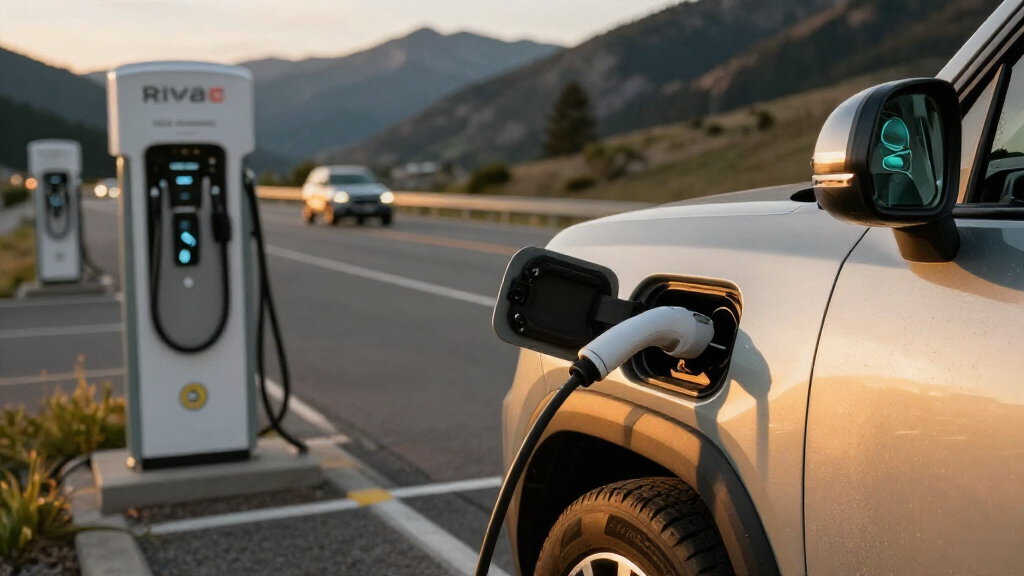
Rivian reported 1,185 ports in its Adventure Network of DC fast chargers at 165 U.S. stations as of the third quarter of 2026. The port count rose 39% from a year earlier, while the station count increased 26%; the slower Waypoint network has grown more slowly, according to Department of Energy data cited by InsideEVs.
Rivian’s Adventure Network reached 1,185 DC fast-charging ports at 165 U.S. stations in the third quarter of 2026, according to the company’s earnings report. The port total was 39% higher than in Q3 2025, while the number of stations rose 26%, marking continued expansion of Rivian’s in-house charging system for its electric vehicles.
The reported total counts individual charging ports, not stations: Rivian said its network had 1,185 ports capable of delivering up to 300 kilowatts of power. It listed 165 stations, up from the end of the third quarter of 2025. The two growth rates describe different measures and should not be treated as interchangeable: ports increased faster than station locations.
Rivian also says the Adventure Network’s charging is matched with 100% renewable energy. As InsideEVs explains, that claim does not necessarily mean the electricity physically reaching a vehicle at a given charger comes directly from a nearby wind or solar installation. The company matches each kilowatt-hour delivered with renewable energy sources, which may be located elsewhere.
The network’s slower Level 2 counterpart, Rivian Waypoints, received less attention in the company’s latest materials. Data from the Department of Energy’s Alternative Fuels Data Center, cited by InsideEVs, show 540 Waypoint chargers at 208 U.S. locations. The database showed Rivian had installed ten 11-kilowatt Waypoint chargers during the year, with two more coming online in October. Those figures are distinct from the third-quarter earnings snapshot for the fast-charging network.
Rivian Adds More Fast-Charging Capacity
More Adventure Network ports can give Rivian drivers additional options for long-distance travel and rapid charging, particularly at locations built for the company’s vehicles. The maximum stated output of up to 300 kW describes charger capability; the rate a vehicle receives can vary based on factors such as the vehicle, battery conditions and charging session.
Rivian’s own network is only one part of the charging landscape available to its customers. The company’s vehicles can also use many public DC fast chargers across the United States, including Tesla Superchargers equipped with the North American Charging Standard. The new count is therefore a measure of Rivian-owned network growth, not the full number of chargers its drivers may be able to access.
The scale comparison is substantial. InsideEVs reported that Tesla had more than 40,000 U.S. fast-charging ports at nearly 3,300 locations, alongside about 14,000 Level 2 Destination Chargers at almost 4,000 sites. That comparison places Rivian’s 1,185 Adventure Network ports in perspective, but the figures do not by themselves show how evenly either network is distributed or how reliable individual sites are.
Popular right now

Shark PowerDetect Corded Stick Vacuum with HEPA Filtration, Purple (HZ4001AMZ)

Ninja Foodi 8-Quart DualZone 6-in-1 Air Fryer, Grey (DZ201)

Shark Navigator Lift-Away Upright Vacuum, NV360
As an affiliate, we earn on qualifying purchases.
Fast Chargers Outpace Waypoints
Rivian has continued building a purpose-built DC fast-charging network even as its vehicle owners have access to other public charging providers. The Adventure Network expansion is reported in the company’s third-quarter 2026 earnings materials; the year-over-year comparison uses Q3 2025 as its baseline. The source says station count was 26% higher than at the end of that earlier quarter.
The separate Waypoint Level 2 network is intended for slower charging and has a different footprint and use case. It stood at 540 chargers across 208 U.S. locations in the AFDC data cited by InsideEVs. Rivian’s earnings documents did not mention Waypoints, according to the report, so the public information available there gives a less current account of its expansion than the Adventure Network figures.
Rivian remains much smaller than established charging operators by port count, according to the comparison in the source report. The figures are snapshots rather than a full assessment of charger uptime, customer use, site availability or geographic coverage.
“The network had 1,185 ports capable of delivering up to 300 kilowatts of power, up 39% compared with the third quarter of 2025.”
— Rivian, in its third-quarter 2026 earnings report, as quoted in the InsideEVs report
Coverage and Charger Use Remain Unclear
The reported growth figures do not specify how many of the 1,185 ports were newly opened during each part of the year, or how the added capacity is distributed across states and travel corridors. The source material also does not provide network utilization, uptime or reliability figures, so the port count alone cannot show how often drivers find chargers available or operational.
It is also unclear from the cited earnings information whether Rivian has set a target for further Adventure Network expansion or for the Waypoint network. The AFDC installation data offer a count for Waypoints, but the timing and completeness of database updates can differ from company reporting. Rivian’s renewable matching claim does not establish that each site is supplied directly by renewable generation.
Future Network Targets Await Disclosure
The next useful update would be Rivian’s subsequent quarterly reporting, which could show whether the Adventure Network continues to add ports and stations and whether the company gives a clearer account of Waypoint installations. Until then, the Q3 2026 figures provide the latest reported snapshot in the source material, rather than a forecast or a commitment to a particular expansion pace.
Drivers considering a Rivian vehicle can also check current public charging maps and vehicle compatibility information, since access to third-party networks is separate from the size of Rivian’s own network. Further reporting would be needed to compare coverage, operating performance and charging experience across providers.
Key Questions
How many Rivian Adventure Network chargers were reported?
Rivian reported 1,185 DC fast-charging ports at 165 U.S. stations in Q3 2026. Ports are individual charging connections; they are not the same as station locations.
What does the 39% growth figure measure?
It refers to the year-over-year increase in Adventure Network charging ports compared with Q3 2025. Rivian separately reported that its number of stations was 26% higher than at the end of Q3 2025.
How fast can Rivian’s network charge?
The company said its Adventure Network ports can deliver up to 300 kilowatts. That is a maximum stated capability, not a guarantee that every vehicle will charge at that rate.
Is Rivian’s Waypoint network growing at the same pace?
The cited AFDC data show 540 Waypoint Level 2 chargers at 208 U.S. locations and ten installations during the year covered by the report, with two more online in October. Those figures suggest slower additions than the fast-charging network, but they are based on separate database information.
Does the renewable-energy claim mean each charger runs directly on wind or solar power?
Not necessarily. The source report says Rivian matches each kilowatt-hour delivered with renewable energy, which may be generated in a different location. The claim does not mean every charger is directly connected to a nearby wind or solar facility.
Source: insideevs.com