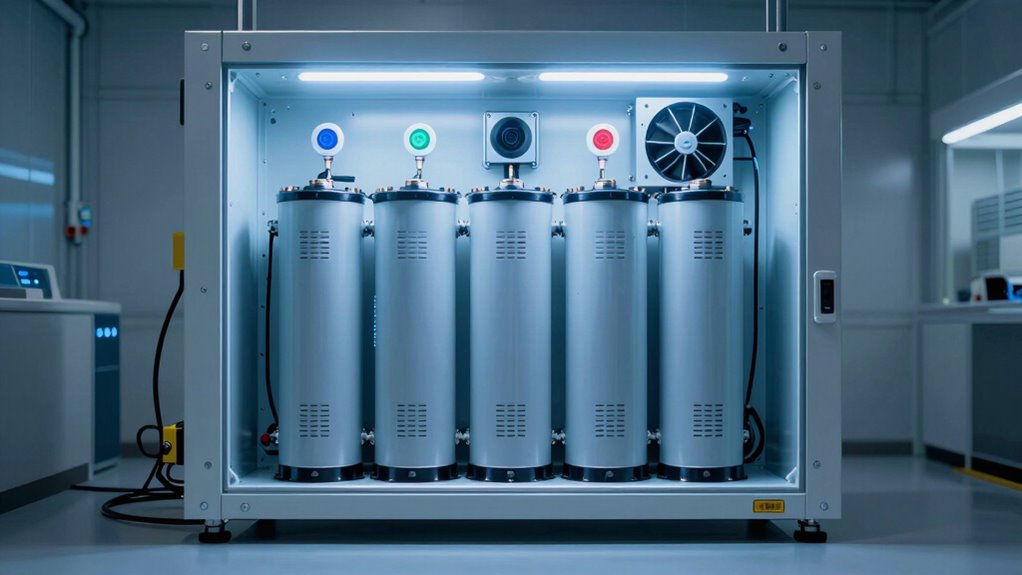

To prevent damage and maximize battery lifespan, keep your batteries within the ideal temperature range of 20°C to 25°C (68°F to 77°F). Temperatures outside this zone, especially extreme heat or cold, can cause internal damage, capacity loss, or accelerated wear. Proper thermal management—using insulation, ventilation, or climate control—helps maintain these conditions. Staying within this temperature zone is essential for safe, efficient battery use. Continue exploring to learn more about suitable storage practices.
Key Takeaways
- Keep batteries stored within the optimal temperature range of 20°C to 25°C (68°F to 77°F) to prevent damage.
- Cold storage slows degradation but must avoid freezing temperatures that cause internal damage.
- Hot temperatures above 80°F accelerate aging, capacity loss, and increase risk of thermal runaway.
- Use insulation, ventilation, and climate control to maintain stable, safe storage temperatures.
- Regular temperature monitoring helps prevent exposure to damaging heat or cold, extending battery lifespan.
Understanding Battery Temperature Zones

Understanding battery temperature zones is essential because temperature directly affects a battery’s performance and lifespan. When you keep a battery within its ideal temperature zone, you help maintain its chemical stability, which prevents degradation and extends its life. Temperature influences how well heat is transferred through the battery’s materials, thanks to thermal conductivity. If it gets too hot, chemical reactions accelerate, risking instability and potential damage. Conversely, low temperatures slow down these reactions, reducing efficiency. Recognizing these zones helps you avoid extremes that can harm the battery’s internal chemistry. By understanding the relationship between temperature, chemical stability, and thermal conductivity, you can choose the most suitable storage conditions, ensuring your battery stays safe, reliable, and long-lasting. Additionally, proper thermal management is crucial for maintaining optimal battery performance during use and storage, as it helps keep the battery within its recommended temperature range and prevents thermal runaway or other hazards. Understanding thermal conductivity and how it impacts heat transfer within the battery allows for better design and operational decisions to prolong battery life and safety. Moreover, maintaining consistent temperatures can help prevent performance degradation caused by thermal stress.
The Cold Storage Zone: Risks and Benefits
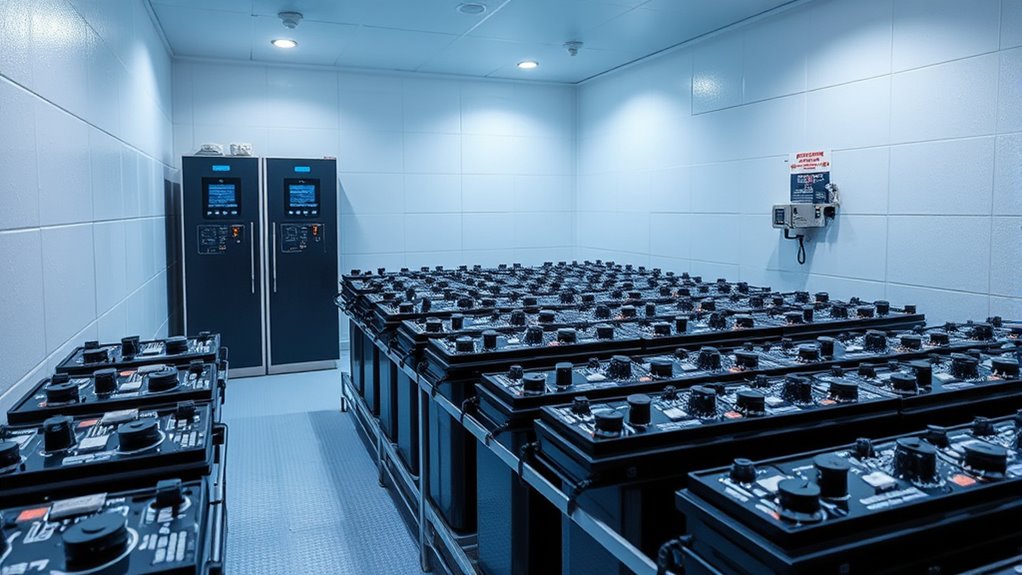
Storing batteries in the cold can slow down chemical reactions, which helps reduce degradation and extend their lifespan. Cold storage minimizes stress on battery components, leading to longer-lasting performance. Additionally, maintaining proper temperature regulation is vital to prevent overheating or freezing, which can compromise battery integrity. Proper temperature control can also help minimize self-discharge rates, conserving energy over time. Monitoring storage conditions closely ensures that batteries remain within safe temperature ranges and avoid damage. However, temperature risks exist if temperatures drop too low; extreme cold can cause internal damage, such as cracking or electrolyte issues. These risks may impair capacity and safety. On the benefit side, cold storage reduces self-discharge rates, conserving energy over time. It’s essential to maintain a stable, moderate cold environment rather than freezing conditions to avoid damage. Proper cold storage can be effective, but you need to carefully monitor temperature levels to prevent the hazards associated with temperature risks. Temperature control is crucial for maximizing battery health and safety during cold storage.
The Optimal Temperature Range for Battery Performance

Maintaining batteries within their ideal temperature range is essential for maximizing performance and longevity. Generally, the key temperature for most batteries is between 20°C and 25°C (68°F to 77°F). Battery chemistry dictates how well a battery functions at specific temperatures, and staying within this range helps prevent capacity loss and degradation. Thermal insulation plays a critical role in maintaining consistent temperatures, especially in variable environments. Proper insulation minimizes temperature fluctuations that can harm the battery. Operating outside this optimal zone, whether too hot or too cold, can lead to reduced efficiency and shorten lifespan. Understanding battery chemistry and how it interacts with temperature helps you optimize storage conditions. By managing temperature with appropriate insulation and understanding battery chemistry, you guarantee your batteries perform reliably and last longer. Additionally, Vetted information about battery performance can guide you in choosing the right storage conditions for your specific needs. Implementing temperature monitoring devices can further ensure batteries stay within their ideal range, preventing damage from unexpected fluctuations. Recognizing the importance of thermal management techniques is crucial for maintaining battery health over time. Incorporating appropriate ventilation can also help regulate temperature and prevent overheating in enclosed spaces.
Effects of High Temperatures on Batteries

High temperatures can greatly impair battery performance and accelerate degradation. When batteries heat up excessively, their internal chemistry suffers, leading to reduced capacity and lifespan. To combat this, effective thermal insulation helps maintain a stable temperature, preventing rapid heat buildup. Additionally, implementing ventilation strategies allows heat to escape, avoiding overheating. Consider these key points:
- Thermal insulation minimizes heat transfer from external sources.
- Proper ventilation ensures excess heat is dispersed efficiently.
- Combining both methods provides ideal protection against high-temperature damage.
- Monitoring temperature zones is essential to keep batteries within safe operational limits. Proper temperature regulation supports energy management and prolongs battery life. Understanding how thermal properties influence heat flow can help optimize your setup. Managing heat also involves understanding thermal conductivity to select appropriate materials for insulation and ventilation design. Optimizing heat dissipation techniques further enhances battery safety and performance.
Ignoring these strategies can cause irreversible damage, increased safety risks, and costly replacements. Managing heat through insulation and ventilation keeps your batteries safe, enhances longevity, and maintains peak efficiency. Staying within safe temperature zones is essential to prevent thermal runaway and performance loss.
How Temperature Fluctuations Impact Battery Longevity

Temperature fluctuations can considerably affect your battery’s lifespan, especially when they push beyond the ideal range. When temperatures swing too high or too low, it can accelerate wear and reduce efficiency. Understanding how these changes impact your battery helps you protect its longevity and performance. Implementing Free Floating designs in your battery system can help mitigate some of these temperature-related issues by allowing better airflow and heat dissipation. Additionally, awareness of temperature management strategies can further enhance battery durability in fluctuating conditions. Maintaining optimal thermal conditions is essential to prevent damage caused by extreme temperature variations, especially for sensitive drone batteries. Incorporating connected equipment that monitors ambient temperatures can provide real-time data to optimize operating environments and extend battery life.
Optimal Temperature Range
Have you ever wondered how temperature swings can shorten your battery’s lifespan? Maintaining an ideal temperature range is vital for preserving battery chemistry and performance. When temperatures stay within this range, the battery’s chemical reactions proceed efficiently, and thermal conductivity helps dissipate heat effectively.
Here’s what to keep in mind:
- Staying between 20°C and 25°C ensures maximum chemical activity.
- Cooler temperatures slow down reactions, reducing capacity over time.
- Excessive heat accelerates degradation, damaging internal components.
Effects of Extreme Heat
Ever wonder how sudden temperature spikes can sabotage your battery’s lifespan? Extreme heat accelerates chemical reactions inside your battery, leading to faster degradation. Fluctuations in ambient conditions strain thermal insulation, making it harder to maintain a stable temperature. Over time, high temperatures cause capacity loss and reduce overall longevity. To visualize this, consider the table below:
| Temperature Range | Effect on Battery | Recommended Action |
|---|---|---|
| 100°F and above | Rapid aging | Use thermal insulation |
| 80°F – 100°F | Accelerated wear | Improve ventilation |
| Below 80°F | Stable performance | Maintain consistent ambient conditions |
Proper thermal insulation and monitoring ambient conditions help shield your battery from damaging heat spikes, extending its lifespan.
Methods to Maintain Proper Temperature Conditions
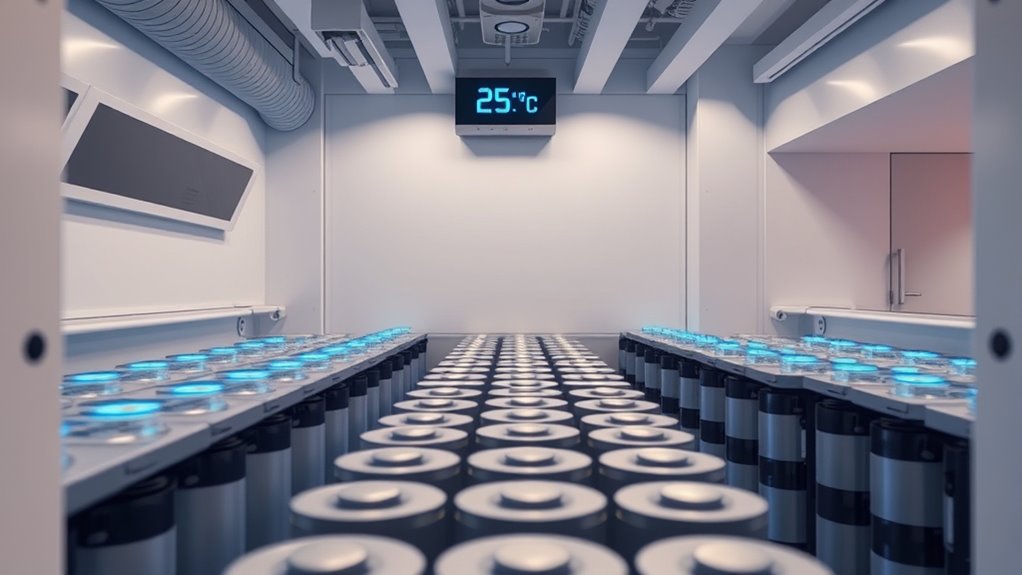
Maintaining proper temperature conditions is essential for enhancing battery storage performance and longevity. To achieve this, you can implement several methods. First, use thermal insulation to reduce temperature fluctuations caused by external conditions. Second, incorporate climate control systems, such as HVAC units, to regulate ambient temperature precisely. Third, ensure proper ventilation to prevent heat buildup and maintain consistent temperatures. These methods help protect batteries from extreme heat or cold, reducing degradation and potential damage. Regularly monitoring temperature levels with sensors allows you to make adjustments quickly. Combining thermal insulation, climate control, and proper ventilation provides a thorough approach to maintaining ideal conditions. Staying proactive with these methods ensures your batteries perform efficiently over their lifespan.
The Role of Thermal Management Systems

Thermal management systems play a crucial role in optimizing battery performance by controlling temperature fluctuations during operation and storage. They prevent overheating or excessive cooling that can damage cells and reduce lifespan. These systems use thermal insulation to limit external temperature influences and cooling systems to actively regulate internal temperatures. Effective thermal management ensures batteries stay within the ideal temperature zone, maintaining efficiency and safety. Consider the following:
| Component | Function | Benefit |
|---|---|---|
| Thermal Insulation | Minimizes external temperature impact | Protects against temperature swings |
| Cooling Systems | Dissipates excess heat | Prevents overheating |
| Sensors | Monitor temperature levels | Enables precise regulation |
| Heat exchangers | Transfer heat away from battery | Maintains consistent temperature |
| Control Units | Manage system operations | Optimize thermal performance |
These elements work together to keep your battery safe and effective.
Recognizing Signs of Temperature-Related Battery Damage

How can you tell if your battery is suffering from temperature-related damage? Look for warning signs that indicate potential issues. First, note any sudden drops in battery capacity, which suggest the battery can’t hold a charge as well. Second, watch for swelling or bulging, a sign of internal damage from overheating. Third, be alert to unusual heat during operation, which could lead to thermal runaway if ignored. These signs often result from exposure to extreme temperatures, accelerating damage and reducing lifespan. Recognizing these indicators early helps prevent further harm and maintains ideal performance. If you notice any of these signs, address them promptly to avoid costly repairs and ensure safe battery use.
Best Practices for Safe Battery Storage

Proper storage conditions can substantially extend your battery’s lifespan and guarantee safety. Keep batteries in a cool, dry environment, ideally within the recommended temperature range, to prevent thermal damage. Use thermal insulation materials to buffer against temperature fluctuations, especially if you store batteries in areas prone to extreme heat or cold. Avoid exposing batteries to direct sunlight or heat sources, which can accelerate degradation. When batteries reach end-of-life, dispose of them responsibly through proper battery disposal channels to prevent environmental harm. Never throw batteries in regular trash, as they can pose safety hazards. By following these best practices, you minimize the risk of battery failure and environmental damage, guaranteeing safe storage and peak performance over time.
Frequently Asked Questions
How Do Ambient Humidity Levels Affect Battery Temperature Zones?
Ambient humidity levels impact battery temperature zones by increasing corrosion risks and affecting performance. High humidity can cause moisture buildup inside the battery, leading to corrosion that damages internal components and disrupts heat regulation. Conversely, low humidity helps maintain stable temperatures. You should monitor humidity levels closely, especially in humid environments, to prevent corrosion and guarantee your batteries stay within safe temperature zones, maximizing lifespan and safety.
Can External Weather Conditions Influence Internal Battery Temperatures?
Yes, external weather conditions can influence internal battery temperatures. You can manage this by using effective thermal insulation to shield batteries from extreme outdoor temperatures. Additionally, proper ventilation strategies help dissipate excess heat during hot weather and retain warmth in cold conditions. These measures ensure your batteries stay within safe temperature zones, preventing damage and maintaining ideal performance regardless of external weather fluctuations.
Are There Specific Safety Precautions for Extreme Temperature Storage?
Think of extreme temperatures as a double-edged sword that can cut through your battery’s safety. You should always follow fire safety protocols and use thermal insulation to prevent overheating or freezing. Store batteries in a cool, dry place and avoid direct sunlight or freezing conditions. Regularly check for signs of damage, and never expose batteries to temperature swings that could ignite a fire or cause internal damage.
How Quickly Do Batteries Heat up or Cool Down in Fluctuating Environments?
In fluctuating environments, batteries heat up or cool down within minutes to hours, depending on the temperature change’s severity and thermal insulation. Proper cooling systems help regulate temperature, preventing rapid shifts that could damage the battery. By maintaining ideal conditions, you guarantee the battery’s longevity and performance. Regular monitoring of temperature levels and adjusting cooling mechanisms as needed keeps your batteries safe and efficient in unpredictable environments.
What Are the Cost Implications of Thermal Management Systems?
Thermal management systems might seem like an investment, but they’re worth it for the long-term cost reduction and efficiency improvements. By maintaining ideal temperatures, you prevent damage, extend battery life, and reduce replacement costs. While initial setup costs can be higher, the savings from improved performance and fewer maintenance needs lead to better overall value. In the end, a well-managed system keeps your batteries working efficiently and your budget balanced.
Conclusion
By keeping your batteries within the right temperature zones, you prevent damage and extend their lifespan. For example, imagine storing electric vehicle batteries at the ideal temperature; they’ll perform better and last longer. Using thermal management systems ensures your batteries stay safe from extreme temperatures. Remember, monitoring temperature and following best practices not only safeguards your investment but also keeps your devices running smoothly for years to come.