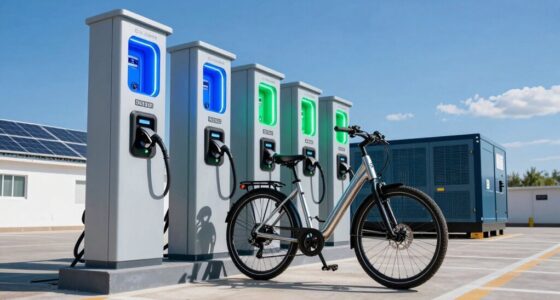

To travel smarter with your EV, keep your battery healthy by following best practices like avoiding deep discharges and keeping charge levels between 20% and 80%. Use scheduled charging and plan trips during cooler times to prevent overheating. Regularly monitor your battery’s health and adjust your habits accordingly. Proper maintenance and awareness can prevent unexpected issues, ensuring reliable commutes. If you continue exploring, you’ll discover more tips to make your journey even smoother.

Get bike and ride gear delivered free — and shop member deals
- Fast, free delivery on millions of items
- Access to Prime Big Deal Days deals on October 6–7
- Prime Video, Amazon Music and more included
Key Takeaways
- Regularly monitor battery health and address issues early to ensure reliable daily commuting.
- Keep battery levels between 20% and 80% to optimize longevity and prevent unexpected range loss.
- Use scheduled charging and temperature management features to maintain optimal battery performance.
- Plan routes and charging breaks during off-peak hours for efficient and stress-free travel.
- Avoid deep discharges and rapid charging to reduce battery wear and extend its lifespan.
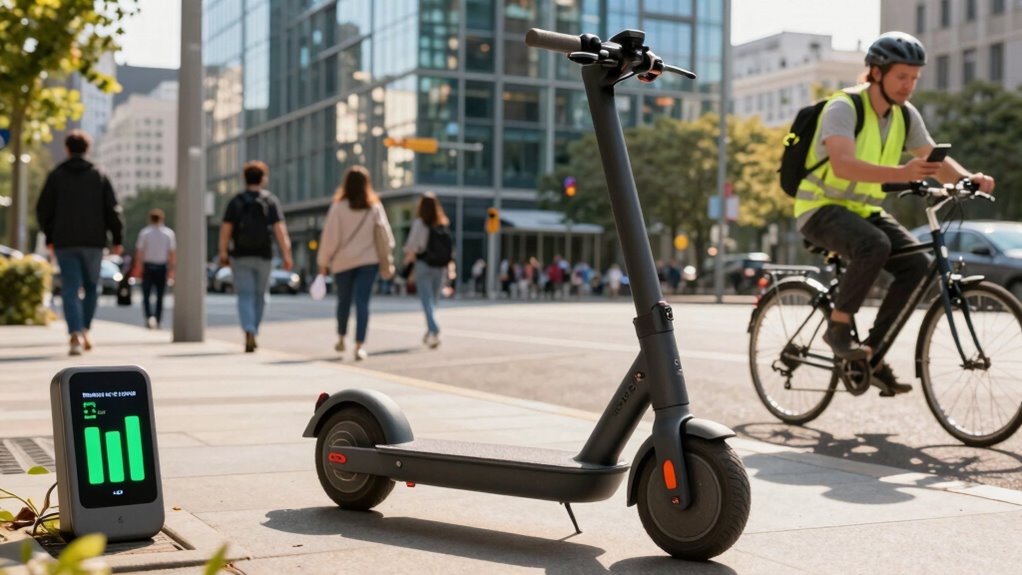
When your daily commute relies on a battery-powered vehicle, staying ahead of battery health issues becomes essential. You need to pay attention to battery maintenance and adopt effective charging strategies to guarantee your vehicle performs reliably every day. Proper battery maintenance involves more than just plugging in your vehicle; it’s about understanding how to keep the battery in peak condition for as long as possible. Regularly inspecting for signs of battery wear, such as reduced range or slower charging times, helps you catch potential problems early. Keeping your battery clean and free from debris also prevents corrosion and maintains efficient power flow. Additionally, monitoring the battery’s temperature and avoiding extreme heat or cold can greatly extend its lifespan. Cold weather, in particular, can diminish battery capacity, so preconditioning your vehicle or parking in sheltered areas helps preserve its health.
Charging strategies are equally important. Instead of consistently charging to 100%, aim to keep your battery level between 20% and 80%. This practice minimizes stress on the battery and reduces the risk of long-term degradation. Frequent small charges are better than infrequent full charges, which can strain the battery and accelerate capacity loss. If your vehicle has fast-charging capabilities, use them sparingly; rapid charging generates more heat and can wear down the battery faster over time. For daily commuting, try to plan your charging sessions during off-peak hours or when you have ample time to fully top up without rushing. Avoid letting your battery sit at a low charge for extended periods, as this can lead to capacity loss and reduce overall range. Additionally, understanding your vehicle’s battery management system can help you optimize charging and maintenance routines to prolong battery life. Moreover, monitoring your battery’s health through the vehicle’s diagnostic tools can help you catch potential issues early and prevent costly repairs.
Another smart move is to familiarize yourself with your vehicle’s manufacturer guidelines on charging and maintenance. Many modern electric vehicles come with built-in features that help enhance battery health, such as scheduled charging or temperature management systems. Leveraging these tools can make a substantial difference in maintaining battery longevity. Incorporating proper storage practices during long periods of inactivity can also prevent capacity loss and keep your battery in good condition. Moreover, staying informed about battery deterioration signs can help you address issues promptly before they become costly repairs. Remember that consistent, mindful charging habits combined with regular battery checks can save you money and inconvenience down the line. By implementing these practices in your routine, you’ll not only extend your battery’s life but also improve your overall travel experience. When you prioritize good battery maintenance and adopt effective charging strategies, you’re making a smart investment in your vehicle’s future, ensuring your daily commute remains smooth, reliable, and efficient.
As an affiliate, we earn on qualifying purchases.
Frequently Asked Questions
How Often Should I Have My Battery Checked by a Professional?
You should have your battery checked by a professional at least once a year, especially if you notice your device’s performance declining or if your charging habits have changed. Regular checks help identify if a battery replacement is needed before it fails unexpectedly. Maintaining good charging habits, like avoiding overcharging, extends your battery’s lifespan and reduces the frequency of professional inspections, ensuring your commute remains smooth and reliable.
What Are Signs My Battery Is Degrading Prematurely?
You’ll notice signs of premature battery degradation if your battery lifespan shortens unexpectedly or if it drains quickly despite normal charging habits. Pay attention to reduced runtime, longer charging times, or unexpected shutdowns. Poor charging habits, like frequent partial charges or using incompatible chargers, can accelerate degradation. Regularly monitor your battery’s health through your device’s diagnostics to catch issues early, ensuring your commute remains reliable and efficient.
Can Certain Weather Conditions Affect Battery Health During Commutes?
Imagine you’re in a medieval castle, and weather impact still affects your battery resilience. Cold temperatures slow down chemical reactions, reducing your battery’s capacity, while heat accelerates degradation. Extreme weather conditions can drain your battery faster or cause damage over time. To keep your commute smooth, avoid exposing your device to harsh weather, and consider using protective cases or keeping your battery warm or cool, depending on the climate.
Are There Apps to Monitor My Vehicle’s Battery Status in Real-Time?
Yes, there are apps that monitor your vehicle’s battery status in real-time, helping you maintain peak performance. These apps often track your battery calibration and charging habits, alerting you to potential issues before they worsen. By monitoring these factors, you can adjust your charging routine and extend your battery’s lifespan. Regularly using such apps ensures you stay informed about your battery health, making your commute more reliable and efficient.
How Does Battery Age Impact Overall Vehicle Performance and Safety?
Battery age affects your vehicle’s performance and safety by reducing capacity and increasing the risk of failure. As your battery ages, it may not hold charges efficiently, leading to decreased range and power. Regular electric vehicle maintenance, including monitoring battery health and considering battery recycling options, guarantees safety and longevity. Staying proactive helps prevent unexpected breakdowns, keeping your commute reliable and safe.
electric vehicle charging station
As an affiliate, we earn on qualifying purchases.
As an affiliate, we earn on qualifying purchases.
Conclusion
By keeping an eye on your battery health and planning ahead, you can travel smarter and avoid unexpected breakdowns. Did you know that batteries typically lose about 20% of their capacity within the first year? Staying proactive guarantees you won’t be caught off guard, saving you time and stress. Remember, a little maintenance goes a long way—so regularly check your battery and plan your routes accordingly. That way, your commute stays smooth and reliable.
As an affiliate, we earn on qualifying purchases.
As an affiliate, we earn on qualifying purchases.
Evergreen bestsellers Picks
bestsellers
As an affiliate, we earn on qualifying purchases.