To keep your groceries balanced on your bike, distribute the weight evenly, placing heavier items near the center or rear and securing everything tightly with straps or bungee cords. Use sturdy, water-resistant containers, and pack items carefully to prevent shifting. Adjust your riding technique by maintaining a steady speed, choosing the right gear, and engaging your core for stability. If you continue exploring, you’ll discover more tips to make grocery rides safer and wobble-free.
Key Takeaways
- Distribute heavier groceries near the bike’s center, close to the frame or rear rack, to maintain stability.
- Secure loads tightly with bungee cords or straps to prevent shifting and wobbling during the ride.
- Use lightweight, water-resistant containers and panniers designed for cycling to ensure even weight distribution.
- Keep your core engaged and maintain steady, smooth pedal strokes to enhance control and balance.
- Ride at moderate speeds, select appropriate gears, and practice load placement adjustments to improve stability.
Distribute Your Load Evenly on the Bike

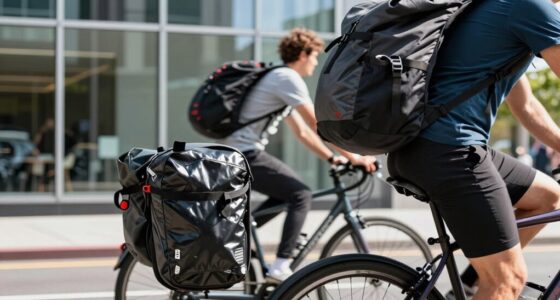
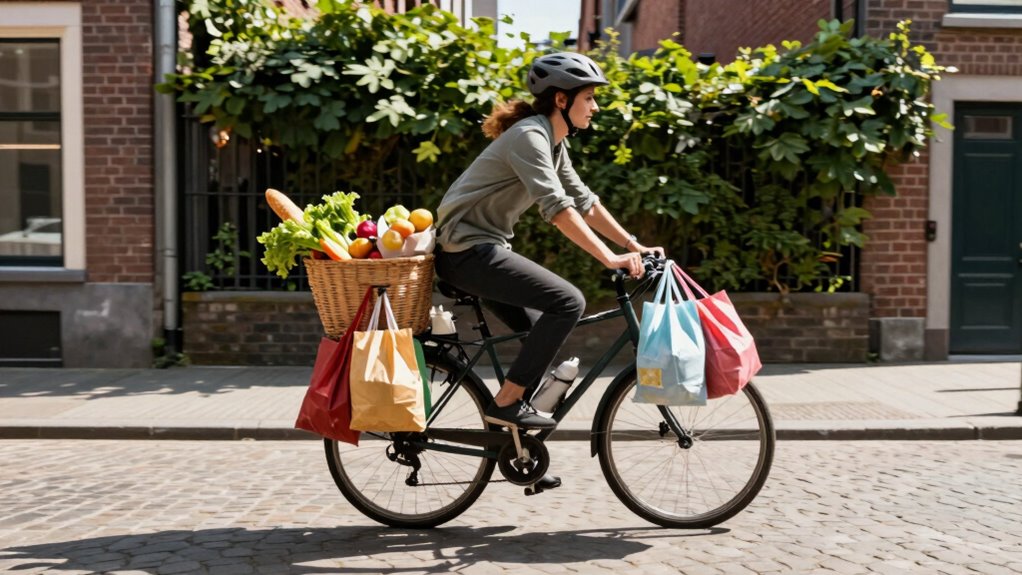
To keep your bike stable and prevent accidents, it’s essential to distribute your grocery load evenly. Proper load balancing ensures that weight distribution stays centered, reducing wobbling and improving control. Place heavier items closer to the bike’s center, ideally near the frame or on the rear rack, to maintain balance. Avoid shifting the load to one side, which can cause your bike to lean and become harder to steer. Use both sides of the rack or panniers equally to achieve symmetry and stability. Keep the load compact and secure to prevent shifting during your ride. Additionally, proper load management helps prevent damage to your bike’s components and prolongs its lifespan. When loading your bike, consider the center of gravity to help maintain a stable ride. Being mindful of weight distribution enhances overall safety and handling. Ensuring that your load is well-balanced also contributes to safety on uneven terrain or during sudden stops. By paying attention to load balancing, you help your bike handle smoothly and stay stable, even on uneven terrain or during sudden stops. Proper weight distribution makes your grocery run safer and more enjoyable.
Use Appropriate Containers for Your Groceries
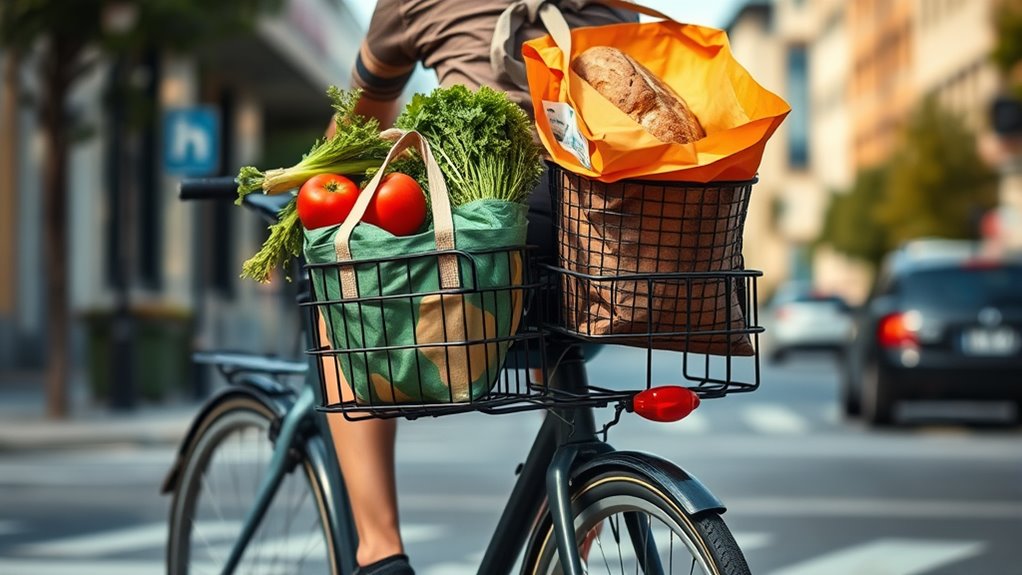
Using the right containers for your groceries can make a big difference in how smoothly your ride goes. Choose containers with appropriate material selection—lightweight, durable, and water-resistant—to prevent added strain or damage. Consider container capacity to match your shopping load; overloading can cause imbalance, while underutilized containers waste space. Use sturdy baskets or panniers designed for cycling, which help distribute weight evenly. Properly organize your load to maintain balance and prevent wobbling. Additionally, selecting containers that are weather-resistant ensures your groceries stay dry and secure during the ride. Regularly checking your containers for damage or wear can help maintain safety and stability while cycling. Being aware of material properties can further enhance your choice of containers for different weather conditions and load types. Here’s a quick guide:
| Material | Capacity | Best Use |
|---|---|---|
| Plastic | Medium to large | Heavy items, versatile |
| Canvas/Burlap | Small to medium | Fresh produce, light goods |
| Metal | Large | Heavy, bulky items |
| Insulated | Medium | Perishables needing temperature control |
| Waterproof | Varies | Liquids, wet items |
Choosing the right containers guarantees your groceries stay balanced and your bike remains wobble-free.
Secure Your Items to Prevent Shifting

To keep your groceries safe during the ride, make sure to secure them properly. Using bungee cords can hold everything in place, while packing items tightly prevents shifting. Taking these steps helps guarantee your groceries arrive intact and your ride stays smooth. Proper weight distribution is essential for maintaining balance and preventing wobbling on two wheels. Regular practice and paying attention to visual and auditory cues can also assist in achieving better balance during your rides. Additionally, being aware of center of gravity adjustments can further enhance stability and safety. Understanding how electric motor power influences bike handling can also improve your control and confidence on the road, especially when managing connected fitness technology that enhances your riding experience.
Use Bungee Cords
When riding your bike with groceries, securing your items is essential to prevent shifting and falling. Bungee cords are a simple, effective tool for this. Their tension is adjustable, allowing you to tighten or loosen as needed. To guarantee stability, secure your bags with elastic bungee cords that grip tightly without damaging the contents. Wrap the cords around your bundles and attach them firmly to your bike’s rack or frame. This prevents your groceries from bouncing or sliding during your ride. Make sure the cords are taut but not overly tight, so they don’t strain or deform your bags. Regularly check the tension as you ride, adjusting if necessary. Using bungee cords keeps your groceries steady, making your ride safer and more comfortable. Additionally, choosing high-quality gelato flavors can add a delightful treat to your day after the ride. Incorporating proper load distribution techniques can further enhance your stability and riding experience, reducing the risk of wobbling caused by uneven weight. Being aware of Feature Buddies can help you better understand how to optimize your gear and accessories for safer cycling. To enhance safety, consider adding reflective elements to your load for better visibility during low-light conditions.
Pack Items Tightly
Securing your items tightly guarantees they won’t shift or fall during your ride. To achieve this, focus on weight compression by pressing items together to minimize gaps. Use your backpack or cargo bags to create a compact packing space, which helps distribute weight evenly. Place heavier items at the bottom and lighter ones on top, ensuring everything stays stable. Wrap fragile items carefully to prevent breakage. Tightly packed groceries reduce movement, preventing wobble and imbalance. Avoid loose packaging that can shift easily. If needed, use additional straps or bungee cords to secure loose items further. Remember, the goal is to make your load as compact as possible so that your bike remains balanced and your ride smooth. Incorporating smart organization strategies can further enhance stability and safety during your ride. Additionally, choosing eco-friendly accommodations with sustainable design can make your entire trip more environmentally conscious. Being mindful of weight distribution can also help prevent wobbling and improve overall riding comfort.
Adjust Your Riding Technique for Stability

To stay balanced, keep your weight centered over the bike. Focus on using smooth, consistent pedal strokes to maintain control. These small adjustments can make a big difference in keeping your ride steady while carrying groceries.
Maintain a Centered Position
Maintaining a centered position on your bike is essential for stability and control, especially when maneuvering crowded grocery aisles or uneven terrain. Focus on posture awareness; keep your back straight and shoulders relaxed. Engage your core muscles to support your balance and absorb shocks from bumps or sudden stops. A strong core helps you stay steady, even when your load shifts or you encounter obstacles. Keep your weight evenly distributed over the bike, avoiding leaning too far forward or back. Look ahead rather than down, which helps maintain proper alignment. By consciously adjusting your posture and strengthening your core, you improve your stability, reduce wobbling, and handle your grocery load more confidently. This technique creates a solid foundation for safer, smoother rides.
Use Smooth Pedal Strokes
Using smooth pedal strokes is key to maintaining stability while riding with a loaded bike. Focus on pedal smoothness to prevent sudden jerks that can cause wobbling, especially when your bike is heavier. Keep your cadence controlled by maintaining a steady, consistent rhythm, which helps distribute weight evenly and reduces unnecessary movement. Avoid pushing or pulling unevenly on the pedals, as abrupt forces can destabilize your balance. Instead, aim for a fluid motion, engaging your legs gradually and smoothly. This technique not only improves your control but also minimizes fatigue. When you master smooth pedal strokes and cadence control, you’ll find it easier to keep your bike steady, even when carrying groceries or other loads.
Select the Right Gear and Speed

How do you choose the right gear and speed for a grocery run on two wheels? It’s all about gear selection and speed control to keep your load steady and avoid wobbling. First, shift to a lower gear if you’re carrying a heavy load—this gives you better control and easier pedaling. Keep your speed moderate; going too fast can make balancing tricky, especially with added weight. Remember, smooth, steady pedaling helps maintain stability.
- Use a gear that lets you pedal comfortably without straining
- Keep your speed consistent and manageable
- Avoid sudden accelerations or decelerations
- Adjust your gear as terrain changes to stay balanced
Choosing the right gear and maintaining a controlled speed are key to a smooth, wobble-free grocery ride.
Practice Balancing With Different Loads

Practicing balancing with different loads is essential to becoming confident on your bike. Start by experimenting with various weight distributions, placing loads centered or slightly forward to maintain stability. Pay attention to how load placement affects your balance; heavier items should be closer to your bike’s center to prevent wobbling. As you ride, shift loads gradually to see how it impacts handling. Practice riding with uneven loads, like one side heavier than the other, to develop your ability to adjust weight distribution on the fly. This helps you learn how different load placements influence your control. Over time, you’ll instinctively know where to position your cargo for smooth, wobble-free grocery runs. Consistent practice with varied loads sharpens your balancing skills and boosts your confidence.
Frequently Asked Questions
What Are the Best Types of Bikes for Heavy Grocery Loads?
For heavy grocery loads, cargo bikes are your best bet. They’re designed to handle substantial weight and keep you stable. Look for models with sturdy frames and wide tires to improve balance. Pannier options are also helpful, allowing you to distribute weight evenly on either side. This setup reduces wobble and makes your grocery runs safer and easier. Choose a cargo bike with ample cargo space and reliable panniers for peak performance.
How Does Weather Affect Balancing With a Loaded Bike?
Weather can considerably affect your bike’s balance, especially when loaded. Rain impact makes surfaces slippery, so you’ll need to slow down and take wider turns to avoid wobbling. Wind influence can push your bike off course, especially with a heavy load. To stay safe, stay alert to weather conditions, adjust your riding style, and consider using wider tires or fenders to improve stability during adverse weather.
Can Using a Trailer Improve Load Stability During Grocery Trips?
Using a trailer can be your secret weapon for load stability on grocery trips. Think of it as a steady anchor, preventing your bike from wobbling like a ship in rough seas. Proper trailer stability relies on secure load anchoring, ensuring weight is evenly distributed. This setup reduces sway and keeps your ride smooth, making grocery runs safer and less stressful, especially when you’re carrying heavy or bulky items.
What Safety Equipment Should I Wear When Carrying Heavy Groceries?
When carrying heavy groceries, you should wear a helmet for safety, especially if you’re riding on busy roads. Always don reflective gear to increase visibility, making sure others can see you clearly. Consider gloves to improve grip and protect your hands, and wear sturdy shoes for stability. Prioritize safety equipment to prevent accidents and stay protected during your grocery trips on two wheels.
How Do I Repair a Wobble Caused by Uneven Weight Distribution?
Think of your bike as a tightrope walker balancing a pole. To fix a wobble caused by uneven weight, do a quick bike repair by adjusting the weight distribution. Shift groceries to even out the load, then check tire pressure and realign the handlebars if needed. These weight adjustments will stabilize your ride, helping you glide smoothly and confidently, just like a skilled performer on a tightrope.
Conclusion
Now that you know how to keep your groceries balanced, imagine hitting the road with confidence—until suddenly, a bump or sharp turn challenges your skill. Will your load hold steady, or will wobbling take over? Mastering these techniques isn’t just about safe riding; it’s about staying in control when it counts most. Are you ready to turn your next grocery run into a test of your balance and wits? The journey awaits.