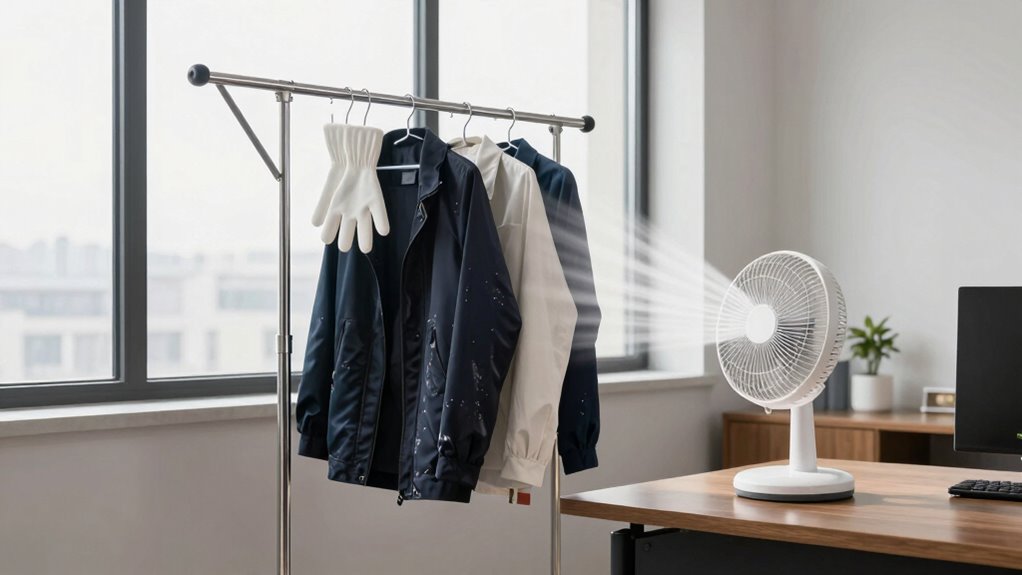
To dry gloves and jackets without creating a mess, set up a dedicated drying area with ventilated racks stretched in a single layer and position oscillating fans for good airflow. Use space heaters carefully to maintain warmth, and incorporate dehumidifiers to reduce moisture in the air. Keep everything organized and elevated to speed drying while preventing clutter. Following these tips will help you create an efficient, tidy drying space, ensuring you’ll discover more effective strategies ahead.
Key Takeaways
- Use sturdy, ventilated drying racks to spread gloves and jackets in a single layer, preventing clutter and trapped moisture.
- Position oscillating fans or open windows nearby to promote airflow and accelerate drying.
- Create a designated drying area with sufficient space, away from damp or poorly ventilated zones.
- Elevate items on racks or hangers to maximize air exposure and reduce drying time.
- Incorporate dehumidifiers or space heaters safely to maintain optimal temperature and humidity levels.
Have you ever faced a sudden water leak or flooding in your office? It’s a stressful situation, especially when important documents, clothing, or equipment get wet. When this happens, quick and effective drying becomes a priority to prevent mold, odors, and damage. The key to a successful office drying setup is maximizing air circulation and using drying racks efficiently. Good air circulation speeds up evaporation, so setting up your space to promote airflow is essential. Position fans or open windows to encourage fresh air movement around the wet items. If possible, use oscillating fans to cover a larger area and prevent stagnant air pockets. This approach helps the moisture escape faster, reducing drying time considerably.
Drying racks are your best friends in this scenario. They keep wet gloves, jackets, or other clothing items off the floor, preventing additional messes and contamination. Choose sturdy, ventilated racks that allow air to circulate around each item. Avoid piling items on top of each other, as that traps moisture and slows down the drying process. Spread everything out in a single layer whenever possible. If space is limited, consider vertical drying racks or multi-tier options that maximize airflow while saving room. These racks are portable, so you can position them near fans or windows for enhanced drying efficiency. Remember, the goal is to keep items elevated and exposed to as much air movement as possible.
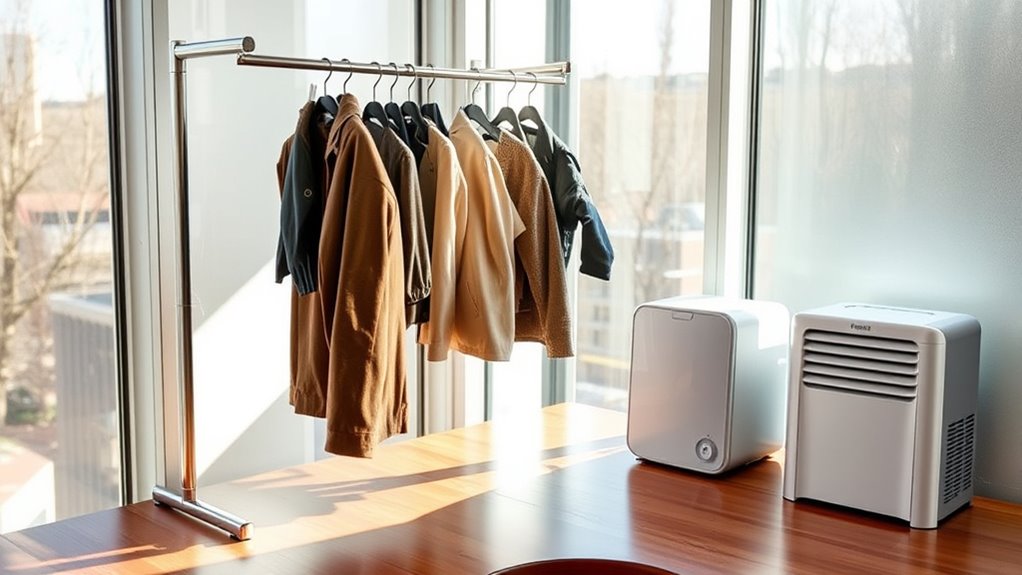
To further improve your drying setup, keep the environment warm and dry. Use space heaters if the office temperature is too low, but ensure they are placed safely away from wet materials and electrical outlets. Dehumidifiers can also be a game-changer, pulling excess moisture from the air and helping items dry faster. Additionally, utilizing AI-powered climate control devices can optimize humidity levels automatically, creating an ideal drying environment. Be cautious about placing wet items directly in damp or poorly ventilated areas, as this can cause lingering odors or mold growth. Instead, designate a specific drying zone with good airflow, plenty of space, and proper tools like drying racks and fans. Setting up this dedicated area minimizes clutter and keeps your office organized during the drying process.
Frequently Asked Questions
What Are the Best Materials for Quick-Drying Gloves?
For quick-drying gloves, synthetic fabrics like polyester and nylon work best because they dry faster than natural fibers. Look for moisture-wicking materials that draw sweat away from your skin, helping your gloves dry more quickly. These fabrics are lightweight, durable, and ideal for active use. By choosing gloves made from these materials, you’ll stay comfortable and dry, especially during outdoor activities or workouts.
How Long Does It Typically Take to Dry Jackets Indoors?
Indoor jackets typically take about 6 to 12 hours to dry, depending on your indoor climate and drying time factors. If your space is warm and well-ventilated, jackets dry faster. To speed up the process, use a fan or dehumidifier, and hang your jackets in a way that allows air to circulate around them. Keep an eye on humidity levels, as high humidity slows down drying.
Can I Use a Regular Fan to Speed up Drying?
Yes, you can use a regular fan to speed up drying, but its efficiency depends on placement and airflow. Position the fan to circulate air around your gloves or jackets, ensuring it doesn’t blow directly onto wet fabric, which can cause uneven drying. A fan improves drying speed by increasing air circulation, but for faster results, consider a fan with adjustable speed settings or a high-powered model to maximize drying efficiency.
Is It Safe to Use a Heat Gun or Hairdryer?
Using a heat gun or hairdryer is like playing with fire—risky if you’re not careful. For safety, avoid direct heat on gloves and jackets to prevent damage or even fires. Instead, consider safer alternative methods like air drying or using a fan on a low setting. Always keep a safe distance and monitor the drying process closely to protect your gear and yourself.
How Do I Prevent Mold During Indoor Drying?
To prevent mold during indoor drying, you should improve ventilation strategies by opening windows or using fans to circulate air. Guarantee your gloves and jackets are thoroughly dried before storing them. Use mold prevention techniques like wiping excess moisture and avoiding high humidity levels. Keep the drying area clean and dry, and consider using a dehumidifier if needed. These steps help reduce moisture and inhibit mold growth effectively.
Conclusion
With this office drying setup, your gloves and jackets will find a cozy haven amid the chaos, turning your workspace into a invigorating oasis. Think of it as planting seeds of freshness that bloom into dry, comfortable gear without a single mess to scatter. Soon, your belongings will emerge from their drying journey like butterflies emerging from cocoons—ready to face the day, fresh and renewed, all thanks to your clever setup.