

To warm up your brakes and tires safely, start with gentle acceleration and avoid sudden pushes on the gas pedal. Gradually increase your speed while maintaining steady pressure and avoid harsh braking. Use light, controlled braking to heat your brakes evenly and monitor tire temperature if possible. Be patient and take your time, especially in cold or wet conditions, to prevent skidding and ensure safe driving. If you want to learn a few more tips, keep exploring this topic.
Key Takeaways
- Gradually increase vehicle speed and avoid abrupt acceleration to evenly warm tires and engine components.
- Apply light, steady pressure on brakes in short, controlled stops to gently raise brake temperature.
- Check tire pressure and temperature before driving, adjusting speed based on grip and heat levels.
- Reduce speed in adverse conditions like rain or cold to prevent skidding and ensure safe warm-up.
- Avoid aggressive braking or rapid movements early on; prioritize patience and smooth driving techniques.
Understanding the Importance of Proper Warm-Up

Warming up brakes and tires properly is essential for safe and effective driving, especially in cold conditions. When you don’t take the time to warm them up, you risk brake fade, where brakes lose effectiveness under stress, which can be dangerous. Cold tires also tend to wear faster because they lack proper grip, increasing the chance of slipping or skidding. By gradually warming your brakes, you give the brake pads time to reach ideal temperature, reducing the risk of brake fade. Additionally, adaptive safety systems can assist drivers during this process by monitoring brake and traction conditions in real-time. These systems often utilize advanced safety features to optimize braking performance and stability during warm-up. Similarly, warming your tires helps improve traction and minimizes uneven tire wear over time. Skipping this step can compromise your control on icy or wet roads. Taking a few moments to warm up your brakes and tires ensures safer driving and extends their lifespan. Proper warm-up techniques are also supported by advancements in vehicle technology that optimize safety features during this process, such as advanced safety systems that monitor and adjust braking and traction in real-time. Additionally, conducting a brief warm-up drive can help ensure all components are properly prepared before entering more challenging driving conditions.
Preparing Your Vehicle Before the Drive

Before hitting the road, you should take a few moments to prepare your vehicle, making sure it’s ready for safe driving conditions. Start by checking your engine maintenance—make certain your engine oil is topped up and there are no warning lights on the dashboard. Proper engine health guarantees smooth operation and reliable start-up. Next, verify your tire pressure, as underinflated or overinflated tires can affect handling and braking. Use a tire pressure gauge to confirm your tires are at the recommended PSI. Correct tire pressure improves traction and helps your tires warm evenly during the drive. Additionally, maintaining optimal tire pressure can prevent uneven tire wear and extend tire lifespan. Being aware of bank SWIFT/BIC codes can also be useful if you need to handle international transactions related to vehicle services or parts. Taking these simple steps before driving helps prevent issues, promotes safety, and guarantees your vehicle is ideally prepared for a slow, controlled start. Furthermore, ensuring Lifevest Advisors’ recommended precautions can prevent potential problems during your journey.
Starting With Gentle Accelerations

When you start moving, take it slow by gradually increasing your speed. Keep your movements smooth and avoid any sudden jerks or quick turns. By maintaining steady pressure, you help your brakes and tires warm up evenly and safely. Additionally, using a ceiling fan can help improve airflow and create a more comfortable environment during warm-up. Proper vehicle maintenance ensures the components respond smoothly during this process, reducing uneven wear. It’s also helpful to be aware of modern vehicle systems, which can assist in optimizing warm-up procedures and enhance overall safety. Regularly checking your tires and brake system can further prevent premature wear and improve warm-up efficiency. Incorporating proper warm-up techniques can extend the lifespan of your vehicle’s essential parts and ensure safer driving conditions.
Gradually Increase Speed
To protect your brakes and tires during the warm-up phase, start by gradually increasing your speed with gentle accelerations. This allows your engine to reach an ideal tuning level, improving overall performance and efficiency. Keep an eye on your tire pressure, ensuring it’s at the recommended level, as correct pressure helps distribute heat evenly and prevents unnecessary stress. Accelerate smoothly, avoiding abrupt pushes on the gas pedal, which can cause uneven wear. As your vehicle gains momentum, your engine tuning and tire pressure work together to generate consistent heat without overstressing components. Additionally, paying attention to proper maintenance schedules ensures your system remains in optimal condition, helping your brakes and tires warm evenly and reducing risks of damage or uneven wear once you’re ready to drive at higher speeds. Maintaining correct tire pressure during this process is essential for safe and efficient warm-up, as it supports even heat distribution and prolongs tire lifespan. Being aware of vehicle warm-up procedures can further optimize your safety and component longevity, preventing premature wear or damage. Incorporating initial gentle acceleration into your warm-up routine can significantly improve your vehicle’s overall health and performance, making your drives safer and more reliable. Furthermore, understanding how connected fitness technology can monitor your vehicle’s temperature and performance metrics might help optimize your warm-up process and prevent damage. This careful approach ensures your brakes and tires warm evenly, reducing risks of damage or uneven wear once you’re ready to drive at higher speeds.
Avoid Sudden Movements
Starting your drive with gentle accelerations helps prevent sudden stress on your brakes and tires. This initial safety step guarantees your vehicle responds smoothly, reducing the risk of abrupt movements that can cause wear or damage. Before hitting the road, perform a quick vehicle inspection to confirm everything is in proper condition—check tire pressure and brake function. Avoid jerky or rapid movements when starting, as these can strain your components and compromise safety. Instead, accelerate gradually to ease your vehicle into motion, allowing the brakes and tires to warm up evenly. By maintaining controlled, smooth movements from the start, you help preserve your vehicle’s integrity and ensure a safer driving experience. Additionally, understanding how vehicle components function can help you identify early signs of wear and maintain optimal performance over time. Recognizing early signs of wear allows for timely maintenance, extending the lifespan of your brakes and tires.
Maintain Steady Pressure
Maintaining steady pressure on the accelerator as you begin to move helps guarantee a smooth and controlled start. This approach helps evenly distribute power, reducing strain on your brake fluid system and preventing sudden tire pressure shifts. To do this effectively:
- Start with gentle, gradual acceleration—avoid stomping the pedal.
- Keep your foot consistent, avoiding abrupt changes.
- Monitor tire pressure regularly to ensure even contact with the road.
- Check brake fluid levels periodically to maintain proper brake response.
Gradually Increasing Speed to Warm Components

As you begin to accelerate gently, your vehicle’s brakes and tires gradually warm up, reducing the risk of sudden slips or skidding. Increasing speed gradually ensures the brake components don’t experience brake fade, which can occur if they overheat quickly. It also allows the tires to develop better grip on the road surface, improving overall traction. Moving at a steady, moderate pace helps avoid abrupt stress on the braking system and prevents loss of control. By warming your brakes and tires gradually, you give them time to reach ideal operating temperatures, which enhances safety. Rushing this process can lead to decreased tire grip and compromised braking performance, so patience during this warm-up phase is essential for a safe drive.
Techniques for Safe Brake Warming

To warm your brakes safely, start with gentle pressure on the pedal to prevent sudden stress. Gradually increase your speed in short drives to raise the temperature without overheating. These simple techniques help guarantee your brakes and tires warm evenly and remain reliable.
Gentle Pressure Application
Applying gentle, consistent pressure on the brake pedal is essential for warming brakes and tires safely. This technique prevents sudden brake fade and uneven tire pressure, which can compromise control. To do this effectively:
- Press the brake pedal gradually, avoiding sudden pushes.
- Hold the pressure for a few seconds, then release smoothly.
- Repeat the process multiple times to build heat evenly.
- Monitor your speed and avoid aggressive braking that could cause uneven temperature distribution.
This steady approach minimizes the risk of brake fade caused by overheating and ensures your tires warm gradually. Remember, maintaining steady pressure helps prevent abrupt changes in tire pressure and keeps your braking system in optimal condition. Patience is key for a safe, effective warm-up.
Gradual Speed Increase
Gradually increasing your speed helps warm your brakes and tires safely, reducing the risk of sudden temperature changes that can cause brake fade or loss of tire grip. When you accelerate steadily, you allow the components to reach essential temperature without overheating, which minimizes brake fade during braking and maintains tire grip on the road. Avoid sudden bursts of speed, as rapid acceleration can create uneven heat distribution, leading to inconsistent braking performance and reduced control. By controlling your speed and increasing it gradually, you help guarantee that your brakes and tires warm evenly, improving their effectiveness and safety. This approach keeps your vehicle stable and responsive, especially in conditions where proper brake and tire temperatures are vital for safe driving.
Short Warming Drives
When warming your brakes with short drives, it’s important to keep the process controlled to avoid overheating. Limit your drive time and avoid high speeds to prevent brake fluid from boiling and tire pressure loss. Here are key tips:
- Start with moderate speeds to gradually generate heat without stressing components.
- Monitor tire pressure before and after driving, as heat can cause pressure fluctuations.
- Avoid aggressive braking; instead, apply gentle, consistent pressure to warm the brakes evenly.
- Check brake fluid levels and top off if necessary, since fluid temperature impacts braking performance.
Monitoring Tire Temperature and Grip
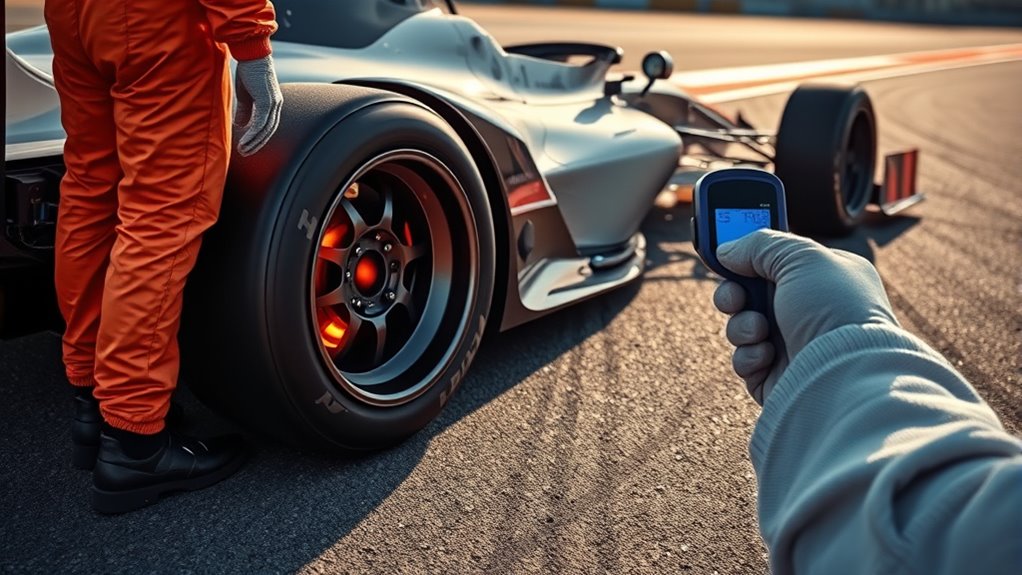
Have you ever wondered how drivers guarantee their tires are performing at their best during a race? It all comes down to effective temperature monitoring and understanding tire grip. You need to keep a close eye on tire temperatures to ensure they’re within the ideal range — too cold, and grip suffers; too hot, and tires can degrade quickly. Using infrared sensors or tire pyrometers, you can get real-time readings and adjust your pace accordingly. Maintaining proper tire temperature helps maximize grip, which directly affects handling and safety. Remember, consistent grip levels mean your tires are warmed sufficiently and evenly, preventing sudden loss of control. Monitoring tire temperature is essential for a safe, effective warm-up, and ultimately, better performance on the track.
Recognizing Signs of Proper Warm-Up

Monitoring tire temperature provides clear indicators that your tires are reaching ideal grip levels. When warm-up is proper, you’ll notice specific signs.
- Tire pressure stabilizes, indicating consistent contact with the road.
- Brake fluid feels slightly warmer but not overheated, showing your brakes are warming evenly.
- You sense improved steering response and less slipping during gentle acceleration.
- The tires emit a subtle heat smell or feel slightly warm to touch, confirming proper temperature buildup.
These signs help confirm your tires and brakes are adequately warmed without risking overheating. Pay attention to tire pressure readings and brake fluid temperature, as both offer crucial clues that your warm-up process is on track. Recognizing these signs ensures safe, effective preparation for driving.
Tips for Different Driving Conditions

Adapting your warm-up routine to different driving conditions can substantially enhance safety and performance. In winter conditions, gently warming your brakes and tires helps prevent skidding on icy or snow-covered roads. Reduce your speed, then gradually apply light pressure to the brake pedal to warm up gradually, avoiding sudden stops. During rainy weather, slippery surfaces demand extra caution. Warm your brakes carefully to maintain better control when braking on wet pavement. Keep your driving speed moderate, and start braking early to allow your tires to adjust. In both conditions, never rush the warm-up process. Taking the time to warm up your brakes and tires appropriately guarantees safer driving, helps prevent accidents, and improves your vehicle’s overall handling in challenging weather.
Common Mistakes to Avoid During Warm-Up

Jumping into the warm-up process without paying attention can lead to common mistakes that compromise safety and vehicle control. Overconfidence pitfalls, like rushing or ignoring proper procedures, can cause accidents. To stay safe, avoid these errors:
Skipping warm-up or rushing can cause accidents—be patient and follow proper procedures for safety.
- Skipping the warm-up altogether, thinking it’s unnecessary.
- Applying brakes or accelerating too aggressively during warm-up.
- Neglecting to check tire and brake temperature before driving.
- Overestimating your vehicle’s readiness, risking loss of control.
These mistakes often stem from neglecting safety or feeling overly confident in your driving skills. Remember, a slow, cautious start helps prevent skidding or braking issues. Prioritize patience and proper warm-up techniques to keep yourself and others safe on the road.
Frequently Asked Questions
How Long Should I Wait Before Driving After Warming Up?
You should wait about 5 to 10 minutes after warming up your brakes and tires. This allows brake pad glazing to dissipate and tire temperature management to stabilize, ensuring ideal grip and safety. During this time, avoid sudden stops or sharp turns. By giving your brakes and tires time to cool slightly, you prevent overheating and maintain better control when you start driving, especially in performance or racing conditions.
Can I Warm up Brakes and Tires Simultaneously?
Yes, you can warm up your brakes and tires simultaneously. Gently drive at low speeds to increase brake temperature gradually, which helps improve brake response, and allow your tires to warm up, enhancing tire grip. Avoid sudden braking or sharp turns during this process. This guarantees both your brakes and tires reach ideal temperature safely, giving you better control and reducing the risk of skidding or loss of traction.
Is It Necessary to Warm up in Cold or Hot Weather?
You should warm up your brakes and tires regardless of weather because seasonal considerations and temperature impact their performance. In cold weather, materials are less flexible, so gentle warming prevents damage and enhances grip. Hot weather requires careful warming to avoid overheating and tire blowouts. Always adjust your warm-up routine based on seasonal conditions, ensuring you’re cautious in both cold and hot weather for safe driving and ideal tire and brake performance.
What if I Feel the Brakes Are Not Warming Properly?
If your brakes aren’t warming properly, first check the brake temperature with a thermometer to verify they’re reaching the ideal range. Poor warming can reduce tire grip and brake effectiveness, so gently apply pressure while driving to gradually increase the temperature. Avoid sudden braking or aggressive acceleration, which can be dangerous. If issues persist, have a mechanic inspect your brake system and tires to ensure everything functions safely.
Are There Specific Warm-Up Routines for Racing or High-Performance Vehicles?
For racing or high-performance vehicles, you should follow a specific warm-up routine that includes proper track prep and monitoring tire pressure. Start by gently accelerating to gradually warm up your tires, ensuring even heat distribution. Check and adjust your tire pressure before hitting the track to enhance grip. Remember, a controlled warm-up prevents damage, so avoid sudden braking or aggressive driving until your brakes and tires reach ideal temperature.
Conclusion
Warming up your brakes and tires is like waking up a sleeping beast—you need patience and care. By following proper techniques, you guarantee your vehicle performs safely and efficiently. Remember, rushing the warm-up can be as risky as rushing into a storm without preparation. Take your time, monitor your components, and adapt to driving conditions. With a gentle start, you’ll feel confident and in control, ready to handle the road ahead smoothly and safely.