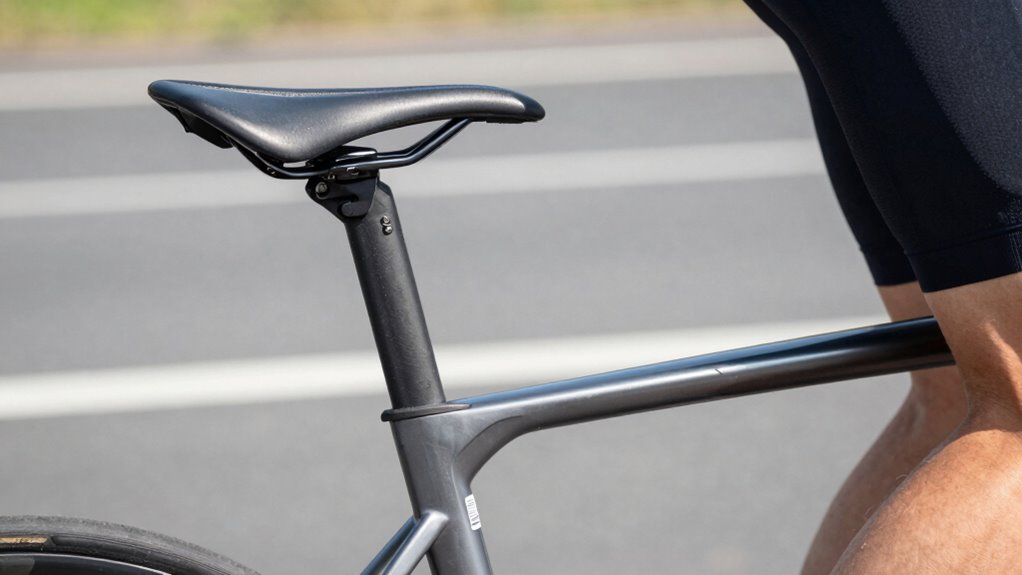
To fix knee pain from saddle height, start by adjusting your saddle to match your leg extension—ensure your knee is slightly bent at the pedal bottom. Next, fine-tune the fore-aft position so your kneecap aligns directly over the pedal axis when the pedal is at 3 o’clock. Finally, tweak the saddle tilt for comfort and efficiency. These three adjustments can make a big difference; keep exploring to learn more about ideal cycling setup.
Open a free Amazon Business account
Business pricing, bulk buying and tax-exempt orders.
As an affiliate, we earn on qualifying purchases.
Key Takeaways
- Ensure saddle height allows a slight knee bend at the pedal bottom to prevent overextension or strain.
- Adjust saddle fore-aft so your kneecap aligns over the pedal axle at 3 o’clock for proper knee tracking.
- Fine-tune saddle tilt to reduce pressure on sensitive areas and improve comfort during pedaling.
- Verify that the saddle height is appropriate for your leg length and riding style to minimize knee discomfort.
- Regularly reassess saddle position and make small adjustments for ongoing comfort and to avoid knee pain.

SODPE 8 Pack Bicycle Accessories, Bike Light Set USB Rechargeable, 1 Bike Water Bottle Holder, Bicycle Bag and 1 Bike Aluminum Bicycle Bell,Pump
- Bike Lights with Multiple Modes: USB rechargeable with 3 lighting modes
- Water-Resistant Bike Lights: IPX6 rated for rainy conditions
- Durable Water Bottle Holder: Fits most standard and oversized bottles
As an affiliate, we earn on qualifying purchases.
Check Your Saddle Height at the Correct Leg Extension
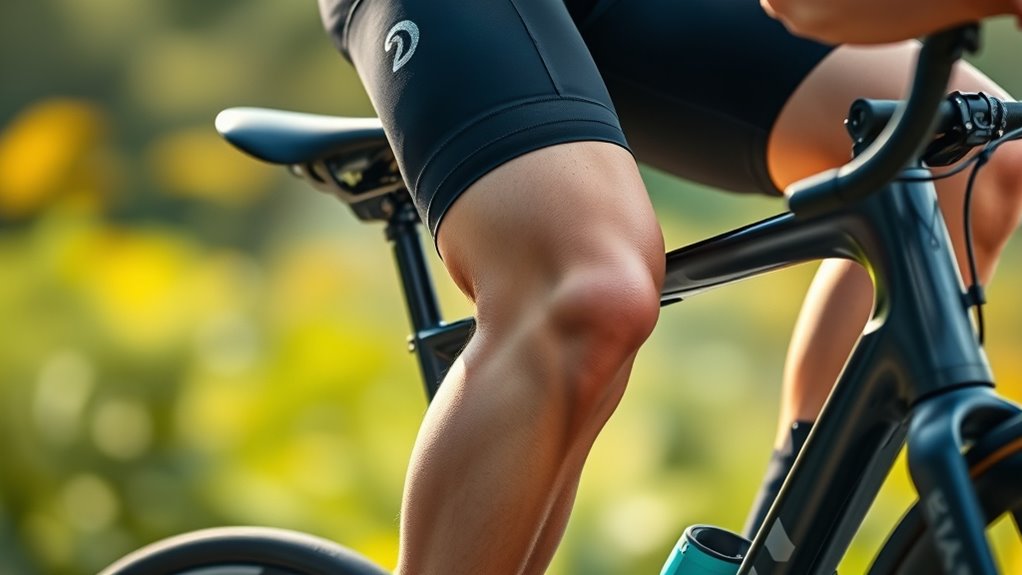
To guarantee your saddle height is set correctly, start by checking it at the leg extension where your leg is fully straightened but not locked. When you sit on your bike, your pedal stroke should feel smooth and efficient, with minimal wobbling or instability. If the saddle is too high, you might notice your hips rocking or losing saddle stability, which can lead to knee pain. Conversely, if it’s too low, your pedal stroke becomes limited, causing unnecessary strain. Adjusting your saddle height to match your leg extension ensures your knee remains slightly bent at the bottom of the pedal stroke, promoting better pedal efficiency and reducing stress. Proper saddle height supports a natural pedal motion, preventing overextension and knee discomfort. Maintaining the correct saddle height also helps reduce joint strain, contributing to overall comfort and injury prevention during rides. Additionally, ensuring your saddle height aligns with your anatomical structure can further enhance comfort and performance.
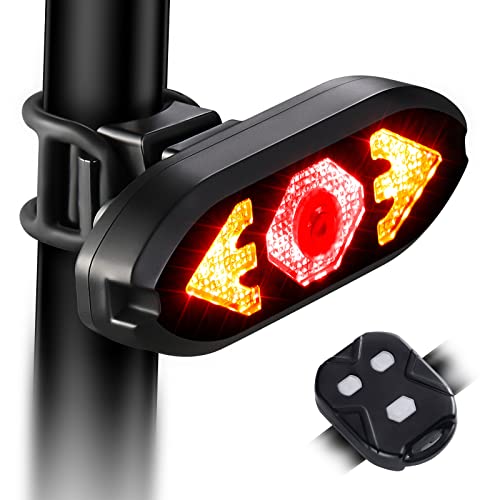
Bike Tail Light with Turn Signals Wireless Remote Control Waterproof Bicycle Rear Light Back USB Rechargeable Ultra Bright Safety Warning Cycling Taillight for Night
- Bright LED for Safety: 100 lm LED for clear visibility
- Wireless Remote Turn Signals: Left and right turn signals with 3 modes
- Waterproof Design: IPX4 waterproof for rainy conditions
As an affiliate, we earn on qualifying purchases.
Adjust the Saddle Fore-Aft Position for Better Knee Alignment
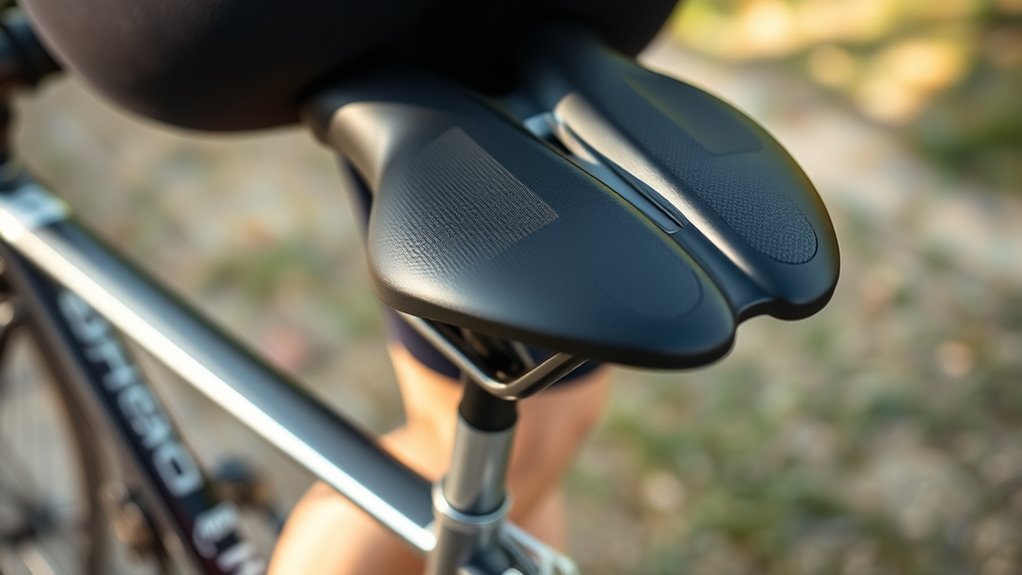
Adjusting the saddle fore-aft position is essential for proper knee alignment and efficient pedaling. If your saddle is too far forward or back, you may experience stability issues, making your ride less smooth and increasing knee strain. A saddle that’s too far forward can cause your knee to track ahead of the pedal, leading to discomfort and reduced pedal efficiency. Conversely, a saddle too far back shifts pressure away from your knee, also affecting stability and power transfer. To find the right position, sit on your bike and place the pedals at 3 o’clock and 9 o’clock. Adjust the saddle so that your kneecap is roughly over the pedal axle when the foot is in the 3 o’clock position. This ensures ideal knee alignment and enhances overall pedal efficiency. Additionally, understanding the importance of home theater projectors can help you create a comfortable and immersive environment for your rides or relaxation space. Proper bike fit, including saddle position, is also crucial for injury prevention and enjoying longer rides without discomfort. Paying attention to biomechanics can further improve your cycling experience and prevent overuse injuries.

JXFUKAL Rear Bike Rack Bag with Rain Cover, 7L/9L/10L/12L Waterproof Bicycle Ebike Saddle Bag Cycling Pannier Trunk Carrier with Reflector & Adjustable Cord for Commuter Travel Outdoor
- Water-Resistant Material: Made of durable, water-repellent PU and polyester
- Rain Cover Included: Provides full protection from rain, dirt, and snow
- Large 10L Capacity: Main compartment plus extra pockets for organization
As an affiliate, we earn on qualifying purchases.
Fine-Tune Saddle Tilt for Optimal Comfort and Performance
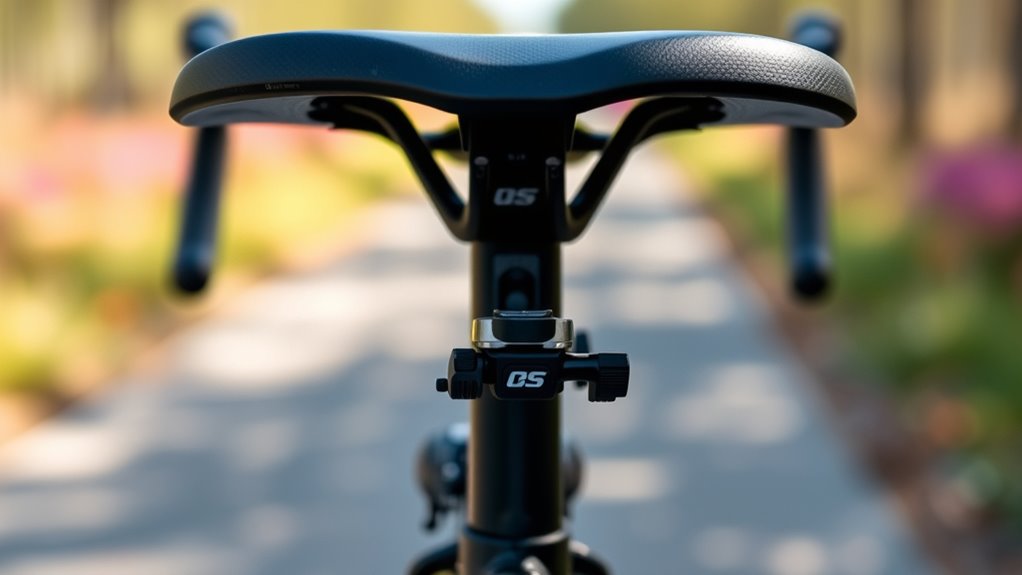
Once you’ve set the saddle’s fore-aft position, fine-tuning the saddle tilt can make a significant difference in comfort and performance. Adjusting the tilt influences your pedal stroke and muscle engagement, helping you find a natural, efficient position. A slight nose-down tilt can reduce pressure on sensitive areas and improve comfort, while a level or slightly nose-up tilt might enhance power transfer. Pay attention to how your muscles engage during each pedal stroke—if you notice unnecessary strain or instability, tweak the tilt accordingly. Small adjustments can prevent knee pain and fatigue, optimizing your ride. Remember, the goal is to achieve a position where both comfort and efficiency align, so experiment carefully until you find the sweet spot. Additionally, understanding how your saddle tilt affects your overall riding experience can help you make more informed adjustments. Being aware of cycling ergonomics can further assist in fine-tuning your setup for better comfort and performance.

Cool Led Bike Spoke Lights - DAWAY A12 Bright Bicycle Wheel Light (1 Pack), Safety Bike Tire Lights for Kids Boys Girls Men Women, Burning Man, Xmas, Birthday Gift, Fun Accessory, Waterproof
- Bright RGB LED Spoke Lights: 14 LEDs with 8 colors and 30 patterns
- Enhanced Night Visibility: Vibrant patterns for safety and style
- Auto & Manual Control: Motion sensor and manual switch modes
As an affiliate, we earn on qualifying purchases.
Frequently Asked Questions
How Often Should I Reassess My Saddle Height?
You should reevaluate your saddle height every few months or after significant bike maintenance, like replacing components or changing your riding routine. Regularly checking your cycling ergonomics ensures comfort and prevents injury. If you notice discomfort, decreased performance, or your flexibility changes, it’s time to tweak your saddle height. Keeping your bike fit up-to-date helps you ride efficiently and safely, so don’t skip these routine adjustments.
Can Saddle Height Changes Affect Other Joints Besides Knees?
Adjusting your saddle height is like tuning a musical instrument—you need the right fit for harmony. Changes can influence other joints, like hips and ankles, causing joint strain if not done properly. Poor saddle height can also lead to poor posture correction, increasing discomfort and risking injury. Regularly reassess your saddle height to guarantee it supports your body’s natural alignment, preventing issues beyond just your knees.
Is There a Different Adjustment Method for Mountain Biking Versus Road Cycling?
Yes, mountain biking and road cycling often require different saddle height adjustments due to bike frame compatibility and riding posture. Mountain bikes typically need a slightly higher saddle for technical terrain, while road bikes favor a more streamlined posture with a lower saddle. To optimize your cycling posture correction, adjust saddle height gradually and test ride to find the most comfortable position for each type, ensuring efficient pedaling and reduced joint stress.
Should I Seek Professional Help for Saddle Adjustments?
Think of your bike fit as a finely tuned instrument—you don’t want to guess and risk a discordant ride. You should seek professional help for saddle adjustments, as a professional assessment can pinpoint issues you might overlook. An expert consultation guarantees your saddle height and position are perfectly aligned, preventing knee pain and enhancing comfort. Trust the pros to fine-tune your setup, so every pedal stroke feels smooth and effortless.
How Do I Know if My Saddle Is Too High or Too Low?
You can tell if your saddle is too high if your hips rock side to side or your knees lock at the top of each pedal stroke. If it’s too low, you may feel excessive knee bend or discomfort. Check your saddle tilt—aim for a level position—and adjust the saddle fore aft to ensure your knee aligns over the pedal axle when at the 3 o’clock position. Proper positioning alleviates knee pain.
Conclusion
Getting your saddle height right is like tuning a fine instrument—you’ll notice improved performance and less pain. Just a few simple adjustments can turn your ride from a rough ride into a smooth symphony. Take the time to perfect your setup, and your knees will thank you. When you find the perfect fit, cycling becomes a dance rather than a struggle, allowing you to glide effortlessly toward your next adventure.
Flea & tick season Picks
flea and tick prevention
As an affiliate, we earn on qualifying purchases.