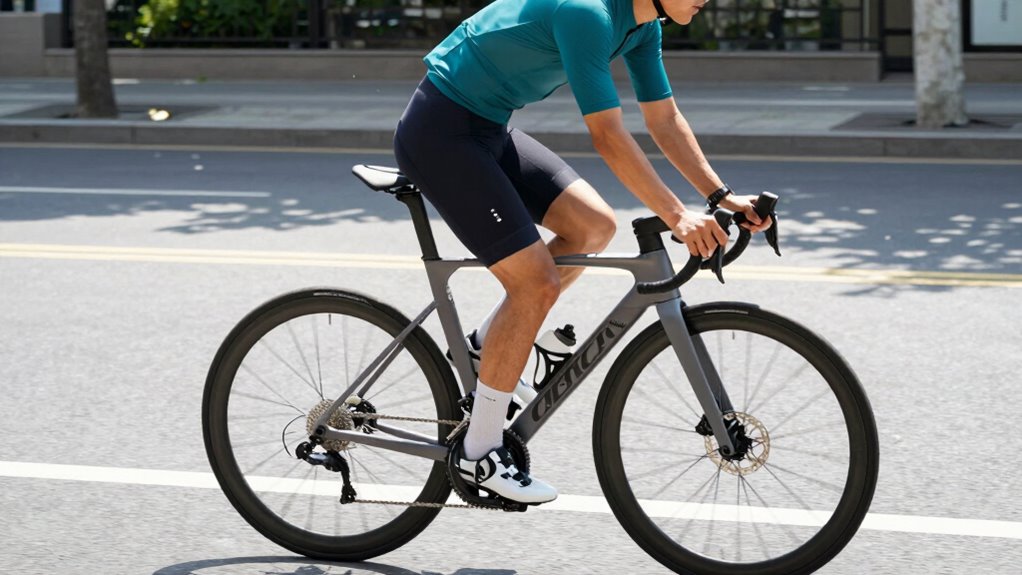
To make your daily commute less tiring, start by adjusting your saddle so your knee has a 25-35° bend at the bottom of each pedal stroke. Make sure your handlebar height and reach feel relaxed and natural, reducing back and shoulder strain. Shift gears smoothly to match terrain, avoiding overexertion. Small tweaks like these improve comfort and efficiency, helping you stay energized. Keep exploring for more simple adjustments that can transform your riding experience.
Key Takeaways
- Adjust your saddle height so your knee has a 25-35° bend at the bottom of the pedal stroke.
- Set the saddle fore-aft position to align your knee over the pedal axle at 3 o’clock.
- Use lower gears early on hills and higher gears on flats to maintain a steady cadence and reduce effort.
- Position handlebars for a relaxed posture, minimizing back and shoulder strain during rides.
- Make small, regular adjustments to your bike fit to improve comfort, efficiency, and reduce fatigue over time.
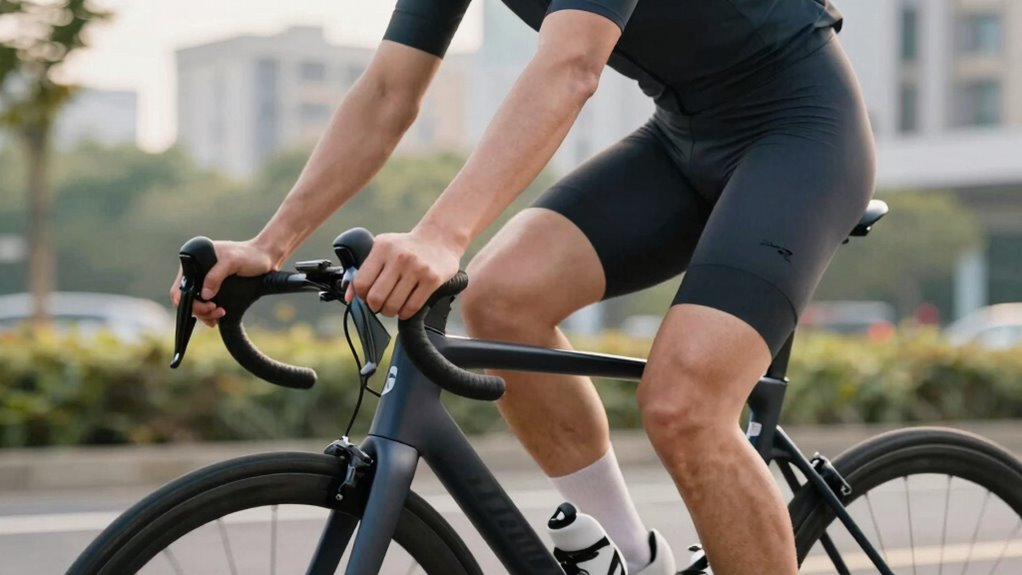
If commuting by bike feels uncomfortable or exhausting, small adjustments to your bike fit can make a big difference. One of the most effective tweaks is optimizing your riding position to improve pedal efficiency. When your saddle height is too low or too high, you waste energy by overextending or not fully engaging your muscles. Adjust your saddle so that when your foot is at the bottom of the pedal stroke, there’s a slight bend in your knee—about 25 to 35 degrees. This position allows you to generate more power with less effort. Additionally, check your saddle fore-aft position; it should be aligned so that your knee is directly over the pedal axle when the pedal is at 3 o’clock. Proper saddle height and position ensure you’re using your leg muscles effectively, reducing fatigue over long commutes. Proper bike fit also helps prevent discomfort and injuries, making your rides more comfortable and sustainable over time.
Another simple yet impactful tweak involves gear selection. Many riders tend to stay in the same gear, even when faced with hills or headwinds, which can drain energy quickly. Learning to shift gears smoothly and choosing the right gear for the terrain helps maintain a steady cadence—your preferred pedaling rate—without overexertion. When climbing hills, shift to a lower gear early so you can keep a comfortable cadence without pushing too hard. Conversely, on flat stretches, selecting a higher gear allows you to pick up speed without unnecessary pedaling effort. Regularly adjusting your gears ensures you’re not wasting energy fighting against resistance or spinning too fast in an inefficient gear. This not only conserves your strength but also reduces strain on your knees and hips.
Furthermore, paying attention to your handlebar position influences your overall comfort. If your handlebars are too low or too high, you may strain your back or shoulders, which adds to fatigue. Adjusting your handlebar height or reach so your body is in a relaxed, natural position helps you maintain good posture and reduces muscle tension. When your body is properly aligned, your breathing improves, and your muscles work more efficiently, making your commute feel less tiring. Additionally, bike fit adjustments can help prevent injuries and discomfort during longer rides. Ensuring your bike setup is tailored to your body not only enhances comfort but also boosts your riding efficiency.
Incorporating these small adjustments—fine-tuning your saddle height and position, mastering gear selection, and ensuring a comfortable handlebar setup—can dramatically improve your ride. They make pedaling more efficient, help you conserve energy, and keep fatigue at bay. With a little attention to your bike fit, your daily commute becomes not only easier but also more enjoyable.
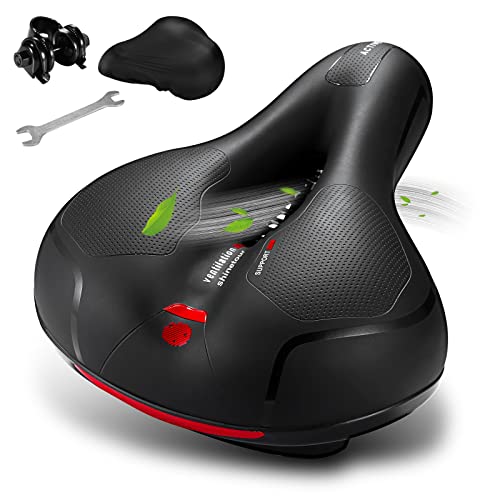
Comfortable Seat Cushion for Men Women with Dual Shock Absorbing Ball Memory Foam Waterproof Wide Bicycle Saddle Fit for Road Bikes
★DOUBLE SHOCK ABSORBING BALL★The two shock absorbing balls placed beneath the bicycle seat ensure absorbing the shocks coming…
As an affiliate, we earn on qualifying purchases.
As an affiliate, we earn on qualifying purchases.
Frequently Asked Questions
How Often Should I Reassess My Bike Fit?
You should reassess your bike fit every few months or whenever you notice discomfort or decreased gear efficiency. Regular checks help maintain bike comfort, reducing fatigue during daily commutes. Changes in your flexibility, riding style, or bike components can affect fit, so staying attentive guarantees you stay comfortable and efficient. Don’t wait too long; periodic adjustments keep your ride smooth, comfy, and ideal for everyday commuting.
Can Bike Fit Adjustments Prevent Saddle Soreness?
Yes, bike fit adjustments can help prevent saddle soreness by reducing excessive saddle pressure and improving padding comfort. When your bike is properly fitted, you’ll distribute your weight more evenly, alleviating pressure points that cause soreness. Adjusting saddle height, tilt, or position can make a big difference. Investing in a comfortable saddle and ensuring proper padding support also helps, making your daily commute more comfortable and soreness-free.
What Tools Are Needed for Basic Bike Fit Tweaks?
Think of your bike as a finely tuned instrument—you need the right tools to keep it playing smoothly. For basic bike fit tweaks, you’ll need an Allen wrench set, a torque wrench, a ruler or saddle height gauge, and a bubble level. These tools help you fine-tune your bike’s ergonomic setup and saddle positioning, ensuring a comfortable ride and reducing fatigue. Proper adjustments make a world of difference on your daily commute.
How Do I Know if My Handlebars Are at the Right Height?
You’ll know your handlebars are at the right height if your riding posture feels comfortable and natural. Check handlebar ergonomics by ensuring your elbows are slightly bent and your shoulders relaxed. When you ride, your wrists shouldn’t strain, and your back should stay straight without hunching. If you find yourself reaching or leaning excessively, adjust the handlebars higher or lower until your posture remains relaxed and efficient for daily commuting.
Do Bike Fit Tweaks Improve Riding Safety?
Imagine riding a knight’s steed—bike fit tweaks definitely improve riding safety. Proper gear alignment keeps your components working smoothly, reducing accidents. Ensuring your tire pressure is just right prevents flats and enhances control. When your bike’s fit feels natural, you’re less likely to lose balance or strain muscles, making every ride safer. So, yes, these small adjustments boost your safety, letting you focus on the journey and enjoy the ride.

Adjustable MTB Stem 31.8mm 70 Degree – 90/110/130/145mm Bike Stem Riser for Handlebar – Aluminum Alloy Mountain Bike Handlebar Riser Extender for MTB Road City Bike Bicycle
NOTE: PLEASE CONFIRM YOUR SIZE BEFORE YOUR PURCHASE. 90, 110 130 and 145mm are not the total long…
As an affiliate, we earn on qualifying purchases.
As an affiliate, we earn on qualifying purchases.
Conclusion
Remember, small changes can make a big difference. By tweaking your bike fit, you’ll find your daily commute becomes less tiring and more enjoyable. It’s easy to overlook the little adjustments, but they can prevent discomfort and boost your endurance. As the saying goes, “A journey of a thousand miles begins with a single step.” Start with simple tweaks today, and enjoy the ride—your body will thank you for it.
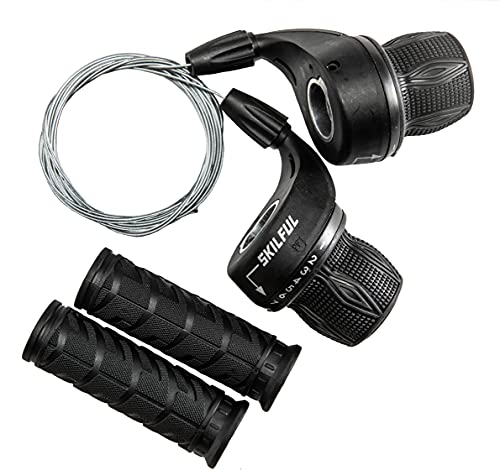
MEGHNA Bicycle 21 Speed Twist Shifter Lever 3 x 7 Speed Grip Shift Left and Right Shifting Mountain Bike Hybrid Bike Kids Bike Tricycle Gear Grip Shifter with Grips (Pair)
Model: MG-MG-BS-3X7S; 3 x 7 / 21 Speed Bike Twist Shifter with Handle Grips Set.
As an affiliate, we earn on qualifying purchases.
As an affiliate, we earn on qualifying purchases.
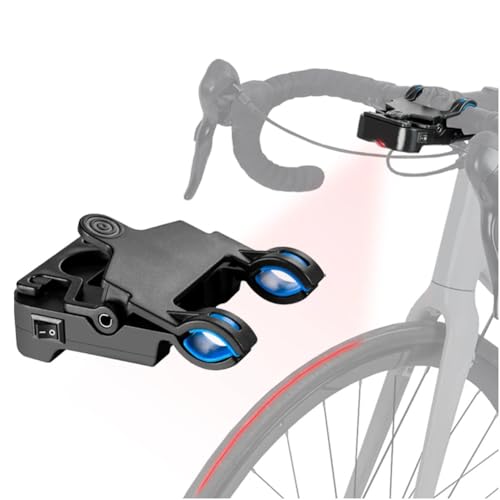
Handlebar Laser Aligner for Bicycles, Bike Seat Calibrator Bike Tool,Bicycle Handlebar Laser Aligner Seat Center Adjuster Measurement Tool, Aligning Indicator Tool
Bicycle Handlebar Alignment: Maximize your cycling performance with our handlebar calibrator. Mounting it in the handlebar's middle, and…
As an affiliate, we earn on qualifying purchases.
As an affiliate, we earn on qualifying purchases.