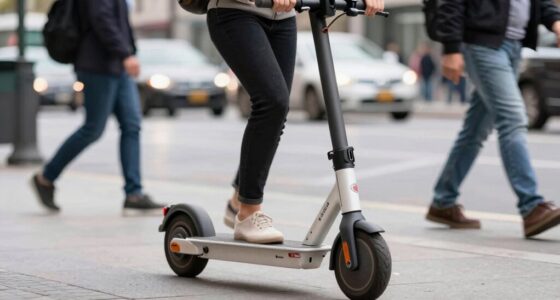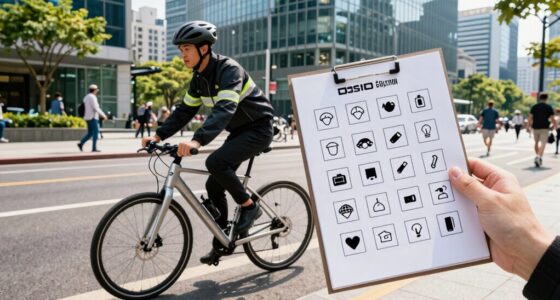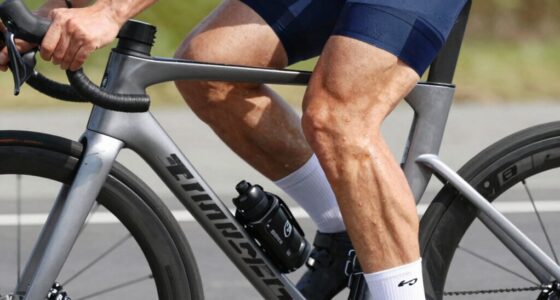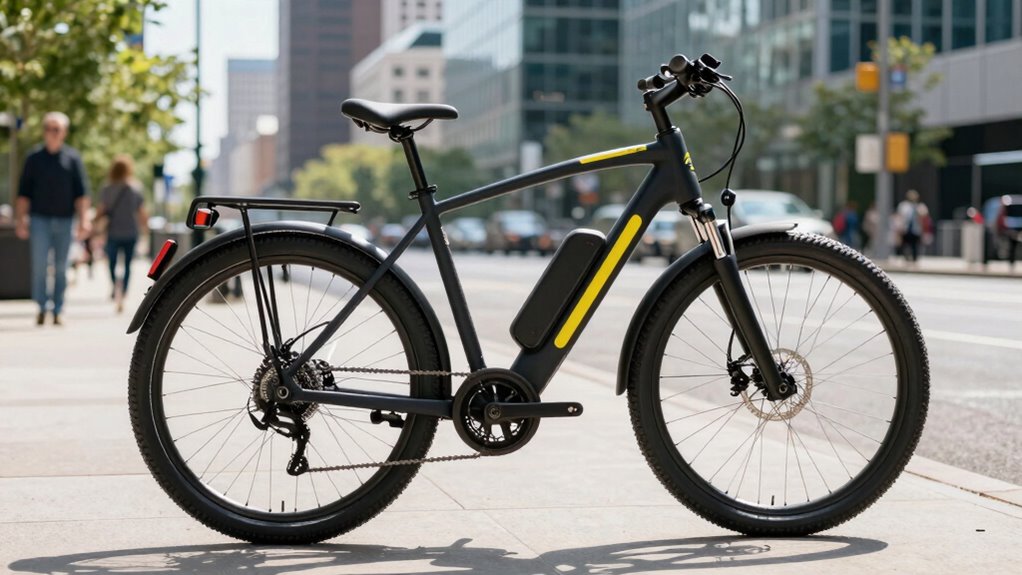
To pick the right commuter e-bike, consider your daily distance and terrain. If you travel short distances on flat roads, a smaller battery and lower wattage motor may suffice. For longer rides or hilly terrain, opt for a larger capacity battery and a more powerful motor to guarantee enough assistance without frequent recharges. Balancing battery size with motor power can make your commute smoother and more reliable; explore further to find your perfect match.

Get bike and ride gear delivered free — and shop member deals
- Fast, free delivery on millions of items
- Access to Prime Big Deal Days deals on October 6–7
- Prime Video, Amazon Music and more included
Key Takeaways
- Assess your daily travel distance to determine the appropriate battery capacity for sufficient range.
- Match motor power to your route terrain; higher wattage for hills, lower for flat areas.
- Balance bike weight and battery size for comfort and ease of handling during daily commutes.
- Consider terrain and assistance needs to select compatible motor and battery specifications.
- Prioritize a balanced setup to ensure reliable, efficient, and enjoyable riding experiences.
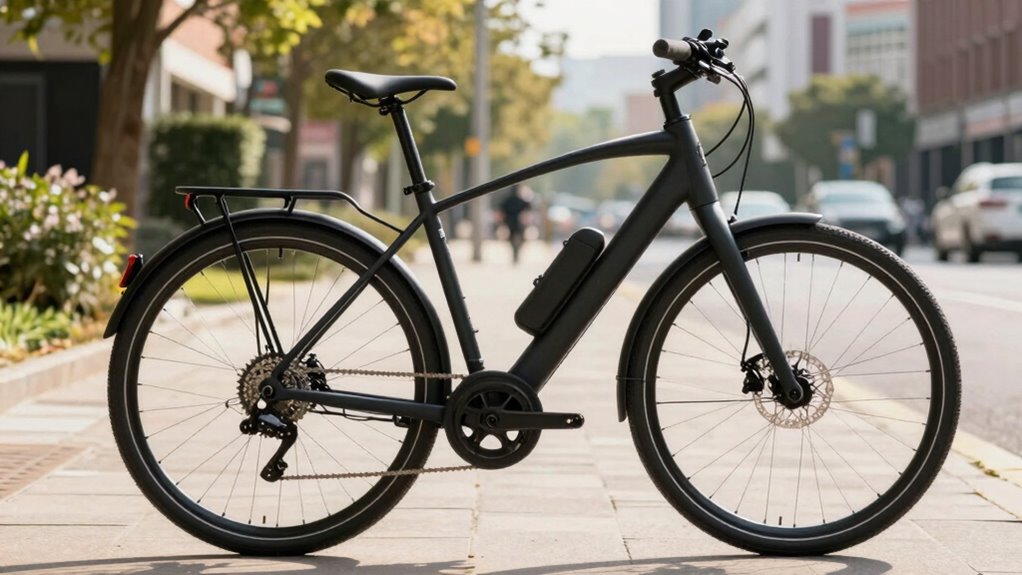
Are you considering a commuter e-bike to make your daily travels easier and more enjoyable? If so, you’re making a smart choice. E-bikes can transform your commute, saving you time and effort while reducing your carbon footprint. But choosing the right one depends on understanding a few key factors, especially around battery capacity and motor power. These elements directly influence how well the e-bike will serve your daily route and how much you’ll enjoy the ride.
Starting with battery capacity, you want to factor in how far you typically travel each day. A larger battery capacity generally means a longer riding range, so you won’t have to worry about running out of juice mid-commute. If your daily route is short—say, under 10 miles—you might get away with a smaller battery, which keeps the bike lightweight and more affordable. But if you’re commuting longer distances or plan to use your e-bike for errands beyond your usual route, investing in a model with a higher battery capacity guarantees you’ll have enough power to complete your trip without needing a recharge. Keep in mind that larger batteries tend to add weight, so strike a balance that fits your strength and comfort level. Additionally, battery capacity can influence how often you’ll need to recharge, affecting your overall convenience. Understanding battery technology can also help you select a model with a longer lifespan and improved performance over time, ensuring your investment remains reliable for years to come.
Motor power also plays a crucial role in your riding experience. It determines how much assistance you get from the motor, especially when facing hills, headwinds, or carrying extra gear. If your daily route includes steep inclines or you want more robust assistance, look for an e-bike with a higher wattage motor—something in the 500W to 750W range. These motors provide more torque, making climbs easier and helping you keep up a steady pace without exerting too much effort. Conversely, if your route is mostly flat and you prefer a lighter, more maneuverable bike, a motor with lower wattage may suffice. Remember, more powerful motors often consume more battery power, so pairing a high-capacity battery with a strong motor guarantees you get the best performance without sacrificing range. Furthermore, understanding motor technology can help you choose a model that offers efficient power delivery and longevity, maximizing your riding enjoyment.
Ultimately, the best commuter e-bike for you balances battery capacity and motor power according to your daily route. Think about how far you usually travel, the terrain you encounter, and how much assistance you want. By paying attention to these key features, you’ll choose a bike that makes your daily commute smoother, more efficient, and more enjoyable.
commuter e-bike with long battery life
As an affiliate, we earn on qualifying purchases.
As an affiliate, we earn on qualifying purchases.
Frequently Asked Questions
What Is the Average Lifespan of a Commuter E-Bike Battery?
Think of your e-bike’s battery like a rechargeable coffee mug—its lifespan depends on care and quality. On average, battery technology offers a lifespan estimation of 3 to 5 years or around 500 to 1,000 charge cycles. Proper maintenance, such as avoiding extreme temperatures and regular charging, can extend this. With good care, your commuter e-bike battery will keep powering your daily rides for many seasons.
How Do I Maintain My E-Bike for Daily Commuting?
To keep your e-bike in top shape for daily commuting, regularly check and clean the chain, tires, and brakes. Keep your battery charged and store it in a cool, dry place. Use bike accessories like lights and a lock for safety, and follow commuting tips such as planning routes and avoiding rough terrains. Consistent maintenance guarantees your e-bike stays reliable, making your daily ride smooth and enjoyable.
Are There Legal Restrictions on E-Bike Speeds in Cities?
Yes, there are legal restrictions on e-bike speeds in cities. You need to follow e bike speed regulations, which often limit pedal-assist bikes to 20 mph and throttle-controlled bikes to similar speeds. City e bike laws vary, so verify your local regulations to avoid fines or penalties. Staying within these limits ensures safe riding and compliance with the law, making your daily commute smoother and worry-free.
Can I Upgrade Components on My Commuter E-Bike Later?
Yes, you can upgrade components on your commuter e-bike later, but you should consider battery upgrades and component compatibility. Before swapping parts, check if the new components fit your bike’s frame and match the motor system. Upgrading the battery can extend your range, but make sure it’s compatible with your bike’s electronics. Carefully selecting compatible parts helps maintain peak performance and safety, making your e-bike suit your evolving commuting needs.
What Safety Gear Is Recommended for E-Bike Commuting?
You should wear protective clothing like a helmet, gloves, and reflective jackets to stay safe while commuting. Visibility accessories, such as bright lights and reflective tape, help others see you clearly, especially in low-light conditions. Always check that your lights are working and wear gear that enhances your visibility. Prioritizing safety gear guarantees you’re protected and easily noticed during your daily e-bike rides.
As an affiliate, we earn on qualifying purchases.
Conclusion
Choosing the right commuter e-bike means considering your route, budget, and riding style. Test different models, prioritize comfort and features, and don’t rush your decision. Remember, a journey of a thousand miles begins with a single step—pick the bike that feels right and makes your daily commute enjoyable. When you find the perfect fit, every ride will be smoother and more rewarding. Happy cycling!
As an affiliate, we earn on qualifying purchases.
As an affiliate, we earn on qualifying purchases.
Evergreen bestsellers Picks
bestsellers
As an affiliate, we earn on qualifying purchases.