Many believe that pedaling slowly or with less effort saves battery, but spinning faster actually helps extend your e-bike’s range. When you pedal at a steady, higher cadence, your motor works more efficiently, using less energy. This reduces strain on your battery and can make your rides last longer. If you want to release more tips and tricks to maximize your battery life, stay tuned for insights that challenge common misconceptions.

Get bike and ride gear delivered free — and shop member deals
- Fast, free delivery on millions of items
- Access to Prime Big Deal Days deals on October 6–7
- Prime Video, Amazon Music and more included
Key Takeaways
- Spinning faster improves motor efficiency by reducing strain and energy consumption during rides.
- Higher cadence allows the motor to operate within its optimal range, conserving battery power.
- Pedaling at a steady, faster pace helps prevent excessive assistance that drains the battery quickly.
- Efficient pedaling techniques can extend your bike’s range without upgrading the battery.
- Misconceptions about pedal assist often overlook the benefits of increased pedaling speed for battery longevity.
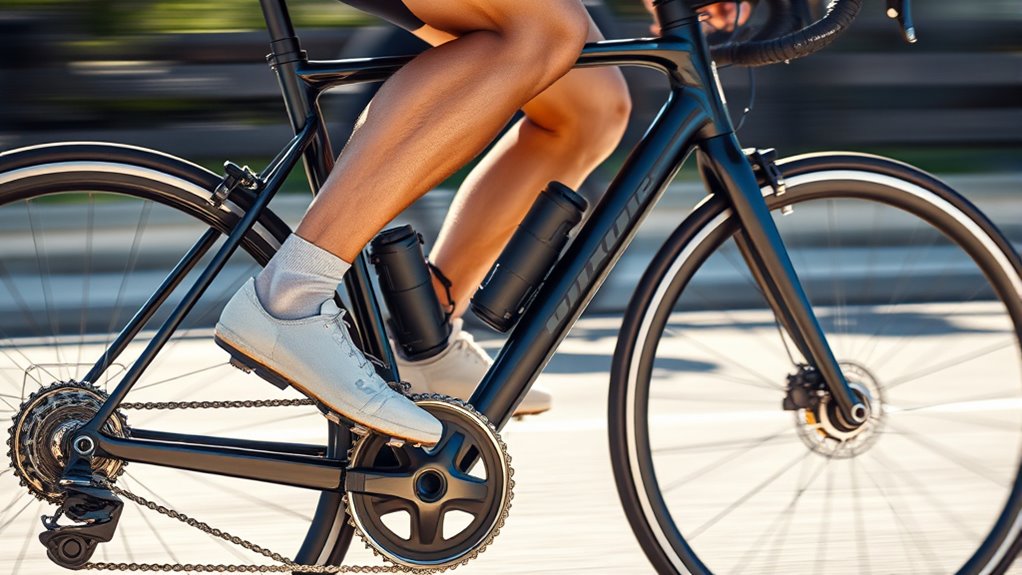
Many people believe that pedal assist bikes are just glorified scooters, but this is a common misconception. These bikes are designed to enhance your pedaling experience, not replace your effort entirely. One key factor that influences how far you can go on a single charge is battery capacity. A larger battery capacity means more energy stored, which translates into longer rides without needing a recharge. However, simply having a bigger battery isn’t the whole story. How you use that energy makes a significant difference, and that’s where motor efficiency and riding technique come into play.
Motor efficiency refers to how well the motor converts electrical energy into mechanical power to assist your pedaling. A highly efficient motor uses less energy to provide the same level of assistance, meaning your battery lasts longer. When you pedal faster or maintain a steady cadence, the motor doesn’t have to work as hard to keep up. This balance is vital because it directly impacts your battery life. If you’re pushing the motor too hard by riding at a slow speed or applying excessive assistance, your battery drains faster. Conversely, when you spin faster and keep a consistent, moderate cadence, you’re maximizing the motor’s efficiency. This means less energy is wasted, and your battery can support longer rides.
Maximize your e-bike’s range by pedaling faster and maintaining a steady cadence for better motor efficiency.
You might think that riding faster consumes more energy, but it actually depends on how you approach your speed. Spinning your pedals at a higher cadence reduces the strain on the motor and helps it operate more efficiently. When the motor isn’t overexerting itself, it consumes less power, conserving your battery capacity. This is especially true with modern pedal assist bikes equipped with intelligent controllers that adjust assistance levels based on your pedaling speed. If you pedal with a smooth, steady rhythm, you’re encouraging the motor to work within its ideal efficiency range, saving your battery for when you really need it. Additionally, choosing the right projector technology can enhance your cinematic experience, just as optimizing riding techniques enhances your e-bike range.
Ultimately, understanding that faster pedaling can conserve battery life is a game-changer. Instead of relying on maximum assistance at low speeds, you can focus on maintaining a steady, higher cadence. This not only improves your riding experience but also extends your bike’s range. It’s a simple yet effective way to get more out of your pedal assist bike, proving that sometimes, spinning faster can be the smarter way to go. So, next time you’re out riding, remember that efficiency isn’t just about the bike’s specs — it’s about how you ride, and optimizing your cadence can make a real difference in how far your battery takes you.
As an affiliate, we earn on qualifying purchases.
Frequently Asked Questions
Does Pedaling Harder Always Extend Battery Life?
No, pedaling harder doesn’t always extend your battery life. Motor efficiency depends on your pedaling speed and effort, but spinning faster at a moderate pace can optimize motor efficiency and conserve battery capacity. Pushing too hard may drain your battery faster, while steady, moderate pedaling helps the motor work efficiently. Find a rhythm that balances effort and efficiency to maximize your battery life and enjoy longer rides.
Can Riding Faster Drain the Battery Quicker?
Ever wonder if riding faster drains your battery quicker? Yes, it can. When you pedal faster, your bike frame and motor power work harder, increasing energy consumption. The motor has to supply more power to match your increased speed, which can deplete your battery faster. So, maintaining a steady, moderate pace helps conserve battery life, letting you enjoy longer rides without worrying about running out of power.
How Does Rider Weight Affect Battery Consumption?
Your rider weight directly impacts battery consumption because heavier weights require more power to move. When you carry more weight, your e-bike uses more energy from the battery capacity, leading to quicker depletion. To optimize your ride, keep your rider weight in mind and adjust your riding habits accordingly. Lighter loads help conserve battery life, making your trips longer and more efficient.
Is There an Optimal Pedaling Speed for Battery Efficiency?
You can maximize your e-bike’s battery life by maintaining an ideal cycling cadence, usually around 80-100 RPM. Spinning faster or slower can reduce motor efficiency, making your battery drain faster than a rocket heading to the moon. Keep a steady, moderate pedal speed, and you’ll help your motor operate at peak efficiency. This way, your battery lasts longer, giving you more miles of adventure without needing a recharge every few minutes.
Do Different Terrains Impact the Effectiveness of Pedal Assist?
Different terrains definitely impact how effective pedal assist is. On challenging terrains like steep hills or uneven surfaces, you’ll find yourself relying more on motor power because of terrain challenges and surface traction issues. You should adjust your pedaling effort accordingly to maintain control and efficiency. Remember, smoother terrains allow you to spin faster and save battery, while rougher ones demand more motor support to handle terrain challenges effectively.
pedal assist bike motor efficiency
As an affiliate, we earn on qualifying purchases.
As an affiliate, we earn on qualifying purchases.
Conclusion
So, remember, spinning faster doesn’t drain your battery faster—it’s like chasing a mirage. Instead, focus on steady, efficient pedaling to make your e-bike last longer. By debunking this myth, you’ll ride smarter, not harder, turning each journey into a smooth sail rather than a frantic race against the clock. Keep your wheels turning wisely, and your battery will thank you, shining like a well-tuned instrument ready to serenade every adventure.
As an affiliate, we earn on qualifying purchases.
e-bike range extender accessories
As an affiliate, we earn on qualifying purchases.
As an affiliate, we earn on qualifying purchases.
Fall Picks
fall essentials
As an affiliate, we earn on qualifying purchases.