If you hear high-pitched squealing or screeching when applying your brakes, it’s a sign that your brake pads are worn and need attention. Grinding noises indicate severe wear, exposing metal to metal contact, which can damage your rotors. Thumping or vibrations also point to potential rotor issues. Ignoring these sounds risks safety and costly repairs. Keep listening to what your brakes tell you—more details to help you stay safe are just ahead.
Key Takeaways
- A high-pitched squeal often indicates worn brake pads needing immediate replacement.
- Grinding sounds suggest severe pad wear and potential metal-on-metal contact, requiring urgent inspection.
- Squealing or screeching signals hardware issues or insufficient lubrication, risking brake failure if ignored.
- Thumping or vibrations during braking point to warped rotors or caliper problems, demanding prompt attention.
- Ignoring brake noise can lead to rotor damage, increased repair costs, and compromised safety.
Common Noises Indicating Brake Problems

When your brakes start making unusual noises, it’s a clear sign something isn’t right. You might notice a soft hissing or a grinding sound, which could indicate brake fluid leaks. Leaking fluid reduces braking performance and can lead to complete brake failure if ignored. Additionally, a sticking brake caliper can cause a constant squeal or dragging noise, especially when you’re driving or braking. This issue makes your brake pads stay in contact with the rotor longer than necessary, leading to uneven wear and reducing safety. Don’t dismiss these sounds—they’re warnings that your brake system needs attention. Addressing brake fluid leaks and sticking calipers early can prevent costly repairs and keep you safe on the road.
The High-Pitched Squeal and Its Meaning
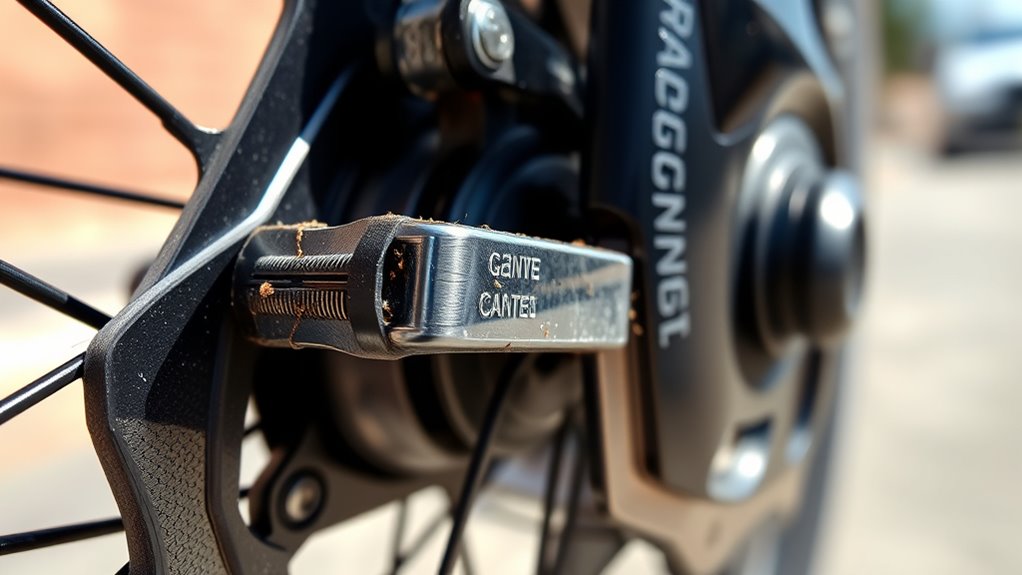
A high-pitched squeal from your brakes often signals that your brake pads are wearing thin or that the brake system needs lubrication. This sound typically results from certain brake pad materials, like those with metallic components, which tend to produce a squeal when they contact the rotor. It’s a warning sign that you should consider brake system diagnostics to determine the cause. The squeal may also indicate that your brake pads have become glazed or that the shims and hardware need cleaning or replacement. Ignoring this noise can lead to further damage or reduced braking performance. Regular inspections can help catch these issues early, ensuring your brakes stay effective and safe. Additionally, innovative European cloud servers exemplify how advanced technology can support sustainable and secure automotive solutions. Recognizing the significance of early diagnosis in brake wear can help prevent costly repairs and enhance vehicle safety. Understanding nanotechnology’s applications in automotive sensors and diagnostics can further improve early detection and maintenance strategies. Moreover, implementing advanced sensor technology can provide real-time alerts, helping drivers stay ahead of potential brake failures before they become critical.
Grinding Sounds: A Sign of Severe Wear
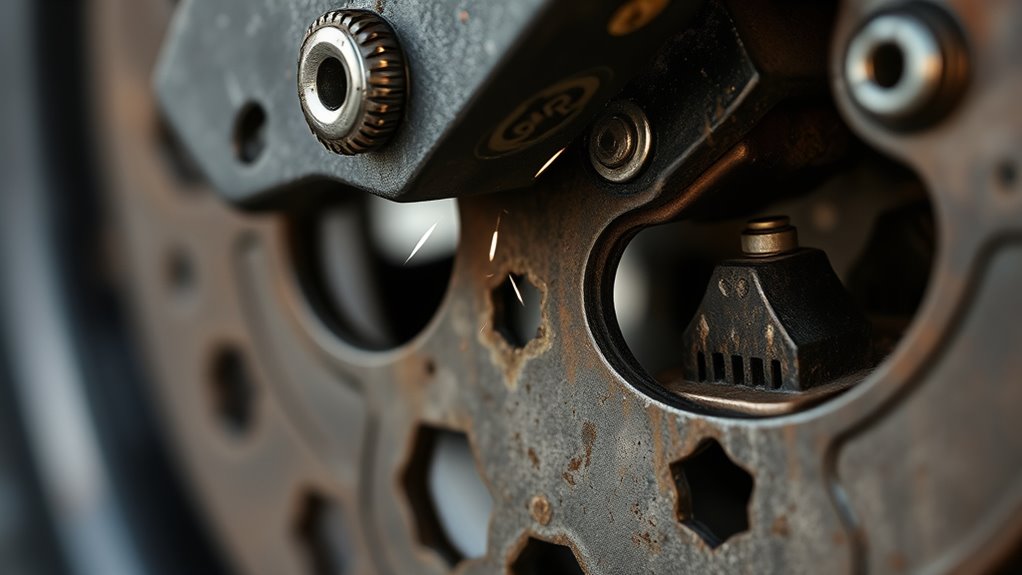
Grinding sounds from your brakes are a clear warning that severe wear has occurred, and immediate attention is necessary. When you hear this harsh noise, it often indicates that the brake pads have worn down completely, exposing the metal backing. The composition of your brake pads—whether ceramic, semi-metallic, or organic—affects how quickly they wear and produce noise. Metal-on-metal contact causes the grinding sound, which can damage other parts of your brake system. To prevent costly repairs, you should promptly perform brake system diagnostics. These diagnostics help identify underlying issues, such as uneven pad wear or damaged rotors. Regular inspections and understanding common repair issues can help you address problems before they escalate. Ignoring grinding noises can lead to reduced braking efficiency and safety risks, so don’t delay in getting your brakes inspected and serviced immediately. Additionally, understanding brake system components can aid in early detection of potential failures before they produce alarming noises. Being familiar with wear indicators can also help you recognize when your brakes need servicing before severe damage occurs. Moreover, staying aware of performance signs can help you catch problems early and maintain optimal braking performance.
Thumping or Vibrations When Applying Brakes
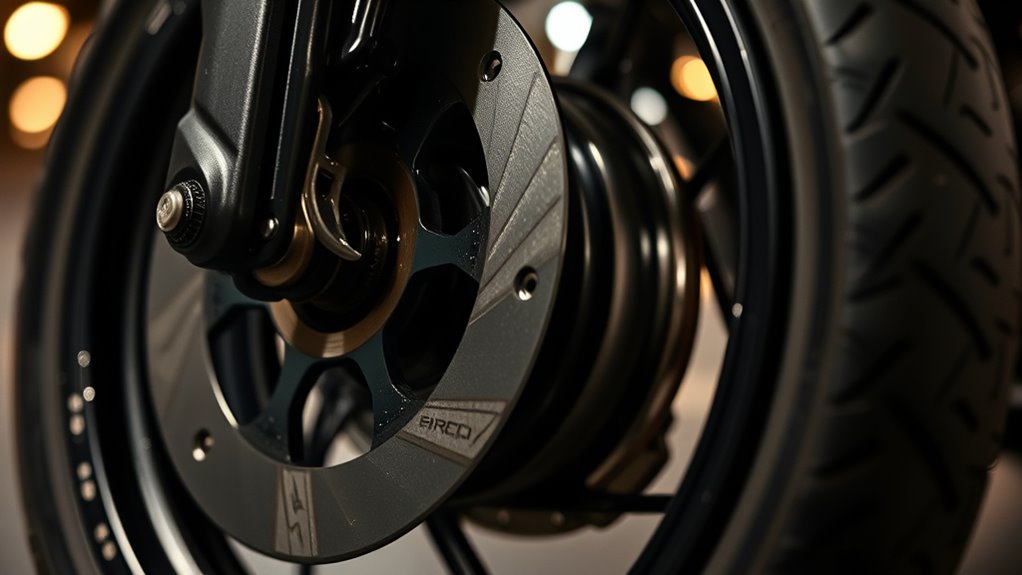
If you notice thumping or vibrations when applying your brakes, it often signals issues beyond simple wear. You might experience inconsistent brake pedal feedback or uneven brake response, which can compromise safety. This sensation usually indicates rotor problems, such as warping or uneven surfaces, causing the vibrations. Additionally, braking system issues can lead to similar symptoms and should be inspected promptly. Consider these potential causes: 1. Warped rotors that create uneven contact with brake pads. 2. Brake caliper issues, like sticking or misalignment. 3. Worn or uneven brake pads leading to irregular braking force. Regular brake system inspections are essential to identify and resolve these problems early. Proper brake maintenance can prevent further damage and ensure optimal performance. Addressing these issues promptly can improve braking performance and prevent further damage. If you feel vibrations or uneven pedal feedback, don’t ignore them—they’re warning signs that your braking system needs inspection and repair. Recognizing rotor problems early can help avoid costly repairs and maintain vehicle safety.
How to Recognize the Sound of Worn Brake Pads
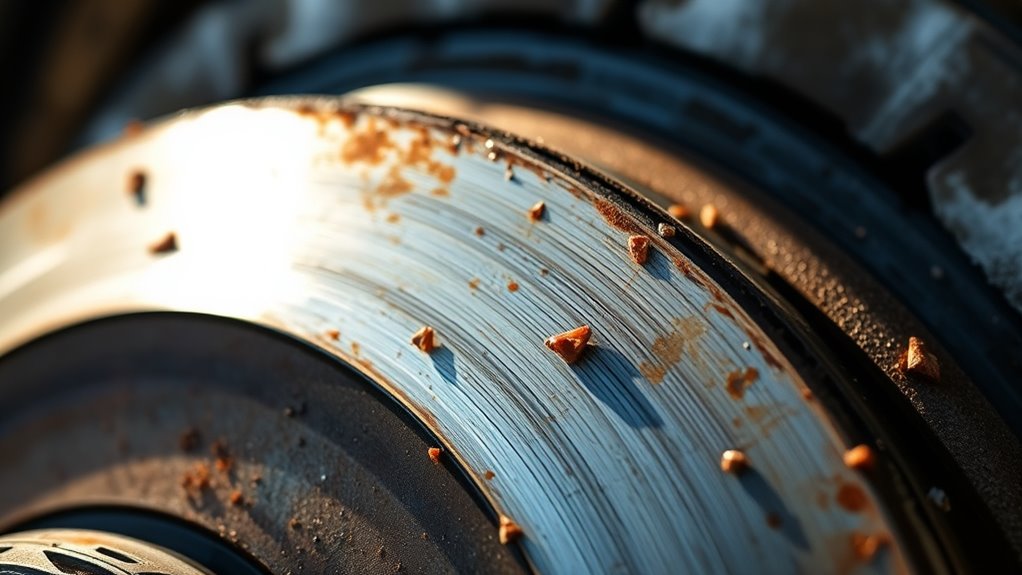
Recognizing the sound of worn brake pads is essential for maintaining safe braking performance. Worn brake pads often produce a high-pitched squeal or screech that’s caused by the brake pad material’s wear indicator contact. This brake noise frequency varies depending on the pad material—metallic, ceramic, or organic—each creating distinct sounds. Metallic pads tend to produce a sharper, more persistent squeal, while ceramic pads may generate a softer, high-frequency noise. If you hear a constant or intermittent screech when applying brakes, it’s a strong sign that your brake pads need replacement. Pay attention to these sounds, as they can alert you before more serious issues develop. Recognizing these auditory cues helps you address brake wear early, ensuring your safety on the road. Understanding the different brake pad materials can help you better identify the specific sounds associated with each type.
What Your Vehicle’s Noises Say About Brake Health

Your vehicle’s noises can be valuable indicators of brake health, often revealing issues before they become serious. Pay attention to different sounds, as they reflect specific problems.
- Squealing or screeching typically signals worn brake pad materials, which may need replacing soon.
- Grinding noises often indicate that brake pads are entirely worn through, exposing rotors or drum brake components, risking damage.
- Thumping or pulsating sounds can point to issues with drum brake operation, such as uneven drum surfaces or imbalance.
- Sometimes, unusual noises can also be related to other vehicle components, like flat iron bike parts, which might produce similar sounds under certain conditions.
Additionally, understanding the wear patterns of brake components can help diagnose issues early and prevent costly repairs.
Research indicates that sound wave frequencies can influence cellular responses, highlighting the importance of paying attention to odd vehicle noises.
Being aware of diagnostic cues from noises can assist in early detection and effective maintenance, reducing the likelihood of brake failure. Recognizing that vibration analysis can provide further insights into brake system issues emphasizes the need for comprehensive diagnostics.
Understanding these sounds helps you identify when your brakes need attention. Recognizing the relationship between noise and brake components allows you to prevent more costly repairs. Always consider these signals as early warnings to maintain safe braking performance.
Immediate Steps to Take When You Hear Brake Sounds

When you hear unusual brake sounds, taking immediate action can prevent further damage and guarantee your safety. Start by scheduling a brake pad inspection to identify any worn or damaged components that could be causing the noise. Checking your brake fluid level and condition is also essential, as low or contaminated fluid can impair braking performance. If you notice a squeal or grinding sound, don’t delay—these often indicate worn brake pads or issues with the calipers. Keep an eye on brake fluid leaks or a spongy brake pedal, which signals a problem with your hydraulic system. Addressing these issues promptly can save you from costly repairs later and ensure your brakes continue to perform reliably when you need them most. Additionally, understanding brake system maintenance can help you recognize early warning signs and keep your braking system in optimal condition. Regular inspections and timely replacements are crucial for preventing brake failure, especially if you frequently drive in demanding conditions. Performing routine brake inspections can also help you catch minor issues before they develop into major problems.
Preventive Measures for Brake System Longevity

Regular maintenance is essential to extend the lifespan of your brake system. Consistently check your brake fluid levels and perform brake fluid maintenance to prevent corrosion and guarantee smooth operation. Regularly inspect your calipers for signs of wear or sticking, which can cause uneven brake pad wear or reduced stopping power. To maximize longevity, consider these steps:
Regular brake checks and fluid maintenance ensure safety and prolong system life.
- Schedule routine brake fluid changes every 1-2 years or as recommended by your vehicle’s manufacturer.
- Conduct caliper inspections at least once a year to catch issues early.
- Keep an eye on brake pad thickness and replace them before they wear too thin, preventing damage to rotors and calipers.
These measures help maintain ideal brake performance and avoid costly repairs down the line.
Frequently Asked Questions
How Often Should I Have My Brakes Inspected for Wear Signals?
You should have your brakes inspected at least once a year or every 12,000 miles, whichever comes first. During these inspections, check the brake fluid levels and rotor condition for signs of wear or damage. If you notice squealing sounds or reduced braking performance, get them checked sooner. Regular inspections help catch brake wear signals early, ensuring your safety and preventing costly repairs down the line.
Can Brake Noises Indicate Issues Other Than Wear?
Think of brake noise causes like a vintage radio crackling—sometimes it’s more than just wear. Non-wear brake sounds, such as squealing or grinding, can stem from dust, moisture, or rusty components. These noises don’t always mean your brakes are worn out, but they signal you should get them checked. Ignoring these sounds could lead to bigger issues, so don’t dismiss unusual brake noise; it’s your car’s way of warning you.
Are There Specific Driving Habits That Accelerate Brake Wear?
Your driving style impacts brake wear considerably. Aggressive habits like hard braking, rapid acceleration, and riding the brakes constantly accelerate brake pad materials’ deterioration. Frequent stop-and-go traffic also speeds up wear. To extend brake life, avoid sudden stops, anticipate traffic flow, and use gentle braking. Smooth driving reduces stress on your brake system, saving you money and ensuring your brakes last longer.
What Are the Risks of Ignoring Brake Wear Signals?
Ignoring brake wear signals is like ignoring a warning sign on a cliff’s edge—you risk catastrophic failure. When you dismiss brake noise and warning signs, you jeopardize your safety, as worn brakes can suddenly fail, leading to accidents. Overlooking these signals causes further damage, expensive repairs, and potential loss of control. Always heed brake signals; they’re your vehicle’s way of telling you to stop before it’s too late.
How Long Do Brake Pads Typically Last Before Needing Replacement?
Brake pads typically last between 30,000 and 70,000 miles, depending on brake pad materials and driving habits. You should watch for brake wear indicators, which produce a squealing sound when pads are worn down. Keep an eye on these signals and replace your brake pads promptly to guarantee safety and avoid damage to your brake rotors. Regular inspections will help you catch wear early and extend your braking system’s lifespan.
Conclusion
Pay attention to your brake noises—they’re your vehicle’s way of whispering secrets. Ignoring these signals is like dismissing a warning siren in a storm. When you hear squeals or grinding, don’t wait for a breakdown; take action now. Regular checks and prompt repairs keep your brakes in top shape, ensuring your safety rides smoothly down the road. Remember, listening to your brakes is listening to your own peace of mind.