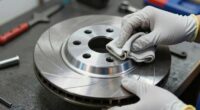
To check your brake pads without removing the wheel, look through the wheel spokes or opening to visually inspect the brake caliper and rotor. Look for the brake pad pressing against the rotor, uneven edges, or pads that are less than ¼ inch thick. Listen for squealing or screeching sounds when braking, and notice if your vehicle pulls or vibrates. For a more detailed check, exploring further can help guarantee your brakes stay in top shape.

Get bike and ride gear delivered free — and shop member deals
- Fast, free delivery on millions of items
- Access to Prime Big Deal Days deals on October 6–7
- Prime Video, Amazon Music and more included
Key Takeaways
- Visually inspect brake calipers through the wheel spokes for pad thickness and uneven wear.
- Listen for squealing or screeching noises during braking as warning signs of worn pads.
- Check for vibrations or pulsating brake pedal indicating possible pad or rotor issues.
- Observe rotor surface through the wheel for scoring marks or discoloration linked to pad wear.
- Use a flashlight to look around the wheel area for pad material thickness and signs of deterioration.
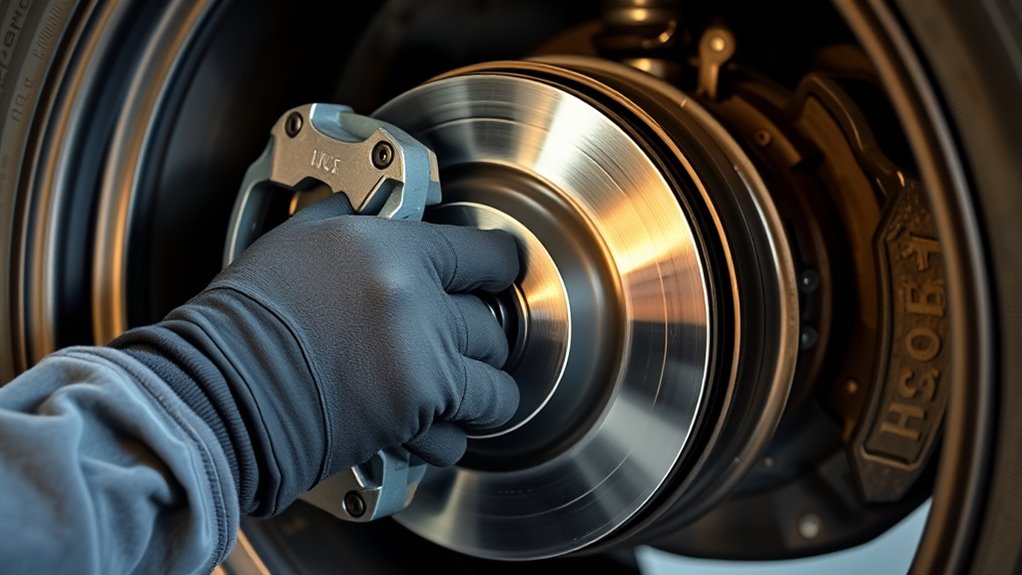
Knowing how to check your brake pads is essential for maintaining vehicle safety and performance. You don’t always need to remove the wheel to get a good idea of their condition. Start by inspecting the brake caliper through the wheel spokes. If your vehicle has a disc brake system, you might see a portion of the brake pad pressing against the rotor. Look for any visible signs of wear, such as uneven edges or thinning material. The key is to recognize that brake pad materials vary, with some being softer or more durable, which influences how quickly they wear down. If you notice the pad material is less than a quarter-inch thick or if the pad appears to be nearly flush with the caliper, it’s a clear sign that you should consider replacing them soon.
Inspect brake calipers through wheel spokes; look for uneven edges or thin pads under a quarter-inch.
Next, pay attention to the signs of wear that might not be immediately visible but are noticeable during driving. For example, if you hear squealing or screeching when applying the brakes, it could indicate that the brake pads are worn down to the wear indicators. These small metal tabs are designed to create noise as a warning. Additionally, if your vehicle pulls to one side when braking or if you experience a vibrating or pulsating brake pedal, these issues often point directly to worn or uneven brake pads. Such symptoms are especially important indicators to avoid delaying maintenance, as worn pads can damage the rotor and lead to more costly repairs.
You can also perform a simple check by feeling the brake pedal. If the pedal feels softer or sinks more than usual when pressed, it might be a sign that your brake pads are wearing thin or that there’s an issue with the hydraulic system. While this doesn’t directly measure pad thickness, it’s a useful early warning sign. To get a better sense of pad wear without removing the wheel, you might also look for discoloration or scoring marks on the visible parts of the rotor through the wheel, which often correlates with worn or uneven brake pads. Regularly monitoring brake pad materials and signs of wear can help you determine when it’s time for a professional inspection or replacement.
Ultimately, understanding brake pad materials and signs of wear helps you determine when it’s time for a professional inspection or replacement. Regularly checking these indicators ensures you maintain excellent braking performance and avoid unexpected breakdowns. Remember, staying vigilant about these visual cues and symptoms can save you money and keep you safe on the road.
As an affiliate, we earn on qualifying purchases.
Frequently Asked Questions
Can I Check Brake Pad Wear Without Any Tools?
Yes, you can check brake pad wear without tools through visual inspection. Look through the wheel spokes for the brake pads and see if they’re less than a quarter inch thick. Many brake pads have indicators that squeal or make noise when worn down. If you notice the pads are thin or the indicators are making noise, it’s time to get them checked or replaced.
How Often Should I Inspect My Brake Pads?
You should inspect your brake pads every 10,000 to 20,000 miles—because who doesn’t love a little surprise when braking? The brake pad materials, like organic or ceramic, influence wear, but sticking to the recommended brake pad replacement intervals keeps your stopping power reliable. Regular checks help catch wear early, saving you money and safety headaches. So, don’t wait until squeals or vibrations remind you—inspect proactively!
What Are Signs of Worn Brake Pads?
You’ll notice signs of worn brake pads when you hear squealing or grinding noises, or if your brake pedal feels softer or sinks lower. Watch for thinner brake pad materials, as they indicate wear nearing replacement intervals. If you see shiny or metal surfaces, it’s time for brake pad replacement. Regular inspections help you catch these signs early, ensuring safe braking performance and avoiding costly repairs.
Is It Safe to Drive With Worn Brake Pads?
Driving with worn brake pads isn’t safe, as it increases stopping distance and risks brake failure. Did you know that brake pads typically last between 30,000 to 70,000 miles? Before hitting the road, check your brake fluid and tire pressure regularly, since low brake fluid can mimic brake issues. If your brake pads are worn, it’s best to get them inspected and replaced promptly for your safety and ideal vehicle performance.
Can Brake Pad Thickness Affect Braking Performance?
Yes, brake pad thickness considerably impacts braking performance. Thinner pads, especially when worn close to the brake pad material limit, reduce stopping power and increase stopping distance. Regularly checking your brake pad material and adhering to the recommended brake pad replacement interval guarantees ideal braking. If your pads are nearing the minimum thickness, it’s time for a replacement to maintain safe, effective braking and avoid potential damage to other brake components.
disc brake caliper inspection mirror
As an affiliate, we earn on qualifying purchases.
As an affiliate, we earn on qualifying purchases.
Conclusion
By now, you know how to check your brake pads without removing the wheel. Just a quick visual inspection through the caliper or using a tool can save you a trip to the mechanic—no need to be like a knight in shining armor every time. Remember, staying on top of brake maintenance keeps you safe on the road. Don’t wait until your brakes cry “Eureka!”—a little check now can save you from a costly repair later.
As an affiliate, we earn on qualifying purchases.
As an affiliate, we earn on qualifying purchases.
Fall Picks
fall essentials
As an affiliate, we earn on qualifying purchases.