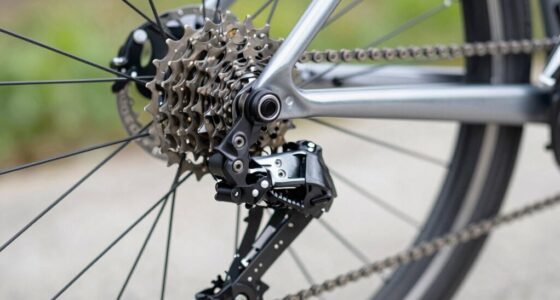
Many believe a dirty drivetrain causes faster chain wear and performance issues, but that’s a myth. If you maintain your bike properly, excess grime doesn’t necessarily harm your chain or slow you down. Proper lubrication, timely chain replacements, and regular cleaning are more important. Over-lubrication attracts dirt, speeding up wear, but a well-maintained chain can last longer than you think. Keep this in mind—you’ll discover ways to optimize your drivetrain’s lifespan if you continue to explore.

Get bike and ride gear delivered free — and shop member deals
- Fast, free delivery on millions of items
- Access to Prime Big Deal Days deals on October 6–7
- Prime Video, Amazon Music and more included
Key Takeaways
- A dirty drivetrain doesn’t necessarily cause faster chain wear if properly lubricated and maintained.
- Over-lubrication attracts dirt, which can accelerate wear more than dirt itself.
- Regular cleaning without overdoing it helps prevent grime buildup that speeds up component deterioration.
- Chain wear is more influenced by neglecting proper lubrication and timely replacement than by dirt alone.
- Proper maintenance, including correct lubrication and monitoring chain wear, extends chain lifespan regardless of dirt levels.
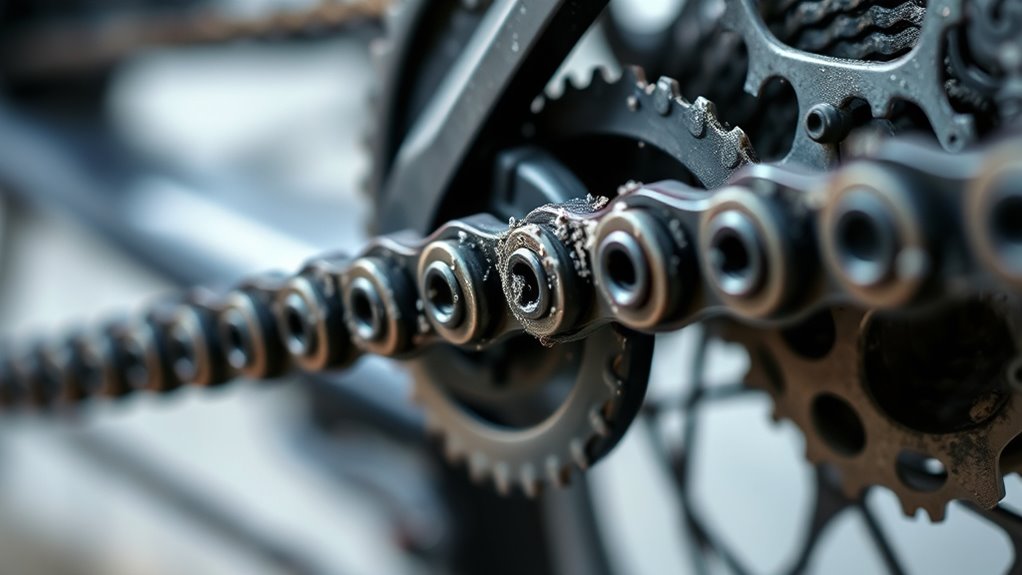
Many cyclists believe that a dirty drivetrain slows down performance and damages their bike, but this isn’t entirely true. While keeping your chain clean is important, obsessively scrubbing it isn’t always necessary for peak performance. Instead, understanding proper lubrication techniques and knowing when to replace your chain can have a much bigger impact on longevity and efficiency. Over-lubricating can attract more dirt and grime, which may lead to increased wear, but applying the right amount of lubricant at appropriate intervals is key. You want to guarantee the chain moves smoothly without excess buildup that can trap debris. Regularly wiping off excess lubricant after application helps keep the chain clean and reduces the accumulation of dirt. This approach guarantees that your drivetrain remains efficient without the need for frequent, aggressive cleaning sessions.
When it comes to lubrication techniques, consistency is vital. Use a high-quality lubricant suited for your riding conditions—wet lubes for rain or mud, dry lubes for dusty environments—and apply sparingly. After riding, wipe down the chain with a clean cloth to remove dirt and excess lube. This minimal maintenance routine prevents grime from sticking to the lubricant, reducing wear and keeping your drivetrain running smoothly. Remember, a well-lubricated chain reduces friction and prolongs component life, but over-lubrication can cause more harm than good. The goal is to keep the chain adequately lubricated without creating a sticky residue that attracts dirt. Proper lubrication also minimizes excessive wear, which is influenced by how well the chain is maintained.
As for chain replacement frequency, it’s less about a fixed timeline and more about how the chain wears over time. Many riders assume that if the chain looks dirty, it’s time to replace it, but visual inspection alone isn’t enough. Using a chain wear indicator tool provides a more accurate measure of stretch and wear. A worn chain accelerates the wear on your cassette and chainrings, leading to costly replacements. Replacing the chain at the right time maintains smooth shifting and prevents unnecessary drivetrain damage. Typically, a chain should be replaced every 2,000 to 3,000 miles, but this varies depending on riding conditions and maintenance habits. If you ride frequently in harsh conditions or neglect lubrication, you might need to replace your chain sooner.
high-quality bike chain lubricant
As an affiliate, we earn on qualifying purchases.
As an affiliate, we earn on qualifying purchases.
Frequently Asked Questions
Can a Dirty Chain Actually Improve Shifting Performance?
A dirty chain won’t improve shifting performance; in fact, it often makes it worse. When your chain is coated in grime, chain cleanliness suffers, causing it to slip or hesitate during shifts. Regular cleaning guarantees smoother shifting performance by reducing friction and preventing wear. Keep your chain clean to optimize your bike’s shifting ability and extend its lifespan, as a well-maintained drivetrain delivers the best overall riding experience.
How Often Should I Replace My Chain for Optimal Performance?
You should replace your chain when it reaches a chain wear indicator of about 0.5% to 0.75%, typically every 2,000 to 3,000 miles, depending on riding conditions. Regularly check your chain wear using a gauge to guarantee peak performance. Ignoring wear can cause drivetrain issues and faster wear on other components. Staying proactive with your replacement interval keeps your bike shifting smoothly and prolongs the life of your drivetrain.
Does Using Lubricant Extend or Shorten Chain Life?
Using lubricant can actually extend your chain’s life by reducing friction and preventing rust, which slows chain wear. Proper lubrication keeps the chain smooth and protects its components, but over-lubricating can attract dirt and accelerate wear. Apply just enough lubricant to coat the chain evenly, and wipe off excess. Regularly maintaining your chain with the right lubricant helps prevent excessive chain wear and keeps your drivetrain running efficiently.
Are Expensive Chains More Durable Than Cheaper Options?
Like a finely tuned instrument, expensive chains usually last longer than cheaper options. They’re made from higher-quality materials that resist wear and corrosion, boosting chain longevity. Cheaper chains often wear out faster because they use lower-grade metals. Investing in a pricier chain can save you money in the long run, as it’s more durable and needs fewer replacements, keeping your bike running smoothly mile after mile.
What Signs Indicate My Drivetrain Needs Professional Servicing?
You should consider professional servicing if you notice increased drivetrain noise or uneven shifting, which often results from poor chain lubrication or grime buildup. Additionally, if your chain looks rusted, stretched, or feels gritty when you run your fingers over it, it’s time for expert help. Proper maintenance guarantees smooth performance, reduces wear, and extends your drivetrain’s lifespan, so don’t ignore these signs.
As an affiliate, we earn on qualifying purchases.
Conclusion
So, next time you hear that a dirty chain ruins your ride, remember—your drivetrain might just be thriving in its grime. Ironically, obsessing over every speck of dirt could be more harmful than helpful, as frequent cleaning can cause unnecessary wear. Sometimes, a little dirt isn’t the villain—it’s just part of the adventure. So, relax, ride on, and let that ‘dirty’ drivetrain do its thing. After all, perfection is overrated.
wet and dry bicycle chain lubricants
As an affiliate, we earn on qualifying purchases.
As an affiliate, we earn on qualifying purchases.
As an affiliate, we earn on qualifying purchases.
Fall Picks
fall essentials
As an affiliate, we earn on qualifying purchases.