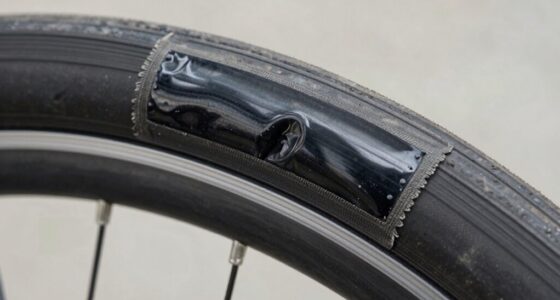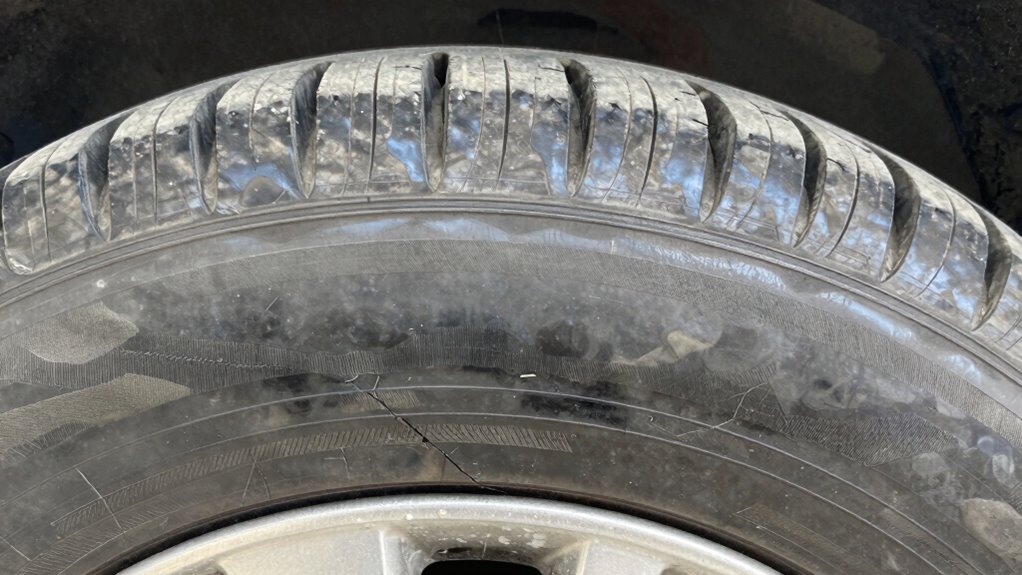
A flat spot or bald center on your tire indicates issues like overinflation, misalignment, or excessive wear. Overinflation causes the tire’s center to bear most of the load, leading to faster wear in that spot. Misalignment can also create uneven wear patterns, including bald centers. Catching these signs early can prevent safety risks and costly repairs. Keep an eye on your tires—continue to learn more about what these wear patterns mean for your safety and vehicle health.

Get bike and ride gear delivered free — and shop member deals
- Fast, free delivery on millions of items
- Access to Prime Big Deal Days deals on October 6–7
- Prime Video, Amazon Music and more included
Key Takeaways
- A bald center indicates overinflation, causing excessive wear in the middle of the tire.
- Flat spots may result from sudden braking, hard stops, or flat tire issues, leading to uneven contact.
- Uneven tire wear patterns suggest misalignment, improper inflation, or suspension problems.
- Regularly checking tire pressure and alignment helps prevent and identify bald centers or flat spots early.
- Addressing underlying causes improves safety, extends tire life, and maintains optimal vehicle handling.
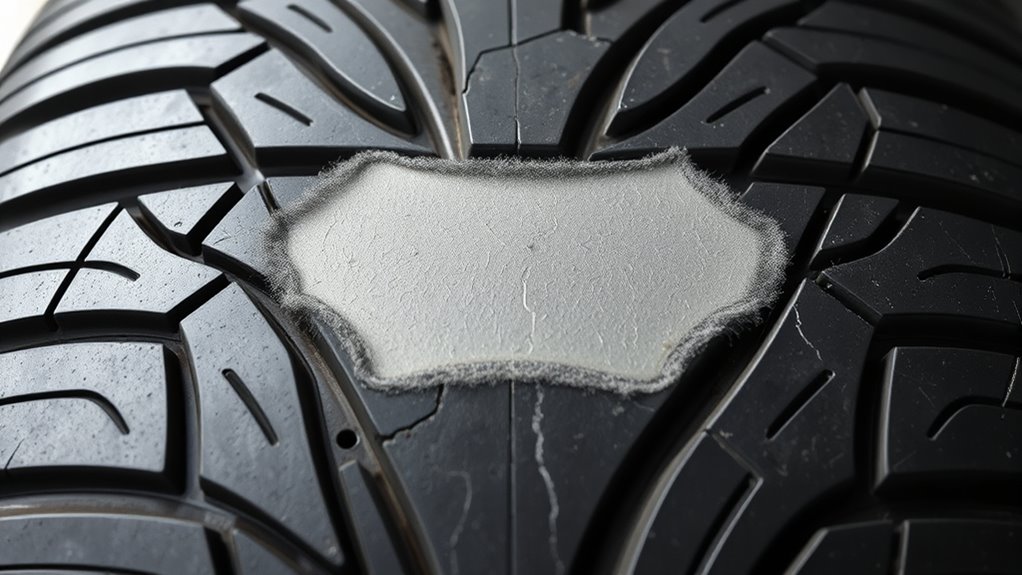
Have you ever noticed uneven wear on your tires and wondered what it might signify? Tire wear patterns can reveal a lot about your vehicle’s health and maintenance needs. One common pattern is a flat spot or a bald center, which often points to specific issues like tire pressure problems or alignment concerns. Recognizing these signs early can save you money and improve your safety on the road.
Uneven tire wear, like bald centers or flat spots, signals possible pressure or alignment issues.
A flat spot or bald center usually indicates that your tires are overinflated. When your tires have too much air, the contact patch with the road becomes smaller and harder, causing the center of the tread to bear most of the load. Over time, this leads to excessive wear in the middle of the tire, creating a bald or flat appearance. Not only does this reduce tire lifespan, but it also compromises your vehicle’s handling and braking performance. To prevent this, you should regularly check your tire pressure and make sure it matches the manufacturer’s recommended levels. Underinflation causes uneven wear on the outer edges, but overinflation specifically affects the center, making it a key sign to watch for.
Beyond tire pressure issues, alignment concerns can also cause similar wear patterns. When your wheels are misaligned, the tires don’t sit at the correct angles relative to the road. This misalignment causes uneven contact, accelerating wear in specific areas. For example, if your vehicle pulls to one side or you notice uneven tread wear, it’s a strong sign that your alignment needs attention. Misaligned wheels can produce a bald or flattened center if the camber or toe settings are off, especially when combined with overinflation. Regular alignment checks are essential if you notice unusual tire wear patterns. Proper alignment ensures your tires wear evenly, improving fuel efficiency and prolonging their lifespan.
It’s important to stay attentive to these signs and not ignore them. Flat spots and bald centers are more than just aesthetic issues—they’re indicators of underlying problems that could affect your safety and driving comfort. By maintaining correct tire pressure and scheduling regular alignment inspections, you can prevent these wear patterns from worsening. This proactive approach helps you get the most mileage out of your tires and keeps your vehicle handling smoothly. Additionally, proper tire maintenance can help detect early signs of issues like improper inflation or misalignment. Ultimately, understanding what tire wear patterns mean and addressing the root causes guarantees you’re not just replacing tires more often than necessary but also driving confidently, knowing your vehicle is in good shape.
As an affiliate, we earn on qualifying purchases.
Frequently Asked Questions
How Often Should I Check My Tire Wear Patterns?
You should check your tire wear patterns every 5,000 to 8,000 miles, especially during tire rotations. Keep an eye on tread depth and look for flat spots or bald centers, which indicate uneven wear. Regular inspections help you catch issues early, ensuring even tire wear, better safety, and longer-lasting tires. Don’t forget to replace tires when tread depth becomes too low for safe driving.
Can Uneven Tire Wear Affect Fuel Efficiency?
Uneven tire wear can definitely damage your fuel efficiency. When your tire pressure drops or tread depth thins unevenly, it increases rolling resistance, making your engine work harder. This extra effort burns more fuel and wastes energy. Keep your tires properly inflated and regularly check tread depth to prevent uneven wear, ensuring smooth sailing, saving you money, and boosting your vehicle’s overall performance.
What Tools Are Best for Inspecting Tire Wear?
You should use a tire tread depth gauge to accurately measure how worn your tires are. For a thorough inspection, perform wear pattern analysis by examining the tire’s surface for flat spots or bald centers. Visual checks help spot uneven wear, while a tread depth gauge provides precise measurements. Combining these tools guarantees you identify issues early, so you can address problems before they impact your safety or tire longevity.
How Long Can I Drive on a Bald Tire Safely?
Driving on a bald tire is like walking on thin ice—you risk falling anytime. You shouldn’t drive on it much longer; it’s unsafe. Check your tire rotation and tread depth regularly to prevent this. Once the tread is below 2/32 inch, replace it immediately. Continuing to drive puts you at risk of blowouts or accidents. Prioritize safety and replace bald tires promptly to keep your journey smooth and secure.
Does Tire Wear Pattern Indicate Alignment Issues?
Yes, tire wear patterns often indicate alignment issues. If you notice uneven wear, it’s a sign you should get a tire rotation and a suspension check. Misalignment causes tires to wear unevenly, especially on the edges or center. Addressing these problems early helps improve handling, extends tire life, and ensures safety. Regular maintenance, including alignment checks, maintains your tires in good shape and prevents costly repairs down the road.
As an affiliate, we earn on qualifying purchases.
Conclusion
By paying attention to tire wear patterns, you can catch issues before they become costly repairs. Whether it’s a flat spot or a bald center, each tells a story about your vehicle’s health and driving habits. Don’t you want to imagine your car smoothly gliding down the road, free of uneven wear and tear? Staying vigilant and addressing these signs early keeps your ride safe, comfortable, and efficient—so why wait until the problem worsens?
As an affiliate, we earn on qualifying purchases.
As an affiliate, we earn on qualifying purchases.
Fall Picks
fall essentials
As an affiliate, we earn on qualifying purchases.