To control speed on descents without losing confidence, shift to a lower gear before starting your descent. Use gentle, intermittent braking—feathering the brake levers—to avoid skidding or overheating. Focus on smooth, controlled movements rather than sudden stops. Keep your body relaxed and anticipate terrain changes early to adapt your technique. Mastering these skills helps you stay in control and ride confidently. If you continue exploring, you’ll uncover more tips to enhance your skills further.
Key Takeaways
- Shift to a lower gear before descending to maintain steady speed and reduce brake reliance.
- Use gentle, controlled braking to gradually slow down without overusing brakes or losing confidence.
- Anticipate terrain features early to adjust speed proactively and avoid sudden, panic-inducing stops.
- Maintain proper bike handling skills to navigate turns and rough terrain confidently.
- Develop consistent braking habits and terrain awareness to build trust in your control during descents.
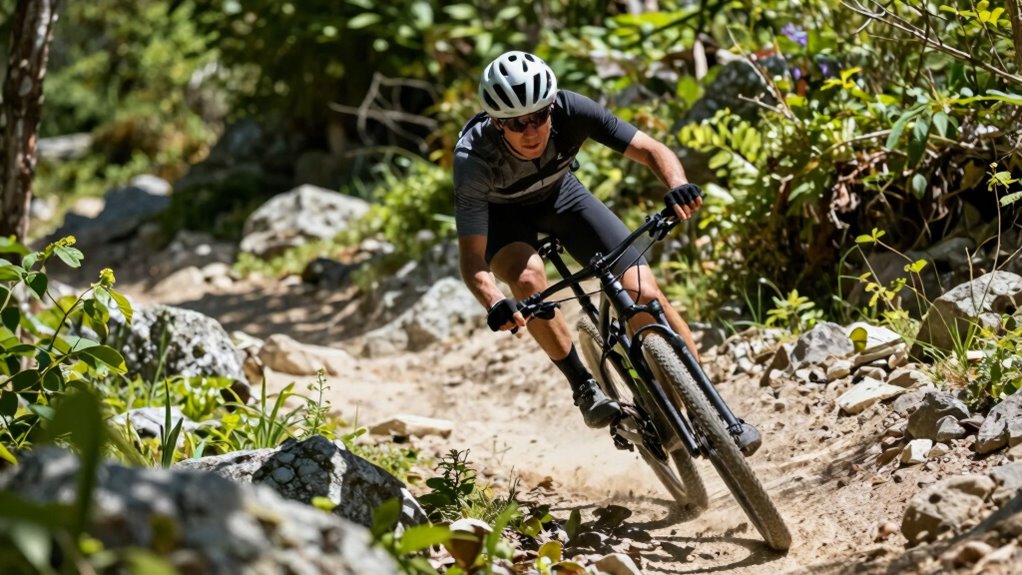
Descending a hill can be exhilarating, but if you don’t control your speed, it can quickly become dangerous. When tackling a descent, your primary focus should be on maintaining a steady, safe pace. One of the most effective ways to do this is by mastering gear selection. As you approach a descent, shift to a lower gear before you start descending. This allows you to control your speed more smoothly and reduces the strain on your brakes. Using a lower gear acts like engine braking, helping slow you down without relying solely on your brake pads. It also keeps your pedaling cadence steady, preventing sudden surges that could upset your balance. Proper gear selection is crucial for controlling your speed, especially on steep or technical descents.
Shifting to a lower gear before descending helps control speed smoothly and reduces brake strain.
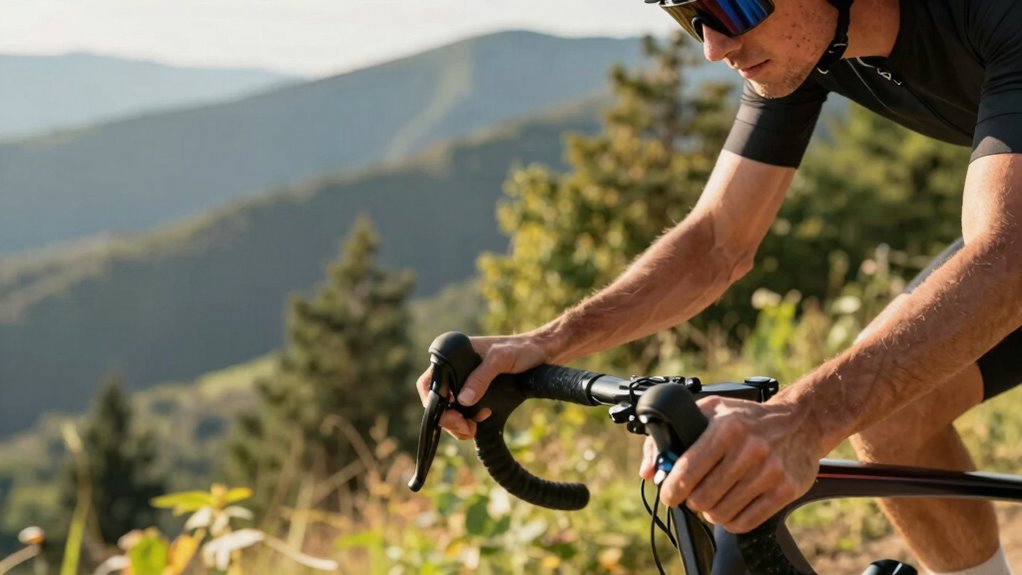
Equally important are your brake techniques. You want to avoid grabbing the brakes abruptly or riding them constantly, as this can lead to brake fade or loss of control. Instead, apply gentle, controlled pressure to your brake levers, especially the rear brake, to modulate your speed. Feathering your brakes — lightly and intermittently squeezing — provides a more consistent deceleration and helps you stay balanced through the turn. Remember, using your brakes too aggressively can cause skidding or overheating, which diminishes braking effectiveness. It’s best to anticipate changes in terrain, such as sharp turns or loose gravel, and adjust your braking early rather than reacting suddenly. Developing good braking habits is essential for safe descents and maintaining confidence. Practicing these techniques not only improves safety but also enhances your overall riding skills, making descents feel more controlled and enjoyable. Additionally, understanding your bike handling can greatly improve your ability to navigate descents with confidence. Building your terrain awareness can further help you anticipate and adapt to varying conditions, boosting your control and safety during descents.

Fredertent TX50-7 7 Speed Right Bike Trigger Shifter with Gear Display
- Precise 7-Speed Shifting: Accurate and responsive gear changes
- Ergonomic Thumb Control: Easy operation with thumb and finger
- Durable Construction: Wear-resistant for long-lasting use
As an affiliate, we earn on qualifying purchases.
As an affiliate, we earn on qualifying purchases.
Frequently Asked Questions
What Gear Should I Use on Steep Descents?
On steep descents, you should select a lower gear to maintain control and avoid overusing brakes. Gear selection is essential; shift to a gear that allows you to pedal smoothly without straining, giving you better control. Use proper descents technique by staying relaxed, leaning back slightly, and keeping your weight centered. This combination helps you manage your speed effectively, boosting confidence while preventing fatigue and ensuring a safer, more enjoyable ride.
How Do I Handle Unexpected Obstacles During a Descent?
When unexpected obstacles appear during a descent, stay calm and focus on obstacle navigation. Use your brakes smoothly and shift your weight back to maintain stability. Keep a vigilant eye ahead, scanning for hazards. Mental preparedness is key; trust your skills and react confidently. By staying calm, adjusting your speed, and making controlled movements, you can handle surprises safely without losing confidence or control.
Is It Safer to Brake Continuously or Intermittently?
Imagine the rhythmic beat of waves crashing on the shore—your braking technique should mirror this, applying intermittent pressure rather than constant force. This approach helps you maintain better control, prevents overheating brakes, and builds confidence with each descent. By braking intermittently, you stay adaptable to changing conditions, allowing you to respond calmly and safely, rather than risking sudden loss of control with continuous braking.
How Can I Improve My Confidence Before Descending?
To boost your confidence before descending, focus on your bike posture—keep your body relaxed, hands steady, and weight centered. Practice mental preparation by visualizing smooth, controlled rides and positive outcomes. Take deep breaths to stay calm, and remind yourself of your skills. Gradually expose yourself to more challenging descents, building trust in your abilities. With consistent practice and a confident mindset, you’ll feel more secure and in control on every descent.
What Should I Do if I Start to Panic?
If you start to panic during a descent, focus on panic management by calming your mind. Use breathing techniques like deep, slow breaths to steady yourself and reduce anxiety. Keep your eyes on the trail ahead to maintain focus, and remind yourself that you’re capable. By controlling your breathing and staying present, you’ll regain confidence and handle the descent more safely and comfortably.

CHUMXINY Brake Bleed Kit for Shimano, TEKTRO, TRP Hydraulic Disc Brakes. Bicycle Hydraulic Brake Bleed Kit Includes Brass Connector, 150ML Mineral Oil Brake Fluid
- Transparent Funnel: Clear view of liquid and bubbles
- Sturdy Brass Connectors: Durable and wear-resistant
- High Quality Syringe: Leak-proof and well-sealed
As an affiliate, we earn on qualifying purchases.
As an affiliate, we earn on qualifying purchases.
Conclusion
Remember, mastering your speed on descents isn’t about conquering the mountain but respecting it. With steady control and trust in your skills, you’ll find the confidence to face every downhill with grace, not fear. Think of each descent as a dance—fluid, controlled, and in harmony with the terrain. So, embrace the challenge, stay present, and let your confidence grow stronger with every ride. After all, the greatest victory is in riding smart, not fast.

WESTWOOD FOX Cycling Gloves for Men Women,Half Finger Unisex Gel Padded Anti-Slip Mountain Bike Gloves, Breathable Shock Absorption Grip Palm Bicycle Summer Riding MTB Bike Gloves (Blue, XL)
- Premium Quality Materials: Breathable fabrics and durable padding
- Half Finger Design: Provides protection and dexterity
- Gel-Padded Palm: Offers shock absorption and comfort
As an affiliate, we earn on qualifying purchases.
As an affiliate, we earn on qualifying purchases.
![Universal Bicycle Brake Levers Set (Pair) - 22mm (7/8") Bike Brake Handles for Mountain Bike (MTB), Road, BMX, Kids & Fixed Gear Bicycles - Lightweight & Durable Replacement Parts [Black]](https://m.media-amazon.com/images/I/31kWgmjmmWL._SL500_.jpg)
Universal Bicycle Brake Levers Set (Pair) – 22mm (7/8") Bike Brake Handles for Mountain Bike (MTB), Road, BMX, Kids & Fixed Gear Bicycles – Lightweight & Durable Replacement Parts [Black]
- Universal Fit for 22mm Handlebars: Fits MTB, Road, BMX, Kids, and Fixies
- Quick Recovery Technology: Automatic lever reset after impacts
- Durable and Lightweight Construction: Stainless steel core with ABS exterior
As an affiliate, we earn on qualifying purchases.
As an affiliate, we earn on qualifying purchases.