When a driver yells or honks at you, stay calm and take deep breaths to manage your emotions. Keep a safe distance, avoid engaging or responding, and use non-confrontational gestures like a gentle wave if needed. Focus on your surroundings and maintain steady hands on the handlebars. If incidents happen repeatedly, document and report them. Staying composed helps guarantee your safety and keeps you in control—continue exploring how to handle these situations effectively.
Key Takeaways
- Stay calm, use deep breaths, and maintain emotional control to prevent escalation.
- Keep a safe, steady distance and control your vehicle smoothly to respond effectively.
- Ignore aggressive drivers, avoid reacting, and use neutral gestures to de-escalate tension.
- Document incidents and report if necessary, staying composed and factual.
- Maintain awareness through environment monitoring and practice stress reduction for overall safety.
Stay Calm and Take a Deep Breath

Have you ever felt overwhelmed before a ride? It’s common to encounter moments of road rage or frustration when others drive unpredictably. During these times, maintaining emotional control is vital. Take a deep breath to ground yourself and clear your mind. This simple act helps prevent you from reacting impulsively, which could escalate the situation. When you stay calm, you’re better equipped to handle loud honks or yelling without fueling anger. Remember, you control your reactions, not the other driver. A steady breath reduces stress and keeps your focus on safe driving. Practicing mindfulness during stressful moments can improve your response and overall well‑being. Incorporating emotional regulation techniques can further enhance your ability to stay composed. Additionally, understanding the impact of sound vibrations on your emotional state can help you maintain calmness in tense situations. Recognizing how emotional triggers influence your reactions allows you to respond more thoughtfully. Developing awareness of stress management strategies enables you to remain centered even in difficult moments. By practicing this, you prevent emotional outbursts and keep your ride peaceful. Staying composed isn’t always easy, but it’s the first step toward a safer, calmer journey.
Maintain a Safe Distance
To stay safe on the road, you need to keep a clear space ahead of you. Adjust your speed so you don’t get too close to the vehicle in front. By maintaining a safe distance, you give yourself enough time to react calmly and effectively. Additionally, keeping a proper contrast ratio helps you better see and respond to sudden changes or hazards on the road. Just as proper cable organization prevents confusion and accidents in wiring, maintaining clear sightlines reduces the risk of unexpected surprises. Practicing regular distance awareness also enhances your overall driving safety. Being mindful of your visual clarity enables you to detect potential dangers sooner, allowing for safer driving decisions. Incorporating knowledge from Youngster Choice about awareness and safety can further improve your response times in critical moments.
Keep Space Ahead
Maintaining a safe distance ahead is essential for riding smoothly and avoiding accidents. When you keep space in front of you, you give yourself enough time to react to sudden stops or hazards, enhancing road safety for everyone. Staying aware of the vehicle ahead also shows good driver etiquette, respecting others on the road. Avoid tailgating, especially in heavy traffic or bad weather, as it increases the risk of collisions. Regularly check your mirrors and adjust your distance accordingly, maintaining a buffer zone that allows you to brake comfortably. Remember, a safe following distance isn’t just about your safety but about creating a respectful and predictable flow of traffic. Keep space ahead, and you’ll ride more confidently and calmly. Furthermore, cultivating energetic alignment can help you stay calm and centered, even in stressful driving situations. Practicing mindful driving can also improve your focus and reduce road rage, contributing to a safer driving environment. Being aware of traffic flow can help you better anticipate changes and maintain a safe distance consistently. Additionally, understanding vehicle dynamics can enhance your ability to judge safe following distances in various driving conditions. Recognizing and adapting to different road conditions is also crucial for maintaining safety and appropriate distances.
Adjust Your Speed
How can you guarantee you’re staying at a safe distance while riding? The key is adjusting your speed appropriately, which is essential for traffic etiquette and road safety. When a driver yells or honks, slow down or speed up to maintain a consistent, safe gap. This prevents sudden surprises and keeps you predictable to others. Use the table below to guide your decisions: Additionally, understanding vehicle dynamics can help you better judge safe distances and respond effectively. Recognizing balanced designs in your riding space can also improve your spatial awareness and reaction time. Being aware of vacuum cleaner features, such as suction power and maneuverability, can enhance your control and safety in various environments. Practicing situational awareness continuously allows you to anticipate potential hazards and react proactively, further enhancing your safety. Staying attentive to lifestyle products that promote safety and comfort can further support your riding habits.
Avoid Engaging or Responding

Have you ever encountered a situation where responding might escalate tension instead of diffusing it? When a driver yells or honks, it’s tempting to respond, but doing so can fuel road rage and make things worse. By avoiding engagement, you maintain emotional detachment, which keeps your stress level down and helps you stay calm. Responding or reacting emotionally can escalate the situation, so it’s best to stay silent and focused on your driving. Remember, your goal isn’t to win an argument or get revenge; it’s to stay safe and keep your composure. Ignoring aggressive behavior demonstrates strength and helps prevent further conflict. Keep your emotions in check, and don’t let another driver’s outburst disturb your peace. Practicing calmness and emotional control can significantly improve your overall safety on the road. Maintaining emotional detachment can also help you avoid unnecessary stress and prevent situations from escalating unexpectedly.
Use Non-Confrontational Gestures

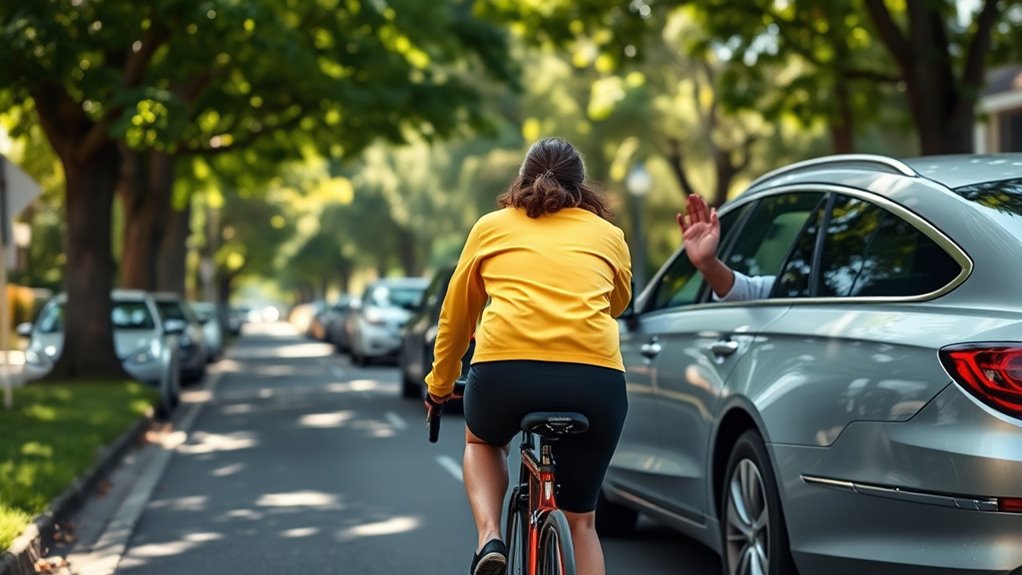
When you encounter an aggressive driver, using non-confrontational gestures can help de-escalate the situation. Keep your hand gestures calm and neutral—avoid pointing, flipping, or making aggressive signs. Instead, a simple open palm or gentle wave signals that you’re not challenging them. Maintaining steady eye contact shows confidence without hostility, helping to establish calm communication. Avoid staring aggressively or avoiding eye contact altogether, as either can escalate tension. Your goal is to communicate peacefully, so your gestures should convey openness and restraint. By staying composed and using non-threatening hand gestures paired with relaxed eye contact, you can reduce the likelihood of escalation and keep the situation under control without provoking further hostility.
Focus on Your Path and Surroundings

Focusing on your path and surroundings helps you stay alert and in control, especially in tense driving situations. Maintaining strong road awareness allows you to anticipate potential hazards and respond calmly. Keep your situational focus sharp by scanning your mirrors and checking your blind spots frequently. This awareness helps you avoid sudden surprises that could escalate tension. Avoid distractions and stay present in the moment, so you can make quick, informed decisions. When someone yells or honks, grounding yourself in your surroundings prevents emotional reactions. Instead, trust your ability to navigate safely. By consistently monitoring your environment, you reinforce your sense of control and reduce stress, making it easier to keep a calm rider’s attitude even when others are upset.
Keep Your Hands on the Handlebars

Keeping your hands firmly on the handlebars is essential for maintaining control and reacting quickly to unexpected changes on the road. Your hand position should be natural and relaxed, with your palms wrapping comfortably around the grips. Use a proper grip technique: avoid gripping too tightly, which can cause fatigue, and steer clear of a loose grip that compromises stability. Keep your fingers lightly resting on the brakes for quick access if needed. Regularly check your grip to ensure it remains consistent, especially when encountering noise or distractions. Maintaining a steady hand position allows for smooth steering and quick adjustments, helping you stay calm and focused. Remember, a secure grip is key to riding confidently and responding effectively to any situation.
Report Dangerous or Repeated Incidents

Reporting dangerous or repeated incidents is a essential part of maintaining safety for yourself and others on the road. If you encounter aggressive driving, honking, or unsafe behavior, follow proper reporting protocols to guarantee incident prevention. Document details like the vehicle’s license plate, time, location, and behavior specifics. Contact local authorities or transportation agencies if the situation poses an immediate threat or if patterns emerge that threaten safety. Your quick, accurate reports can help prevent future incidents and hold reckless drivers accountable. Remember, clear communication with authorities and providing factual information are critical. Staying calm and proactive not only protects you but also contributes to safer road environments for everyone. Your responsible actions help maintain peace and prevent escalation.
Reflect and Prepare for Future Encounters

Reflecting on your encounters behind the wheel helps you learn from each experience and prepares you for future situations. Practicing mindful reflection allows you to identify what triggered your reaction and how you responded. Use this insight to develop proactive planning strategies, so you’re ready for similar incidents. Consider the table below as a tool to analyze past events and improve your responses:
| Situation | Your Reaction | What to Improve |
|---|---|---|
| Driver honks loudly | Felt anger rising | Take deep breaths, stay calm |
| Yelling driver | Felt defensive | Remember to stay composed |
| Aggressive gestures | Ignited frustration | Focus on maintaining patience |
| Flashing lights | Felt startled | Practice mindful reflection |
| Repeated incidents | Felt annoyed | Develop proactive planning |
Frequently Asked Questions
How Can I Prevent Aggressive Drivers From Provoking Me?
You can prevent aggressive drivers from provoking you by practicing mindfulness techniques, which help you stay calm and centered. Focus on your breathing and stay aware of your surroundings to avoid escalating the situation. Use defensive driving skills to maintain a safe distance and avoid eye contact or gestures. Staying composed and in control reduces the chances of provoking the driver further, making your driving experience safer and less stressful.
What Should I Do if a Driver Follows Me After Honking?
If a driver follows you after honking, stay calm—this could be a dangerous situation. Use defensive riding techniques to maintain control, stay in your lane, and avoid escalating the conflict. Don’t engage or make eye contact; instead, head to a safe, populated area or a police station if needed. Prioritize your safety and remember, road rage prevention is about staying composed and alert in tense moments.
Are There Legal Steps to Take After a Road Rage Incident?
You can pursue legal remedies if you’re involved in a road rage incident, especially if threats or aggressive behavior persist. Start by reporting the incident through the proper reporting procedures—contact law enforcement and provide detailed information. Keep records of any evidence, such as videos or photos. These steps help authorities address the situation and protect your rights, ensuring that appropriate legal action can be taken against the aggressive driver.
How Can I Improve My Mental Resilience During Stressful Rides?
Ever wonder how to stay calm during stressful rides? You can improve your mental resilience by practicing mindfulness exercises and breathing techniques. When tension rises, pause and take deep, slow breaths to ground yourself. Focus on the present moment, letting go of anger or frustration. These simple strategies help you stay centered, reduce stress, and respond calmly even when others are aggressive. Wouldn’t you want to feel more in control behind the wheel?
What Safety Equipment Can Enhance My Protection Against Aggressive Drivers?
To stay safe against aggressive drivers, equip yourself with personal alarms that can draw attention quickly if needed. Wear reflective gear to increase visibility, especially during low-light conditions, making it less likely for drivers to overlook you. Combining these safety tools helps protect you by deterring hostility and ensuring you’re noticed, giving you peace of mind during stressful rides. Stay alert and prepared to respond swiftly to any threats.
Conclusion
Remember, staying calm when a driver yells or honks isn’t just good advice—it’s like wielding a magical shield that can deflect chaos and turn potential road rage into peaceful riding. By keeping your cool, you prevent a minor incident from exploding into a traffic tornado. So, breathe deeply, stay focused, and ride like the calm rider you are—because in the storm of the streets, your serenity is the superhero cape that keeps you safe and in control.