Riding too close to the curb in city traffic puts you at risk of hitting hidden hazards like debris, broken pavement, or sudden door openings. It limits your reaction space when cars turn or pull over, making it harder to avoid unexpected obstacles or pedestrians. Close proximity also increases the chance of losing balance or skidding on uneven surfaces. Keep a safe distance to stay safer and navigate city streets more confidently; you’ll find more tips if you explore further.
Key Takeaways
- Riding close increases the risk of hitting surface hazards like potholes, debris, and uneven pavement, leading to loss of control.
- It reduces reaction space to sudden door openings, pedestrians, or vehicles pulling out from parking spots.
- Proximity to parked cars can obscure pedestrians and other hazards, increasing collision risk.
- Near the curb, slipping on gravel or broken pavement can cause falls or skids.
- Limited space makes it harder to respond to sudden traffic changes, raising accident potential.
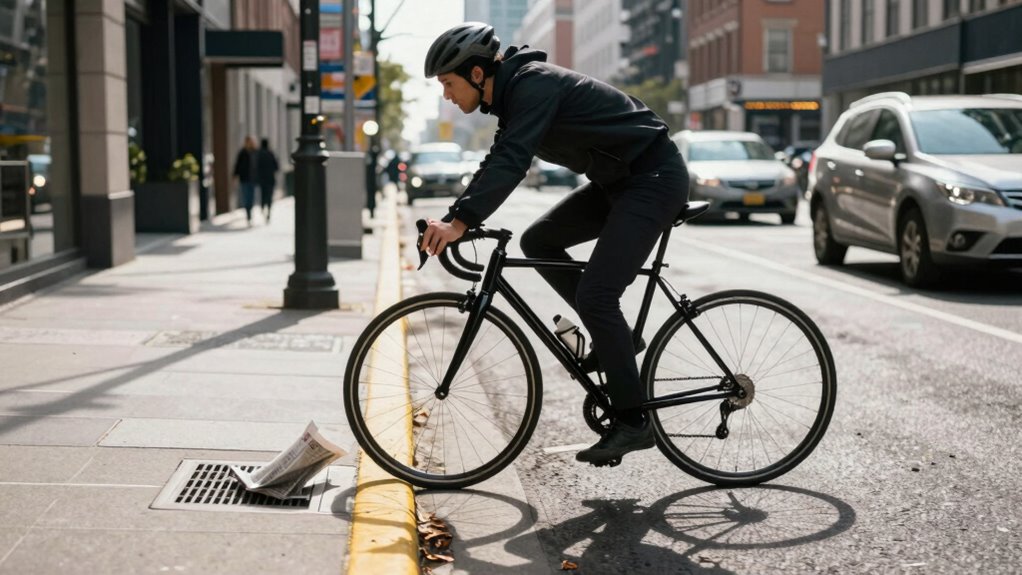
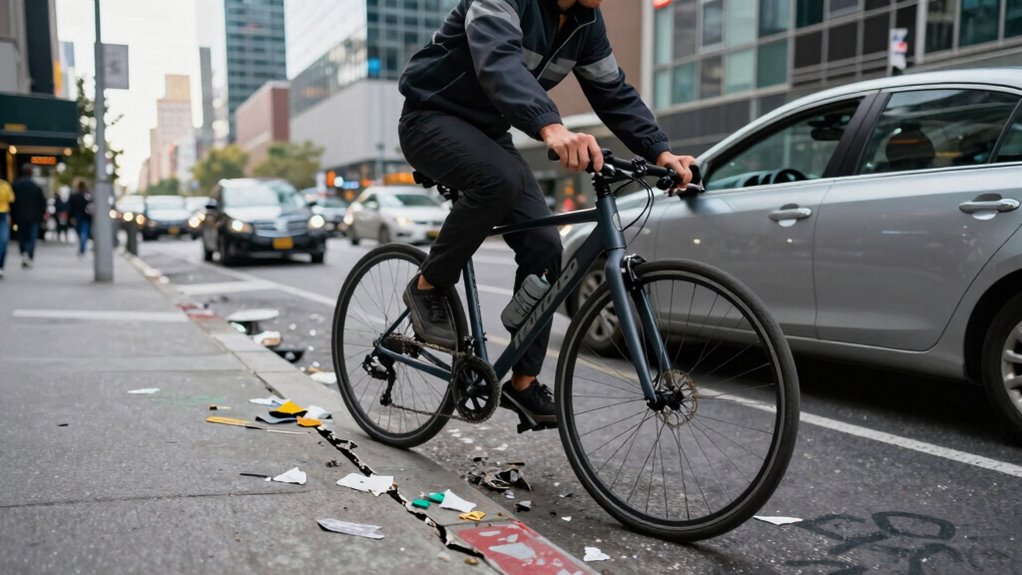
Riding too close to the curb might seem like a safe way to avoid road hazards, but in reality, it often backfires in city traffic. When you stick close to the edge, you risk encountering a variety of issues that can compromise your safety and disrupt your ride. One major problem is the uneven or damaged road surface near the curb. Pavement can crack, potholes can form, and debris often accumulates along the edges, making your ride bumpier and more unpredictable. These surface irregularities can cause you to lose control or suddenly swerve, especially if you’re riding fast or not paying close attention. Additionally, road surface irregularities can be difficult to anticipate, increasing the risk of accidents. Moreover, the presence of debris and broken pavement near the curb can often be overlooked, further increasing the danger.
Beyond the road surface, parking hazards are a constant threat when riding close to the curb. Vehicles parked along the side of the street don’t always open their doors carefully, and you might find yourself dodging swinging doors or unexpectedly opening trunks. Sometimes, drivers or passengers step out without warning, forcing you to brake hard or swerve to avoid collision. Parked cars can also obscure pedestrians or other cyclists, making it harder to anticipate their movements. This close proximity leaves little room for error, increasing your chances of a collision or a sudden need to brake.
Riding near parked cars risks door swings, hidden pedestrians, and sudden obstacles, increasing collision chances.
Furthermore, riding right next to the curb limits your ability to react to sudden changes in traffic flow. Vehicles turning into parking spots or making U-turns often do so from very close to the curb, and if you’re riding too close, you might not have enough space or time to respond. This is especially dangerous in busy city streets where drivers frequently change lanes or pull over without signaling. The tight space also reduces your maneuvering options, so if a hazard appears—like a stray pedestrian or an animal—you’re more likely to be caught off guard.
Additionally, the curb itself can be a hidden hazard. It’s easy to misjudge the distance, especially in crowded or poorly lit areas, and inadvertently clip the edge or lose balance. Gravel, dirt, or broken pavement around the curb can cause slipping or skidding. Since city streets are often littered with trash, glass, or other debris near parking zones, riding too close increases your chances of punctures or cuts to your tires. Being aware of these hidden hazards can make a significant difference in your safety.
In short, trying to minimize exposure to road hazards by riding close to the curb can expose you to a host of new risks. The uneven road surface, parking hazards, limited reaction space, and hidden obstacles make it a poor strategy. It’s safer to maintain a moderate distance from the curb, stay alert, and keep an eye on the entire road environment, not just the edge.

TioyFiuy Bright Bike Lights Set for Night Riding, 9+9 Modes Rechargeable eBike Lights Front and Back, Waterproof Bicycle Lights, Bike Headlight and Tail Light Set for MTB, Off-Road & City Riding
- Multiple Lighting Modes: 9+9 modes for visibility and safety
- Bright Illumination: 300lm front, 100lm rear lights
- Long Battery Life: 4-20 hours runtime on a single charge
As an affiliate, we earn on qualifying purchases.
As an affiliate, we earn on qualifying purchases.
Frequently Asked Questions
How Does Riding Near the Curb Affect Pedestrian Safety?
Riding near the curb can reduce pedestrian visibility, making it harder for pedestrians to see your bike and vice versa. It also increases the risk of sidewalk encroachments, where your bike might unintentionally block or come too close to pedestrians on the sidewalk. This creates dangerous situations, especially in busy city traffic. Staying a safe distance away from the curb improves pedestrian safety, giving everyone more space and reducing accidents.
Can Riding Close to the Curb Improve Fuel Efficiency?
Riding close to the curb can slightly improve fuel efficiency by reducing wind resistance. Studies show that minimizing air drag boosts aerodynamic efficiency, leading to lower fuel consumption—up to 10% in some cases. When you stay near the curb, your vehicle faces less air resistance, making it easier to maintain speed and save fuel. Just be cautious of hazards and pedestrians to avoid safety risks.
What Are Legal Penalties for Improper Curb Riding?
If you ride improperly close to the curb, you can face legal fines and insurance penalties. Law enforcement may ticket you for unsafe driving, which results in legal fines that increase with repeated offenses. Additionally, your insurance premiums might rise because insurers see improper curb riding as risky behavior. These penalties aim to promote safer street sharing, so it’s best to stay within designated lanes and avoid risky curb riding.
Does Curb Riding Impact Long-Term Vehicle Maintenance?
Riding too close to the curb can subtly influence your vehicle’s long-term health. It often causes misalignment, leading to uneven tire wear over time. This constant strain can reduce your car’s efficiency and increase maintenance costs. By maintaining a safe distance from the curb, you help preserve proper vehicle alignment and guarantee even tire wear, ultimately saving you money and keeping your ride smoother for longer.
How Do Weather Conditions Influence Curb Riding Risks?
Weather conditions considerably influence curb riding risks. During rain, visibility drops, making it harder to see pedestrians, cyclists, or obstacles near the curb. Wet surfaces also increase the chances of slipping or losing control when riding too close. Weather hazards like fog or snow further reduce visibility and traction, so you should maintain a safe distance from the curb to avoid accidents. Always adapt your riding to current weather conditions for safety.

WITTKOP Bike mirror | Large HD field of vision | 360° rotatable & foldable | Mounting above & below | Break-proof & durable | ebike accessories, bike mirror handlebar mount, bicycle mirrors
- HD Field of Vision: Large crystal-clear convex glass mirror
- 360° Adjustable: Full rotation and tilting for customized view
- Durable Construction: Reinforced with over 20% stronger materials
As an affiliate, we earn on qualifying purchases.
As an affiliate, we earn on qualifying purchases.
Conclusion
Staying too close to the curb might feel safer, like sticking to the edge of the path, but it often leaves you vulnerable—like a tightrope walker too close to the edge. In city traffic, this gamble can backfire, exposing you to surprises from parked cars or opening doors. Instead, keep a safe distance, like an open window inviting fresh air. Sometimes, the safest spot isn’t the closest, but the clearest.

WOTOW Bike Handlebar Bag Waterproof – Bicycle Front Pouch, 2.4L
- Waterproof and Durable Material: Made of 900D oxford fabric with PU coating
- Laminated Waterproof Zippers: Keeps rainwater out for full protection
- Large Reflective Safety Area: Enhances visibility in low light conditions
As an affiliate, we earn on qualifying purchases.
As an affiliate, we earn on qualifying purchases.

Slime 1022-A Tube Rubber Patch Kit, for Bikes and Other Inflatables, Contains, 5 Patches, Scuffer and Glue
- Suitable for various inflatables: Repairs bikes, ATVs, mowers, wheelbarrows
- Complete 7-piece kit: Includes patches, scuffer, and glue
- Five rubber patches included: For multiple repairs
As an affiliate, we earn on qualifying purchases.
As an affiliate, we earn on qualifying purchases.