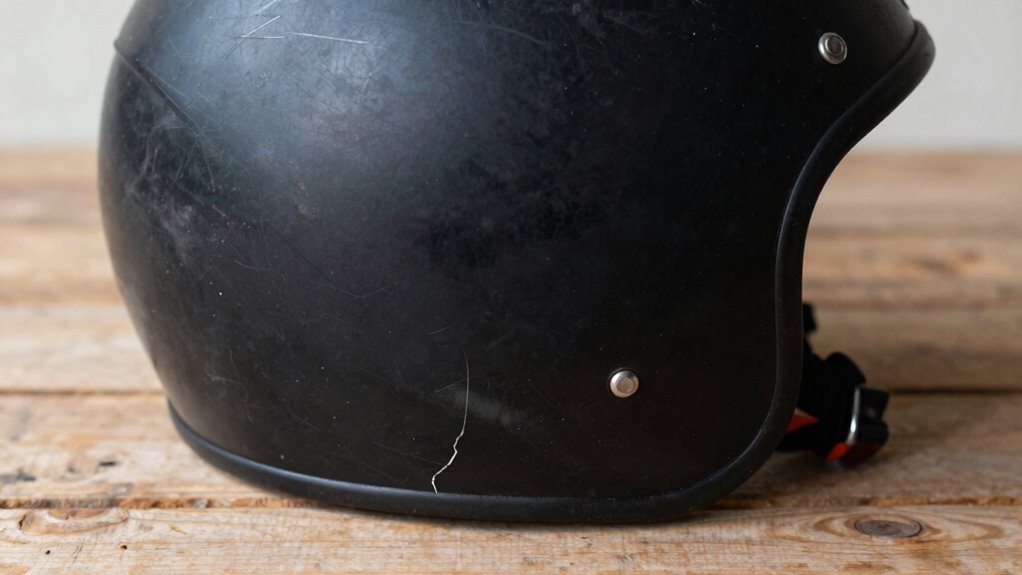

After a fall, it’s common to only check the helmet’s outer shell for cracks or dents, but that’s a mistake. Many people overlook inspecting the foam lining and internal structure, which can sustain unseen damage that weakens protection. Impact indicators might not change color, yet internal damage could still exist. To stay safe, you should perform a thorough inspection, including checking inside, every time you drop your helmet. Keep going to learn how to do a proper damage check.
Key Takeaways
- Visually inspect the outer shell for cracks, dents, or deformities after dropping your helmet.
- Check internal foam for cracks, compression, or looseness that may not be visible externally.
- Confirm impact indicator stickers haven’t changed color, signaling potential internal damage.
- Assess the helmet’s fit and structure for looseness or unusual movement, indicating possible damage.
- Replace the helmet immediately if any signs of impact damage or indicator changes are present, regardless of external appearance.
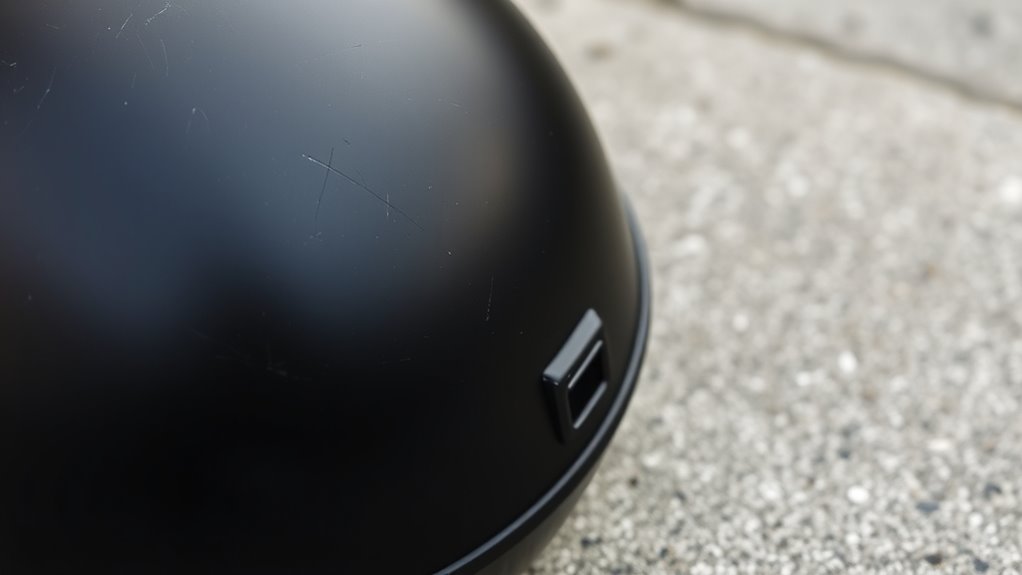
Your helmet is your first line of defense, so maintaining it regularly for damage is essential. After a fall or any impact, it’s tempting to think that a quick visual inspection is enough. But many riders overlook the importance of thoroughly checking their helmet for hidden damage, which can compromise its protective capabilities. One of the key steps is evaluating the helmet material, as different helmets are constructed from various compounds like foam, polycarbonate, fiberglass, or carbon fiber. These materials absorb and distribute impact energy, but they can also degrade or become compromised after a fall. It’s necessary to recognize that visible cracks or dents aren’t the only signs of damage—internal damage may go unnoticed but still weaken the helmet’s integrity.
Impact indicators are a helpful tool in this process. Many helmets come equipped with built-in impact indicators or safety stickers that change color after a significant impact. These indicators serve as a quick, visual cue that your helmet may have sustained damage, even if no obvious signs are visible. If an impact indicator has changed color or if your helmet shows any signs of deformation, it’s safest to replace it immediately. Relying solely on impact indicators isn’t enough, though; you should still perform a detailed inspection of the helmet’s surface and structure. Sometimes, damage can be internal, with cracks or weakened foam inside that internal layers of the helmet don’t reveal.
When inspecting your helmet, pay close attention to the foam lining inside. Cracks, compression marks, or a feeling of looseness indicate that the helmet’s ability to absorb impact has been compromised. Check the outer shell for any cracks, dents, or deformities—these can suggest that the helmet has taken a hard hit. Even if the shell looks intact, you should still consider replacing the helmet if it’s been dropped from a significant height or onto a hard surface. Remember, the helmet’s impact-absorbing foam can only handle so much, and once compromised, it won’t protect you as effectively in a future fall.
Always keep in mind that damage can be subtle yet serious. It’s not just about visible damage but also about internal degradation of the helmet material. When in doubt, replace your helmet. It’s a small price to pay for your safety. Regular inspections, especially after a drop, are essential. Don’t skip the damage check—your head’s protection depends on it.
helmet impact damage inspection kit
As an affiliate, we earn on qualifying purchases.
As an affiliate, we earn on qualifying purchases.
Frequently Asked Questions
How Often Should I Replace My Helmet After a Fall?
You should replace your helmet immediately after any fall, as even minor impacts can compromise its durability and protective integrity. Helmets don’t have fixed replacement intervals because damage isn’t always visible. Regularly inspect your helmet for cracks or dents, and replace it every 5 years regardless of impact. Prioritizing helmet durability ensures maximum safety, so don’t wait for noticeable damage—replace it promptly after a fall to stay protected.
Can Minor Cracks in the Helmet Affect Its Safety?
Think of your helmet like Achilles’ armor; even tiny cracks can weaken its impact resistance. Minor cracks in the helmet material compromise its ability to absorb shocks, making it unsafe during a fall. Don’t ignore small damages—they can expand or cause hidden weaknesses. Always inspect your helmet thoroughly after a drop, replacing it if cracks appear, to guarantee it maintains peak impact resistance and keeps you protected when it matters most.
Is There a Way to Test Helmet Integrity at Home?
You can’t reliably test helmet integrity at home, but you can inspect for damage. Check the helmet material for cracks, dents, or deep scratches, especially around impact indicators like foam or shell layers. If you notice any signs of damage or if it’s been dropped, replace your helmet. Remember, impact indicators aren’t always dependable, so when in doubt, it’s safer to get a professional assessment or replace it to ensure your safety.
What Signs Indicate a Helmet Is No Longer Safe?
You’ll know your helmet isn’t safe if the helmet material shows cracks, dents, or deformation, especially around impact zones. Any visible damage or compromised structural integrity indicates it’s no longer effective in protecting you. Also, if the helmet feels loose or uneven on your head, it might be compromised. Always replace it after a significant impact, even if no visible damage appears, to guarantee your safety during future rides.
Do Helmet Damage Checks Differ for Different Helmet Types?
Yes, helmet damage checks differ based on helmet material and impact absorption features. For foam-lined helmets, look for cracks, dents, or compression in the foam that could reduce impact absorption. Hard-shell helmets should be checked for cracks or chips in the outer shell. Always inspect straps and fasteners too. Different helmet types require specific checks to guarantee they still provide maximum protection after any impact or fall.
helmet foam padding replacement
As an affiliate, we earn on qualifying purchases.
As an affiliate, we earn on qualifying purchases.
Conclusion
Next time you drop your helmet, don’t just brush it off like a minor scratch. Think of it as the guardian of your safety, quietly bearing the scars of battle. A quick damage check can be the difference between riding worry-free or risking unseen cracks that lurk like hidden landmines. Treat your helmet like a trusted friend—inspect it thoroughly, because a small oversight can turn a simple fall into a dangerous gamble. Stay vigilant; your safety depends on it.
helmet impact indicator stickers
As an affiliate, we earn on qualifying purchases.
As an affiliate, we earn on qualifying purchases.
bike helmet internal damage check
As an affiliate, we earn on qualifying purchases.
As an affiliate, we earn on qualifying purchases.