At night, you often miss the spot right in front of your vehicle—just outside your immediate focus. Limited visibility and shadows can hide pedestrians crossing or waiting in crosswalks, especially in poorly lit areas. Drivers tend to concentrate on the road ahead and traffic signals, leaving the immediate crosswalks overlooked. Developing a habit of actively scanning the entire intersection, especially the front zone, helps spot hidden pedestrians and improves safety. Keep exploring to learn effective strategies for safer night driving.

Get bike and ride gear delivered free — and shop member deals
- Fast, free delivery on millions of items
- Access to Prime Big Deal Days deals on October 6–7
- Prime Video, Amazon Music and more included
Key Takeaways
- Drivers often overlook the area directly in front of their vehicle, missing pedestrians crossing or waiting in dark zones.
- Limited peripheral vision in low-light conditions causes drivers to neglect corners and crosswalks near intersections.
- Shadows and inconsistent lighting obscure pedestrians, especially those outside crosswalks or wearing dark clothing.
- Drivers tend to focus on signals and road ahead, neglecting immediate crosswalks and pedestrian zones.
- Proper scanning of the entire intersection, including the area immediately in front, reduces the risk of missing pedestrians.
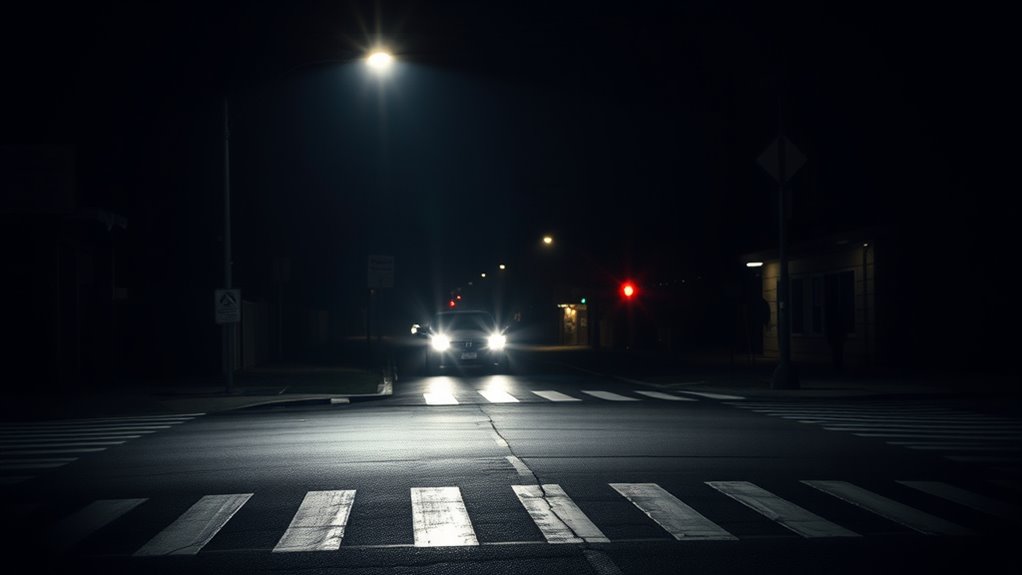
Have you ever struggled to see clearly at intersections during low-light conditions? If so, you’re not alone. Nighttime driving introduces a host of visibility challenges that can make or break your ability to respond quickly and safely. One of the most overlooked dangers at these times is the spot right in front of you—often the area drivers fail to scan thoroughly, leading to potential accidents. Pedestrian safety becomes especially compromised when visibility is limited, increasing the risk of hitting someone crossing or waiting to cross. Recognizing these visibility challenges is essential for safer driving, but many drivers overlook critical blind spots or underestimate how darkness affects their perception.
At low-light intersections, your eyes depend heavily on streetlights, vehicle headlights, and reflective signs to guide you. Unfortunately, these light sources can be inconsistent, creating shadows and dark patches that obscure pedestrians or other vehicles. Pedestrians dressed in dark clothing or crossing outside designated crosswalks become even harder to see, especially when your focus is primarily on the road ahead or on other vehicles. This creates a false sense of security and makes it easy to overlook someone in the crosswalk or on the sidewalk. You must actively scan the entire intersection, including the corners and crosswalks, to compensate for these visibility challenges. Failing to do so greatly endangers pedestrian safety, which should always be a priority.
Always scan entire intersections at night to prevent missing pedestrians hidden in shadows and dark patches.
The spot drivers often neglect is right in front of their vehicle—what’s directly ahead in the crosswalk or just beyond the line of sight from the driver’s seat. It’s easy to focus on the road or the traffic signal but miss a pedestrian stepping into the crosswalk or a cyclist approaching from the side. This oversight is often due to limited peripheral vision or poor lighting conditions that diminish your ability to perceive movement and depth accurately. To mitigate this, you need to actively scan and avoid tunnel vision, especially when approaching intersections in the dark. Use your headlights effectively to illuminate crosswalks, and slow down as you approach these areas, giving yourself more time to react. Additionally, understanding how contrast ratio impacts visibility can help you better anticipate what might be obscured in low-light scenarios.
Ultimately, low-light intersections demand heightened awareness and a proactive attitude. You must recognize the visibility challenges and prioritize pedestrian safety. Don’t rely solely on your headlights or streetlights to do the work for you. Instead, develop the habit of scanning thoroughly—checking the crosswalks, corners, and sidewalks—and anticipate that pedestrians may be less visible than during daylight. By doing so, you can reduce accidents, protect vulnerable pedestrians, and navigate these tricky spots more safely. Remember, the critical zone often overlooked is the one immediately in front of you, and paying close attention to it can make all the difference.
night driving LED headlight bulbs
As an affiliate, we earn on qualifying purchases.
As an affiliate, we earn on qualifying purchases.
Frequently Asked Questions
How Can Drivers Improve Visibility at Low-Light Intersections?
To improve visibility at low-light intersections, you should use night-time signage to alert you of upcoming crossings. Wearing reflective gear makes you more noticeable to other drivers, especially in dim conditions. Keep your headlights on and clean your windshield regularly to maximize your view. Stay alert, reduce your speed, and watch for pedestrians and vehicles. These steps help you see better and avoid accidents in low-light conditions.
What Are Common Mistakes Drivers Make at Low-Light Intersections?
You often stumble into trouble at low-light intersections, like missing a hidden island. Common mistakes include ignoring pedestrian awareness, which can cause accidents, and neglecting vehicle maintenance, like faulty headlights, making you less visible. You might also rush through yellow lights or overlook stop signs, increasing danger. Stay alert, keep your vehicle properly maintained, and always look carefully for pedestrians and other vehicles to avoid these mistakes.
Are There Specific Traffic Signals for Low-Light Intersection Safety?
Yes, there are specific traffic signals designed for low-light intersection safety. Smart lighting systems improve signal visibility, making signals easier to see in poor lighting conditions. These advanced signals use brighter lights or adaptive lighting technology to catch your attention and reduce confusion. By focusing on signal visibility, you can better anticipate when to stop or go, ultimately enhancing your safety and that of others at low-light intersections.
How Do Weather Conditions Affect Low-Light Intersection Visibility?
Weather conditions can considerably impact your visibility at low-light intersections. Poor lighting conditions, like overcast skies or fog, reduce how well you see other vehicles, pedestrians, and traffic signals. Fog visibility, in particular, makes it harder to judge distances and spot hazards early. When weather worsens, slow down, use your headlights properly, and stay extra alert to avoid accidents, since visibility drops and risks increase.
What Are the Legal Implications of Accidents at Low-Light Intersections?
You should know that accidents at low-light intersections can lead to serious legal consequences, including liability complexities and insurance claims disputes. Nearly 50% of intersection crashes happen in poor lighting conditions, increasing your risk of legal trouble if you’re at fault. If involved, you could face fines, lawsuits, or increased insurance premiums. Always drive cautiously, document the scene, and consult an attorney to protect your rights and minimize legal impacts.
pedestrian crossing warning lights
As an affiliate, we earn on qualifying purchases.
As an affiliate, we earn on qualifying purchases.
Conclusion
Don’t disregard the darkness at low-light intersections. Diligently dart your eyes and double-check every direction, avoiding accidents and anxiety. By paying attention and practicing patience, you prevent potential pitfalls and preserve safety. Remember, the quiet, questionable corners demand your caution. Clear your conscience and conquer the concealed hazards lurking in the shadows. Stay vigilant, stay safe—because the most minor mistake at these mysterious moments can make a massive mess.
high visibility reflective vest for drivers
As an affiliate, we earn on qualifying purchases.
As an affiliate, we earn on qualifying purchases.
car dash camera with night vision
As an affiliate, we earn on qualifying purchases.
As an affiliate, we earn on qualifying purchases.
Fall Picks
fall essentials
As an affiliate, we earn on qualifying purchases.