To layer reflective and high-visibility gear smartly, start with a moisture-wicking base layer that keeps you dry and comfortable. Add a snug-fitting outer layer with reflective strips or accents placed on arms, torso, and back for multi-angle visibility. Avoid bulky clothing to prevent restriction and bunching. Regularly check your gear for wear or damage, and clean it as instructed to maintain reflectivity. For more tips on maximizing safety, keep exploring how proper layering can make all the difference.

Get bike and ride gear delivered free — and shop member deals
- Fast, free delivery on millions of items
- Access to Prime Big Deal Days deals on October 6–7
- Prime Video, Amazon Music and more included
Key Takeaways
- Start with a moisture-wicking base layer to stay dry and prevent chafing during activity.
- Choose high-visibility colors and reflective strips that meet safety standards for maximum daytime and nighttime visibility.
- Layer waterproof or protective outer gear with reflective accents to enhance safety in adverse weather conditions.
- Regularly inspect and clean reflective gear to maintain its brightness and effectiveness over time.
- Follow activity-specific regulations and aim for gear that exceeds minimum safety standards for optimal protection.

Ever wondered how to stay visible and safe in low-light conditions? When you’re out during dawn, dusk, or nighttime, proper layering of reflective and high-visibility gear becomes essential. It’s not just about tossing on a reflective vest or some bright clothing; it’s about understanding how to combine these layers effectively while adhering to safety regulations. Safety regulations often specify the minimum standards for visibility gear, especially for workers or cyclists, so you want to guarantee your equipment meets those guidelines. This means selecting gear that’s compliant, durable, and suited for the environment you’re in.
Effective layering of reflective and high-visibility gear ensures safety and compliance in low-light conditions.
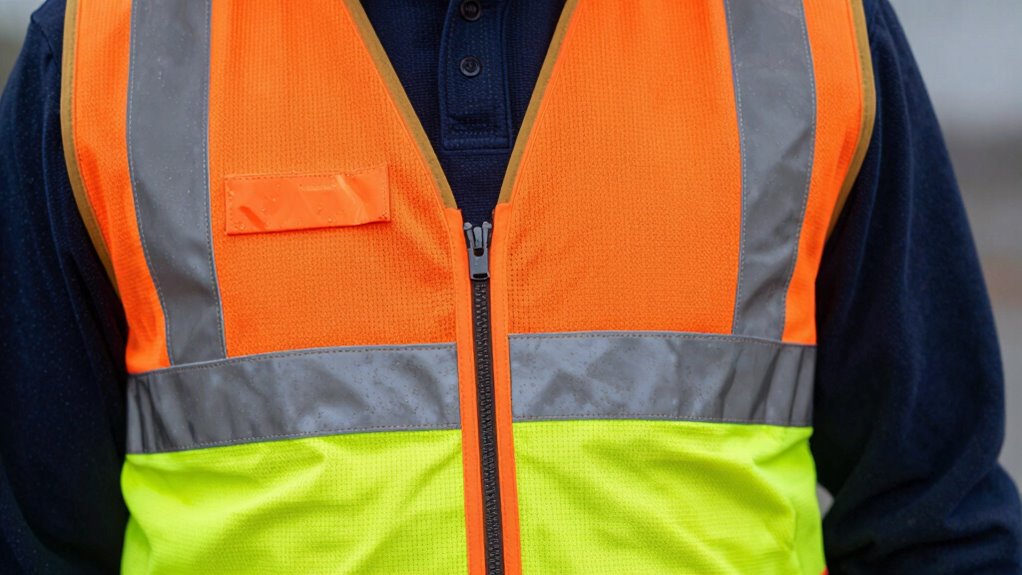
Your first step is to choose a base layer that’s comfortable and fits well. This could be moisture-wicking clothing that keeps you dry and prevents chafing. Over that, add a high-visibility vest or jacket made from fluorescent materials, which enhances daytime visibility and provides a bright background for reflective strips. These strips are essential—they reflect light from headlights or street lamps directly back to the source, making you highly visible. Be sure the reflective elements are positioned correctly—on the arms, torso, and back—so they catch light from multiple angles. Proper gear maintenance is critical; regularly inspect your reflective gear for tears or fading, and clean it according to manufacturer instructions to keep reflectivity at its best. Additionally, understanding the importance of biodiversity in our environment can remind us that just as diverse ecosystems thrive through balanced interactions, our safety gear benefits from proper care and correct layering. Maintenance of your gear is vital for ensuring longevity and reliable performance in low-light conditions. Furthermore, choosing gear with durable materials can significantly improve its resistance to wear and tear over time.
Layering smartly also involves considering your activity and environment. For instance, if you’re cycling, you might need a waterproof outer shell with reflective accents to stay dry and visible. If you’re working outdoors, a high-visibility safety vest over your regular work clothes might suffice, but ensure it’s ANSI or EN ISO compliant. Remember, safety regulations set the minimum standards, but going beyond them enhances your safety. It’s wise to invest in gear with high-quality reflective tape and vibrant colors, as these last longer and perform better over time. Recognizing the importance of visibility in preventing accidents underscores why high-quality gear is so vital. Being aware of the different regulations that apply to your specific activity can help you choose the most appropriate gear and avoid potential safety issues.
When layering, avoid bulky clothing that restricts movement or interferes with your safety gear. Instead, aim for a snug fit that allows layering without bunching. Always check your gear before each use—make sure reflective strips aren’t loose or damaged, and clean your clothing regularly to maintain visibility. Proper gear maintenance not only prolongs the lifespan of your equipment but also guarantees consistent performance when you need it most. By following these principles—adhering to safety regulations, maintaining your gear diligently, and layering thoughtfully—you’ll stay visible, safe, and confident during your low-light adventures.
reflective safety vest with reflective strips
As an affiliate, we earn on qualifying purchases.
As an affiliate, we earn on qualifying purchases.
Frequently Asked Questions
Can Reflective Gear Be Washed Without Losing Effectiveness?
Yes, reflective gear can be washed without losing effectiveness if you follow proper washing techniques. Use mild detergent and cold water to protect the material’s durability. Avoid bleach and fabric softeners, which can degrade reflective surfaces. Turn gear inside out before washing, and air dry instead of using a dryer. Proper care guarantees your reflective gear maintains its safety features and lasts longer, keeping you visible and protected.
How Do I Choose the Right High-Vis Color for Safety?
Did you know that bright yellow and orange are among the most visible colors in low light? To guarantee safety, choose high-vis colors that meet safety color standards, like fluorescent yellow-green or orange, which are easily seen in various conditions. Color visibility is vital for alerting others, so pick colors that stand out against your environment. Always follow safety standards to maximize your visibility and safety.
Is Reflective Gear Suitable for All Weather Conditions?
Reflective gear is generally suitable for most weather conditions, but you should consider weather resistance and material durability. In heavy rain or snow, look for gear made from waterproof, quick-drying fabrics to stay dry and visible. For hot or humid weather, choose breathable options to prevent overheating. Always check the gear’s specifications to verify it withstands the elements, so you stay safe and visible regardless of the weather.
How Often Should I Replace High-Vis or Reflective Clothing?
Think of your high-vis gear as a trusted shield that needs regular reinforcement. You should replace it when the material shows signs of wear, fading, or tears, typically every 6 to 12 months, depending on use. Material durability and cost considerations matter—invest in quality gear that lasts longer, saving you money. Regular replacement guarantees visibility stays sharp, keeping you safe and confident on the road or worksite.
Are There Any Legal Requirements for High-Vis Gear in Specific Industries?
Yes, there are legal standards and industry regulations that specify when you must wear high-vis gear. For example, construction, road work, and railway industries typically require high-visibility clothing to meet safety standards set by organizations like OSHA or ANSI. These regulations guarantee visibility in hazardous environments, minimizing accidents. Always check your local laws and industry-specific rules to stay compliant and protect yourself on the job.
high visibility moisture-wicking base layer
As an affiliate, we earn on qualifying purchases.
As an affiliate, we earn on qualifying purchases.
Conclusion
So there you have it—master the art of layering reflective and high-vis gear, and you’ll be practically invisible to danger… or at least very hard to ignore. Just remember, no amount of gear can turn you into a superhero—so don’t get too confident. Stay smart, stay safe, and keep those reflective strips shining brighter than your confidence on a Monday morning. After all, the road isn’t a fashion show, but it’s definitely your runway.
waterproof high visibility jacket with reflective accents
As an affiliate, we earn on qualifying purchases.
As an affiliate, we earn on qualifying purchases.
As an affiliate, we earn on qualifying purchases.
Fall Picks
fall essentials
As an affiliate, we earn on qualifying purchases.