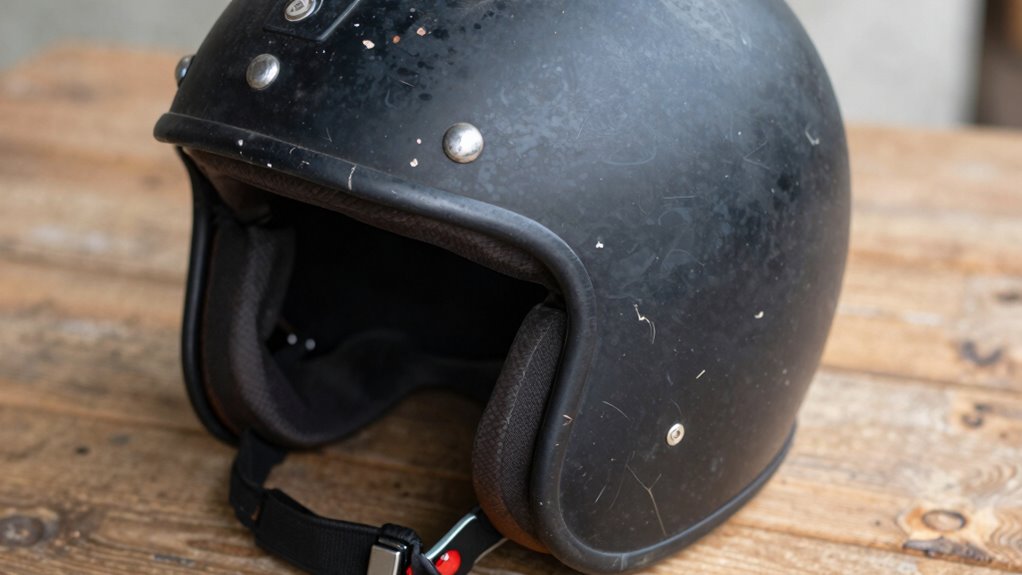

You should replace your helmet every five years, even if it looks fine, because materials can weaken over time. You also need to swap it out immediately after any crash, collision, or visible damage, as its protective ability is reduced. Regular inspections can help identify unseen issues. Keep in mind, internal degradation can occur without obvious signs, so staying vigilant is key—if you want to know more, keep exploring the signs and best practices.

Get bike and ride gear delivered free — and shop member deals
- Fast, free delivery on millions of items
- Access to Prime Big Deal Days deals on October 6–7
- Prime Video, Amazon Music and more included
Key Takeaways
- Replace helmets every five years regardless of visible condition due to material degradation.
- Discard helmets immediately after any crash or impact, even if no visible damage is apparent.
- Inspect helmets regularly for cracks, dents, or damage; replace if any signs are found.
- Consider environmental exposure, such as extreme heat or sunlight, which can weaken helmet materials over time.
- When in doubt about a helmet’s safety or age, replace it to ensure optimal protection.
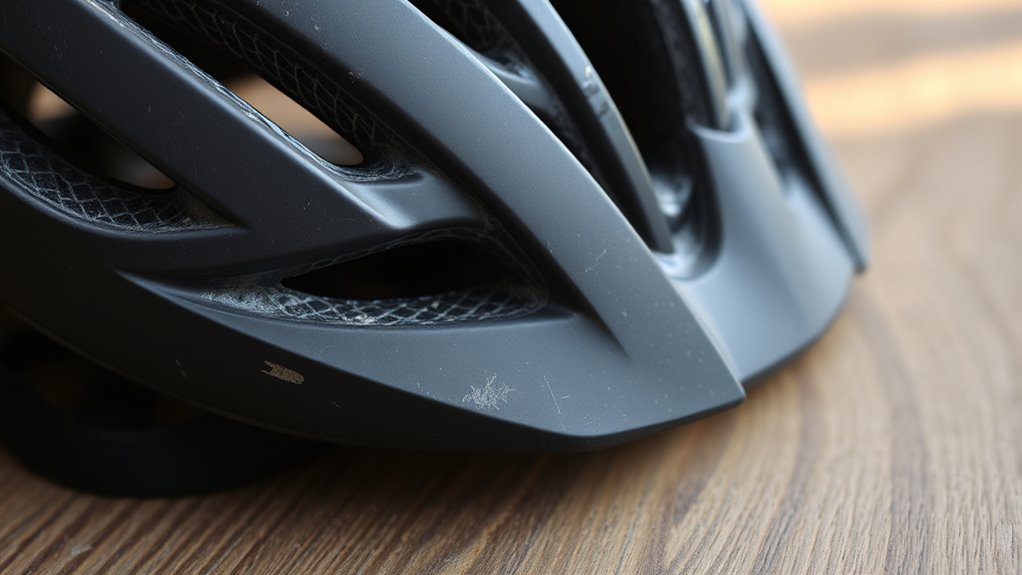
Your helmet is your first line of defense, but it doesn’t last forever. Over time, its helmet durability can decline, reducing its ability to protect you in case of an accident. Even if your helmet looks fine on the outside, the materials inside can degrade due to regular use, exposure to sunlight, or temperature fluctuations. That’s why understanding when to replace it is essential for maintaining safety standards. Helmets are designed with specific safety standards to guarantee they provide maximum protection, but these standards also have limits. When your helmet no longer meets these standards, it’s time for a new one.
A key indicator that it’s time to replace your helmet is the passage of time. Most manufacturers recommend replacing helmets every five years, regardless of whether you’ve been in a crash, because helmet materials such as foam and adhesives can weaken over time. Even if your helmet looks intact, the internal padding can break down or become less effective at absorbing impact. Keep in mind, safety standards are established based on extensive testing, but they assume helmets are used within their intended lifespan. After that, the helmet’s ability to withstand impact diminishes, making it less reliable in protecting your head.
Another trigger for replacement is visible damage. Cracks, dents, or any signs of impact compromise helmet integrity, even if they seem minor. Sometimes, a helmet can sustain a hard blow that isn’t immediately obvious, but the internal structure may have been compromised. This is especially true if you’ve fallen or been involved in a collision. In such cases, the helmet’s ability to absorb shock can be greatly reduced, and it should be discarded. Don’t forget that even if a helmet looks fine externally, the inside might have sustained damage that’s not visible but can impact helmet durability and safety standards.
Additionally, if your helmet has been involved in a crash, it’s essential to replace it immediately. Impact can weaken the helmet’s materials, even if you don’t see any visible damage. The foam liner absorbs the energy of an impact, but it’s designed for a single use. Once compromised, it no longer offers the same level of protection. Also, if your helmet has been exposed to extreme heat or sunlight for prolonged periods, the materials can degrade, diminishing its ability to protect you. Always prioritize your safety and be cautious—if in doubt, replace your helmet. Regular inspection of helmets is crucial to ensure ongoing safety and performance.
Frequently Asked Questions
Can a Helmet Be Safely Reused After a Minor Fall?
You shouldn’t reuse a helmet after a minor fall because it can compromise the helmet’s lifespan and safety. Even if it looks fine, you need to perform a thorough safety inspection to check for cracks, dents, or foam damage. Minor impacts can weaken the helmet’s structure, reducing its ability to protect you in future crashes. When in doubt, replace it to guarantee maximum safety every time you ride.
How Do I Check if My Helmet Is Still Effective?
Think of your helmet like a trusty shield—if it’s been through impact testing, check its labeling for age or damage indicators. Inspect for cracks, dents, or foam deterioration, and make sure straps work properly. If it’s been involved in a crash or shows signs of wear, replace it. Even if it looks fine, impact testing can reveal unseen damage. Regular checks keep your helmet effective and your head protected.
Does Sweating or Exposure to Sunlight Affect Helmet Integrity?
Sweating and sunlight exposure can affect helmet integrity over time. Sweat can weaken helmet materials, especially foam and padding, leading to reduced protection. Sunlight’s UV rays degrade plastic and foam, causing brittleness and cracks. Environmental factors like extreme heat or moisture also accelerate deterioration. To maintain safety, regularly inspect your helmet for damage or wear, and replace it if you notice any degradation caused by these environmental factors.
Are Certain Helmet Brands More Durable Than Others?
Some helmet brands are more durable because of their reputation for quality and the materials they use. You should look for brands known for high standards, as they often use better materials that resist wear and tear. While premium brands typically provide longer-lasting protection, always check the helmet’s condition regularly. Remember, even the best helmet needs replacing if it shows signs of damage or deterioration, regardless of brand reputation.
Can I Replace Just the Padding Instead of the Entire Helmet?
You can substitute just the helmet padding if it’s worn out or uncomfortable, but you should consider helmet replacement if the helmet has sustained significant impact or damage. Check the padding for signs of wear, like thinning or tearing, and replace it to guarantee comfort and safety. Keep in mind, helmet padding replacement alone may not restore full protective integrity, so evaluate whether a new helmet might be a better choice for ongoing safety.
Conclusion
Remember, replacing your helmet after a crash or every 5 years is vital for safety. Did you know that nearly 70% of helmet users overlook the expiration date? Wearing an outdated helmet can compromise protection. Stay proactive—inspect it regularly, and don’t wait for visible damage. Prioritize your safety by replacing your helmet on time. It’s a small step that can make a huge difference in protecting your head during an accident.
Fall Picks
fall essentials
As an affiliate, we earn on qualifying purchases.