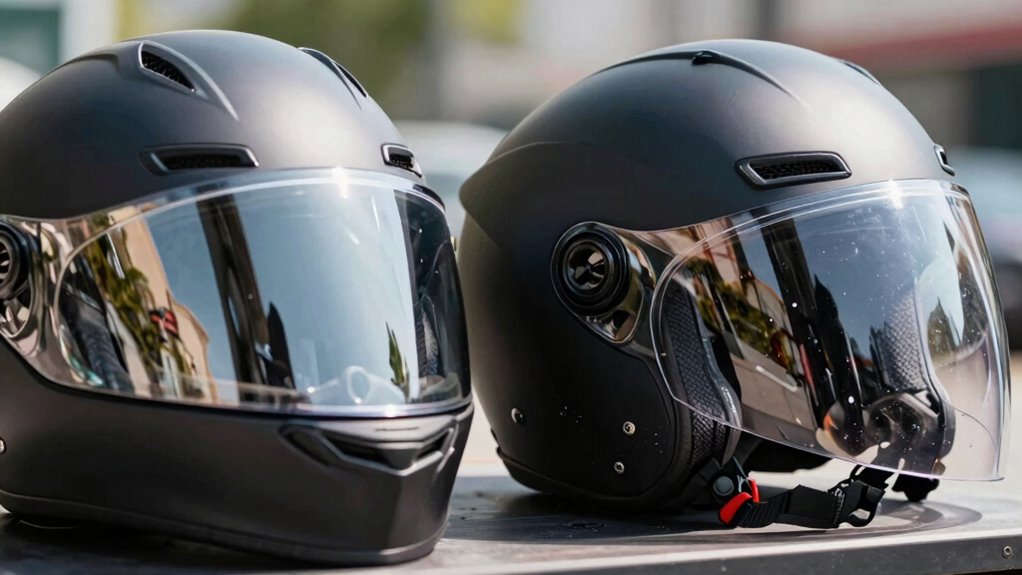

When comparing visor helmets to standard commuter helmets, focus on design, safety features, and practicality. Visor helmets have integrated, often retractable shields made from impact-resistant materials, offering better visibility and weather protection. Standard helmets usually rely on separate goggles or visors, which might need frequent cleaning or replacement. Consider ease of maintenance, aerodynamics, and comfort, too. Exploring these differences further will help you choose the helmet that best suits your riding style and needs.
Key Takeaways
- Compare the helmet construction, with visor helmets having integrated shields and standard helmets using separate visors or goggles.
- Assess safety features like impact absorption materials and coatings such as anti-fog and anti-scratch.
- Consider aerodynamics and comfort, noting that visor helmets often offer better wind resistance and quick-access mechanisms.
- Evaluate visibility and weather adaptability, focusing on integrated visors with weather-resistant coatings versus manual visor adjustments.
- Review maintenance ease, as visor helmets typically simplify cleaning and visor replacement compared to standard helmets.
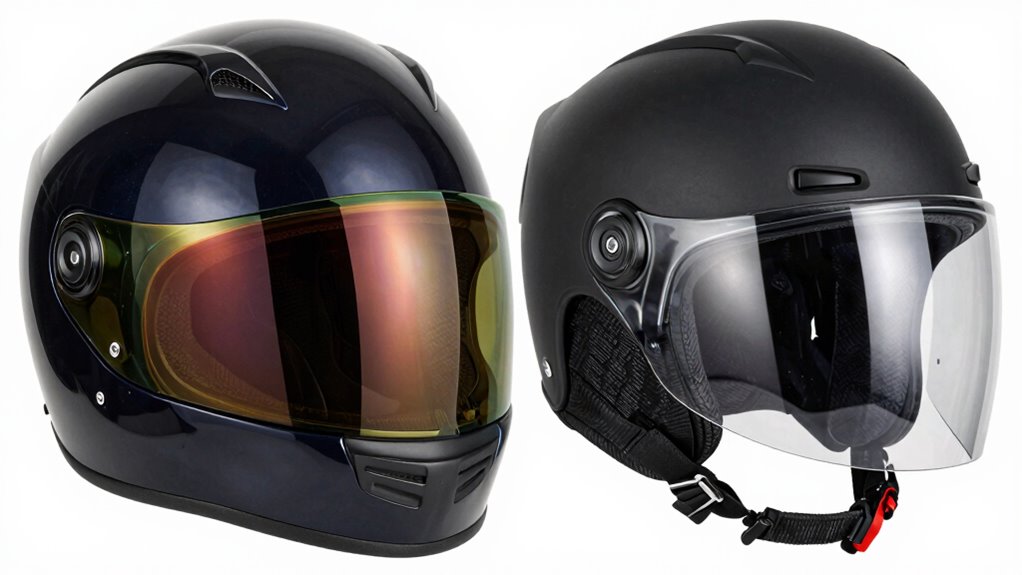
When choosing a helmet for your daily commute, understanding the differences between visor helmets and standard commuter helmets can help you make a smarter decision. Visor helmets feature a built-in visor design, which means the face shield is integrated into the helmet itself, providing a seamless look and quick access to protection. This visor design can be either retractable or fixed, giving you options based on your riding style and preferences. On the other hand, standard commuter helmets typically rely on separate visors or goggles, which you may need to attach or remove depending on the weather or lighting conditions.
One of the key factors to compare is how each helmet type handles safety features. Visor helmets often come equipped with reinforced shells made from durable materials like polycarbonate or fiberglass, designed to absorb impacts effectively. The visor itself is usually made from shatterproof polycarbonate, offering clear visibility while protecting your face from debris, wind, and insects. Many visor helmets also incorporate anti-scratch and anti-fog coatings to improve safety and visibility in different weather conditions. In contrast, standard helmets tend to have a more traditional construction, with a focus on padding and impact absorption, and their visors or goggles may not always have the same advanced coatings or impact-resistant qualities.
Another aspect to consider is how each helmet type impacts your overall safety experience. Visor designs often allow for better aerodynamic efficiency, reducing wind resistance and noise, which can help you stay focused and comfortable on your ride. The quick-release mechanisms on some visor helmets make it easier to lift or lower the face shield without removing the helmet, adding convenience and safety during sudden weather changes. Conversely, standard helmets with separate visors might require more manual effort to change or clean and may lack some of the integrated safety features that visor helmets offer. Additionally, helmet safety standards** ensure that both helmet types meet essential impact protection requirements, regardless of design differences. Paying attention to helmet maintenance is crucial to preserving the safety features and longevity of your helmet, regardless of its type. Also, the overall design and materials used in visor helmets can contribute to improved aerodynamic performance**, enhancing comfort and safety during rides.
Ultimately, your choice depends on your priorities—whether you prefer the sleek, integrated look of a visor helmet with advanced safety features or the simplicity and versatility of a standard commuter helmet. Both types can provide adequate protection if they meet safety standards, but understanding how their visor design impacts visibility and safety features can help you select the right helmet for your daily ride. When you weigh these factors carefully, you’ll be better equipped to choose a helmet that keeps you safe, comfortable, and prepared for whatever your commute throws at you.
visor helmet with retractable shield
As an affiliate, we earn on qualifying purchases.
As an affiliate, we earn on qualifying purchases.
Frequently Asked Questions
Are Visor Helmets More Aerodynamic Than Standard Commuter Helmets?
Yes, visor helmets are generally more aerodynamic than standard commuter helmets. Their sleek visor design reduces air resistance, helping you ride faster and with less effort. Plus, visor helmets often feature better helmet ventilation, keeping you cool on long rides. You also benefit from enhanced visor durability, which protects against impacts and scratches. Overall, visor helmets improve your riding experience by being more aerodynamic, ventilated, and durable than standard commuter helmets.
How Do Visor Helmets Affect Peripheral Vision?
Did you know visor helmets can slightly narrow your peripheral vision? They improve visual clarity by providing a clear, unobstructed view directly ahead and reduce glare, which helps you see better in bright conditions. However, the design can sometimes limit side visibility, so you might need to turn your head more often. Overall, visor helmets balance better glare reduction and visual clarity but may require adjustments for peak peripheral awareness.
Can Visor Helmets Be Used in Rainy Weather?
Yes, visor helmets can be used in rainy weather, but their rain protection depends on the visor’s design and coating. Look for helmets with anti-scratch and anti-fog coatings to improve visibility. Durability is key; a sturdy visor resists scratches and cracks from rain and debris. Keep the visor clean and use a rain-resistant treatment if needed. This guarantees clear vision and better rain protection, making your ride safer and more comfortable.
Are Visor Helmets Suitable for Long-Distance Commuting?
Visor helmets are suitable for long-distance commuting because they offer excellent visibility through various visor helmet styles. They also enhance commuter helmet comfort by protecting your face from wind, dust, and insects, reducing fatigue over long rides. Plus, many visor helmets feature adjustable visors and ventilation systems, making extended trips more comfortable. Just make certain the helmet’s fit is snug and the visor doesn’t fog up for peak comfort during your commute.
How Do Visor Helmets Compare in Weight to Standard Helmets?
You might be surprised to find visor helmets often weigh less than standard helmets, thanks to their streamlined design. This lighter weight can reduce fatigue during long rides. Plus, visor helmets excel in helmet ventilation, keeping you cool, and offer better noise reduction, minimizing wind noise and distractions. These features make visor helmets a comfortable, practical choice, especially if you prioritize comfort and safety on your commute.
impact-resistant commuter helmet
As an affiliate, we earn on qualifying purchases.
As an affiliate, we earn on qualifying purchases.
Conclusion
Ultimately, choosing between visor helmets and standard commuter helmets depends on your needs. Visor helmets deliver visibility and vigilance with vivid, veiled views, while standard helmets offer simplicity and safety without the splash of added features. Decide based on your daily demands—whether you prefer protection with panoramic perception or plain practicality. Remember, your helmet’s harmony hinges on your handling, so heed your heart and hit the road confidently, knowing your choice champions your comfort and safety.
anti-fog and anti-scratch helmet visor
As an affiliate, we earn on qualifying purchases.
As an affiliate, we earn on qualifying purchases.
quick-release face shield helmet
As an affiliate, we earn on qualifying purchases.
As an affiliate, we earn on qualifying purchases.