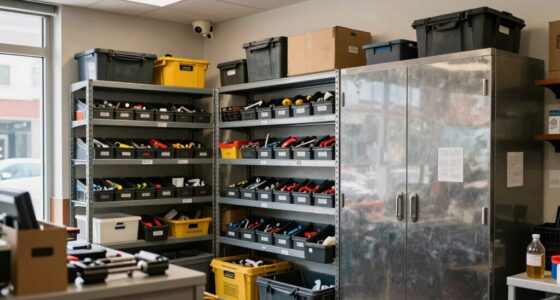
To keep your scooter in top shape indoors, start by cleaning it thoroughly to remove dirt and moisture, then dry it completely and apply light lubricant to moving parts. Choose a dry, cool, well-ventilated space, elevate the scooter on a stand, and use a breathable cover. Disconnect the battery and secure the scooter for safety. Following these steps helps prevent rust and damage while ensuring you’re ready for the next ride—more tips await you.

Get bike and ride gear delivered free — and shop member deals
- Fast, free delivery on millions of items
- Access to Prime Big Deal Days deals on October 6–7
- Prime Video, Amazon Music and more included
Key Takeaways
- Clean and dry your scooter thoroughly to prevent dirt, moisture, and rust during indoor storage.
- Use a breathable cover to protect from dust while allowing moisture to escape.
- Disconnect the battery and turn off all electronic systems for safety and preservation.
- Store the scooter in a cool, dry, well-ventilated space, elevated on a stand to avoid flat spots.
- Regularly inspect and start the scooter to prevent corrosion, pests, and maintain optimal condition.
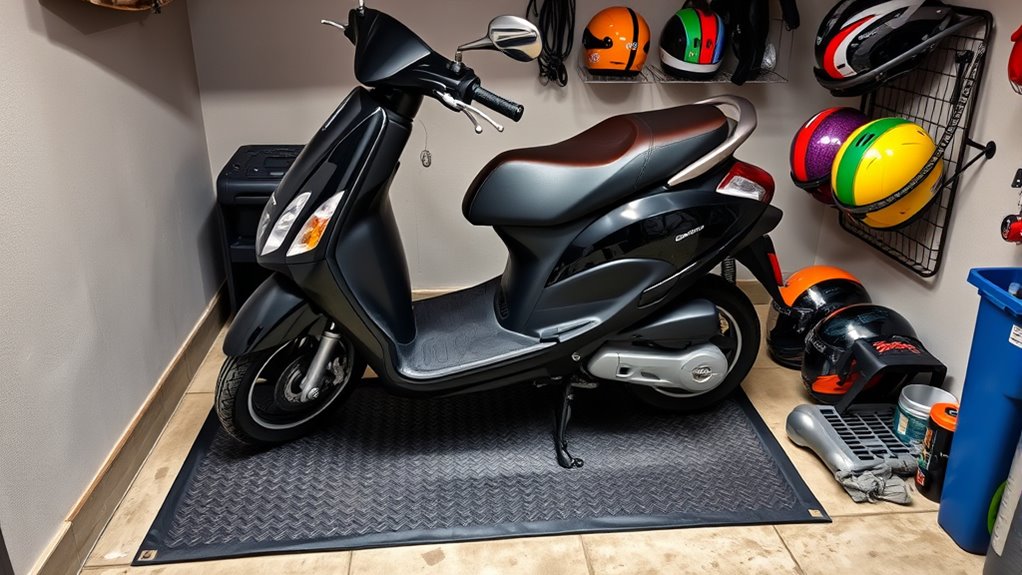
Storing your scooter indoors can protect it from weather damage and theft, but you need to do it correctly to avoid potential issues. Proper storage isn’t just about finding a spot; it’s about creating a safe, clean environment that preserves your scooter’s condition and keeps it ready to ride. To do this, you should follow some essential maintenance tips and safety precautions. First, make sure your scooter is clean before storage. Dirt, mud, and grime can cause corrosion and damage over time. Wipe down all surfaces, paying special attention to the chain, brakes, and electrical components. Removing moisture is vital, so dry the scooter thoroughly to prevent rust. Applying a light lubricant to moving parts can also help maintain smooth operation and guard against corrosion. Incorporating nanotechnology-based protective coatings can further enhance corrosion resistance and extend the lifespan of your scooter’s components.
Properly clean and dry your scooter before indoor storage to prevent corrosion and damage.
Next, choose a suitable indoor location. Ideally, you want a dry, cool, and well-ventilated space that’s free from extreme temperatures and humidity, which can accelerate deterioration. Avoid storing your scooter in areas prone to flooding, direct sunlight, or near heating vents. Once you find a good spot, consider elevating the scooter on a stand or rack to prevent tires from developing flat spots. This also makes it easier to access and reduces contact with the ground, which can trap moisture and dirt. Cover your scooter with a breathable cover designed for outdoor or indoor storage—this protects it from dust while allowing moisture to escape, preventing mold and corrosion.
Safety precautions are equally important during storage. Disconnect the battery if you plan to store your scooter for an extended period. Batteries can leak or corrode if left connected, and a drained battery might be difficult to recharge later. Check your owner’s manual for specific instructions. Additionally, ensure that the scooter is turned off, with all switches and electronic systems disengaged. This minimizes the risk of accidental activation or electrical issues. If you’re storing the scooter in a shared garage or storage unit, secure it properly with locks or chains to deter theft. Keep the storage area free of clutter around your scooter to prevent accidental damage.
Finally, schedule periodic checks. Even when stored away, inspecting your scooter every few weeks can catch issues early. Look for signs of moisture, rust, or pest intrusion. Start the scooter occasionally to keep the engine and moving parts functioning smoothly. Following these simple maintenance tips and safety precautions guarantees your scooter stays in top condition while stored indoors. When it’s time to ride again, you’ll find your scooter ready, clean, and safe, just as you left it. Proper storage isn’t complicated, but it makes a world of difference in extending your scooter’s lifespan and keeping it in peak shape.
As an affiliate, we earn on qualifying purchases.
Frequently Asked Questions
How Often Should I Clean My Indoor Scooter Storage Area?
You should clean your indoor scooter storage area at least once a month to prevent dirt buildup and moisture. Follow a regular cleaning schedule, wiping down surfaces and checking for any signs of mold or mildew. Good ventilation practices are essential—keep the area well-ventilated to reduce humidity and odors. This routine helps maintain a clean, dry space, prolonging your scooter’s lifespan and keeping your indoor environment fresh.
Can Storing a Scooter Indoors Cause Any Property Damage?
Storing your scooter indoors can cause property damage if you don’t take precautions. Leaking fluids might stain floors or damage walls, and accumulated dirt or moisture can lead to mold or structural issues. Additionally, it can create safety hazards like slipping or tripping. To prevent this, clean your scooter regularly, use drip trays, and keep the storage area well-ventilated and organized, ensuring both your property and safety stay protected.
What Are the Best Dehumidifiers for Indoor Scooter Storage?
You should choose a dehumidifier with the right capacity for your space to keep moisture levels in check. Look for models with low noise levels so it doesn’t disturb your daily activities. Portable options with adjustable settings work well for indoor scooter storage. Make sure it can handle the room size and maintains humidity at around 50-60%, preventing rust and mold without creating excess noise or energy use.
How Do I Prevent Mold and Rust in Indoor Storage?
Think of your scooter as a precious treasure, and moisture control as its shield. To prevent mold and rust, keep humidity low with dehumidifiers, and make certain good airflow. Regularly wipe down surfaces with protective sprays, creating a barrier against moisture. Store it in a dry, well-ventilated space, and consider using silica gel packs. These steps guard your scooter’s health, preserving its shine and strength for many rides ahead.
Is It Safe to Store a Scooter Near Electrical Outlets Indoors?
Yes, it’s safe to store your scooter near electrical outlets indoors if you prioritize electrical safety. Make sure the outlet placement is away from any moisture or potential water leaks from the scooter. Keep the scooter at a safe distance from outlets to prevent accidental contact and avoid overloading circuits. Regularly inspect the area for any signs of water or damage, ensuring both your scooter and your home’s electrical system stay safe.
As an affiliate, we earn on qualifying purchases.
Conclusion
Storing your scooter indoors using the ‘drip and dirt’ plan keeps your space tidy and your friends happy. Did you know that 65% of scooter owners report fewer complaints from friends when they follow proper storage methods? By staying consistent with cleaning and drip management, you not only protect your scooter but also maintain a clean, welcoming home environment. Keep up these habits, and you’ll enjoy hassle-free storage and more time riding!
battery disconnect tool for scooters
As an affiliate, we earn on qualifying purchases.
As an affiliate, we earn on qualifying purchases.
breathable scooter storage cover
As an affiliate, we earn on qualifying purchases.
As an affiliate, we earn on qualifying purchases.
Fall Picks
fall essentials
As an affiliate, we earn on qualifying purchases.