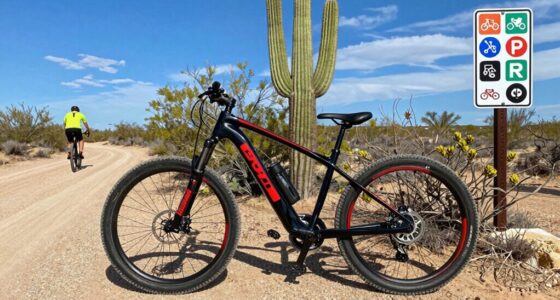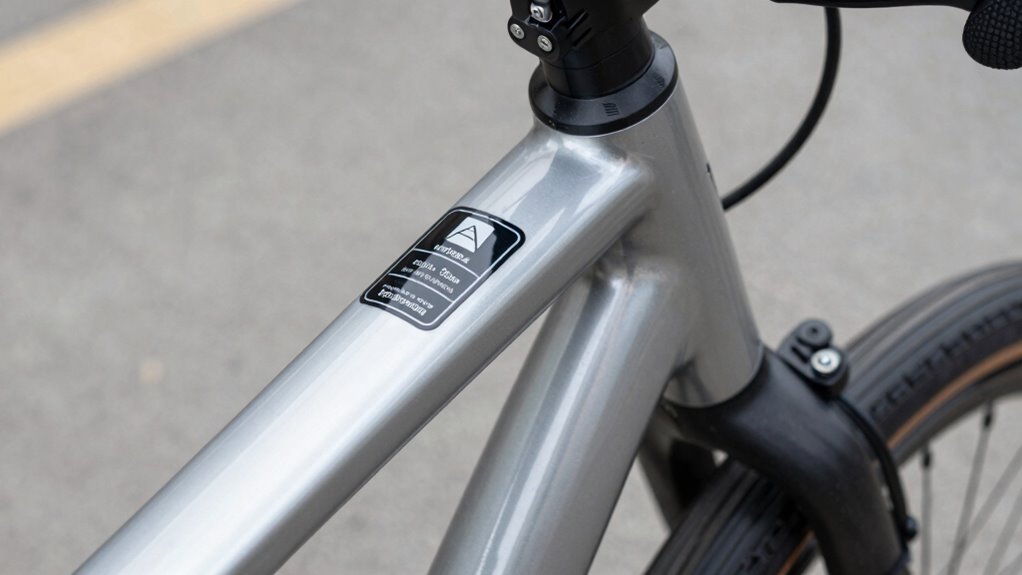
Your e-bike label shows more than just basic info; it reveals crucial safety, performance, and maintenance details. Pay attention to battery capacity, voltage, and handling instructions to prevent accidents and extend lifespan. Understanding motor wattage and type helps you ride confidently within legal limits while optimizing power and efficiency. Properly interpreting these labels keeps you safe and guarantees your bike performs at its best—if you keep exploring, you’ll uncover even more important details.
Open a free Amazon Business account
Business pricing, bulk buying and tax-exempt orders.
As an affiliate, we earn on qualifying purchases.
Key Takeaways
- Battery capacity and voltage info guide ride planning and range estimation.
- Safety labels warn against overcharging, water exposure, and physical damage to prevent hazards.
- Motor power specifications determine performance, speed, and legal compliance.
- Understanding battery chemistry and motor type influences maintenance and longevity.
- Proper interpretation of labels ensures safe, efficient, and responsible e-bike ownership.
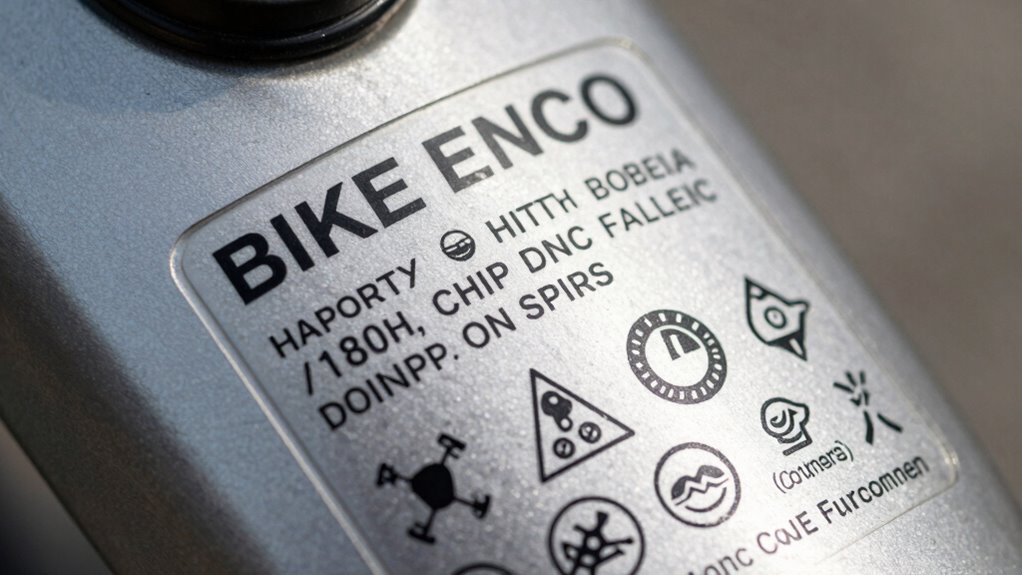
Have you ever wondered what the labels on your e-bike really mean? Most riders glance at them briefly, but they often overlook the crucial details that can impact your safety and riding experience. Two key areas to pay close attention to are battery safety and motor power specifications. These labels aren’t just random markings; they’re designed to give you essential information that can help you ride smarter and safer.
Battery safety labels provide essential details about the battery’s capacity, voltage, and proper handling. These labels usually include warnings about avoiding overcharging, exposure to extreme temperatures, or physical damage. Ignoring these instructions can lead to battery malfunctions, fires, or reduced lifespan. For example, a label might specify a maximum voltage for charging—sticking to this prevents overvoltage that could cause dangerous overheating. It’s also common to see warnings about not puncturing or exposing the battery to water, which helps you understand how to handle it safely. Knowing this info can prevent accidents and ensure your battery remains reliable throughout its lifespan. Battery safety is an important aspect of responsible e-bike ownership. Additionally, understanding how to properly dispose of or recycle batteries is vital for environmental safety. Recognizing the importance of battery capacity can also assist in planning your rides more effectively, especially if you need to estimate range. Being aware of the battery chemistry can help you understand its charging and maintenance needs better.
Next, you’ll want to scrutinize the motor power specifications. This part of the label reveals the motor’s wattage, which directly affects your e-bike’s performance. A higher wattage typically delivers more torque and speed, making hill climbs easier or allowing faster acceleration. But it’s not just about power—these labels also specify whether the motor is pedal-assist only or capable of full-throttle operation. Understanding these details helps you choose the right bike for your needs and ensures you stay within legal limits, as many regions restrict e-bike power to certain wattages. Additionally, the label may include information about the motor’s efficiency and whether it’s brushless or brushed, which influences maintenance and longevity. Knowing the motor’s specifications empowers you to ride confidently, knowing your bike’s capabilities and limitations. Being aware of motor efficiency can also help you optimize your riding to conserve battery life.
e-bike battery capacity and voltage monitor
As an affiliate, we earn on qualifying purchases.
As an affiliate, we earn on qualifying purchases.
Frequently Asked Questions
Are E-Bike Labels Standardized Across Different Countries?
E-bike labels aren’t fully standardized worldwide, so you should check each country’s regulations. Your brand’s reputation depends on clear, accurate labeling that meets local standards, guaranteeing regulatory compliance. When shopping or riding abroad, look for labels that specify power limits, speed restrictions, and certification marks. This helps you avoid legal issues, ensures safety, and confirms the e-bike meets the necessary standards, reinforcing trust in the brand you choose.
How Often Do E-Bike Label Regulations Change?
You might notice e-bike label regulations change every few years, especially as technology and safety standards evolve. For example, a 2020 update in Europe emphasized battery safety, requiring more precise label info. These updates aim to guarantee label accuracy and promote rider safety. Staying informed helps you understand current regulations, but changes can be unpredictable, so regularly checking official guidelines is wise.
Do Labels Indicate Battery Health or Lifespan?
E-bike labels don’t directly indicate battery health or lifespan. Instead, they focus on label transparency, providing info like voltage, capacity, and safety standards. To gauge battery longevity, you’ll need to check manufacturer specs or user reviews. Keep in mind, proper maintenance impacts battery lifespan more than what the label reveals. So, while labels are helpful, they don’t give a complete picture of your e-bike’s battery health over time.
Can Label Details Affect Warranty or Insurance Claims?
You might find it a coincidence, but label durability can impact your warranty or insurance claims. If your e-bike label isn’t clear or gets damaged, it could delay or complicate claims, leaving you unprotected when you need it most. Rider awareness of label details guarantees you understand what’s covered and how to prove your bike’s condition. Being attentive to these details helps prevent surprises and keeps your claims smooth and straightforward.
Are There Counterfeit E-Bike Labels to Watch Out For?
Yes, you should watch out for counterfeit e-bike labels that mimic genuine motorcycle branding and label customization. Counterfeit labels can deceive you into believing an e-bike is authentic, affecting warranty and insurance claims. Always verify labels for proper branding, holograms, and serial numbers. Authentic labels will match the manufacturer’s specifications, ensuring your e-bike’s legitimacy and protecting your investment. Stay vigilant to avoid falling for fake labels and potential scams.
electric bike motor wattage display
As an affiliate, we earn on qualifying purchases.
As an affiliate, we earn on qualifying purchases.
Conclusion
Next time you hop on your e-bike, take a moment to really read that label. Imagine the tiny print as a map guiding you through safe and enjoyable rides. The details aren’t just words—they’re your assurance of quality, power, and safety. Like a trusted compass, they steer you clear of surprises and keep your journey smooth. So, embrace those label details—they’re the secret to riding confidently, knowing you’re backed by every ounce of quality and care.
As an affiliate, we earn on qualifying purchases.
As an affiliate, we earn on qualifying purchases.
Flea & tick season Picks
flea and tick prevention
As an affiliate, we earn on qualifying purchases.