In Florida, e-bike rules depend on their classification: Class 1 and 2 bikes are generally treated like bicycles and can access most bike paths and roads, but check local rules for trail restrictions. Class 3 e-bikes face more limitations and may be banned from certain trails or parks. Always follow posted signage, follow traffic laws, and verify specific local regulations to ride safely and legally. Keep going to discover more tips to navigate Florida’s e-bike landscape smoothly.
Key Takeaways
- E-bike classifications in Florida determine trail access, with Class 1 and 2 generally allowed and Class 3 facing restrictions.
- Always verify local trail and municipal regulations before riding, as rules vary by area.
- E-bikes are considered bicycles on roads if they meet classification criteria and must follow traffic laws.
- Trail access may be restricted or prohibited for motorized e-bikes; look for signage and designated pathways.
- Follow safety etiquette, including yielding to pedestrians and staying on designated trails, to ensure compliant and enjoyable riding.

Are you wondering about the rules for riding e-bikes in Florida? Understanding electric bike laws is vital to guarantee you’re riding legally and safely, whether you’re cruising on city streets or exploring scenic trails. Florida’s regulations distinguish between different types of e-bikes based on their speed and motor assistance, so knowing where and how you can ride is essential. Generally, e-bikes are classified into three categories: Class 1, Class 2, and Class 3. Class 1 e-bikes provide pedal-assist only up to 20 mph, Class 2 e-bikes have a throttle and also max out at 20 mph, and Class 3 e-bikes offer pedal-assist up to 28 mph. These classifications determine where you can ride, along with specific trail access regulations that vary by location.
Florida e-bike laws classify bikes into three categories: Class 1, 2, and 3, based on speed and assistance type.
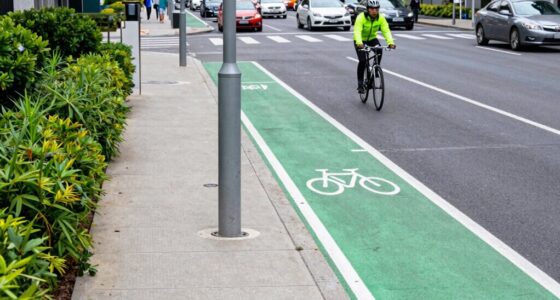
In Florida, electric bike laws state that Class 1 and Class 2 e-bikes are usually treated like bicycles. That means you can ride them on most bike paths, bike lanes, and multi-use trails unless local ordinances say otherwise. However, Class 3 e-bikes often face more restrictions—they might be prohibited from certain bike paths or trails designed primarily for traditional bicycles. Always check local trail access regulations before heading out, because some parks or municipalities limit or ban Class 3 e-bikes to preserve trail safety and experience for other users.
When it comes to riding on roads, the rules are straightforward: e-bikes are generally considered bicycles if they meet the classification criteria. You’re allowed to ride on most public roads, but you should keep in mind that some areas may have specific speed limits or restrictions for e-bike riders. Wearing a helmet is recommended, especially for riders under 16, and you should follow all traffic laws just like with regular bicycles. If you’re riding in urban areas, be aware that some municipalities might impose additional regulations, such as requiring registration or lighting requirements, so it’s wise to verify those details beforehand.
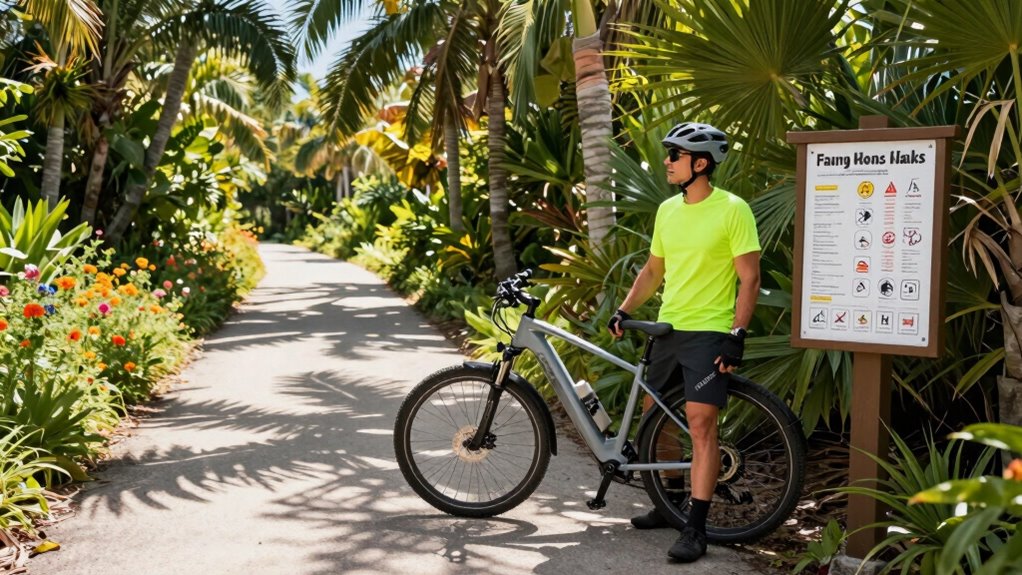
Another key aspect of trail access regulations involves respecting signage and designated pathways. Many parks and recreational areas have specific rules about where e-bikes can and cannot go. For instance, some trails are off-limits to motorized vehicles, including electric bikes, to protect natural resources and guarantee safety. Always stay on designated trails, keep your speed reasonable, and yield to pedestrians and other trail users. By doing so, you help maintain the reputation of e-biking as a sustainable and enjoyable activity.
Frequently Asked Questions
Can I Ride My E-Bike in Florida State Parks?
Yes, you can ride your e-bike in Florida state parks, but you’ll need to check specific park rules. Some parks may require e-bike registration and proof of insurance, especially for motorized models. Always review individual park policies beforehand, as regulations vary. Make sure your e-bike complies with Florida laws and park requirements to enjoy your ride without any issues.
Are E-Bikes Allowed on All Florida Beaches?
You can ride your e-bike on some Florida beaches, but beach access and e-bike regulations vary by location. Always check local rules before you go, as many beaches restrict e-bike use to protect visitors and the environment. Look for designated areas or posted signs indicating whether e-bikes are permitted. Following these regulations ensures you enjoy your ride responsibly while respecting beach ecosystems and fellow visitors.
Do E-Bike Laws Differ Between Cities in Florida?
E-bike laws in Florida vary as much as a kaleidoscope from city to city. You’ll find municipal regulations that differ regarding where and how you can ride, with enforcement differences impacting your experience. Some cities may have strict rules, while others are more relaxed. Always check local ordinances before hitting the road, so you stay compliant and avoid unexpected surprises. Stay informed and ride responsibly across Florida’s diverse communities.
What Safety Gear Is Required When Riding an E-Bike?
When riding an e-bike in Florida, you should wear a helmet, as helmet requirements are strongly recommended to guarantee safety. While Florida doesn’t mandate reflective gear regulations by law, it’s wise to wear reflective clothing or gear, especially at night or in low visibility conditions. This helps you stay visible to other drivers and cyclists, reducing the risk of accidents and keeping you safer on the road or trail.
Are There Age Restrictions for Riding E-Bikes in Florida?
In Florida, there are no specific age restrictions for riding e-bikes, but you should be aware of local regulations. Licensing requirements are generally not necessary for e-bikes that meet certain criteria, such as pedal-assist models under 750 watts. However, if you’re riding a more powerful e-bike or in certain areas, you might need to follow additional rules, including age limits or licensing. Always check local laws before riding.
Conclusion
Staying informed about Florida’s e-bike rules keeps you on the right side of the law and helps you enjoy your rides without a hitch. Remember, knowledge is power—don’t let confusion be your undoing. By respecting trail and road access guidelines, you’re not just riding safely, but also helping preserve the beauty of Florida’s scenery. So, keep your wits about you and ride smart; after all, a little preparation goes a long way.