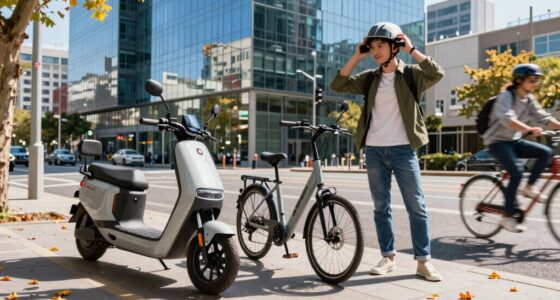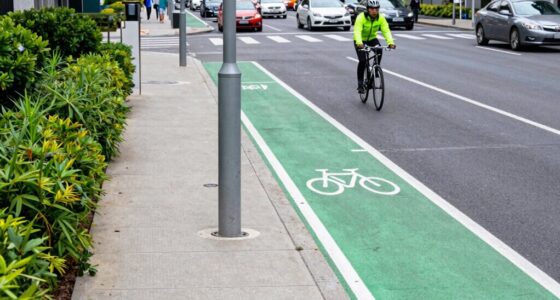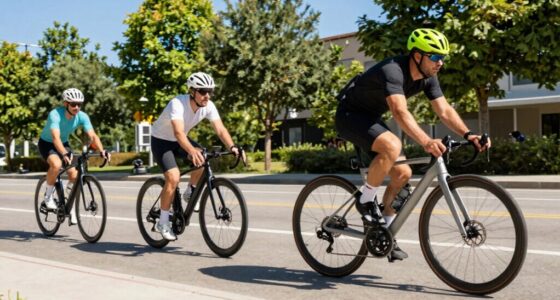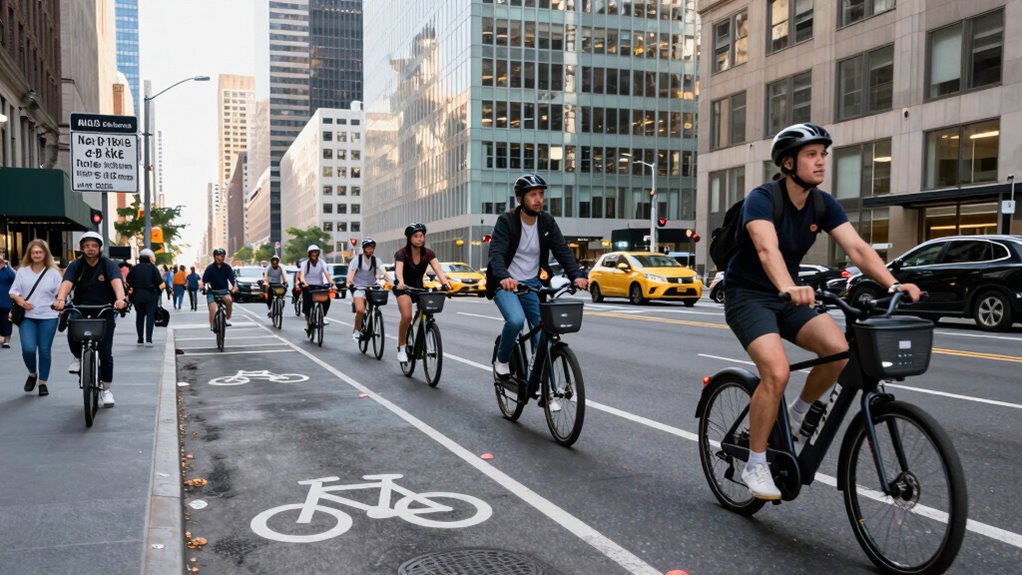

In New York, you can ride Class 1 and Class 2 e-bikes on bike lanes, paths, and roads, but avoid using Class 3 e-bikes in bike lanes or paths as they’re limited to streets. Be sure to follow local rules, stay off sidewalks unless allowed, and register your bike if needed. Look out for posted signs and restrictions in parks or pedestrian zones. To stay safe and legal, keep these guidelines in mind and learn what to watch for.
Key Takeaways
- E-bikes are allowed on bike lanes, paths, and streets; avoid restricted pedestrian zones and parks unless authorized.
- Class 1 and 2 e-bikes can ride in bike lanes; Class 3 e-bikes are restricted from bike lanes and paths.
- Use front and rear lights at night and signal clearly to ensure safety and compliance.
- Riding on sidewalks is generally prohibited unless explicitly permitted by local signage.
- Proper registration and carrying proof are required for legal e-bike riding in New York.
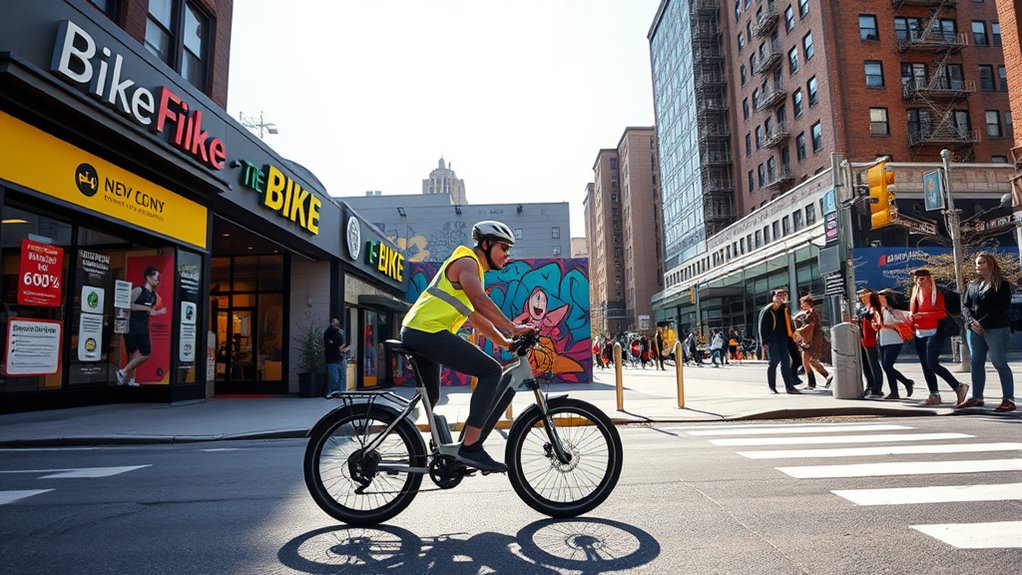
New York has recently updated its e-bike regulations to guarantee rider safety and promote responsible use. As an e-bike rider, understanding these rules is essential to stay compliant and ensure your safety on the road. These updates clarify where you can ride and emphasize the importance of following electric scooter regulations and bike lane safety. The city aims to balance encouraging eco-friendly transportation with protecting pedestrians and other road users.
New York’s updated e-bike rules prioritize safety, responsible riding, and clear regulations to protect pedestrians and promote eco-friendly transportation.
You should know that e-bikes are now classified into three categories based on their speed capabilities. Class 1 and Class 2 e-bikes are allowed on bike lanes, paths, and roads, making them suitable for city commuting. However, Class 3 e-bikes, which can reach higher speeds, are restricted from bike lanes and bike paths, limiting their use to streets with lower speed limits. This distinction helps promote bike lane safety, reducing conflicts between faster e-bikes and pedestrians or slower cyclists. When riding, always check your bike’s classification to ensure you’re in the right space. Riding a Class 3 e-bike in a bike lane can result in fines or other penalties.
Electric scooter regulations also impact e-bike use. Since electric scooters and e-bikes share similar rules in many areas, you should be aware that riding on sidewalks is generally prohibited unless explicitly permitted. Instead, you’re encouraged to stay on designated bike lanes or streets. When riding in bike lanes, stay alert for pedestrians and other cyclists, and always signal your intentions. Keep your speed reasonable to prevent accidents and ensure bike lane safety. Wearing a helmet is strongly recommended, and in some cases, legally required, especially for younger riders. Visibility is crucial, so use front and rear lights, particularly if you ride at night or in poor weather conditions.
The updated rules also specify where you can’t ride. E-bikes are not allowed on certain pedestrian-heavy areas or parks unless explicitly authorized. This restriction helps protect pedestrians and keeps bike lanes clear for cyclists. Be mindful of posted signs and local regulations, as they may vary across neighborhoods. Additionally, make sure your e-bike is properly registered and that you carry proof of registration when riding, as enforcement has increased.
Furthermore, awareness of classification and understanding the differences in allowed riding areas can greatly improve safety and compliance.
Frequently Asked Questions
Are E-Bikes Allowed on Sidewalks in New York?
You shouldn’t ride your e-bike on sidewalks in New York, as it’s illegal and can endanger pedestrian rights and sidewalk safety. Biking on sidewalks can cause accidents and injuries, so always stay on designated bike lanes or streets. Respect pedestrians by giving them plenty of space and avoiding riding on sidewalks unless specifically allowed. Staying off sidewalks helps keep everyone safe and promotes responsible e-bike use.
What Is the Maximum Speed Limit for E-Bikes?
When it comes to e bike speed regulations, the maximum speed limits are set to keep you safe. You can ride your e-bike up to 20 miles per hour on streets and bike paths, but always stay within local laws. Don’t push your luck or you’ll be skating on thin ice. Knowing these limits helps you avoid fines and accidents, so stay within the speed limits and enjoy a smooth ride.
Do I Need a License to Ride an E-Bike?
You don’t need a license to ride an e-bike in New York if it falls under Class 1 or Class 2 classifications, which are limited to 20 mph. However, if your e-bike is classified as a Class 3 e-bike, you’ll need a valid driver’s license. Always check your e-bike’s classification and local regulations to guarantee compliance. Stay informed about licensing requirements to ride safely and legally.
Are E-Bike Helmets Mandatory in New York?
In New York, helmet laws require you to wear a helmet when riding an e-bike, especially if you’re under 18. Safety regulations emphasize helmet use to prevent head injuries. Even if you’re over 18, wearing a helmet is highly recommended for your safety. Always stay updated on local laws, and prioritize safety to guarantee a smooth and secure riding experience on your e-bike.
Can I Ride an E-Bike on Public Transportation?
Yes, you can ride an e-bike on public transportation in New York, but you need to follow specific rules. Make sure to adhere to e-bike parking regulations when storing your bike at transit stations. Also, be aware of e-bike noise ordinances, which restrict loud noise during transit. Always check with transit authorities for any updates, and verify your e-bike is properly secured and complies with local regulations.
Conclusion
Now that you know where you can ride and what to watch for, managing your e-bike is like steering a ship through familiar waters. Stay alert, follow the rules, and enjoy the ride without hitting any reefs. With these guidelines, you’re equipped to navigate New York’s e-bike landscape confidently. Remember, a smooth journey depends on respecting the rules — so keep your course steady and keep riding forward!