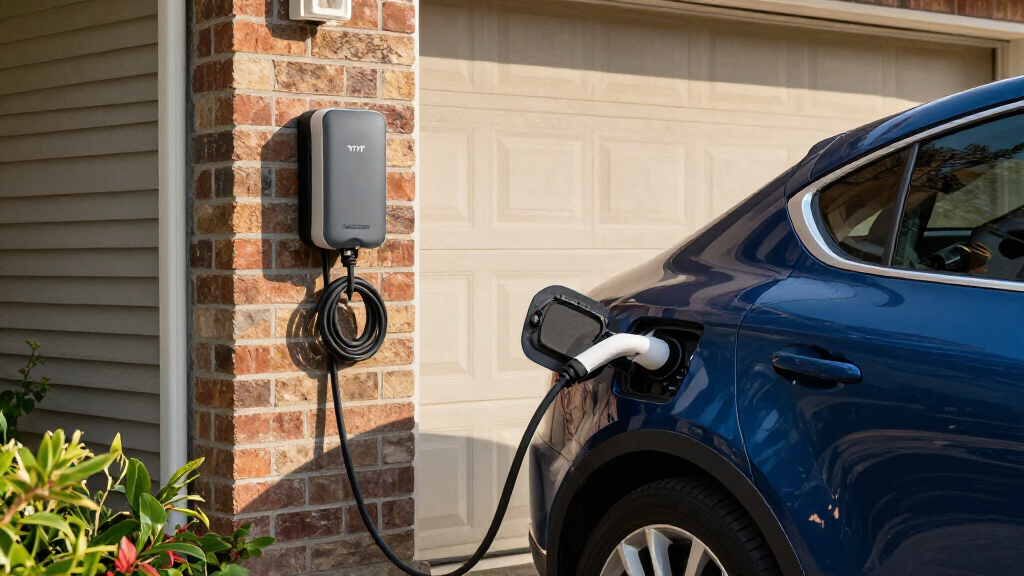

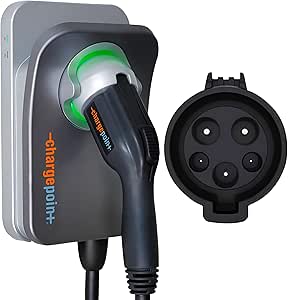
The best electric vehicle home chargers balance charging speed, electrical compatibility and everyday convenience. I rank the ChargePoint HomeFlex Level 2 plug-in as the best overall for drivers who want a well-established home-charging option with a J1772 connector, while the Autel MaxiCharger 50A stands out for a higher-output hardwired setup and the EVDANCE 40A portable charger for flexible use with a compatible outlet. The main tradeoffs are between Level 1 convenience and slower charging, portable flexibility and permanent installation, and J1772 compatibility versus newer NACS connections. Your home circuit and vehicle connector matter as much as the charger’s headline amperage. Read on for the full breakdown, selection criteria and advice on choosing the right setup.

Get bike and ride gear delivered free with Prime
- Fast, free delivery on millions of items
- Prime Video, Amazon Music and more included
- Member-only deals all year
Key Takeaways
- ChargePoint’s plug-in and hardwired HomeFlex models serve different installation plans: the plug-in version fits a compatible NEMA 14-50 outlet, while the 50A hardwired model is aimed at a permanent installation.
- Higher amperage only helps when the electrical circuit and vehicle can support it: the 48A IYILO and 50A Autel and ChargePoint models call for more careful circuit and installation checks than lower-output portable options.
- Portable chargers dominate the lineup, but they are not interchangeable: the EVDANCE 40A and VDLPOWERVP 32A plug-in models need compatible 240V outlets, while dual-voltage 16A choices can work across more outlet situations at lower output.
- Connector choice changes which cars can connect directly: most listed chargers use J1772, while the IYILO 48A 11.5 kW NACS model uses the newer J3400 connection.
- Level 1 models prioritize access over speed: the Lectron 120V charger and several 16A dual-voltage portable units suit light daily charging or backup use better than drivers who regularly need a fast overnight recharge.




| electric vehicle home charger | Cable length | Connector |
|---|---|---|
| EVDANCE 40A Level 2 Portable E | 25 ft | J1772 |
| ChargePoint HomeFlex Level 2 E | 23 ft | J1772 |
| Toptoo Level 1+2 Portable EV C | — | J1772 |
| Autel MaxiCharger Level 2 EV C | 25 ft | J1772 |
| ELEGRP 40A Level 2 Portable EV | 25 ft | J1772 |
| EVDANCE Portable Level 1 and L | 25 ft | J1772 |
| IYILO Level 2 EV Charger | 25 ft | NACS (J3400) |
| EVDANCE Portable Level 1 and L | 25 ft | J1772 |
| bokman Portable Level 1 and Le | 20 ft | J1772 |
| Lectron Level 1 Portable EV Ch | 16 ft | J1772 |
| ChargePoint HomeFlex Level 2 H | 23 ft | J1772 |
| VDLPOWERVP Level 2 Portable EV | 20 ft | — |
| VDLPOWERVP Level 1 and Level 2 | 20 ft | — |
| IYILO 48A Level 2 EV Charger | 25 ft | SAE J1772 |
| Energbison 16A Level 1 and Lev | 25 ft | SAE J1772 |
More Details on Our Top Picks
EVDANCE 40A Level 2 Portable EV Charger with 25 ft Cable
I’d choose the EVDANCE 40A when a portable charger needs to adapt to more than one outlet or charging routine. Its six current settings, from 10A to 40A, give it finer adjustment than the ELEGRP’s five settings, which can help match charging to a circuit’s capacity. The 25-foot cable, carry bag, and holders also make it easier to store or move than a permanently installed charger such as the Autel MaxiCharger.
The tradeoff is that portability still depends on having a suitable NEMA 14-50 outlet; it is not a plug-anywhere solution. Its 9.6 kW ceiling is below the hardwired Autel’s 12 kW, and Tesla drivers need to buy an adapter separately. I’d favor it for flexible home use, not for buyers seeking the highest output or a native Tesla connection.
Pros:- Six current settings from 10A to 40A offer more adjustment steps than the ELEGRP model.
- 25-foot cable and included carry bag and holders support portable storage and setup.
- 1–12 hour delay start allows charging to be scheduled.
- IP66 rating and stated operating range of -22°F to 122°F support varied conditions.
Cons:- Requires a NEMA 14-50 outlet, limiting where it can be used.
- Tesla vehicles need a separately purchased J1772 adapter.
- Maximum 9.6 kW output is lower than the 12 kW Autel MaxiCharger.
Best for: J1772 drivers with a NEMA 14-50 outlet who want a portable charger with several current options and a long cable.
Not ideal for: Tesla owners who want a ready-to-use connector, or households without a compatible 240V NEMA 14-50 outlet.
- Connector:J1772
- Plug:NEMA 14-50
- Input voltage:240 V
- Maximum current:40 A
- Maximum power:9,600 W
- Current settings:10 A, 16 A, 20 A, 24 A, 32 A, 40 A
- Cable length:25 ft
- Delay start:1–12 hours
Our verdict“Choose the EVDANCE if you want a portable 40A charger with especially flexible current settings and already have a NEMA 14-50 outlet.”
ChargePoint HomeFlex Level 2 EV Charger with J1772 Connector and NEMA 14-50 Plug
The ChargePoint HomeFlex suits drivers who want a plug-in home charger with app-based charging controls, reminders, and charging information. Its stated maximum of 50A gives it more output headroom than the 40A EVDANCE and ELEGRP portable chargers, though actual charging speed depends on the vehicle and the electrical circuit. The 23-foot cable is shorter than those two models’ 25-foot leads, but its cold-resistant design may be useful when the cable is handled in chilly weather.
This is not a simple upgrade for every garage: it needs a 240V NEMA 14-50 outlet and a 40A or 50A circuit, with electrician installation specified. Unlike the hardwired Autel MaxiCharger, it uses a plug, but it gives up the Autel’s 25-foot cable and 12 kW maximum output. Tesla owners also need a separate adapter.
Pros:- Supports up to 50A, with charging speed dependent on the vehicle and circuit.
- App features provide charging controls, reminders, and charging information.
- 23-foot cable is described as cold-resistant.
- UL listed and specified for indoor or outdoor installation.
Cons:- Requires a 240V NEMA 14-50 outlet and a 40A or 50A circuit.
- Electrician installation is specified, adding setup requirements compared with portable chargers.
- Tesla vehicles require a separate adapter, and the cable is shorter than the Autel MaxiCharger’s 25-foot cable.
Best for: Drivers with a properly rated NEMA 14-50 setup who want app controls and a higher stated current ceiling than the 40A portable options.
Not ideal for: Renters or homeowners without a suitable 240V circuit, and buyers who prefer a hardwired installation or a 25-foot cable.
- Connector:J1772
- Plug type:NEMA 14-50
- Voltage:240 V
- Maximum current:50 A
- Cable length:23 ft
- Installation:Indoor or outdoor; electrician installation
- Certification:UL listed
- Warranty:3 years on parts
- Model:CPH50-NEMA14-50-L23
Our verdict“Pick the HomeFlex if your electrical setup supports it and you value app-managed charging more than a longer cable or hardwired installation.”
Toptoo Level 1+2 Portable EV Charger, 16A 3.5 kW, J1772, 110–240V
The Toptoo Level 1+2 is the outlier in this group: it accepts 110–240V input and is rated at 16A and 3.5 kW, rather than matching the 40A or 50A output of the EVDANCE, ELEGRP, ChargePoint, and Autel options. That lower ceiling makes it a better fit for buyers who value a portable, lower-power setup over faster Level 2 charging. Its LCD also reports electrical readings and temperature, while scheduled start and duration settings offer more visibility than the basic delay-start controls listed for the EVDANCE.
The product data specifies a 6-20P plug and Type B adapter, so buyers should check their outlet and wiring before choosing it; adjustable current does not make an unsuitable circuit safe. Compared with the ELEGRP, it has lower maximum power but broader stated input-voltage support. I’d skip it if rapid home charging is the main goal.
Pros:- Supports 110–240V input, offering a different setup range from the 240V-only plug-in options.
- LCD displays current, voltage, power, temperature, and charging status.
- Adjustable current plus scheduled start and customizable duration.
- Built-in overvoltage, overheating, and overload protection.
Cons:- 16A and 3.5 kW maximum output are substantially below the 9.6 kW ELEGRP and EVDANCE models.
- Requires a suitable, undamaged outlet and wiring; current must stay within the outlet’s rating.
- The listed 6-20P and Type B plug details require careful outlet compatibility checks.
Best for: J1772 drivers seeking a portable lower-power charger with 110–240V input support, charging readouts, and scheduling controls.
Not ideal for: Drivers who need higher-output Level 2 charging, or anyone whose available outlet and wiring do not match the supplied plug and adapter.
- Connector:J1772
- Input voltage:110–240 V
- Current:16 A
- Maximum power:3.5 kW
- Plug details:6-20P; Type B, 3-pin
- Display:1.8-inch LCD
- Charging controls:Adjustable current, scheduled start, customizable duration
- Safety features:Overvoltage, overheating, and overload protection
Our verdict“Choose the Toptoo if broad input-voltage support and detailed charging readouts matter more to you than high charging power.”
Autel MaxiCharger Level 2 EV Charger, 50A, Hardwired, J1772, 25-Foot Cable
The Autel MaxiCharger is the strongest fit here for a dedicated home installation: it reaches 12 kW at up to 50A, exceeding the 9.6 kW ceiling of the EVDANCE and ELEGRP portable units. Its 25-foot cable matches their reach, while the NEMA Type 4 enclosure and stated indoor/outdoor suitability support a more permanent installation. App controls, scheduling, and Wi-Fi, Bluetooth, and Ethernet connectivity add monitoring options beyond the ChargePoint HomeFlex’s app features.
The main tradeoff is the hardwired setup, which requires an electrician and gives up the ability to unplug and carry the charger. Its J1772 connector also means vehicle compatibility may call for an adapter. I’d rank it above the portable models for buyers prioritizing output and a fixed installation, but below them for anyone who needs a charger that can move between locations.
Pros:- Up to 12 kW and adjustable current from 16A to 50A exceed the portable 40A models’ listed output.
- 25-foot cable is designed to remain flexible in cold temperatures.
- NEMA Type 4 enclosure supports indoor and outdoor installation.
- Wi-Fi, Bluetooth, and Ethernet connectivity support app-based scheduling and monitoring.
Cons:- Hardwired installation requires an electrician and is less portable than the EVDANCE or ELEGRP.
- J1772 connector may require an adapter for vehicles with a different inlet.
- A dedicated installation is a less flexible fit for buyers who may move or change their setup.
Best for: Homeowners planning a permanent indoor or outdoor installation who want up to 50A output, a long cable, and multiple connection options.
Not ideal for: Renters, frequent travelers, or buyers who need a plug-in charger they can move or replace without hardwired work.
- Installation:Hardwired
- Input voltage:240 V
- Maximum output:12 kW
- Adjustable current:16–50 A
- Connector:J1772
- Cable length:25 ft
- Connectivity:Wi-Fi, Bluetooth, Ethernet
- Enclosure:NEMA Type 4
- Warranty:3 years
Our verdict“Choose the Autel MaxiCharger for a permanent home setup where 12 kW output and connected controls outweigh installation flexibility.”
ELEGRP 40A Level 2 Portable EV Charger with J1772 Connector and 25 ft Cable
The ELEGRP 40A makes the most sense for buyers who want a portable 9.6 kW charger with a clear emphasis on outdoor protection. Its IP67 rating and ETL certification distinguish it from the EVDANCE, which lists IP66 protection; both offer a 25-foot cable, a NEMA 14-50 plug, and a 40A ceiling. The ELEGRP has five current settings, from 16A to 40A, while the EVDANCE adds a 10A setting, giving that rival more low-current flexibility.
A 1–12 hour delay helps schedule charging, but this remains a J1772, 240V plug-in charger, not a universal outlet solution. Tesla owners need a separately sold NACS adapter, and the NEMA 14-50 requirement narrows compatibility with existing home wiring. Compared with the hardwired Autel, the ELEGRP is easier to move but tops out at a lower stated power level.
Pros:- IP67 rating supports outdoor use in varied weather conditions.
- 25-foot cable provides useful reach around a garage or driveway.
- Five current settings from 16A to 40A provide flexibility for compatible circuits.
- ETL certification and overheat protection are specified.
Cons:- Requires a 240V NEMA 14-50 outlet.
- Tesla vehicles require a separately sold NACS adapter.
- Offers fewer current settings than the EVDANCE, which includes a 10A option.
Best for: J1772 drivers with a NEMA 14-50 outlet who want a portable Level 2 charger with a higher stated weather-protection rating.
Not ideal for: Tesla owners who do not want to source an adapter, or households seeking hardwired installation or output above 9.6 kW.
- Connector:J1772
- Plug:NEMA 14-50
- Voltage:240 V
- Maximum current:40 A
- Maximum power:9.6 kW
- Current settings:16 A, 20 A, 24 A, 32 A, 40 A
- Cable length:25 ft
- Certification:ETL
Our verdict“Pick the ELEGRP if you want a weather-rated portable 40A charger and already have a compatible NEMA 14-50 outlet.”
EVDANCE Portable Level 1 and Level 2 EV Charger, 25 ft Cable, 12A/120V and 16A/240V, J1772
The defining advantage here is the choice between 120V Level 1 and 240V Level 2 charging, paired with a 25-foot cable that can reach farther across a garage or driveway than the Lectron Level 1 Portable EV Charger’s 16-foot lead. At 240V, its 16A limit and 3.84 kW maximum suit overnight charging, but this is not a high-output replacement for a 32A or 40A Level 2 unit. The included 6-20 to 5-15 adapter adds flexibility for standard outlets, though the charger’s plug and the outlet still need to match the setup. A status display, carrying bag, and IP66-rated housing make it a practical portable choice. I’d skip it if you need broad plug compatibility without checking adapters, or if your vehicle needs the separately sold Tesla adapter.
Pros:- Offers both 12A, 120V Level 1 and 16A, 240V Level 2 charging.
- 25-foot cable gives more parking-position flexibility than the Lectron’s 16-foot cable.
- Includes a carrying bag and LED status and error display.
- IP66-rated housing and control-box charging protections suit portable use.
Cons:- Maximum output of 16A is modest beside higher-amperage Level 2 chargers.
- The included adapter does not cover every outlet type.
- Tesla vehicles need a separately sold J1772 adapter, and compatibility varies by model.
Best for: J1772 EV and plug-in-hybrid owners who want one portable charger for standard 120V outlets and compatible 240V outlets, with enough cable to reach a driveway parking spot.
Not ideal for: Drivers seeking faster, higher-amperage Level 2 charging or Tesla owners who do not want to source a separate J1772 adapter.
- Connector:J1772
- Charging levels:Level 1 and Level 2
- Current and voltage:12A at 120V; 16A at 240V
- Maximum power:3.84 kW
- Cable length:25 ft
- Plug and adapter:NEMA 6-20 plug with 6-20 to 5-15 adapter
- Housing protection:IP66
- Warranty:1 year
Our verdict“Choose this EVDANCE if you want a portable J1772 charger that can use both standard household and compatible 240V outlets, rather than higher Level 2 speed.”
IYILO Level 2 EV Charger, 48A, 11.5 kW, NACS (J3400)
For a home set up around a NACS vehicle, this IYILO offers a substantial step up in charging output from the portable EVDANCE and bokman options: up to 48A and 11.5 kW, with current adjustable in 1A increments. Its app adds scheduled charging, energy tracking, multiple user accounts, and remote updates, while connector temperature monitoring can reduce or stop charging above its stated threshold. That mix suits households that want to manage a permanent home charging setup, and power sharing between two chargers may help when adding a second unit on one circuit. The tradeoff is installation: this is hardwired and calls for a 60A breaker and licensed electrician, unlike plug-in portable models. Its NACS connector also means J1772 vehicles need an adapter that is not included; Wi-Fi is limited to 2.4 GHz.
Pros:- Delivers up to 48A and 11.5 kW for faster home charging than the portable 16A models.
- Current can be adjusted from 6A to 48A in 1A increments.
- App supports scheduled charging, energy tracking, multiple users, and remote updates.
- Temperature monitoring and two-charger power sharing add useful controls for a fixed installation.
Cons:- Hardwired installation requires a 60A breaker and a licensed electrician.
- J1772 vehicles require a separately sourced adapter.
- Wi-Fi support is limited to 2.4 GHz.
Best for: NACS EV owners planning a dedicated hardwired home installation who want adjustable charging, app scheduling, and the option to share circuit capacity across two chargers.
Not ideal for: Renters, drivers who need a portable plug-in charger, or J1772 vehicle owners unwilling to obtain a separate adapter.
- Connector:NACS (J3400)
- Charging level:Level 2
- Maximum current and power:48A; 11.5 kW
- Adjustable current:6A–48A in 1A increments
- Installation:Hardwired; 60A breaker and licensed electrician required
- Cable length:25 ft
- Wi-Fi:2.4 GHz
- Warranty:3 years
Our verdict“Pick this IYILO for a hardwired NACS home setup with high output and app controls, but not for portable charging or a no-adapter J1772 connection.”
EVDANCE Portable Level 1 and Level 2 EV Charger, 16A, 120–240V, 25 ft Cable
This EVDANCE is a good fit for drivers who want simple scheduling on a portable charger, rather than app-connected controls or the higher output of the hardwired IYILO 48A. Its four current settings let owners match charging to their available supply, and the delay start of up to 12 hours can shift charging to a preferred time without relying on an app. The 25-foot cable gives it the same useful reach as the other EVDANCE portable model in this group, while the LED display shows charging information at the unit. At 16A and up to 3.84 kW, it remains a moderate-output choice; it will not charge like a 32A or 48A home unit. The stated compatibility is J1772, so buyers with another connector type need to check their adapter needs before choosing it.
Pros:- Supports Level 1 and Level 2 charging with a 16A maximum.
- Four current settings offer flexibility across charging conditions.
- Delay start adjusts in one-hour increments up to 12 hours.
- 25-foot cable, LED display, and weather-resistant ratings support flexible placement.
Cons:- Maximum current is 16A, well below the 48A IYILO hardwired charger.
- Vehicle compatibility is listed for J1772-standard EVs only.
- The included adapter does not establish compatibility with every outlet type.
Best for: J1772 drivers who want a portable Level 1/Level 2 charger with adjustable current and a built-in delay timer, especially when app control is unnecessary.
Not ideal for: Owners seeking high-amperage Level 2 charging or a charger with stated support for vehicle connector types beyond J1772.
- Connector:J1772
- Charging levels:Level 1 and Level 2
- Current settings:8A, 10A, 13A, and 16A
- Maximum power:3,840W
- Cable length:25 ft
- Adapter:NEMA 6-20 to 5-15
- Delay start:Up to 12 hours in one-hour increments
Our verdict“Choose this EVDANCE for a J1772 vehicle if portable charging with a long cable and built-in delay scheduling matters more than high charging output.”
bokman Portable Level 1 and Level 2 EV Charger, 16A, 20 ft Cable
The bokman’s appeal is hands-on simplicity: its five current settings and 1–12-hour delay timer are controlled without an app, making it a straightforward alternative to the app-equipped IYILO 48A. It supports Level 1 and Level 2 charging, and its included NEMA 5-15 adapter gives it a path to a standard outlet; Level 2 charging requires a compatible NEMA 6-20 outlet. The 20-foot cable is shorter than either EVDANCE portable model’s 25-foot lead, so the parking position matters more. At 16A, it is a portable convenience pick rather than a fast home-charging solution. ETL certification, an IP65-rated enclosure, and listed electrical protections add reassurance, but Tesla owners still need a separate J1772 adapter.
Pros:- Five current settings range from 6A to 16A.
- Delay timer and tactile controls work without an app.
- Includes a NEMA 5-15 adapter for standard household outlets.
- ETL certification, IP65 enclosure, and multiple listed electrical protections.
Cons:- 20-foot cable is shorter than the 25-foot EVDANCE portable chargers.
- Level 2 charging requires a compatible NEMA 6-20 outlet.
- Tesla vehicles need a separately sourced J1772 adapter.
Best for: J1772 drivers who want a portable charger with physical controls, several current choices, a delay timer, and adapters for standard household and compatible 240V outlets.
Not ideal for: Drivers who need a cable longer than 20 feet, app-based charging management, or a higher-amperage home charger.
- Connector:J1772
- Charging levels:Level 1 and Level 2
- Maximum current:16A
- Current settings:6A, 8A, 10A, 12A, and 16A
- Cable length:20 ft
- Plugs and adapters:NEMA 6-20 plug; NEMA 5-15 adapter
- Delay timer:1–12 hours
- Protection and certification:IP65; ETL certified
Our verdict“Choose the bokman if you value manual controls and outlet flexibility in a portable 16A charger, and can work within its 20-foot reach.”
Lectron Level 1 Portable EV Charger, 120V, 15A, J1772, 16 ft Cable
Unlike the EVDANCE and bokman portable models, which can also use compatible 240V supplies, the Lectron is a Level 1-only charger: it plugs into a standard 120V NEMA 5-15 outlet and delivers 15A, or 1.65 kW. That narrower scope can suit a driver who needs a simple home, workplace, or travel charger and does not have a suitable 240V connection. Its ETL and FCC certifications, Energy Star listing, and IP65 rating support a practical everyday role, while overvoltage, overcurrent, and short-circuit protections are specified. The tradeoff is charging speed: its 120V ceiling is far below the 240V-capable portables, and the 16-foot cable is shorter than their 20- or 25-foot leads. It also serves J1772 vehicles only.
Pros:- Plugs into a standard 120V NEMA 5-15 outlet.
- 15A output provides up to 1.65 kW of Level 1 charging.
- Includes overvoltage, overcurrent, and short-circuit protection.
- ETL, FCC, and Energy Star credentials with an IP65 rating.
Cons:- Level 1 only, unlike the 120V/240V EVDANCE and bokman portable chargers.
- 16-foot cable is shorter than the other portable options in this batch.
- Compatibility is listed for J1772 vehicles.
Best for: J1772 vehicle owners who have a standard 120V outlet and want a portable charger for modest overnight top-ups or occasional charging away from home.
Not ideal for: Drivers who need Level 2 charging, a long reach across a garage or driveway, or compatibility beyond J1772 vehicles.
- Connector:J1772
- Charging level:Level 1
- Input and output voltage:120V
- Current and power:15A; 1.65 kW
- Plug type:NEMA 5-15
- Cable length:16 ft
- Certifications:ETL, FCC, Energy Star
- Warranty:2 years
Our verdict“Pick the Lectron for straightforward 120V charging when a standard outlet is your priority and Level 2 speed is not required.”
ChargePoint HomeFlex Level 2 Hardwired EV Charger, J1772, 50A
Adjustable output gives this hardwired HomeFlex a broader fit than the fixed 32A VDLPOWERVP portable charger: it can be set from 16A to 50A to match the available circuit and vehicle. The 23-foot cold-resistant cable also offers more reach than the 20-foot cables on the VDLPOWERVP options, which can help when the parking position is awkward.
Wi-Fi app controls add scheduling and connected features, while indoor or outdoor installation makes it suitable for a garage or a protected exterior wall. The tradeoff is that hardwiring calls for an electrician, and some functions and troubleshooting depend on Wi-Fi. J1772 vehicles connect directly, but Tesla drivers need an adapter. I’d choose it over a portable unit for a permanent, adjustable setup, not for plug-in flexibility.
Pros:- Adjustable 16–50A output can match different circuit capacities.
- 23-foot cold-resistant cable offers useful reach in a garage or driveway.
- App controls and smart home connectivity support connected charging features.
- Rated for indoor or outdoor installation.
Cons:- Hardwired installation requires an electrician.
- Some features and troubleshooting require Wi-Fi.
- Tesla vehicles need a separate adapter.
Best for: EV owners planning a permanent home installation who want adjustable amperage, app controls, and extra cable reach.
Not ideal for: Renters, frequent movers, or buyers without Wi-Fi access who want a plug-in charger that remains easy to relocate or troubleshoot offline.
- Connector:J1772
- Installation:Hardwired
- Output:240 V AC; adjustable 16–50 A
- Circuit requirement:20 A or 80 A circuit
- Charging speed:Up to 37 mi/hr; depends on vehicle
- Cable length:23 ft
- Certifications:UL-certified, Energy Star
- Warranty:3 years
Our verdict“Choose the HomeFlex for a permanent, adjustable J1772 setup with app controls; pick a portable charger if you need a plug-in connection or easy relocation.”
VDLPOWERVP Level 2 Portable EV Charger, 32A, 7 kW, 20 ft Cable, NEMA 14-50 Plug
This VDLPOWERVP makes the most sense for a buyer with a NEMA 14-50 outlet who wants more output than a 16A portable unit without committing to a hardwired installation. Its 32A, up-to-7 kW rating is a step above the Level 1/Level 2 VDLPOWERVP and Energbison options, both capped at 16A, while the 20-foot cable keeps it practical for many garage layouts.
LED indicators show charging status and errors, and listed protections cover overcurrent, overvoltage, leakage, and overheating. That gives it a straightforward, status-visible approach rather than the app-centered controls of the ChargePoint HomeFlex. The tradeoffs are a required 220–240V NEMA 14-50 outlet and less reach than several 25-foot alternatives in this roundup. The product dimensions also omit their measurement units, making fit harder to judge.
Pros:- 32A and up to 7 kW deliver more output than the 16A portable options here.
- NEMA 14-50 plug avoids a hardwired charger installation.
- LED indicators display charging status and errors.
- Listed protections cover overcurrent, overvoltage, leakage, and overheating.
Cons:- Requires a 220–240V NEMA 14-50 outlet.
- 20-foot cable is shorter than the 25-foot cables on some roundup alternatives.
- Product dimensions are supplied without measurement units.
Best for: Drivers with an existing 220–240V NEMA 14-50 outlet who want portable 32A charging and clear status indicators.
Not ideal for: Households without a NEMA 14-50 outlet, or buyers who need a longer cable or detailed, clearly specified product dimensions.
- Charging level:Level 2
- Amperage:32 A
- Output:Up to 7 kW
- Voltage:220–240 V
- Plug type:NEMA 14-50
- Cable length:20 ft
- Weight:6.58 lb
- Operating temperature range:-22°F to 130°F
Our verdict“Pick this VDLPOWERVP if you already have a NEMA 14-50 outlet and want 32A portable charging without a hardwired install.”
VDLPOWERVP Level 1 and Level 2 Portable EV Charger, 16A, 20 ft Cable
The appeal here is having Level 1 and Level 2 charging in one portable unit. Use the included NEMA 5-15 adapter with a household outlet, or connect to a NEMA 6-20 outlet for Level 2 at up to 16A and 3.5 kW. That flexibility is more useful for changing locations than the 32A VDLPOWERVP, which relies on a NEMA 14-50 outlet, but the lower output makes this a slower home-charging choice.
A 20-foot cable, IP65-rated control box, and LED status and error indicators round out a practical, relatively light setup. The tradeoff is outlet dependence: Level 2 requires NEMA 6-20, while household-outlet charging is limited to 12A. Its J1772 connector suits compatible vehicles directly; drivers with another inlet type need an adapter. I’d favor it over the hardwired ChargePoint HomeFlex when portability matters more than higher amperage or app connectivity.
Pros:- Supports Level 1 and Level 2 charging with an included NEMA 5-15 adapter.
- 20-foot cable provides reach for garage or driveway charging.
- IP65-rated control box is described as waterproof and dustproof.
- LED indicators show charging status and errors.
Cons:- Level 2 charging requires a NEMA 6-20 outlet.
- Level 1 charging is limited to 12A.
- 16A maximum output is below the 32A VDLPOWERVP and hardwired higher-output chargers.
Best for: Drivers with J1772 vehicles who need one portable charger for household-outlet use and a NEMA 6-20 Level 2 connection.
Not ideal for: Owners seeking faster high-amperage home charging, app-based features, or Level 2 operation from a NEMA 14-50 outlet.
- Charging levels:Level 1 and Level 2
- Maximum output:3.5 kW
- Current:16 A
- Voltage:110–240 V
- Level 2 plug:NEMA 6-20
- Level 1 adapter:NEMA 5-15
- Cable length:20 ft
- Connector compatibility:SAE J1772
- Certification:FCC
Our verdict“Choose this model if outlet flexibility and portability matter more than charging speed or app-connected controls.”
IYILO 48A Level 2 EV Charger, 11.5 kW, 240 V, J1772
For drivers who want higher-output home charging plus connected controls, the IYILO combines up to 48A and 11.5 kW with scheduling, energy tracking, RFID access, and power sharing. That makes it more feature-rich than the ChargePoint HomeFlex on paper, while its 25-foot cable is longer than the ChargePoint’s 23-foot lead. The adjustable 6–48A range also lets owners set charging current to suit their setup rather than treating maximum output as the only setting.
This is a hardwired unit, so 48A operation requires a 60A breaker and licensed electrician; it is not a plug-in alternative to the VDLPOWERVP portable chargers. Wi-Fi is limited to 2.4 GHz, and Tesla owners need a NACS adapter. The built-in temperature sensor shuts down charging if the connector overheats, but buyers should weigh the installation demands and app dependence against the extra control features.
Pros:- Up to 48A and 11.5 kW with current adjustment from 6A to 48A.
- App supports scheduling, energy tracking, RFID access, and remote upgrades.
- Power sharing supports two chargers on one circuit.
- 25-foot cable and connector overheat shutoff add useful reach and temperature protection.
Cons:- 48A charging requires hardwiring, a 60A breaker, and a licensed electrician.
- Wi-Fi supports 2.4 GHz only.
- Tesla vehicles require a separate NACS adapter.
Best for: Homeowners with a suitable electrical supply who want high-output J1772 charging, scheduling, energy tracking, RFID access, or power sharing.
Not ideal for: Renters, buyers who need a plug-in portable charger, or households without a 60A circuit and access to a licensed electrician.
- Maximum current and power:48 A; 11.5 kW
- Voltage:240 V
- Current adjustment:6–48 A in 1 A increments
- Connector:SAE J1772
- Installation:Hardwired; 60 A breaker and licensed electrician required for 48 A charging
- Cable length:25 ft
- Wi-Fi:2.4 GHz only
- Protection:Built-in GFCI breaker; connector overheat shutoff above 221°F
- Warranty:3 years
Our verdict“Choose the IYILO for feature-rich, high-output hardwired charging if your electrical setup can support its installation requirements.”
Energbison 16A Level 1 and Level 2 Portable EV Charger, J1772, 110V–240V, 25 ft Cable
Among the lower-output portable choices, the Energbison stands out for its 25-foot cable and adjustable current settings from 6A to 16A. That extra reach can solve a parking-layout problem that the 20-foot VDLPOWERVP dual-voltage charger may not, while both offer Level 1 and Level 2 charging. It supports 110V household charging and 240V charging up to 3.68 kW, with a display for charging information and a 1–12 hour delay timer.
The IP66-rated control box and listed electrical protections suit a portable setup, but this is not a high-output replacement for the 32A VDLPOWERVP or the hardwired IYILO. A NEMA 5-15 outlet limits current to 12A, and Level 2 requires the included NEMA 6-20 plug. J1772 compatibility may also call for an adapter with vehicles using another inlet. I’d choose it for reach and adjustable low-to-moderate charging, not speed.
Pros:- Supports Level 1 and Level 2 charging with adjustable 6A, 8A, 10A, 12A, and 16A settings.
- 25-foot flame-retardant cable offers more reach than the 20-foot VDLPOWERVP portable models.
- IP66-rated control box and listed safety protections suit portable use.
- Charging display and 1–12 hour delay timer provide basic charging oversight and scheduling.
Cons:- NEMA 5-15 use is limited to 12A.
- Level 2 charging requires a NEMA 6-20 connection and tops out at 16A.
- J1772 connector may require an adapter for vehicles with a different inlet.
Best for: J1772 drivers who want a portable dual-voltage charger with a long cable, adjustable current, and a delay timer.
Not ideal for: Drivers seeking high-amperage charging, or those who lack a NEMA 6-20 outlet for Level 2 operation and need more than 12A on a household outlet.
- Charging levels:Level 1 and Level 2
- Voltage:110V–240V
- Maximum current:16 A
- Level 1 output:110V, 1.44 kW
- Level 2 output:240V, 3.68 kW
- Connector:SAE J1772
- Included plugs:NEMA 5-15 adapter and NEMA 6-20 plug
- Cable length:25 ft
- Timer:1–12 hours
Our verdict“Pick the Energbison when a long cable and dual-voltage portability matter more than higher charging output.”

How We Picked
I compared these 15 electric vehicle home chargers around the decisions that affect daily home use: charging level and amperage, connector type, outlet or hardwire requirements, cable length, portability and how much electrical planning each setup may require. I treated a high amperage rating as a potential benefit, not an automatic win, since a home circuit and vehicle must both support the output. I also separated Level 1 options from Level 2 chargers so buyers can judge slower, more flexible charging against faster home replenishment.
The ranking favors options that offer a clear fit for a common buyer need, with a useful balance of capability and installation flexibility. ChargePoint HomeFlex plug-in leads for its recognizable Level 2 format and NEMA 14-50 connection; Autel’s 50A hardwired model ranks highly for buyers prioritizing a permanent higher-output setup. Portable EVDANCE and ELEGRP models earn attention for outlet-based flexibility, while compact or lower-output products rank better as starter, backup or light-driving choices. I also account for connector fit: the NACS IYILO model has a distinct role, but J1772 options suit a different vehicle mix. Product specifications alone cannot confirm local electrical-code compliance, installation quality or compatibility with every vehicle, so buyers should verify those details before purchase.
| electric vehicle home charger | Connector |
|---|---|
| EVDANCE 40A Level 2 Portable E | J1772 |
| ChargePoint HomeFlex Level 2 E | J1772 |
| Toptoo Level 1+2 Portable EV C | J1772 |
| Autel MaxiCharger Level 2 EV C | J1772 |
| ELEGRP 40A Level 2 Portable EV | J1772 |
| EVDANCE Portable Level 1 and L | J1772 |
| IYILO Level 2 EV Charger | NACS (J3400) |
| EVDANCE Portable Level 1 and L | J1772 |
| bokman Portable Level 1 and Le | J1772 |
| Lectron Level 1 Portable EV Ch | J1772 |
| ChargePoint HomeFlex Level 2 H | J1772 |
| VDLPOWERVP Level 2 Portable EV | — |
| VDLPOWERVP Level 1 and Level 2 | — |
| IYILO 48A Level 2 EV Charger | SAE J1772 |
| Energbison 16A Level 1 and Lev | SAE J1772 |
Factors to Consider When Choosing Electric Vehicle Home Chargers
Before choosing a charger, I would match the product to the home’s electrical supply and the car’s charging habits, rather than starting with the highest amperage on the box. These broader checks can prevent a charger from becoming an expensive mismatch.
Match charging speed to your driving and circuit
A charger’s amperage is only one part of the charging equation; the car’s onboard charger and the home circuit also set the usable rate. A 48A or 50A model will not deliver its full potential on an undersized circuit, and installation requirements can differ between plug-in and hardwired equipment. For light daily driving, Level 1 may replace enough energy overnight without any new 240V circuit. Drivers covering longer distances or needing quicker turnaround may benefit from Level 2, provided their electrical service can support it. Ask an electrician to check capacity, breaker requirements and local rules before buying around a headline output. Choosing a lower-output model that matches the existing setup can be more useful than paying for power the home or vehicle cannot use.
Choose plug-in or hardwired based on the site
A plug-in charger can be easier to remove or relocate, but that convenience depends on having the correct, properly installed outlet near the parking space. NEMA 14-50 compatibility does not mean any household outlet is suitable, and an outlet used for continuous charging should be installed and rated for that purpose. Hardwired units avoid a plug connection and may suit a fixed parking location, though they require a more permanent installation. Buyers sometimes choose a plug-in unit before checking outlet location, circuit capacity or whether the cord can reach the vehicle inlet. If you rent, expect to move, or share parking, portability may carry more value than maximum output. For a long-term dedicated setup, compare installation costs and electrician advice as well as charger features.
Confirm the connector fits your vehicle
Most products in this lineup use J1772, while one IYILO model uses NACS, also called J3400. The right choice depends on the charge port on your specific car and whether the vehicle maker supports a suitable adapter. Do not assume that a connector name alone guarantees compatibility across all model years or charging configurations. Check the vehicle manual and manufacturer guidance, especially if the car uses a different inlet or has adapter restrictions. If more than one EV will use the charger, consider the connectors on both vehicles and how often the cable will need to be swapped or adapted. A connector mismatch can turn a capable charger into an inconvenient purchase.
Treat portable and dual-voltage claims as setup-dependent
Portable Level 1 and Level 2 chargers can provide flexibility, but switching voltage usually means using a compatible supply and the correct included or specified connection. A 120V outlet offers a different charging rate from a suitable 240V circuit, even when the same portable unit supports both. Check exactly which plugs or adapters are included and whether the manufacturer permits the intended outlet configuration. Avoid relying on extension cords or improvised adapters unless the product maker and a qualified electrician approve the arrangement. Cable length also matters: measure the route from outlet to vehicle inlet, allowing room for parking variation without stretching the cord. Portable does not mean that every outlet or outdoor location is appropriate for charging.
Plan for cable reach, weather and daily handling
A 25-foot cable can make awkward parking positions easier, while a shorter lead may be simpler to store and manage. Measure from the actual outlet or installation point to the charge port with the car parked in its usual position, including the path around walls or obstacles. A cable that reaches only when the vehicle is parked perfectly can become a recurring annoyance. For outdoor use, verify the unit’s stated environmental protection and installation guidance rather than assuming a portable charger is weatherproof. Consider where the connector will sit when not in use and how the cord can be kept clear of tires, walkways and standing water. Cable handling and storage may matter more to daily satisfaction than a small difference in advertised charging output.
Pay for capability you can use, not a bigger number
Higher-output or hardwired equipment makes the most sense when the car, electrical service and parking arrangement can all use its added capacity. A lower-output dual-voltage charger may be a better fit for occasional charging, a second vehicle or a home where a new circuit is impractical. Consider whether smart controls, a permanent mount or a longer cable solve a real problem for your household, rather than treating feature count as value by itself. Buyers should also check warranty terms, support channels and what is included in the package, since those details affect ownership after installation. If you expect to change vehicles, connector flexibility and adapter guidance may matter more than current charging speed. A qualified electrician can clarify whether the upgrade path is realistic before you commit to a charger.
Frequently Asked Questions
Can I use a 48A or 50A charger on my existing home circuit?
Not without checking the circuit, breaker, wiring and installation method first. A charger’s maximum output does not mean your existing outlet can safely provide it, and plug-in and hardwired models can have different requirements. Have a licensed electrician review the circuit and local code before purchasing or setting the charger to a particular output. The vehicle’s onboard charging limit also affects how much of that capacity it can use. If the circuit cannot support the full rating, a lower-output setting or a different charger may be the sensible fit.
Should I choose a J1772 charger or the IYILO NACS model?
Start with the charge-port standard on your vehicle and confirm compatibility in the vehicle maker’s documentation. Most chargers in this roundup use J1772, while the IYILO NACS option uses the J3400 connector. Some vehicles may support an approved adapter, but compatibility and charging behavior can depend on the model and adapter. If multiple cars will share the charger, check every vehicle rather than choosing for just one. A connector that fits directly is generally the simpler daily arrangement.
Is a portable dual-voltage charger a good replacement for a fixed Level 2 charger?
It can be, if its output meets your driving needs and you have a suitable outlet for the voltage you plan to use. A dual-voltage portable unit can be handy for occasional charging or homes where flexibility matters, but its Level 1 rate may be too slow for frequent long-distance driving. Confirm the included plugs, allowed outlet types and circuit requirements before relying on Level 2 operation. A permanently mounted charger can be easier to use every day and may offer higher output, though it calls for a fixed installation. The better choice depends on how often you charge and whether the parking location is stable.
Will a Level 1 charger be enough if I drive every day?
It depends on how far you drive, how long the car is parked at home and how much energy it uses. A 120V Level 1 unit can suit a modest commute when the vehicle has many hours to charge, but it may not replace a large daily energy draw overnight. Cold weather, cabin preconditioning and other driving conditions can also raise the energy needed. Compare your regular mileage with the vehicle’s charging information rather than assuming that any overnight session will be sufficient. If you often arrive home low on charge or need quick turnarounds, a suitable Level 2 circuit is likely a better fit.
What should I check before installing a plug-in charger near my driveway?
Check that the outlet type matches the charger, that the circuit is properly rated for sustained charging and that the outlet is positioned within safe cable reach of the vehicle. Have an electrician inspect the outlet and installation rather than relying on its appearance or age. For an outdoor location, review the charger’s environmental ratings and the maker’s guidance on rain, storage and mounting. Measure the route to the vehicle inlet so the cord will not cross a walkway or sit under a tire. Also check local requirements and any landlord or homeowners’ association approval that applies to the installation.
Conclusion
For most drivers seeking a capable home Level 2 setup, I would start with the ChargePoint HomeFlex plug-in, provided the home has a suitable NEMA 14-50 circuit and the vehicle uses J1772 or an approved adapter. My best premium pick is the Autel MaxiCharger 50A hardwired model for a permanent installation where the electrical service and car can use its output. For best value and flexibility, compare the EVDANCE 40A or VDLPOWERVP 32A portable units against the outlet already available; neither is a bargain if it calls for unsuitable wiring. Beginners who want a gentler entry point can look at the dual-voltage 16A portable chargers, while accepting slower charging. For specific needs, the Lectron Level 1 model suits light charging from 120V, and the IYILO NACS charger is the direct-connector choice for compatible vehicles. Before deciding, I would confirm vehicle fit, circuit capacity, installation requirements and cable reach.