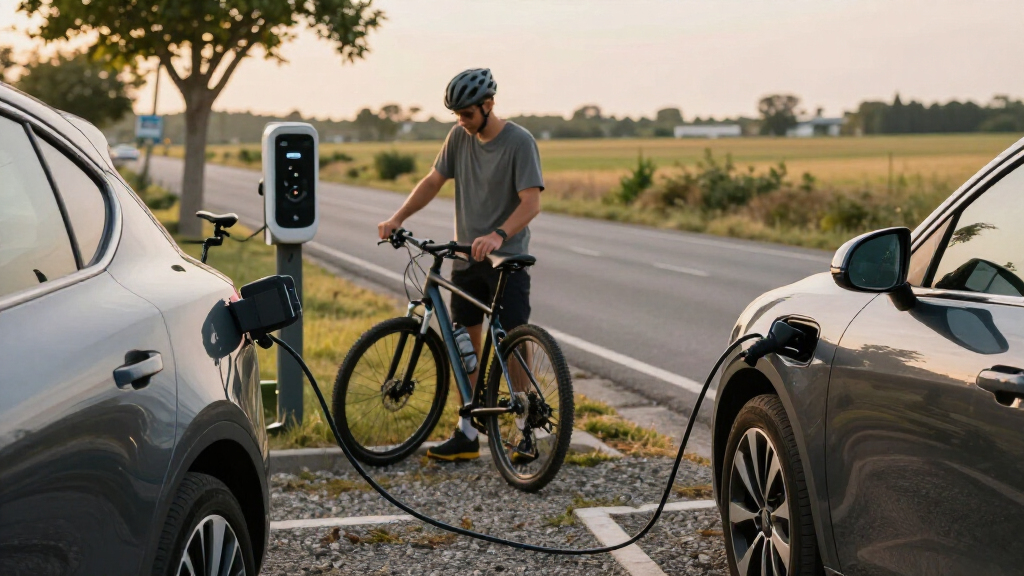

Portable EV chargers trade wall-unit convenience for flexibility, letting you tap into any standard outlet — from a 120V household socket to a 240V dryer or RV plug — wherever you park. After comparing 15 leading models, the WOLFBOX PE40 stands out as my best overall pick for its 40A output and dual Level 1/Level 2 flexibility, while the Toptoo 16A offers the best budget-friendly entry point and the Disaenco AURA A32N covers NACS-equipped vehicles with premium polish. The core tradeoff in this category is speed versus outlet compatibility: high-amperage 32–40A units charge fast but demand a 240V circuit, while 16A models work almost anywhere but add hours to a full charge. Cable length, plug type (J1772 vs NACS), and app control round out the decisions that separate these fifteen options. Keep reading for the full breakdown of which charger fits your vehicle, your outlets, and your daily routine.

Get bike and ride gear delivered free — and shop member deals
- Fast, free delivery on millions of items
- Access to Prime Big Deal Days deals on October 6–7
- Prime Video, Amazon Music and more included
Key Takeaways
- Dual-voltage Level 1/Level 2 models like the WOLFBOX PE40 and EVDANCE dominated the top of this comparison because a single unit covers both emergency 120V charging and daily 240V use — a flexibility that single-voltage chargers can’t match.
- The biggest practical difference between these chargers isn’t peak amperage — it’s plug availability: NEMA 14-50 units (Disaenco, Romaa, AIMILER) need an RV-style outlet most homes don’t have, while NEMA 5-15 models like the Lectron 16 ft work in any household socket out of the box.
- Cable length quietly determined usability rankings — the TopAutoGear‘s 40 ft cable eliminated the parking-position anxiety that 16–20 ft units like the Lectron and Bokman impose, especially for driveway or garage-corner charging.
- Only four of fifteen models (Lectron Wi-Fi, Romaa, and both SEGUMA units) offer app control, and in this comparison that feature mattered most for scheduling cheap off-peak charging, not for day-to-day monitoring.
- NACS-compatible picks (Disaenco AURA A32N and SEGUMA NACS) earned dedicated spots because Tesla and newer Ford/GM owners can’t use J1772 chargers without an adapter — plug type should narrow your shortlist before anything else.
| Disaenco Portable Level 2 EV Charger, 32A, NEMA 14-50, 25 ft J1772 Cable |  | Best Overall | Charging power: Up to 7.7 kW | Voltage: 240V | Current: 32A (adjustable 10–32A) | VIEW LATEST PRICE | See Our Full Breakdown |
| Lectron Level 1 Portable J1772 EV Charger with Wi-Fi App Control, 16 ft Cable, 12A, NEMA 5-15 |  | Best for Slow Overnight Charging | Charging level: Level 1 | Input/Output voltage: 120V | Current: 12A | VIEW LATEST PRICE | See Our Full Breakdown |
| Toptoo Portable Level 1 and 2 EV Charger, 16A, 3.5 kW, J1772 |  | Best Smart Features on a Budget | Input voltage: 110–240V | Current: 16A | Max power: 3.5 kW | VIEW LATEST PRICE | See Our Full Breakdown |
| Grasside Level 1 and Level 2 J1772 EV Charger, 8–16A, 25 ft |  | Most Versatile Plug Compatibility | Charging levels: Level 1 and Level 2 | Current settings: 8A / 10A / 12A / 16A | Max Level 1 output: 12A, 1.44 kW at 120V | VIEW LATEST PRICE | See Our Full Breakdown |
| EVDANCE Level 1 and 2 Portable EV Charger with 25 ft Cable |  | Best Certified Budget Pick | Charging levels: Level 1 and Level 2 | Max current: 12A at 120V; 16A at 240V | Max power: 3.68 kW | VIEW LATEST PRICE | See Our Full Breakdown |
| WOLFBOX Portable Level 1 and Level 2 EV Charger, 40A, J1772 (PE40) |  | Best Overall | Connector: J1772 | Maximum current: 40A (adjustable 6A to 40A) | Charging levels: Level 1 and Level 2 | VIEW LATEST PRICE | See Our Full Breakdown |
| Bokman Portable Level 1 and Level 2 EV Charger, 16A, 20 ft Cable |  | Best Value | Charging levels: Level 1 and Level 2 | Maximum current: 16A (adjustable 6A, 8A, 10A, 12A, 16A) | Cable length: 20 ft | VIEW LATEST PRICE | See Our Full Breakdown |
| Romaa 32A Level 2 Portable EV Charger with WiFi, J1772, NEMA 14-50 |  | Best Smart Features | Charging level: Level 1 and Level 2 | Maximum current: 32A (adjustable 16A, 20A, 24A, 32A) | Maximum power: 7.6 kW at 240V | VIEW LATEST PRICE | See Our Full Breakdown |
| SEGUMA Portable Level 1/2 EV Charger with Wi-Fi and App Control |  | Best for Apartment and Travel Charging | Connector: SAE J1772 | Level 1 input: 120V, up to 12A | Level 2 input: 240V, up to 16A with included NEMA 6-20 adapter | VIEW LATEST PRICE | See Our Full Breakdown |
| Disaenco AURA A32N Portable Level 2 EV Charger, 32A, NEMA 14-50, NACS |  | Best for Tesla and NACS Vehicles | Connector type: NACS | Maximum amperage: 32A (adjustable 10 to 32A) | Maximum power: 7.7 kW at 240V | VIEW LATEST PRICE | See Our Full Breakdown |
| TopAutoGear Portable Level 1 and 2 EV Charger, 110–240V, 8–16A, 40 ft Cable |  | Best for Long-Cable Flexibility | Voltage: 110–240V | Adjustable Current: 8A, 10A, 13A, 16A | Cable Length: 40 ft | VIEW LATEST PRICE | See Our Full Breakdown |
| SEGUMA Level 2 EV Charger for Tesla, 32A, NACS, Black |  | Best for Tesla Owners | Connector: NACS | Plug: NEMA 14-50 | Maximum Current: 32A (adjustable 10–32A) | VIEW LATEST PRICE | See Our Full Breakdown |
| BETUMODA Level 2 EV Charger, 40A, 240V, 9.6 kW, 25 ft Cable |  | Fastest Charging Pick | Maximum Output: 9.6 kW | Voltage: 240V AC | Current Settings: 8A, 16A, 24A, 32A, 40A | VIEW LATEST PRICE | See Our Full Breakdown |
| Lectron Level 1 Portable EV Charger, 120V, 15A, 16 ft Cord, J1772 Connector |  | Best Emergency Backup | Charging Level: Level 1 | Input Voltage: 120V | Power: 1.65 kW | VIEW LATEST PRICE | See Our Full Breakdown |
| AIMILER Level 2 EV Charger, 32A, 25 ft Cable, NEMA 14-50 Plug, J1772 Connector |  | Best Smart Features | Output: 240V, adjustable 16–32A | Maximum Charging Power: 7.68 kW | Cable Length: 25 ft | VIEW LATEST PRICE | See Our Full Breakdown |
| portable EV charger | Connector | Cable length |
|---|---|---|
| Disaenco Portable Level 2 EV C | J1772 | 25 ft |
| Lectron Level 1 Portable J1772 | J1772 | 16 ft |
| Toptoo Portable Level 1 and 2 | J1772 | — |
| Grasside Level 1 and Level 2 J | — | 25 ft |
| EVDANCE Level 1 and 2 Portable | J1772 | 25 ft |
| WOLFBOX Portable Level 1 and L | J1772 | 25 ft |
| Bokman Portable Level 1 and Le | J1772 | 20 ft |
| Romaa 32A Level 2 Portable EV | J1772 | 25 ft |
| SEGUMA Portable Level 1/2 EV C | SAE J1772 | 25 ft |
| Disaenco AURA A32N Portable Le | — | 25 ft |
| TopAutoGear Portable Level 1 a | J1772 | 40 ft |
| SEGUMA Level 2 EV Charger for | NACS | 23 ft |
| BETUMODA Level 2 EV Charger | SAE J1772 | 25 ft |
| Lectron Level 1 Portable EV Ch | J1772 | — |
| AIMILER Level 2 EV Charger | J1772 | 25 ft |
More Details on Our Top Picks
Disaenco Portable Level 2 EV Charger, 32A, NEMA 14-50, 25 ft J1772 Cable
For most EV owners who want one charger that handles both driveway duty and road trips, this Disaenco unit is the strongest all-around choice in this batch. Its 7.7 kW maximum output puts it in a different performance class than the Grasside or EVDANCE units, which top out around 3.8 kW — meaning roughly twice the charging speed when plugged into a 240V NEMA 14-50 outlet. The 25-foot cable matches the reach of the EVDANCE and Grasside, and the adjustable 10–32A output gives flexibility on weaker circuits, something the fixed-output Lectron Level 1 can’t offer. The LCD display shows real charging data rather than the simple LED indicators on the EVDANCE. The tradeoff: it’s a Level 2-only device, so there’s no 120V fallback for emergencies, and at 9.9 lbs it’s the heaviest kind of charger to toss in a frunk. The WOLFBOX PE40 goes even faster at 40A, but for buyers without a 50-amp circuit, this is the smarter fit.
Pros:- Up to 7.7 kW output roughly doubles the charging speed of 16A rivals
- Adjustable 10–32A output adapts to weaker circuits
- 25-foot cable reaches across a driveway or campground pitch
- LCD display shows live charging data
Cons:- Level 2 only — no 120V trickle-charge fallback
- Requires a NEMA 14-50 outlet, which many older homes lack
Best for: EV owners with access to a NEMA 14-50 outlet at home or on the road who want near-wall-charger speeds in a travel-ready package
Not ideal for: Drivers who need a 120V backup option for camping or emergency top-ups — this charger only works on 240V outlets
- Charging power:Up to 7.7 kW
- Voltage:240V
- Current:32A (adjustable 10–32A)
- Plug type:NEMA 14-50
- Connector:J1772
- Cable length:25 ft
- Display:LCD
- Warranty:2 years
Our verdict“If you have a 14-50 outlet available, this is the portable charger that best replaces a wall unit without giving up speed.”
Lectron Level 1 Portable J1772 EV Charger with Wi-Fi App Control, 16 ft Cable, 12A, NEMA 5-15
This Lectron isn’t trying to compete on speed, and that’s the point. Plugging into any ordinary household outlet, it’s the most accessible charger in the lineup — no electrician, no new circuit, no adapters required. Compared with the dual-voltage Toptoo or Grasside, it trades flexibility for convenience: you give up Level 2 entirely, gaining a Wi-Fi app that lets you schedule charging during off-peak hours and monitor sessions remotely — a feature none of the other four chargers in this batch offer. For a plug-in hybrid owner adding 30–40 miles of range overnight, 1.44 kW is genuinely enough. For a full-battery EV driver, it’s a trickle: expect 4–5 miles of range per hour. The built-in surge and short-circuit protection matters more here than on faster chargers, since household circuits are the most common failure point. The 16-foot cable is the shortest in the roundup, so parked-close charging is assumed.
Pros:- Plugs into any standard NEMA 5-15 household outlet
- Wi-Fi app enables scheduling and remote monitoring
- No adapters or special wiring needed
- Includes overvoltage, overcurrent, and short-circuit protection
Cons:- Level 1 speed caps out at 1.44 kW
- 16-foot cable limits parking flexibility
Best for: Plug-in hybrid owners and condo/apartment dwellers who charge from a standard wall outlet overnight
Not ideal for: Full-battery EV drivers who need meaningful range quickly — 1.44 kW adds only a handful of miles per hour
- Charging level:Level 1
- Input/Output voltage:120V
- Current:12A
- Power:1.44 kW
- Plug type:NEMA 5-15
- Connector:J1772
- Cable length:16 ft
- Control:Wi-Fi and Lectron app
Our verdict“This is the charger for people whose only power source is a wall socket — as long as they have all night to use it.”
Toptoo Portable Level 1 and 2 EV Charger, 16A, 3.5 kW, J1772
What separates the Toptoo from similarly priced dual-voltage chargers is scheduling intelligence. Beyond the usual adjustable current, it offers scheduled charging sessions and automatic shutoff when the battery fills — so you can charge at midnight without setting an alarm or waking up to a car needlessly holding a connection. Compared with the EVDANCE, which gives you only LED status lights, Toptoo’s 1.8-inch LCD displays current, voltage, power, and temperature at a glance, making it easier to diagnose a weak outlet before it becomes a problem. The 110–240V input range matches the Grasside’s flexibility, though Toptoo doesn’t include outlet adapters — a real cost difference if your home lacks the right socket. At 16A maximum, it charges at roughly half the speed of the Disaenco 32A, which is fine for overnight use but frustrating for quick turnarounds. Automatic shutoff is the standout: it protects the battery and reduces phantom standby draw.
Pros:- Scheduled charging and automatic shutoff protect the battery and save on electricity
- 1.8-inch LCD shows voltage, current, power, and temperature
- Works on both 110V and 240V outlets
- Overvoltage, overheating, and overload protections included
Cons:- Does not include outlet adapters for different socket types
- Charging current must be manually kept within the outlet’s rated capacity
Best for: Budget-conscious EV owners who want scheduling and monitoring smarts without paying for a Wi-Fi-connected premium unit
Not ideal for: Drivers who want fast top-ups — 16A means long charge times on larger battery packs
- Input voltage:110–240V
- Current:16A
- Max power:3.5 kW
- Connector:J1772
- Display:1.8-inch LCD
- Features:Scheduled charging, adjustable current, automatic shutoff
- Safety:Overvoltage, overheating, overload protection
Our verdict“The smartest dumb-charger in the group — scheduling and a real display at a price that undercuts app-connected rivals.”
Grasside Level 1 and Level 2 J1772 EV Charger, 8–16A, 25 ft
The Grasside’s strength is that it works with the outlets you already have. Where the Disaenco demands a NEMA 14-50 and the EVDANCE sells extra adapters separately, this unit ships with adapters for NEMA 5-15, 5-20, and 6-20 outlets in the box, covering most 120V and 240V sockets found in garages, campsites, and rental properties. Four current settings (8/10/12/16A) let you dial down safely on dubious wiring — a practical touch the fixed 12A Lectron can’t match. Its IP65 water resistance is the best environmental rating among these five chargers, making it the pick for uncovered driveways and rainy campsites. The 0–12 hour delay timer enables off-peak charging, though it lacks the Toptoo’s automatic shutoff. The ceiling is modest: 3.84 kW at 240V is half the Disaenco’s pace, and Tesla drivers need a separate J1772 adapter. For travelers who never know what outlet they’ll find, that flexibility beats raw speed.
Pros:- Includes adapters for NEMA 5-15, 5-20, and 6-20 outlets out of the box
- IP65 rating suits outdoor and wet-weather charging
- Four adjustable current settings protect older wiring
- 0–12 hour delay timer enables off-peak charging
Cons:- Tesla vehicles require a separately purchased J1772 adapter
- Level 2 charging limited to NEMA 6-20 outlets at 16A
Best for: Road-trippers and renters who charge at unfamiliar outlets and need one kit that fits nearly any socket
Not ideal for: Owners wanting fast home charging — 3.84 kW maximum is slow for large battery packs
- Charging levels:Level 1 and Level 2
- Current settings:8A / 10A / 12A / 16A
- Max Level 1 output:12A, 1.44 kW at 120V
- Max Level 2 output:16A, 3.84 kW at 240V
- Cable length:25 ft
- Included adapters:NEMA 5-15/5-20 to 6-20
- Water resistance:IP65
- Warranty:2-year Grasside Care
Our verdict“The most outlet-flexible charger in the batch — buy it for compatibility, not for speed.”
EVDANCE Level 1 and 2 Portable EV Charger with 25 ft Cable
Among entry-level dual-voltage chargers, the EVDANCE stands out for certification: it’s ETL listed with FCC and CE marks, which is more third-party verification than most budget rivals in this space can claim. Like the Grasside, it covers both 120V (NEMA 5-15/5-20) and 240V (NEMA 6-20) outlets with included adapters, though unlike the Grasside it lacks an IP rating for weather exposure. The 25-foot cable plus carry bag matches the reach of pricier options like the Disaenco, making it genuinely usable for driveway parking or campsite charging. Where it falls short of the Toptoo is intelligence — the LED status display tells you charging state, not the voltage, current, and temperature detail the Toptoo’s LCD provides, and there’s no scheduling function. At 3.68 kW maximum, expect roughly 15–20 miles of range per hour on 240V, adequate for overnight needs. The 1-year warranty is the shortest in this group, which reflects its budget positioning.
Pros:- ETL listed with FCC and CE certifications
- Dual-voltage support with included 120V and 240V adapters
- Long 25-foot cable with carry bag
- Built-in charging protections and status display
Cons:- Tesla and some vehicle models require a separately sold adapter
- Only 1-year warranty — the shortest in this batch
- No scheduling or detailed charging metrics
Best for: First-time EV owners who want a certified, no-frills dual-voltage charger at the lowest entry point
Not ideal for: Buyers who want charging data and scheduling — the LED display and lack of timers feel basic next to the Toptoo
- Charging levels:Level 1 and Level 2
- Max current:12A at 120V; 16A at 240V
- Max power:3.68 kW
- Cable length:25 ft
- Supported outlets:NEMA 5-15/5-20 and NEMA 6-20
- Connector:J1772
- Certifications:ETL listed, FCC, CE
- Warranty:1 year
Our verdict“A dependable, safety-certified starter charger for J1772 owners who just want power flowing without paying for smart features.”
WOLFBOX Portable Level 1 and Level 2 EV Charger, 40A, J1772 (PE40)
Among every portable EV charger in this lineup, the WOLFBOX PE40 makes the strongest case for a single do-everything unit. Its 40A maximum output means it charges as fast as most home wall units, yet it still packs into a travel bag with a 25-foot cable that out-reaches the Disaenco AURA A32N by matching its reach while beating its raw power. The adjustable 6A to 40A range is the widest here, so it works safely on weak circuits at a campsite or at full tilt on a 50A circuit at home.
The tradeoff is honest: hitting 40A requires a suitable 240V outlet, and the J1772 plug means Tesla owners need an adapter. Compared with the Bokman 16A, it costs more and weighs more, but it is the only pick here that can genuinely replace a wallbox rather than just back one up.
Pros:- 40A output matches many fixed home chargers while staying portable
- Wall-mountable design lets it double as a permanent station
- 25-foot cable handles driveway and parking-lot reach
- IP66 rating and NEMA 4 certification for outdoor durability
Cons:- Full-speed charging requires a compatible high-amperage 240V outlet
- J1772 connector requires an adapter for Tesla and NACS vehicles
Best for: Owners who want one charger to serve as both a home wallbox replacement and a road-trip backup
Not ideal for: Tesla drivers who want native NACS without adapters, or anyone without access to higher-amperage 240V outlets
- Connector:J1772
- Maximum current:40A (adjustable 6A to 40A)
- Charging levels:Level 1 and Level 2
- Cable length:25 ft
- Certifications:ETL, NEMA 4, IP66
- Charging delay:1 to 12 hours
- Included adapters:NEMA 6-20 and NEMA 5-15
- Warranty:3 years
Our verdict“If you want one charger that can do home duty and travel duty without compromise, this is the one to buy.”
Bokman Portable Level 1 and Level 2 EV Charger, 16A, 20 ft Cable
The Bokman earns its value spot by covering the two charging levels most commuters actually need without padding the price with features they won’t use. Its 16A Level 2 output via the NEMA 6-20 plug is modest compared with the WOLFBOX PE40’s 40A, but a 6-20 outlet is far cheaper and easier for an electrician to install than a 14-50 circuit, which quietly saves money on the whole setup.
Five-step current adjustment down to 6A makes it forgiving on older wiring, and the 1–12 hour delay timer lets you shift charging to off-peak hours without any app. That simplicity is the point: unlike the SEGUMA with its app and display, this keeps things minimal on purpose. The 20-foot cable is the shortest among the 25-foot picks here, and Tesla owners will need their own adapter, but for basic overnight top-ups those are small concessions.
Pros:- Dual Level 1 and Level 2 support with included 5-15 adapter
- Adjustable current down to 6A protects older household circuits
- Delay timer enables off-peak charging without an app
- IP65 protection and wide -22°F to 130°F operating range
Cons:- Level 2 charging requires a dedicated NEMA 6-20 outlet
- Tesla vehicles need a separately purchased J1772 adapter
Best for: Budget-conscious commuters charging overnight on a NEMA 6-20 circuit who want simple, app-free operation
Not ideal for: Drivers needing fast turnaround between trips, since 16A Level 2 charging is slow for large battery packs
- Charging levels:Level 1 and Level 2
- Maximum current:16A (adjustable 6A, 8A, 10A, 12A, 16A)
- Cable length:20 ft
- Plugs:NEMA 6-20 with NEMA 5-15 adapter
- Connector:J1772
- Delay timer:1 to 12 hours
- Weather protection:IP65
- Certification:ETL
Our verdict“The smart money pick for overnight chargers who want Level 2 speed at the lowest total installed cost.”
Romaa 32A Level 2 Portable EV Charger with WiFi, J1772, NEMA 14-50
If scheduling and monitoring from your phone matter, the Romaa is the most complete smart package in this batch. Its WiFi app control covers current adjustment, charging schedules, and session tracking — capabilities the Bokman handles only through onboard buttons. That flexibility pairs well with its 7.6 kW output, which puts it in the same speed class as the Disaenco AURA A32N while adding app management the Disaenco lacks.
Four adjustable settings from 16A to 32A give it real circuit flexibility, and the NEMA Type 4 / IP66 build means it tolerates outdoor mounting better than the IP65-rated Bokman. The catch is infrastructure: the 14-50 plug demands a 40A or 50A dedicated circuit, so buyers without one face an electrician bill that can exceed the charger’s cost. J1772-only connectivity also means NACS-native vehicles need an adapter.
Pros:- WiFi app supports remote scheduling, monitoring, and current changes
- 7.6 kW output charges most EVs overnight with room to spare
- NEMA Type 4 / IP66 construction suits permanent outdoor use
- Four adjustable amperage settings match varying circuit capacities
Cons:- Requires a 40A or 50A dedicated circuit for full-speed charging
- No native NACS support without an adapter
Best for: Tech-inclined owners with an existing NEMA 14-50 outlet who want app-based scheduling and monitoring
Not ideal for: Renters or anyone without a 40A-plus dedicated circuit, since the 14-50 plug is unusable on standard household wiring
- Charging level:Level 1 and Level 2
- Maximum current:32A (adjustable 16A, 20A, 24A, 32A)
- Maximum power:7.6 kW at 240V
- Connector:J1772
- Plugs:NEMA 14-50 with NEMA 5-15 adapter
- Cable length:25 ft
- Weather resistance:NEMA Type 4, IP66
- Certification:ETL listed
Our verdict“The pick for connected-home setups where a 14-50 outlet already exists and app control is a must-have.”
SEGUMA Portable Level 1/2 EV Charger with Wi-Fi and App Control
The SEGUMA is built around a scenario the bigger chargers ignore: charging wherever an ordinary outlet happens to be. Its native NEMA 5-15 plug means true plug-anywhere Level 1 charging from any 120V household socket, with the included NEMA 6-20 adapter unlocking Level 2 speed when a 240V outlet appears. That fallback structure suits apartment dwellers and road-trippers far better than the Romaa, whose 14-50 plug is useless without a dedicated circuit.
It still delivers modern touches — app control, delayed scheduling, and a 1.77-inch TFT display showing live charging data — plus a 25-foot cable and storage bag. The compromises are real, though: 16A Level 2 is roughly half the Romaa’s output, the plug and socket interface lacks waterproofing, and Tesla owners need their own adapter. For slow, opportunistic charging, those limits rarely matter.
Pros:- Charges from any standard 120V outlet out of the box
- App control with delayed charging schedules and live display
- 25-foot cable plus included storage bag for travel
- Includes NEMA 6-20 adapter for Level 2 when available
Cons:- Plug and socket interface are not waterproof
- Not compatible with many outlet types without separately purchased adapters
Best for: Apartment dwellers and frequent travelers who charge from standard 120V outlets and want app scheduling
Not ideal for: Drivers who need fast daily charges at home, since 16A max output is slow for large batteries
- Connector:SAE J1772
- Level 1 input:120V, up to 12A
- Level 2 input:240V, up to 16A with included NEMA 6-20 adapter
- Plug:NEMA 5-15
- Adjustable current:6A, 8A, 10A, 12A, or 16A
- Cable length:25 ft
- Certifications:ETL, FCC
- Warranty:1 year
Our verdict“The right choice when your charging location changes weekly and a normal wall outlet is all you can count on.”
Disaenco AURA A32N Portable Level 2 EV Charger, 32A, NEMA 14-50, NACS
Most chargers in this roundup assume a J1772 vehicle, which leaves Tesla and newer NACS-native owners fumbling with adapters. The Disaenco AURA A32N flips that: its native NACS connector plugs straight into Tesla, plus newer Ford, Rivian, and other vehicles adopting the standard. That alone justifies its slot, because compared with the WOLFBOX PE40 — a faster charger on paper — the WOLFBOX needs an adapter for exactly the cars this one serves.
Performance is solid rather than headline-grabbing: 7.7 kW at up to 32A, adjustable down to 10A, with a display showing current, voltage, power, and session time. The 25-foot cable and carrying case make it a genuine travel companion. Just know that it is Level 2 only — unlike the SEGUMA, there is no 120V fallback — and it demands a properly grounded dedicated NEMA 14-50 circuit, which rules out spontaneous outlet hunting.
Pros:- Native NACS connector eliminates adapter hassle on Tesla and compatible EVs
- Adjustable 10A to 32A output suits different circuits and vehicles
- Display shows real-time current, voltage, power, and status
- 25-foot cable and included carrying case aid portability
Cons:- Level 2 only, with no 120V charging option
- Requires a properly grounded dedicated NEMA 14-50 circuit
Best for: Tesla and NACS-ported EV owners who want full-speed portable charging with no adapter juggling
Not ideal for: J1772 vehicles and anyone without a grounded NEMA 14-50 circuit, since there is no Level 1 fallback
- Connector type:NACS
- Maximum amperage:32A (adjustable 10 to 32A)
- Maximum power:7.7 kW at 240V
- Charging level:Level 2 only
- Cable length:25 ft
- Outlet requirement:NEMA 14-50 on a grounded dedicated circuit
- Display:Current, voltage, power, charging time, and status
- Warranty:2 years
Our verdict“NACS-vehicle owners get a plug-and-go fast charger here, while everyone else should look at the J1772 picks above.”
TopAutoGear Portable Level 1 and 2 EV Charger, 110–240V, 8–16A, 40 ft Cable
Most portable chargers in this roundup cap out at 25 feet of cable, which is where the TopAutoGear’s 40 ft cable immediately changes the math. If your parking situation involves a driveway, a detached garage, or charging from an outlet on the far side of the house, this model reaches spots the BETUMODA or AIMILER simply cannot. The adjustable 8–16A current means it works on modest household circuits without tripping breakers, and the plug-and-play design with an LED display keeps things refreshingly simple compared with the AIMILER’s Wi-Fi setup, which demands a 2.4 GHz network. The tradeoff is raw speed: capped at 16A and 1.92 kW, it charges far slower than 32A or 40A options like the BETUMODA, and the 110V adapter path limits you to 13A. This pick makes the most sense for reach over pace.
Pros:- Exceptional 40 ft cable reach for flexible parking
- Four adjustable current settings protect weaker circuits
- LED display shows real-time voltage, amperage, and energy delivered
- No app, account, or Wi-Fi setup required
Cons:- Maximum 16A output is much slower than 32–40A rivals
- Not suitable for standing water or submersion despite the IP54 rating
Best for: Renters and homeowners with awkward parking arrangements who need to reach a distant outlet without an extension cord
Not ideal for: Drivers who want fast overnight recovery — at 1.92 kW maximum, this is a slow trickle compared with 7–9 kW Level 2 units
- Voltage:110–240V
- Adjustable Current:8A, 10A, 13A, 16A
- Cable Length:40 ft
- Plug / Adapter:NEMA 6-20 with NEMA 5-15 adapter
- Connector:J1772
- Ingress Protection:IP54
- Weight:9.68 lbs
Our verdict“Choose this if cable reach matters more to you than charging speed, and skip it if you need fast Level 2 recovery.”
SEGUMA Level 2 EV Charger for Tesla, 32A, NACS, Black
While most chargers here use a J1772 connector and expect Tesla drivers to buy an adapter, the SEGUMA NACS connector plugs straight into Tesla vehicles with no extra hardware — that alone sets it apart from the BETUMODA, which requires a separately sold adapter. Its 7.68 kW output on a NEMA 14-50 outlet delivers genuinely fast overnight charging, and the adjustable 10–32A range lets you dial back on circuits you don’t fully trust. The delay timer is a practical touch for off-peak rate scheduling, and the IP66 rating plus -22°F to +122°F operating range beats the TopAutoGear’s IP54 for outdoor durability. Compared with the AIMILER, you give up Wi-Fi scheduling but gain a hardier housing and a simpler out-of-box experience. The catch is that non-NACS vehicles are left out unless they buy an adapter, reversing the usual compatibility problem.
Pros:- Native NACS connector eliminates the adapter hassle for Tesla owners
- Adjustable 10–32A current with delay timer for off-peak charging
- IP66 rating and wide -22°F to +122°F temperature tolerance
- Includes a carry bag for travel use
Cons:- Requires a NEMA 14-50 outlet, which many homes lack
- Non-NACS vehicles need a separate adapter, flipping the usual compatibility burden
Best for: Tesla and other NACS-vehicle owners who want fast Level 2 charging without adapters or dongles
Not ideal for: J1772 EV and PHEV owners — this unit’s native connector is aimed squarely at NACS vehicles
- Connector:NACS
- Plug:NEMA 14-50
- Maximum Current:32A (adjustable 10–32A)
- Maximum Power:7.68 kW
- Cable Length:23 ft
- Ingress Protection:IP66
- Certifications:ETL, FCC
Our verdict“If you drive a Tesla and have a 14-50 outlet, this is the most plug-and-play fast option in the lineup.”
BETUMODA Level 2 EV Charger, 40A, 240V, 9.6 kW, 25 ft Cable
This is the speed champion of the batch. At 40A and 9.6 kW, the BETUMODA out-paces the SEGUMA (7.68 kW) and the AIMILER (7.68 kW) by roughly 25 percent, which translates to more miles recovered per hour plugged in — a real advantage for large-battery EVs or anyone squeezing a charge in before a trip. The five-step current range from 8A up to 40A is the widest here, giving flexibility on shared or older circuits, and the 1–12 hour delay timer handles off-peak rates without any app. Where the AIMILER leans on Wi-Fi scheduling, this option stands out for doing everything onboard with no network dependency. The tradeoffs: Tesla owners need a separately sold adapter, and the maker recommends a dry environment with a properly grounded outlet, so it’s less forgiving for rough outdoor setups than the IP66-rated SEGUMA.
Pros:- Highest output in this batch at 9.6 kW
- Widest adjustable current range from 8A to 40A
- 1–12 hour programmable delay timer for off-peak rates
- Long 25 ft cable matches the AIMILER’s reach
Cons:- Tesla adapter not included, unlike the native-NACS SEGUMA
- Recommended for dry, properly grounded installations only
- Demands a NEMA 14-50 outlet and a robust electrical panel
Best for: Drivers with large-battery EVs and a dedicated 50A circuit who want the fastest portable charging available
Not ideal for: Tesla owners who don’t want to buy an adapter, and anyone whose electrical panel can’t support 40A charging
- Maximum Output:9.6 kW
- Voltage:240V AC
- Current Settings:8A, 16A, 24A, 32A, 40A
- Cable Length:25 ft
- Plug:NEMA 14-50
- Connector:SAE J1772
- Delay Timer:1–12 hours
Our verdict“Buy this if raw charging speed is your priority and your home wiring can handle 40A; otherwise a 32A unit is simpler.”
Lectron Level 1 Portable EV Charger, 120V, 15A, 16 ft Cord, J1772 Connector
There’s a specific scenario where this charger earns its place: you’re somewhere with only a standard 120V wall outlet and any charge at all is better than none. The Lectron Level 1 needs no special wiring, no 14-50 outlet, no electrician — a sharp contrast to the BETUMODA and SEGUMA, both of which assume you have 240V service. Its IP65 rating actually beats the TopAutoGear’s IP54 for dust and water resistance, and the ETL, FCC, and Energy Star listings add peace of mind. The obvious cost is speed: at 1.65 kW, it adds only a handful of miles per hour, a fraction of what even the modest TopAutoGear manages on 240V. Compared with the Wi-Fi-equipped Lectron Level 1 elsewhere in this roundup, this version trades app features for simplicity and a lower asking price, which suits a trunk-resident emergency kit perfectly.
Pros:- Works with any standard 120V household outlet
- IP65 rating exceeds the TopAutoGear’s IP54 durability
- ETL, FCC, and Energy Star certified
- Genuinely lightweight and trunk-friendly
Cons:- Level 1 speeds add only a few miles of range per hour
- Requires patience — full charges can take days on larger battery packs
Best for: Drivers who want a no-wiring trunk charger for emergencies, cabins, or rural visits where only standard outlets exist
Not ideal for: Daily charging duty — at 1.65 kW, overnight sessions recover very few miles compared with any Level 2 option
- Charging Level:Level 1
- Input Voltage:120V
- Power:1.65 kW
- Cord Length:16 ft
- Connector:J1772
- Plug:NEMA 5-15
- Ingress Protection:IP65
Our verdict“Keep this in the trunk as insurance for outlet-scarce situations; don’t buy it as your primary charger.”
AIMILER Level 2 EV Charger, 32A, 25 ft Cable, NEMA 14-50 Plug, J1772 Connector
The AIMILER is the only charger in this batch with Wi-Fi app control, which puts scheduling, charging history, and notifications in your pocket — capabilities the BETUMODA’s onboard delay timer and the SEGUMA’s display only approximate. For anyone on time-of-use electricity rates, being able to program and monitor charging remotely can translate into real savings, and the 7.68 kW output matches the SEGUMA’s pace for solid overnight recovery. The 25 ft cable equals the BETUMODA’s reach, and ETL plus FCC listing gives it proper safety credentials. The compromises are worth weighing: setup requires a 2.4 GHz network, so newer 5 GHz-only routers cause headaches, and Tesla owners need a separate J1772-to-NACS adapter — the opposite of the SEGUMA’s native connector. If you want your charger to be part of your smart home rather than just a cord, this is the pick; if you prefer zero-network simplicity, look elsewhere.
Pros:- Wi-Fi app enables charging schedules, history tracking, and notifications
- Full 7.68 kW output matches faster rivals at 32A
- 25 ft cable and informative LED screen
- ETL and FCC certified with broad J1772 EV and PHEV compatibility
Cons:- Tesla and NACS vehicles require a separately purchased adapter
- App setup restricted to 2.4 GHz Wi-Fi networks
- Needs a 240V NEMA 14-50 outlet for full performance
Best for: Tech-inclined EV owners on time-of-use utility rates who want app-based scheduling and monitoring
Not ideal for: Anyone who dislikes app setup or has a 5 GHz-only network — the Wi-Fi features demand a 2.4 GHz connection to function
- Output:240V, adjustable 16–32A
- Maximum Charging Power:7.68 kW
- Cable Length:25 ft
- Plug:NEMA 14-50
- Connector:J1772
- Connectivity:Wi-Fi app (2.4 GHz)
- Certifications:ETL, FCC
Our verdict“This is the choice for smart-home enthusiasts who value remote control; plug-and-play buyers should stick with simpler units.”
How We Picked
I ranked these fifteen portable chargers on four factors that actually change the ownership experience. Charging speed and outlet flexibility came first: a 40A unit that only works on a dedicated 240V circuit serves a different buyer than an 8–16A adjustable charger that plugs into a kitchen outlet, so I rewarded models offering both Level 1 and Level 2 capability. Connector and plug compatibility weighed heavily — J1772 versus NACS, and whether the unit includes adapters like the Bokman’s NEMA 6-20P/5-15 combo — because a charger you can’t plug in is worthless. Cable length and build quality separated otherwise similar units, with 25 ft emerging as the practical sweet spot and 40 ft as a genuine advantage for awkward parking situations.
Beyond specs, I evaluated smart features and reliability of the charging experience: Wi-Fi scheduling, adjustable amperage to protect older circuits, weatherproofing for outdoor use, and warranty support. The ranking logic is straightforward — versatile dual-voltage chargers with robust cables sit at the top, purpose-built budget and beginner options fill the value tier, and niche picks (NACS-only, app-first, ultra-long cable) are slotted for the specific buyers they serve rather than ranked as universal recommendations.
Factors to Consider When Choosing Portable EV Chargers
Before committing to a portable EV charger, it helps to understand the category’s quirks — because the most common buying mistakes happen before you even compare models. These are the factors that shape real-world satisfaction with a portable charger.Amperage: Buy for the Outlet You Actually Have
The single most common mistake is buying a 40A charger when your home only offers a standard 120V outlet — you’ll charge at 12A no matter what the box claims. Amperage ratings describe a ceiling, not a guarantee, and the real bottleneck is always your circuit. A 16A charger on a 240V outlet delivers roughly 3.8 kW, which is enough to recover 20–30 miles of range per hour and covers most daily driving. Stepping up to 32–40A doubles or triples that, but only after an electrician installs a dedicated circuit, which often costs more than the charger itself. Adjustable-amperage models protect you on both fronts, letting you dial down on questionable old wiring and maximize output when a robust circuit is available. Match the charger to your electrical reality first, then think about speed upgrades later.
Plug Type: J1772, NACS, and the Adapter Question
If you drive a Tesla or a newer Ford, GM, or Rivian with the NACS port, a J1772 charger isn’t plug-and-play — you’ll need an adapter every single session, which adds friction and a failure point. Dedicated NACS chargers like the SEGUMA Level 2 solve that cleanly, and as more automakers adopt the standard, connector choice is becoming a longer-term decision than it was two years ago. J1772 remains the broadest standard for existing vehicles and public-charging compatibility, so it’s the safer buy for non-Tesla owners planning to keep their car for years. Some chargers include J1772-to-N Tesla adapters in the box, which is a cheaper workaround but one more piece to lose in the trunk. My advice: choose based on the vehicle you’ll own for the next three to five years, not just the one in your driveway today.
Cable Length: The Spec Everyone Regrets Skimping On
Cable length is the most underrated spec on the box, and it’s the one buyers most often regret. A 16 ft cable forces you to park nose-in at exactly the right spot, which sounds fine until you’re backing into a friend’s driveway at night in the rain. Twenty-five feet — the length most of the top picks in this roundup share — handles the majority of garages and driveways with room to spare. Forty-foot units like the TopAutoGear exist for genuinely awkward setups: long driveways, side-yard outlets, or shared charging between two vehicles. Longer cables do cost slightly more and coil into a bulkier carry case, so there’s a portability penalty at the extreme end. If you’re torn between two lengths, always take the longer one — you can coil excess cable, but you can’t stretch a short one.
Smart Features: When App Control Is Worth Paying For
Wi-Fi app control sounds like a luxury, but it earns its keep in one specific scenario: utility time-of-use rates. If your electricity is cheap at 2 a.m. and expensive at 6 p.m., scheduled charging via an app saves real money every month — potentially hundreds per year. Apps also let you monitor sessions, track charging history, and adjust amperage remotely, which matters if multiple people share the charger. What apps don’t do is charge your car faster, so skip the feature if you’re on a flat-rate utility plan or charge exclusively at work. Cheaper models without connectivity handle the core job just as well, and some vehicles schedule charging natively through their own apps, making third-party scheduling redundant. Pay for connectivity only when your rate plan and vehicle can’t already do the job.
Portability vs. Permanence: Know Which Buyer You Are
Some buyers want a true trunk charger — small, light, and deployed only for road trips and emergencies. Others buy a portable unit intending to leave it plugged into the same outlet every night, treating it as a budget wall charger. These two use cases favor completely different products. The lightweight 16A models with 16–20 ft cables genuinely fit in a trunk without eating your cargo space, while 40A units with 25 ft cables and carrying cases function fine as stationary chargers but get tiring to haul around. If portability is your priority, a slower 120V-capable unit is a feature, not a compromise — the whole point is charging from whatever outlet you find. If you’re really buying a home charger, weigh the portable option against a hardwired wall unit, which typically offers better weather sealing and permanent mounting for similar money.
Safety Certifications and Circuit Protection
A portable charger is pulling serious continuous current for hours at a time, and not every budget model is engineered for that duty cycle. Look for UL or ETL certification, overcurrent protection, thermal monitoring, and a properly rated IP enclosure for outdoor use — features that separate established brands from generic imports. Adjustable amperage matters for safety, too, because it lets you run conservatively on outlets of unknown age or condition. An older home’s wiring may technically accept a 16A draw but heat up over an eight-hour session, which is how outlets get damaged. Check the warranty terms as well: chargers in this category run hard, and a two-year warranty signals more manufacturer confidence than a bare-bones guarantee. Saving twenty dollars on an uncertified unit isn’t a bargain when it’s plugged into your garage wall overnight, every night.
Frequently Asked Questions
Can a portable Level 2 charger replace a hardwired home charging station?
For most drivers, yes — a 32A or 40A portable unit delivers nearly identical charging speeds to a wall-mounted station, since many hardwired units top out at 40–48A anyway. The tradeoffs are durability and convenience: portables live in a carrying case rather than a weather-sealed wall housing, so daily outdoor deployment exposes them to more wear over time. You also lose perks like cable holsters and permanent mounting, and repeatedly plugging and unplugging the NEMA connector can loosen cheap outlets. If your charging happens mostly indoors or semi-permanently in one spot, a quality portable like the WOLFBOX PE40 or AIMILER handles daily-duty charging without issue. Drivers in harsh climates or charging two vehicles daily may still prefer a hardwired unit for longevity.
Is a 16A charger too slow to be worth buying?
Not if you match it to your driving habits. A 16A charger on a 240V outlet adds roughly 10–12 miles of range per hour, which fully covers a 40-mile daily commute with an overnight session. Even on 120V at 12A, most drivers recover 40–50 miles overnight, enough for typical errands and commuting. Where 16A falls short is recovering from a depleted battery — a full charge from near-zero can take 18–24 hours, which matters before a road trip. That’s why dual-voltage 16A units like the Toptoo and Grasside make excellent emergency and second chargers even for owners who also have a fast home unit. Buy 16A for convenience and coverage; buy 32–40A when turnaround time genuinely matters.
Do I need a NEMA 14-50 outlet installed, or can I use existing outlets?
NEMA 14-50 is the standard plug for high-amperage portable charging, and if you don’t have one, an electrician typically installs a dedicated 50A circuit — often costing several hundred dollars. Before paying for that, check what you already have: many homes have a NEMA 6-20 (240V, 20A) in the garage or laundry area, which the Bokman matches natively, and a NEMA 5-15 standard outlet works with every Level 1 model here. RV parks, campgrounds, and some workplaces also offer 14-50 outlets, which is exactly why 14-50-equipped portables are popular with travelers. The smart move is an adjustable charger with adapters, so you can exploit whatever outlet you find. If you’re charging at home exclusively and only have standard outlets, start with Level 1 speeds for a week — you may find you need less than you assumed.
Will a J1772 charger work with my Tesla or NACS-port vehicle?
Yes, but only through an adapter — every Tesla ships with a J1772 adapter, and most NACS-port vehicles from Ford and GM include one as well. The adapter clicks between the charger’s J1772 plug and your car’s port, and it works reliably for daily use, though it’s one more small object to keep in the car. If you’d rather avoid adapters entirely, dedicated NACS chargers like the SEGUMA Level 2 and the Disaenco AURA A32N plug straight in. The adapter route makes sense if multiple vehicles with different ports share one charger, or if you might switch brands at your next purchase. Going native NACS is cleaner if you’re confident in your connector for the long haul. Either way, confirm the adapter supports your charger’s full amperage before buying.
Is Wi-Fi app control worth the extra cost on a portable charger?
It depends entirely on your electricity rate structure. If your utility charges time-of-use rates, app-based scheduling lets you charge exclusively during cheap overnight windows, and the savings can pay for the feature within a year. Wi-Fi models like the Romaa and SEGUMA also let you adjust amperage remotely and review charging history, which is genuinely useful for shared household vehicles. On a flat-rate plan, however, the app mostly duplicates what your car’s own software already does — most EVs schedule charging natively without any charger involvement. There’s also a reliability angle: budget app implementations can be clunky, and a charger that works fine without connectivity beats a fancy one dependent on a mediocre app. Pay for connectivity when your rate plan rewards it; otherwise put that budget toward amperage or cable length.
Conclusion
The right portable EV charger depends less on specs and more on how and where you charge. For the best overall pick, I recommend the WOLFBOX PE40: its 40A ceiling, dual Level 1/Level 2 support, and solid build make it the most versatile charger in this lineup. The Toptoo 16A takes best value, covering both voltage levels at a price that leaves room for an outlet upgrade later. For premium buyers, the Disaenco AURA A32N with NACS support pairs fast 32A charging with the connector that newer vehicles are standardizing on. Beginners should start with the Lectron Level 1 with Wi-Fi — it plugs into any household outlet, charges safely overnight, and its app teaches good charging habits without any electrical work.
Specific needs round out the list: the TopAutoGear is the pick for long driveways thanks to its 40 ft cable, the Bokman fits garages with a NEMA 6-20 outlet, and the SEGUMA NACS serves Tesla owners who want a native-plug spare. Whatever you choose, match the charger to your real outlets and connector first — speed upgrades can come later, but the wrong plug or a too-short cable is a disappointment from day one.
Evergreen bestsellers Picks
bestsellers
As an affiliate, we earn on qualifying purchases.