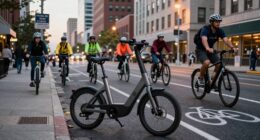
On bad air days, check your local air quality index (AQI) and alerts before deciding to ride. If AQI is above 100, it’s best to avoid outdoor activities since pollution levels can harm your lungs and overall health. Pay attention to smoke alerts, weather conditions, and pollution sources like wildfires or traffic. To stay safe, consider postponing your ride or opting for indoor options. Want to know more about making smart outdoor activity choices?
Key Takeaways
- Check current AQI levels; avoid riding if AQI exceeds 100, especially during smoke or pollution spikes.
- Monitor local air quality updates via apps or advisories to determine safe riding times.
- Prefer riding early mornings or after rain, when pollution levels are typically lower.
- Consider indoor activities or alternative exercises during poor air quality days to protect health.
- Be aware that high pollution can cause respiratory issues; prioritize safety and health over outdoor riding during bad air days.

Have you ever wondered why some days suddenly feel harder to breathe or why your city’s air seems worse than usual? It’s often linked to the quality of the air you’re breathing in. When the air quality drops, outdoor activities can become risky, especially if you have respiratory issues or allergies. That’s why understanding air quality monitoring is essential. It provides real-time data on pollutants like particulate matter (PM), ozone, and nitrogen dioxide, helping you decide whether it’s safe to go for a run or walk outside. These tools are accessible through apps or local health advisories, giving you immediate insight into current conditions.
Knowing the air quality index (AQI) is key to evaluating risk. A low AQI indicates good air quality, while a high AQI signals pollution levels that could harm your health. For example, an AQI above 100 typically means you should limit outdoor exertion, especially if you’re part of vulnerable groups such as children, seniors, or those with asthma. On days with a high AQI, it’s wise to postpone outdoor activities or choose indoor alternatives. You might think that a light jog or quick walk won’t cause harm, but during bad air days, even moderate activity can expose you to unhealthy levels of pollutants.
A high AQI above 100 suggests limiting outdoor activity to protect your health.
Consider how outdoor activity safety depends heavily on current air conditions. If your neighborhood is experiencing smoke from wildfires or smog from industrial pollution, it’s best to stay indoors or keep your outdoor time brief. When you do go outside, try to do so during times when pollution levels tend to be lower, like early morning or after rain, which can help clear some airborne particles. Keep in mind that outdoor activity safety isn’t just about avoiding discomfort; it’s about protecting your long-term health. Breathing in polluted air regularly can lead to chronic respiratory problems, cardiovascular issues, and other health complications.
Utilize air quality monitoring tools to stay informed—many cities now provide real-time updates via websites or smartphone apps. These updates can help you decide if it’s safe to ride your bike, go for a run, or walk the dog. If pollution levels are high, consider indoor workouts, or try exercises that don’t require much fresh air. Being proactive about understanding and responding to air quality data means you’re taking control of your health and outdoor activity safety. It’s a simple step that can make a big difference, especially during those bad air days when your lungs need a little extra protection. Additionally, selecting projectors with high color accuracy can enhance indoor viewing experiences when outdoor air quality prevents outdoor activities.
Frequently Asked Questions
How Does Weather Impact AQI Levels for Biking?
Weather patterns markedly impact air quality variability, affecting your decision to bike. Wind can disperse pollutants, improving air quality, while calm, stagnant conditions trap smog and smoke, raising AQI levels. Temperature inversions can also worsen pollution by preventing vertical mixing. So, check the weather forecast—if windy or clear, it’s safer to ride; if conditions are calm and smoky, it’s best to stay indoors.
Can Wearing Masks Reduce Health Risks on Bad Air Days?
Wearing masks can reduce your health risks on bad air days, but their effectiveness depends on mask types and proper fit. Masks like N95s offer the best filtration, blocking fine particles and pollutants. Cloth masks provide limited protection, mainly filtering larger particles. To stay safer, choose high-quality masks, make certain a snug fit, and wear them correctly. Masks help, but avoiding outdoor activities during severe air quality episodes offers the best protection.
What Are the Long-Term Effects of Riding in Polluted Air?
Riding in polluted air can lead to long-term respiratory effects, such as diminished lung function and increased asthma risk. Over time, you may face chronic health risks like cardiovascular issues and persistent breathing problems. To protect yourself, limit exposure during bad air days, wear masks, and avoid strenuous activity outdoors. Regularly check air quality reports and consider riding indoors when pollution levels are high to safeguard your health long-term.
How Do Smoke and Pollution Levels Differ Across Regions?
Did you know that pollution levels can vary by up to 10 times between regions? Regional variation depends heavily on pollution sources like traffic, industry, and natural factors. Coastal areas often face more smog, while rural regions might have higher dust or wildfire smoke. Understanding these differences helps you decide if riding is safe, especially when pollution spikes due to local sources or weather conditions.
Are There Specific Times of Day Better for Outdoor Riding?
You should ride during off-peak hours, typically early in the morning when sunlight is softer and pollution levels tend to be lower. Avoid peak hours when traffic and emissions increase, raising AQI and health risks. Riding in the morning allows you to enjoy cleaner air, minimizing your exposure to smoke and pollutants. Always check local AQI reports before heading out, especially on bad air days.
Conclusion
On bad air days, it’s smart to check your local AQI, which can spike to over 200, putting you at serious health risk. Did you know that high pollution days can increase respiratory issues by up to 50%? By staying informed and choosing to ride indoors or on clearer days, you protect your lungs and overall health. Remember, a little caution today can prevent long-term health problems tomorrow. Stay safe and breathe easy!