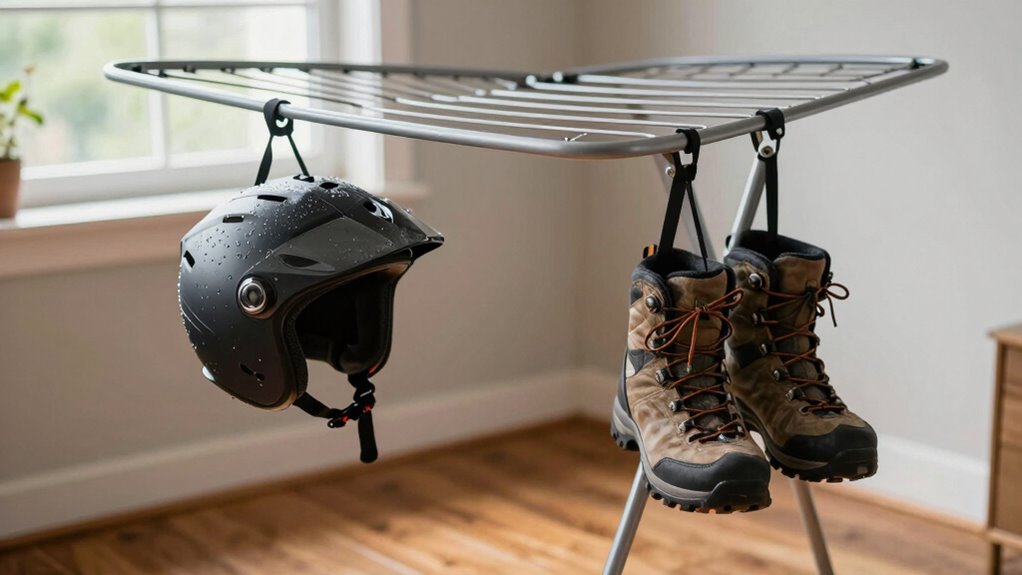

When drying gear indoors during rain, choose a well-ventilated space like a laundry room or near open windows. Hang items with space between to promote airflow and avoid overloading the area. Use fans or dehumidifiers to speed up moisture removal, and consider a space heater on low if needed. Handle clothes gently—turn them inside out and avoid wringing. Still unsure? Discover the best tips to keep your gear safe and dry quickly.
Key Takeaways
- Choose a well-ventilated indoor space with good airflow and minimal humidity for faster drying.
- Hang gear properly with enough space between items to promote even moisture evaporation.
- Use fans or dehumidifiers to accelerate drying without overexposing fabrics to heat or direct airflow.
- Turn or reposition gear regularly to prevent damp spots and ensure uniform drying.
- Avoid wringing or excessive handling to prevent damage, and handle delicate items gently during the process.
Ever wondered how you can dry clothes efficiently at home when it’s raining outside? It’s a common dilemma, especially when you’re pressed for time or trying to avoid the damp smell that can develop from hanging clothes outdoors in bad weather. The key lies in mastering indoor drying techniques that protect your clothing care while speeding up the process. You don’t need a dedicated dryer or fancy gadgets; simple strategies can make a significant difference.
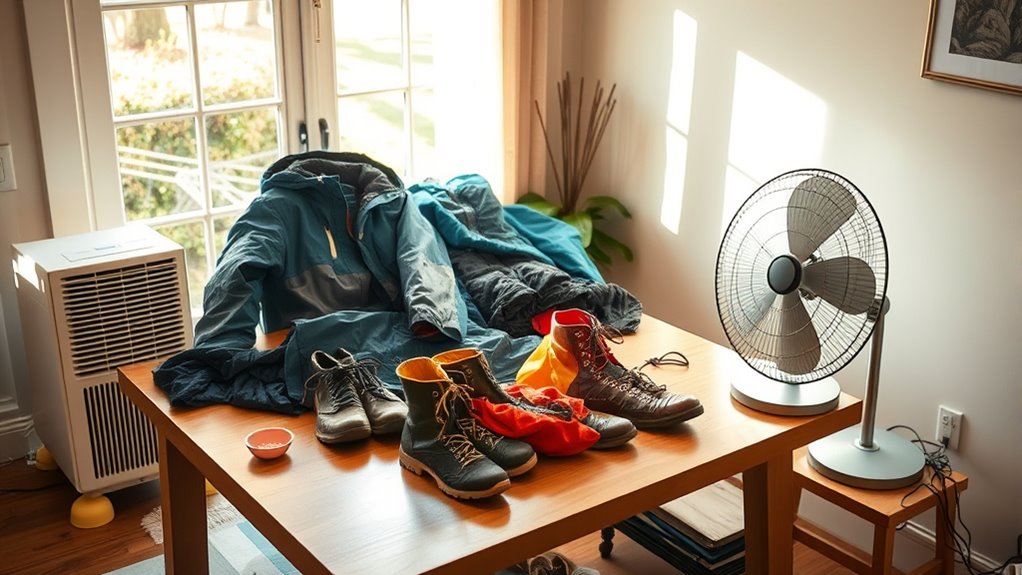
Start by choosing the right spot in your home. A well-ventilated area is essential. If you have a spare room or a laundry area with a window, that’s ideal. Air circulation helps moisture escape and reduces the risk of mold or mustiness. If natural airflow isn’t sufficient, consider using a fan to increase air movement around your clothes. Just make sure it’s not blowing directly onto wet garments, which can cause uneven drying or damage delicate fabrics.
Choose a well-ventilated spot or use a fan to improve airflow and prevent mold.
Next, think about the placement of your clothes. Hang items on a drying rack or a clothesline, leaving enough space between each piece. Overcrowding traps moisture and prolongs drying times. For faster results, turn clothes inside out so the outer layers dry more quickly, and gently squeeze out excess water before hanging. Avoid wringing, which can distort fabrics or weaken fibers over time. Using a clean towel to press out moisture can help speed things up without harming the fabric.
Clothing care is crucial when drying indoors. Use hangers for shirts and dresses, and fold heavier items like towels or jeans to prevent stretching. For delicate fabrics, consider laying them flat on a clean surface or a drying rack to maintain their shape and avoid stretching. If you’re in a rush, employing a dehumidifier can drastically reduce moisture in the air, shortening drying times and improving overall indoor air quality. Pairing this with a space heater set to a low, safe temperature can also accelerate drying, but always keep an eye on your clothes to avoid overheating or damage.
Additionally, choosing appropriate clothing materials that dry quickly can significantly cut down your drying time and help maintain the integrity of your garments. Finally, patience is part of effective indoor drying. While it’s tempting to rush the process, patience ensures your clothes stay in good condition. Regularly check for damp spots and rotate or reposition garments if needed. With these indoor drying techniques, you’ll protect your clothing, maintain its quality, and get your laundry done even when the weather refuses to cooperate. Proper clothing care during rain ensures your garments last longer and stay looking their best, all without wrecking the fabric or your schedule.
Frequently Asked Questions
Can I Use a Hairdryer to Dry My Wet Gear Safely?
Yes, you can use a hairdryer to dry your wet gear, but you need to prioritize hairdryer safety. Keep the heat setting low and hold the dryer at a safe distance to prevent gear heat damage. Avoid using high heat, as it can warp or weaken your gear’s material. Always monitor the process closely, and consider air drying first for the safest, quickest results.
How Long Does It Typically Take to Air Dry Different Gear?
Imagine your waterproof jacket hanging in your closet, waiting to dry. Typically, air drying takes about 12-24 hours, but timing varies based on gear material and humidity. For lightweight fabrics, it might be quicker, around 8-12 hours, whereas heavy gear like winter coats can take longer. Consider timing considerations and material type to guarantee proper drying without damage, especially if you need your gear ready for the next adventure.
Is It Better to Hang Gear Indoors or Outdoors to Dry?
You should hang your gear indoors to dry if indoor airflow is good, as it helps prevent mold and damage. Outdoors, be mindful of humidity; high humidity slows drying and can cause mold. Choose a shaded spot with good air circulation, but avoid direct sunlight to prevent material deterioration. Balancing airflow indoors and monitoring outdoor humidity guarantees your gear dries quickly and safely without wrecking it.
Will Drying Gear in the Sun Cause Damage or Fading?
Drying gear in the sun can cause fabric fading over time due to prolonged sun exposure. To prevent damage, avoid leaving your gear in direct sunlight for extended periods. Instead, opt for drying in a shaded area or indoors with good airflow. This way, you protect the colors and fabric integrity, ensuring your gear stays vibrant and functional without risking fading or weakening from harsh sun exposure.
What Are the Best Methods for Drying Waterproof Clothing?
To dry waterproof clothing effectively, avoid direct sunlight which can damage fabric maintenance and reduce waterproof treatment. Instead, gently squeeze out excess water, then hang it in a well-ventilated, shaded area. Use a towel to absorb moisture or a low-heat dryer if the care label allows. This prevents fabric degradation and preserves the waterproof treatment, ensuring your gear stays functional and lasting longer.
Conclusion
Drying your gear at home doesn’t have to be a hassle. By following these quick tips, you can get your gear dry in no time without risking damage. Did you know that hanging wet gear properly can cut drying time by up to 50%? Keep your gear in good shape and ready for your next adventure by drying it carefully. With a little effort, you’ll be back out there before you know it!