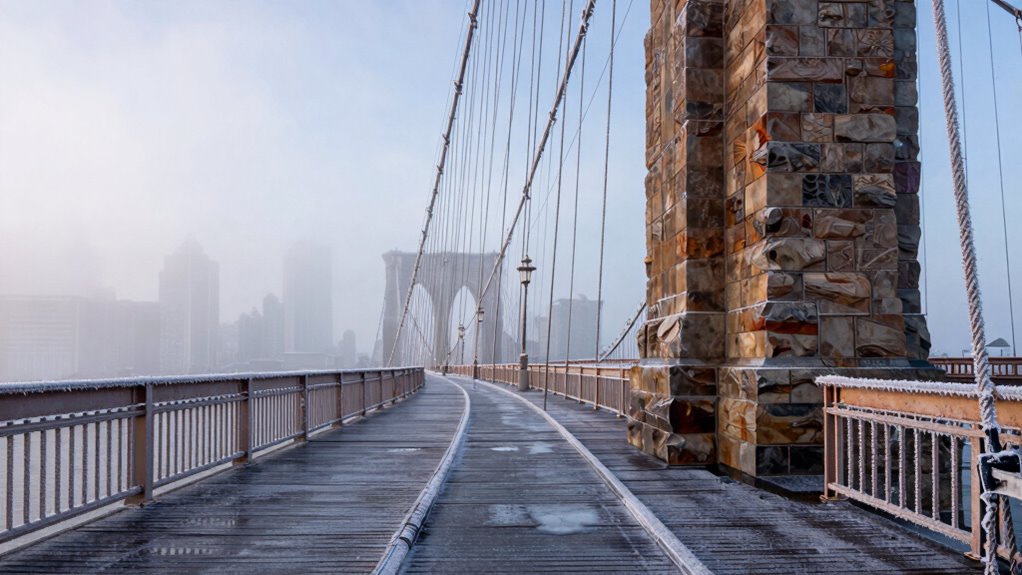

Bridge ice is very real, and it’s because of how quickly they lose heat compared to roads. Bridges are exposed on all sides, and their high thermal conductivity causes them to cool down faster. Wind chill also speeds up the process by removing warm air from the surface. This combination makes bridges freeze first, often forming black ice unexpectedly. To stay safe, slow down and stay alert—there’s more about why this happens that can help you stay prepared.

Get bike and ride gear delivered free — and shop member deals
- Fast, free delivery on millions of items
- Access to Prime Big Deal Days deals on October 6–7
- Prime Video, Amazon Music and more included
Key Takeaways
- Bridges cool faster than roads because their materials have high thermal conductivity and are exposed to air on all sides.
- Wind chill accelerates heat loss from bridge surfaces, causing them to freeze before adjacent roadways.
- Cold air temperatures and wind increase the likelihood of early ice formation on bridges.
- Insulation from snow cover delays freezing on roads, making bridges more prone to early ice formation.
- Drivers should reduce speed and stay alert for black ice on bridges, especially during cold and windy conditions.
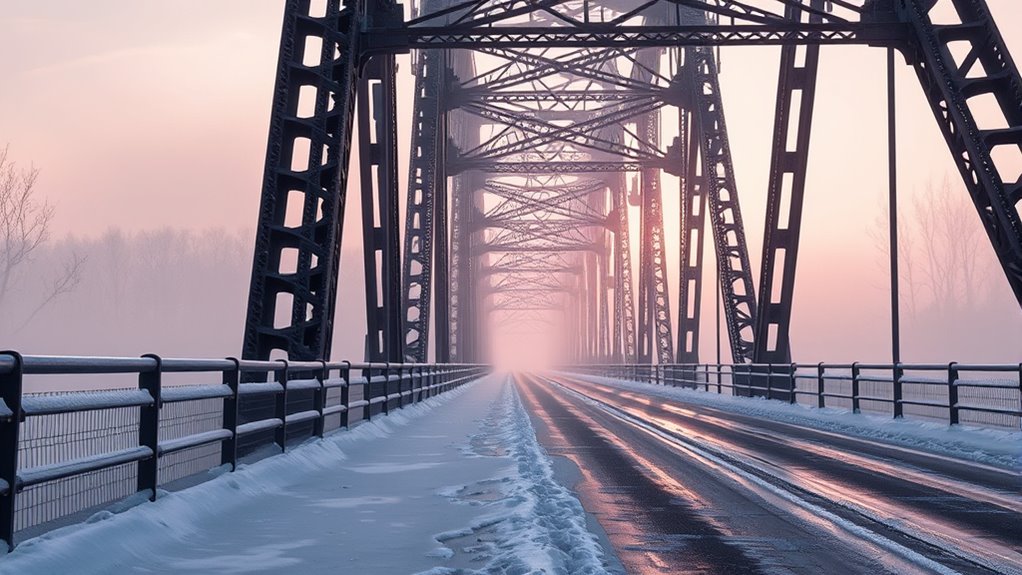
Have you ever wondered if bridge ice is a real danger? It’s a common concern during winter months, especially when sudden cold snaps hit. The reason bridges freeze before the roads is rooted in the physics of heat transfer and environmental factors. When you think about it, bridges are unique structures that behave differently than the pavement or ground beneath them. They’re exposed to air on all sides, which makes them more vulnerable to rapid cooling. This is where the concept of thermal conductivity comes into play. Thermal conductivity refers to how quickly a material can transfer heat. Steel and concrete, the primary materials in bridges, have relatively high thermal conductivity compared to the ground or asphalt. That means they lose heat faster, especially when the surrounding air is chilly. As the air temperature drops, the bridge’s surface cools more quickly than the ground, causing it to reach freezing temperatures sooner.
But the story doesn’t end there. Wind chill markedly amplifies the cooling process. Wind chill describes how moving air makes it feel colder than the actual temperature. When wind blows across a bridge, it strips away the thin layer of warm air that surrounds the structure, accelerating heat loss. This rapid heat dissipation causes the bridge surface to reach freezing point faster than the nearby roads, which are more insulated by the earth and possibly some snow cover. The combination of high thermal conductivity and wind chill creates a perfect storm that makes bridges the first to freeze when the temperature drops.
Understanding this process helps explain why your vehicle might suddenly find itself slipping on a seemingly clear highway bridge. It’s not just about cold weather; it’s about the physics of heat transfer and environmental conditions working together. When you approach a bridge during frigid weather, it’s wise to reduce your speed and stay alert for icy patches. Bridges can develop black ice quickly because they freeze first and often without obvious signs. Being aware of wind chill effects can help you anticipate trouble spots, especially during windy nights or storms.
Frequently Asked Questions
How Can Drivers Identify Icy Bridge Conditions Early?
You can identify icy bridge conditions early by paying attention to weather reports and road condition updates, especially during cold weather. Keep an eye out for signs of reduced traction or black ice, which often forms first on bridges due to their construction and exposure. Regular vehicle maintenance, like tire checks and proper tread, helps you stay safe. Slow down and drive cautiously when approaching bridges in freezing temperatures to prevent accidents.
Are There Specific Signs Indicating Bridge Ice Formation?
Yes, there are visual cues indicating bridge ice formation. You should watch for shiny or wet-looking patches on the bridge surface, which signal ice presence. Temperature drops are also key; when air temperatures near freezing or fall below it, the risk increases. If you notice fog, frost, or a sudden chill while approaching a bridge, slow down and proceed with caution, as ice could be forming or already present.
What Safety Measures Should Pedestrians Take on Icy Bridges?
Ever wonder how to stay safe on icy bridges? You should wear sturdy, slip-resistant pedestrian footwear and take visibility precautions like carrying a flashlight or wearing bright clothing. Walk slowly and avoid sudden movements to prevent slips. Do you really want to risk a fall? By staying alert, dressing appropriately, and paying attention to your surroundings, you can navigate icy bridges safely and reduce the chance of accidents.
How Do Weather Patterns Influence Bridge Icing Severity?
Weather patterns markedly influence how severe bridge icing becomes. When wind chill drops temperatures quickly, it accelerates ice formation on bridges because wind removes heat faster from their surfaces. Temperature gradients, where different parts of a bridge experience varying temperatures, cause uneven icing. Strong winds and rapid drops in temperature make bridges more prone to ice, so you should be extra cautious during such weather conditions.
Can Bridge De-Icing Methods Harm the Structure?
De-icing methods can pose risks to your bridge’s structure, like a double-edged sword cutting both ways. When you use chemicals or salt, they may accelerate corrosion and compromise material durability over time. To protect your bridge, make certain corrosion prevention measures are in place, and opt for eco-friendly de-icing options. This way, you keep the structure resilient, avoiding damage while keeping roads safe during winter’s icy grip.
Conclusion
So, now you know why bridges freeze before the roads. It’s not just a myth—it’s science backing it up. By understanding the role of air circulation and temperature differences, you can stay safer during winter. Next time you see a frozen bridge, remember it’s more vulnerable than other surfaces. Keep this in mind, and always exercise caution in icy conditions. Bridge ice is real, and knowing why helps you stay prepared.
Fall Picks
fall essentials
As an affiliate, we earn on qualifying purchases.