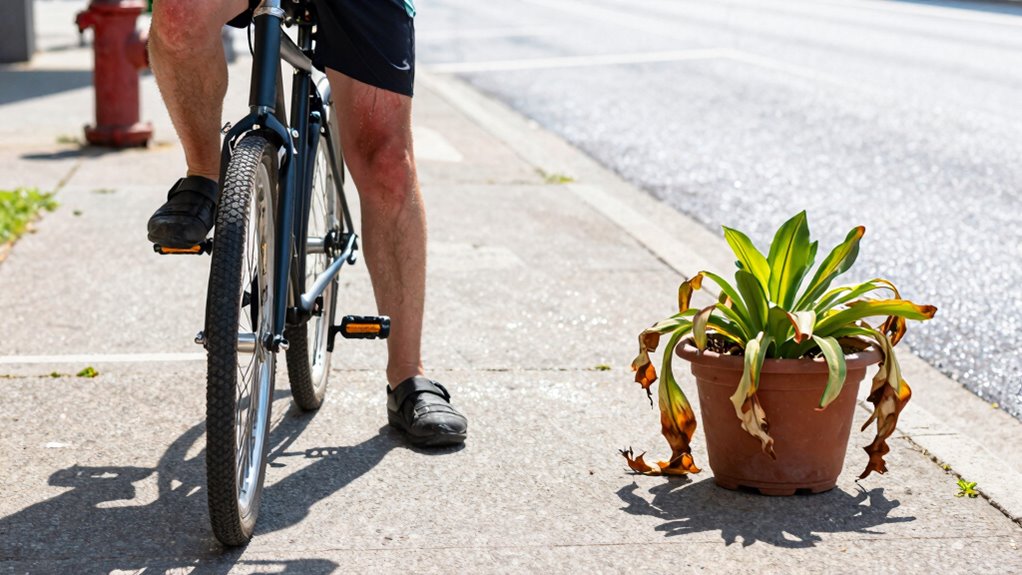

During hot summer days, you should stop and cool down when you notice signs like dizziness, nausea, excessive sweating, a rapid heartbeat, or if your body feels unusually hot and uncomfortable. These symptoms indicate you’re overheating and need immediate relief to prevent heat exhaustion or heatstroke. Acting quickly by seeking shade, hydrating, and cooling your skin helps protect you. Keep these warning signs in mind—there’s more to learn to stay safe and avoid serious health risks.
Key Takeaways
- Feelings of dizziness, nausea, or rapid heartbeat indicate you should stop and cool down immediately.
- Excessive sweating and a high body temperature signal the need to rest and hydrate.
- Physical symptoms like muscle weakness or confusion suggest heat exhaustion or heatstroke.
- Experiencing discomfort or increased body heat requires you to seek shade or a cooler environment.
- Ignoring signs of overheating can lead to serious health risks, so act promptly to prevent heat-related illnesses.

Are your summer days feeling uncomfortably hot? When the temperature rises, it’s easy to push through your daily activities, but ignoring the signs of overheating can be dangerous. Recognizing when your body needs a break is essential to staying safe and comfortable. One of the most effective ways to prevent overheating is by adopting proper hydration strategies. Drinking plenty of water throughout the day keeps your body temperature regulated and helps flush out toxins. Don’t wait until you’re thirsty; sip regularly, especially if you’re active outdoors. Incorporate electrolyte drinks if you’re sweating excessively, as they replenish lost minerals and aid in hydration. Remember, hydration isn’t just about consuming fluids—it’s about maintaining a steady intake to prevent dehydration, which can impair your body’s cooling mechanisms.
Alongside hydration, your clothing choices play a crucial role in managing heat. Opt for lightweight, loose-fitting garments made from breathable fabrics like cotton or moisture-wicking materials. These help sweat evaporate quickly, keeping your skin cool and dry. Bright-colored clothes are preferable, as they reflect sunlight rather than absorb it, unlike dark colors that trap heat. Covering your head with a wide-brimmed hat or lightweight cap shields your face from direct sun exposure, reducing the risk of heatstroke. Sunglasses aren’t just a fashion statement—they protect your eyes from UV rays and glare, making it more comfortable to be outdoors. Avoid tight or heavy clothing that traps heat close to your body; instead, choose layers that allow airflow and facilitate cooling. Additionally, ensuring good air circulation around your living or working space can help maintain a cooler environment and prevent heat buildup indoors.
Pay attention to how your body responds as the day progresses. If you start feeling dizzy, excessively sweaty, nauseous, or experience a rapid heartbeat, it’s time to stop and cool down immediately. Take breaks in shaded or air-conditioned areas, and don’t underestimate the power of a simple fan or a damp cloth on your neck and forehead. These small actions can make a significant difference. Staying aware of these signs and acting promptly helps prevent heat exhaustion or heatstroke, both of which can have serious health consequences.
Incorporating smart hydration strategies and making thoughtful clothing choices are your first lines of defense against summer overheating. These simple, proactive steps empower you to enjoy the sunshine without risking your health. When you start feeling the heat creeping in, don’t ignore the signals your body sends. Instead, pause, hydrate, adjust your clothing, and find a cooler spot. Your body’s comfort and safety depend on it. Summer is meant to be enjoyed, but only when you listen to your body and take the necessary precautions to stay cool and healthy.
Frequently Asked Questions
How Can I Tell if My Overheating Is a Medical Emergency?
If you suspect heat stroke, seek emergency help immediately. Signs include confusion, loss of consciousness, a high body temperature (above 103°F), rapid heartbeat, and hot, dry skin. Heat exhaustion symptoms like heavy sweating and weakness can progress to heat stroke if untreated. To prevent heat stroke, stay hydrated, avoid strenuous activity in extreme heat, and take breaks in cool areas. Recognizing these signs saves your life.
Are There Specific Age Groups More Vulnerable to Overheating?
Like Icarus flying too close to the sun, certain age groups face higher risks of overheating. Elderly adults and young children are particularly vulnerable populations, as their bodies struggle to regulate temperature efficiently. Age-related risks make it essential for you to be extra cautious with vulnerable populations during hot weather. Keep an eye on them, make sure proper hydration, and avoid strenuous activity to prevent heat-related illnesses.
What Dietary Changes Can Help Prevent Overheating Symptoms?
To prevent overheating symptoms, you should incorporate hydration tips like drinking plenty of water throughout the day. Eating cooling foods such as watermelon, cucumber, and citrus can also help regulate your body temperature. Avoid heavy, spicy, or greasy meals that can increase your internal heat. Staying consistently hydrated and choosing these cooling foods help keep your body temperature in check and reduce overheating risks during hot summer days.
How Does Humidity Impact Overheating Risk During Summer?
Remember, every cloud has a silver lining—and high humidity effects can be a real challenge during summer. Humidity raises the heat index, making you feel hotter than the thermometer shows. This increases your risk of overheating because your sweat doesn’t evaporate efficiently. Stay hydrated, wear lightweight clothing, and take breaks in cool, shaded areas. Recognizing how humidity impacts your body helps you avoid heat exhaustion and stay safe.
Can Certain Medications Increase Susceptibility to Overheating?
Certain medications can increase your susceptibility to overheating due to their side effects, like dehydration or impaired sweating. Drugs such as antihistamines, diuretics, or antidepressants may interfere with your body’s natural cooling processes. Additionally, drug interactions can amplify these effects, making you more prone to heat exhaustion. Always stay vigilant, stay hydrated, and consult your healthcare provider if you notice symptoms, especially during hot weather.
Conclusion
As the summer sun gently nudges you towards the edge of comfort, remember to listen to your body’s quiet whispers. When warmth turns into a blazing trail, it’s time to slow your pace and find shade’s cool embrace. Like a delicate flower wilting in the heat, pushing forward can lead to burnout. So, take a moment, breathe deeply, and let the cool breeze guide you back to balance before the season’s fiery dance leaves you drained.