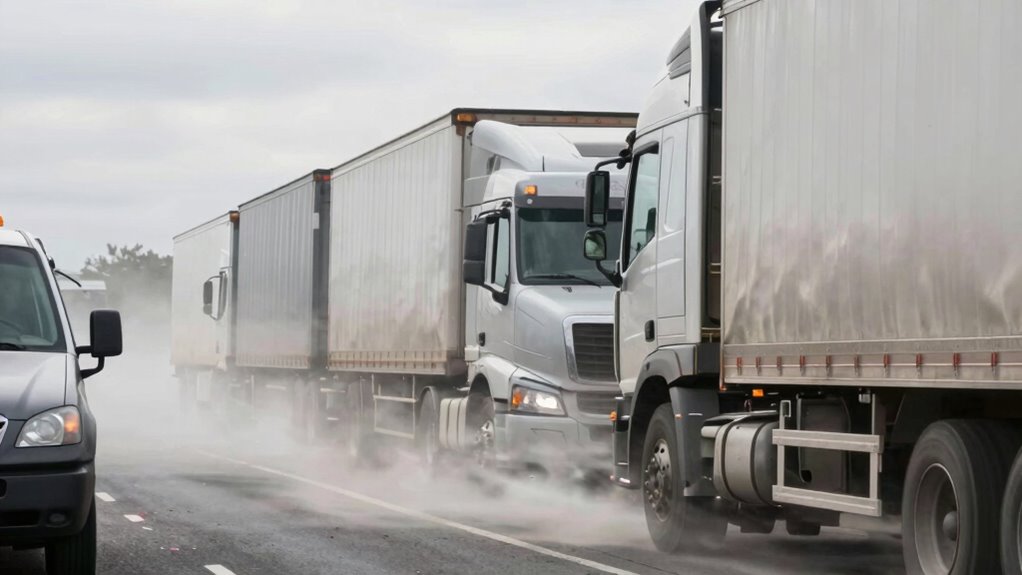

Passing large trucks exposes your vehicle to sudden wind gusts caused by turbulent airflow and vortex regions behind them. As your vehicle moves through these disturbed air zones, the pressure differences can push you sideways unexpectedly. This aerodynamic effect is more pronounced near big trucks due to their shape and speed. Understanding these forces helps you stay safe; continue exploring to discover how to better handle such gusts and maintain control on the road.
Key Takeaways
- Large trucks create turbulent wake regions with low and high-pressure zones that can push passing vehicles sideways.
- Sudden wind gusts occur when airflow interacts with vortex regions formed behind trucks during overtaking.
- Aerodynamic effects, including pressure differentials in vortex zones, cause lateral forces on nearby vehicles.
- Passing close to trucks exposes vehicles to rapid changes in airflow, increasing the risk of being pushed sideways.
- Maintaining safe distance and steady steering helps drivers counteract these gusts and stay controlled.
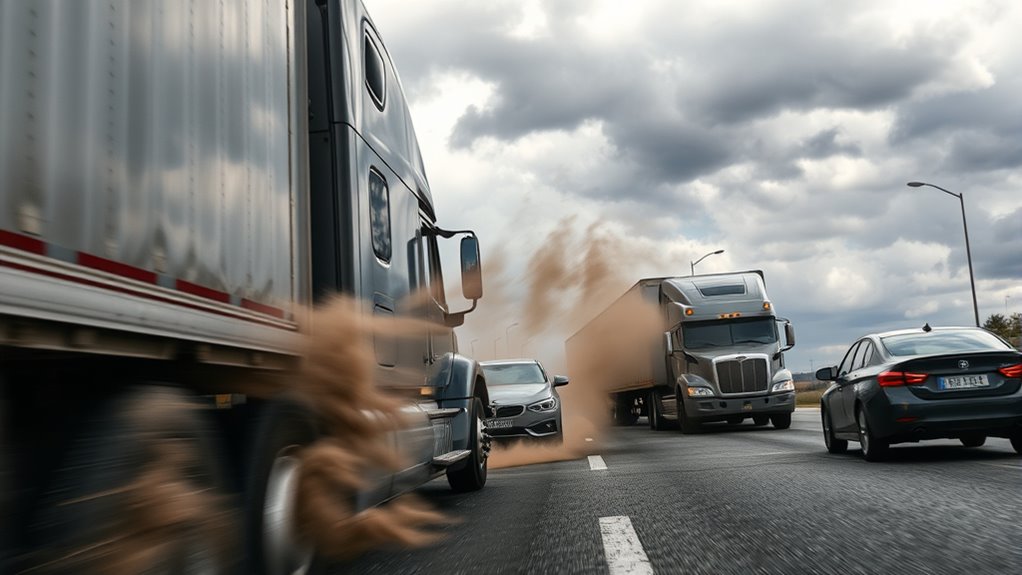
Wind gusts near trucks can be unexpectedly powerful, posing serious safety risks on the road. When you’re driving past a large commercial vehicle, especially a semi-truck, the sudden rush of wind can catch you off guard. These gusts are not just minor breezes; they’re strong enough to push your vehicle sideways, making control more difficult. This phenomenon occurs because of the way air flows around large objects, and understanding it involves principles from aerospace engineering and vehicle aerodynamics. Trucks, due to their size and shape, disturb the airflow in significant ways, creating turbulent wake regions behind them. As you pass through these turbulent zones, the air pressure changes rapidly, exerting lateral forces on your vehicle.
Your safety depends on recognizing that these gusts are unpredictable and can vary based on the truck’s speed, size, and the surrounding environment. High-profile vehicles like trucks generate complex air currents that extend well beyond their immediate vicinity. When you’re driving in close proximity, especially at highway speeds, you’re essentially caught in a flow field that’s been influenced by the truck’s aerodynamic design. Vehicle aerodynamics plays a vital role here; trucks are engineered to optimize fuel efficiency and stability at high speeds, but this design also creates areas of low and high pressure behind the vehicle, known as vortex regions. As you approach or pass through these vortex regions, the differential pressure can suddenly push your vehicle sideways.
To stay safe, you should maintain a safe distance when overtaking large trucks. Keep your steering firm and avoid abrupt maneuvers if you feel the wind pushing against your vehicle. It’s important to anticipate these gusts, especially when driving in windy conditions or near trucks that are heavily loaded or traveling at high speeds. Being attentive to the truck’s movements and the road environment can help you react promptly. Remember, the airflow dynamics involved are rooted in the same principles that aerospace engineers use to design aircraft and improve vehicle aerodynamics. These principles help us understand how air interacts with objects of different shapes and sizes, which directly impacts how wind gusts near trucks can influence your driving experience. Staying alert and respecting these aerodynamic effects can make your journey safer and more manageable.
Frequently Asked Questions
How Do Wind Gusts Affect Motorcycles Differently From Trucks?
Wind gusts affect motorcycles differently from trucks because of their size and aerodynamic forces. Motorcycles are lighter and less stable, so gusts can easily push them sideways, impacting your vehicle dynamics and control. Trucks, being larger and more aerodynamic, resist wind forces better but can create turbulence and sudden gusts that destabilize motorcycles. You need to stay alert and adjust your riding to counteract these aerodynamic effects for safety.
Can Passing Trucks Cause Long-Term Vehicle Instability?
Passing trucks, especially those with high aerodynamic profiles, can cause temporary instability due to wind gusts. However, long-term vehicle instability is unlikely unless you experience repeated, severe gusts. Truck aerodynamics studied in wind tunnel testing help understand these effects, showing that most vehicles are designed to withstand such forces. Stay alert, maintain control, and avoid lingering near large trucks to minimize the risk of instability caused by passing.
What Safety Precautions Should Drivers Take When Near Large Trucks?
When driving near large trucks, you should avoid blind spots, as trucks can’t see you there. Always maintain a safe distance and use safety signaling, like turn signals, early to communicate your intentions. Be patient and pass only when conditions are clear, giving the truck plenty of space. This minimizes risks from wind gusts or sudden movements, keeping you safe and reducing the chance of collisions or being pushed sideways.
Do Wind Gusts Impact Vehicle Fuel Efficiency?
Did you know that strong wind gusts can reduce your vehicle’s fuel economy by up to 10%? Wind gusts impact aerodynamic drag, making your engine work harder to maintain speed. This increased effort means you’re burning more fuel. So, when driving in windy conditions, you might notice your fuel efficiency drops, and it’s a good idea to adjust your driving to minimize resistance and conserve fuel.
How Do Weather Conditions Influence Truck Wind Gust Effects?
Weather conditions substantially influence how wind gusts affect trucks. Wind shear, which involves rapid changes in wind speed or direction, can make gusts more unpredictable and forceful. Additionally, atmospheric pressure differences can intensify wind effects, especially near passing vehicles. When these factors combine, you might experience stronger sideways pushes, making driving more challenging. Staying alert and maintaining a firm grip on the wheel helps you respond effectively to these changing conditions.
Conclusion
Next time you’re beside a truck, remember it’s more than just a vehicle—it’s a giant sail in the wind’s ocean. As gusts dance around it, they can push you like a leaf caught in a storm’s whim. Stay alert, stay grounded, and respect the invisible forces at play. Because in this windy ballet, you’re not just a passenger—you’re part of a wild, shifting landscape that demands awareness and caution at every turn.