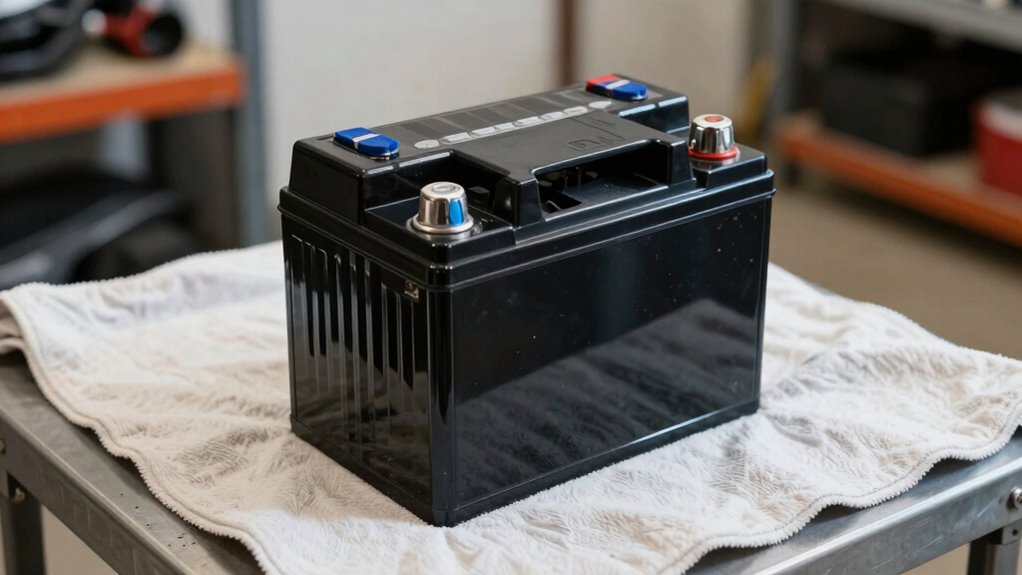

To store your battery safely when you’re not riding for a while, fully charge it to 50-70%, avoiding partial discharges. Keep it in a cool, dry place away from direct sunlight and extreme temperatures, and store it upright on a non-conductive surface. Regularly check for signs of swelling or corrosion, test the voltage, and recharge if needed. Following these steps helps protect your battery. If you want to learn more, you’ll find useful tips to keep it in great shape during storage.

Get bike and ride gear delivered free — and shop member deals
- Fast, free delivery on millions of items
- Access to Prime Big Deal Days deals on October 6–7
- Prime Video, Amazon Music and more included
Key Takeaways
- Fully charge the battery to 50-70% before storage and recharge periodically to prevent sulfation.
- Store in a cool, dry place at 50°F to 68°F, away from direct sunlight and extreme temperatures.
- Disconnect the battery from the device and keep terminals clean and protected with dielectric grease.
- Store upright on a non-conductive surface, inspecting regularly for swelling, leaks, or corrosion.
- Monitor voltage periodically and recharge if it drops significantly to maintain battery health.

Storing batteries safely is essential to prevent damage, leaks, or potential hazards. When you’re not riding for a while, proper storage becomes even more critical to guarantee your battery remains in good condition and functions properly when needed again. The key is understanding effective battery maintenance and applying correct storage techniques. This way, you minimize the risk of deterioration, corrosion, or safety issues that could arise from improper handling.
First, before storing your battery, make sure it’s fully charged. A partially discharged battery can become sulfated over time, which diminishes its capacity and lifespan. Conversely, overcharging can damage the cells, leading to leaks or internal corrosion. Check your manufacturer’s guidelines for the ideal storage charge level—most recommend around 50-70%. If you’re storing the battery for an extended period, it’s wise to recharge it periodically, ideally every few months, to prevent it from discharging completely. Proper storage conditions are crucial for maintaining battery health and safety. Maintaining optimal storage environment helps preserve battery performance over time.
Ensure your battery is fully charged before storage, recharging periodically to prevent capacity loss and damage.
Next, focus on storage techniques that promote battery health. Keep the battery in a cool, dry place, away from direct sunlight, extreme temperatures, or humidity. High heat accelerates chemical reactions inside the battery, increasing the risk of leaks or swelling. Cold environments can slow down self-discharge rates, but avoid freezing temperatures, as they can cause internal damage. A consistent, moderate temperature—around 50°F to 68°F (10°C to 20°C)—is perfect for long-term storage. Additionally, storing batteries in non-conductive surfaces helps prevent accidental short circuits and electrical hazards. Proper insulation and avoiding contact with metal objects are also recommended to reduce the risk of shorts.
When it comes to physical placement, make sure the battery is stored upright and on a non-conductive surface to prevent accidental short circuits. If possible, disconnect the battery from the device or bike to avoid drain or damage to electrical components. Clean the terminals with a dry cloth or a mixture of baking soda and water if you notice any corrosion, then apply a light coating of terminal protector or dielectric grease to prevent future corrosion. Regularly inspecting your battery helps catch potential issues early and ensures ongoing safety. Battery maintenance and periodic checks are vital for safe storage.
Finally, check on your stored battery periodically. Look for any signs of swelling, corrosion, or leaks. Test the voltage with a multimeter every few months to monitor its condition. If the voltage drops markedly, recharge it to the recommended level or consider replacing it if it shows signs of deterioration. By following these storage techniques and maintaining your battery properly, you guarantee it stays safe, functional, and ready to go when you’re back on the road. Proper battery maintenance during storage isn’t just about prolonging its life; it’s about keeping safety at the forefront.
As an affiliate, we earn on qualifying purchases.
Frequently Asked Questions
Can I Store a Battery Outdoors Safely?
You can store a battery outdoors safely if you take proper precautions. Guarantee you use a waterproof, insulated storage container to protect it from weather and temperature extremes. Regularly check battery maintenance, like keeping terminals clean and charged. Avoid direct sunlight and moisture, and consider disconnecting the battery if possible. Proper storage containers and routine checks help prevent damage, prolonging your battery’s lifespan even when kept outside.
How Often Should I Check the Battery During Storage?
You should check your stored battery every 30 days. Statistics show that batteries can lose up to 5% of their charge monthly when stored improperly. Regular battery maintenance and following storage tips help prevent capacity loss and damage. During each check, inspect for corrosion, verify the charge level is maintained around 50-70%, and recharge if needed. Staying consistent with these checks keeps your battery in top shape for when you ride again.
What Signs Indicate a Battery Is Damaged While Stored?
If your stored battery shows signs of damage, watch for corrosion around the terminals, which indicates storage corrosion. You might also notice swelling, leaks, or a foul smell, all signs of internal damage. Battery corrosion can reduce performance or cause failure. Regularly inspecting your battery helps catch these issues early, ensuring it stays in good condition during long storage periods. If you see any corrosion or damage, clean or replace the battery promptly.
Is It Necessary to Remove the Battery From the Vehicle?
Yes, you should remove the battery from your vehicle for proper storage. This enhances storage safety and prevents parasitic drain that can damage the battery over time. Regular battery maintenance, like keeping it charged and checking for corrosion, is essential during storage. Removing the battery also helps avoid leaks or damage from temperature fluctuations, ensuring your battery remains in good condition until you’re ready to use it again.
How Do Temperature Fluctuations Affect Stored Batteries?
Temperature fluctuations cause thermal expansion and contraction in your battery, which can lead to damage over time. As temperatures rise and fall, the internal components shift, risking cracks or leaks. These changes also affect voltage stability, making your battery less reliable. To protect your battery, store it in a cool, stable environment, avoiding extreme heat or cold, and regularly check its charge to maintain best performance.
As an affiliate, we earn on qualifying purchases.
Conclusion
Think of your battery as a delicate sapling, needing proper care to thrive in its dormant season. By storing it in a cool, dry place and keeping it partially charged, you’re nurturing its future growth. With these simple steps, you’re not just preventing damage—you’re safeguarding a tiny powerhouse that’ll be ready to energize your rides again. Treat it with care, and it’ll reward you with many more adventures ahead.
As an affiliate, we earn on qualifying purchases.
As an affiliate, we earn on qualifying purchases.
Evergreen bestsellers Picks
bestsellers
As an affiliate, we earn on qualifying purchases.