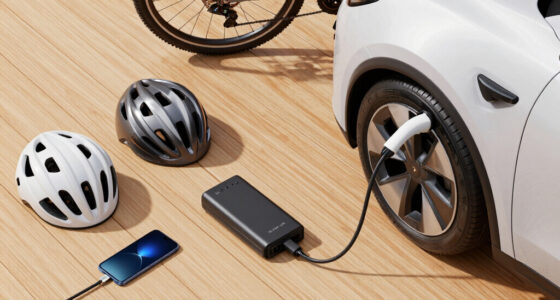
When traveling with your e-scooter, make sure the lithium batteries are in your carry-on luggage, not checked bags, to guarantee safety and compliance. Batteries under 100 Wh usually don’t need approval, but those between 100 Wh and 160 Wh require airline permission, and over 160 Wh are generally prohibited. Always protect terminal contacts with tape and carry any necessary documentation. To find out how to stay safe and avoid issues at the airport, continue exploring the important guidelines.

Get bike and ride gear delivered free — and shop member deals
- Fast, free delivery on millions of items
- Access to Prime Big Deal Days deals on October 6–7
- Prime Video, Amazon Music and more included
Key Takeaways
- Lithium batteries up to 100 Wh are generally permitted in carry-on luggage without approval.
- Batteries between 100 Wh and 160 Wh require airline approval and proper documentation.
- Batteries over 160 Wh are usually prohibited unless explicitly authorized by the airline.
- Always carry batteries in carry-on, properly packaged, and protect terminals with tape to prevent short circuits.
- Declare batteries during check-in or security and follow airline regulations to avoid delays or confiscation.
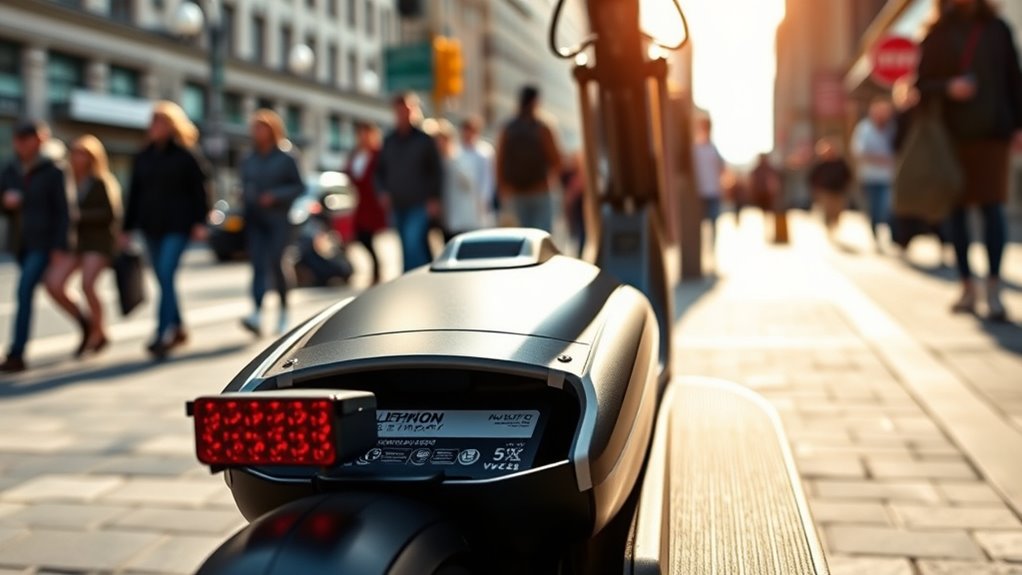
Are you planning to travel with your e-scooter batteries? If so, understanding the rules around battery safety and airline regulations is vital to ensure a smooth trip. Lithium-ion batteries, which power most e-scooters, are considered hazardous materials because they can pose fire risks if mishandled or damaged. That’s why airlines have strict regulations governing their transport. Before you pack your e-scooter or its batteries, take time to familiarize yourself with these rules to avoid delays or confiscation at the airport.
Airline regulations typically specify that batteries must be carried in carry-on luggage rather than checked baggage. This is because cabin crew and passengers can more easily spot and respond to any issues, such as overheating or smoke, that might arise from a damaged battery. When packing, guarantee your batteries are protected from damage. Use original packaging if possible, or secure them with tape to cover exposed terminals and prevent accidental short circuits. Always keep batteries in your carry-on, and never attempt to check them in, as many airlines prohibit this due to safety concerns.
Carry e-scooter batteries in carry-on luggage; protect terminals and avoid checked baggage for safety.
Battery safety is also vital when it comes to capacity limits. Most airlines allow batteries with a capacity of up to 100 watt-hours (Wh) without special approval. If your battery exceeds this limit but stays below 160 Wh, you’ll likely need airline approval and must carry the batteries with proper documentation. Batteries over 160 Wh are generally prohibited on passenger aircraft unless you have specific authorization, which is rare for consumer e-scooter batteries. To stay compliant, check the battery specifications on your e-scooter or its manual, and verify the capacity before packing. It’s recommended to carry only what you need and avoid traveling with spare batteries unless absolutely necessary.
Additionally, some airlines require you to declare your batteries during check-in or security screening. Be proactive by informing airline staff about your batteries and showing documentation if needed. This helps prevent misunderstandings and guarantees you’re following all safety protocols. Remember, the goal of these airline regulations and safety measures is to prevent any fire hazards during your journey, so taking proper precautions protects you and fellow travelers. Understanding European cloud standards and regulations can also be beneficial if traveling internationally, as different countries might have varying rules for lithium battery transport.
lithium battery travel case for e-scooter
As an affiliate, we earn on qualifying purchases.
As an affiliate, we earn on qualifying purchases.
Frequently Asked Questions
Can I Travel Internationally With My E-Scooter Battery?
Yes, you can travel internationally with your e-scooter battery, but you need to verify airline policies first. Proper battery storage is essential—keep batteries in carry-on luggage and avoid damage or short circuits. Additionally, consider travel insurance that covers lithium batteries, as they pose fire risks. Always review your airline’s regulations on lithium batteries to ensure a smooth journey and prevent issues at security checkpoints.
Are There Any Special Packaging Requirements for Lithium Batteries?
Think of battery packaging as a safety net, catching potential sparks before they ignite. You need to follow specific guidelines for lithium batteries, including using sturdy, non-metallic containers and insulating terminals. Always declare batteries during security checks, and avoid damage or punctures. These safety precautions protect everyone’s journey, ensuring your e-scooter’s lithium battery stays secure and compliant during travel, preventing mishaps and keeping you riding smoothly.
What Should I Do if My Battery Is Damaged During Travel?
If your battery gets damaged during travel, you should handle it carefully. First, avoid using or charging it and safely contain it to prevent leaks or fires. Contact a professional for battery repair if possible. If repair isn’t an option, dispose of the damaged battery properly by following local damaged battery disposal guidelines. Always inform the airline or transport authority about the damage to ensure safe handling and compliance.
Are There Restrictions on Battery Capacity for Different Airlines?
Airline policies vary, but most airlines have strict battery size limitations for carry-on items. While some allow batteries up to 160Wh, larger capacities often require approval or are prohibited. You need to verify your airline’s specific restrictions on battery capacity to avoid surprises at the airport. Always carry your e-scooter’s battery in your carry-on, and ensure it complies with airline policies to prevent delays or confiscation.
How Do I Declare My Lithium Battery When Going Through Security?
When going through security, you should declare your lithium battery by informing security personnel about its presence. Keep the battery accessible and make certain it’s properly labeled with the correct watt-hour or capacity information. During security screening, present the battery for inspection if asked. Following airline and security guidelines helps prevent delays, so always carry your battery in your carry-on luggage, and ensure it’s protected from damage.
carry-on lithium battery protector tape
As an affiliate, we earn on qualifying purchases.
As an affiliate, we earn on qualifying purchases.
Conclusion
Remember, your e-scooter’s lithium battery is like a delicate passenger—powerful but fragile. Knowing the limits and regulations helps keep your journey smooth and safe. Treat it with care, and it’ll be your trusted companion on every adventure. Think of the battery as a tiny but mighty engine—handle it gently, and it’ll keep you moving forward, no matter where the road takes you. Stay informed, travel smart, and enjoy every ride.
e-scooter battery capacity tester
As an affiliate, we earn on qualifying purchases.
As an affiliate, we earn on qualifying purchases.
airline approved lithium batteries 100Wh
As an affiliate, we earn on qualifying purchases.
As an affiliate, we earn on qualifying purchases.
Fall Picks
fall essentials
As an affiliate, we earn on qualifying purchases.