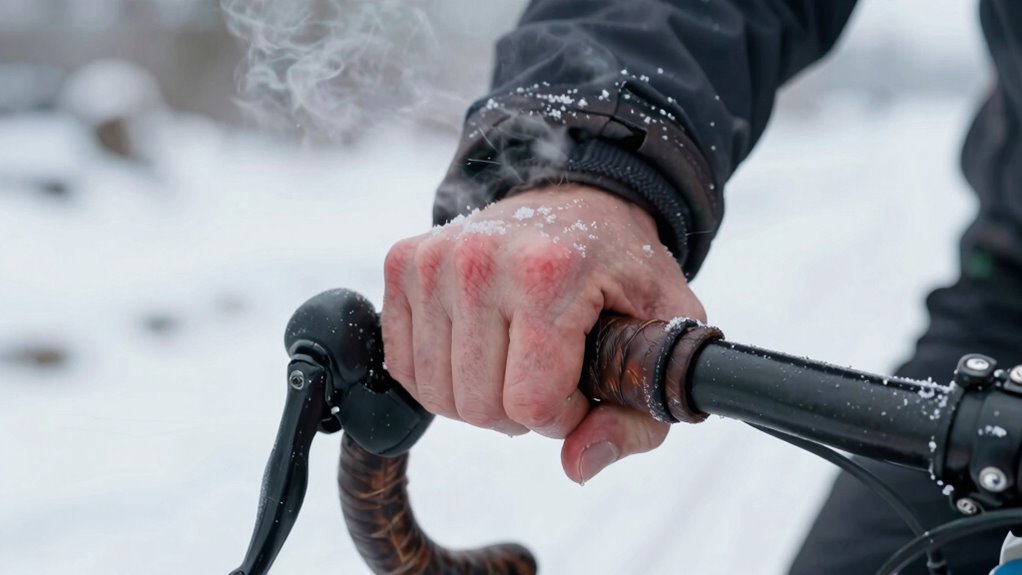

Cold hands do more than just make you uncomfortable—they can impair your grip, reduce reaction times, and affect your overall safety while riding. When your blood circulation slows, your fingers get numb, making it harder to control brakes and shifts. Persistent cold exposure can lead to stiffness, frostbite, or numbness, risking long-term damage. If you wanna know how to protect your extremities and stay safe, you’ll find useful insights below.

Get bike and ride gear delivered free — and shop member deals
- Fast, free delivery on millions of items
- Access to Prime Big Deal Days deals on October 6–7
- Prime Video, Amazon Music and more included
Key Takeaways
- Cold hands impair grip and reaction times, affecting riding safety and control.
- Reduced blood flow diminishes oxygen and nutrients, risking tissue damage and long-term hand health.
- Numbness or frostbite from poor circulation can cause lasting motor skill decline.
- Inadequate insulation worsens circulation issues, increasing discomfort and injury risk.
- Proper thermal gear maintains circulation, preserving both comfort and optimal hand function.
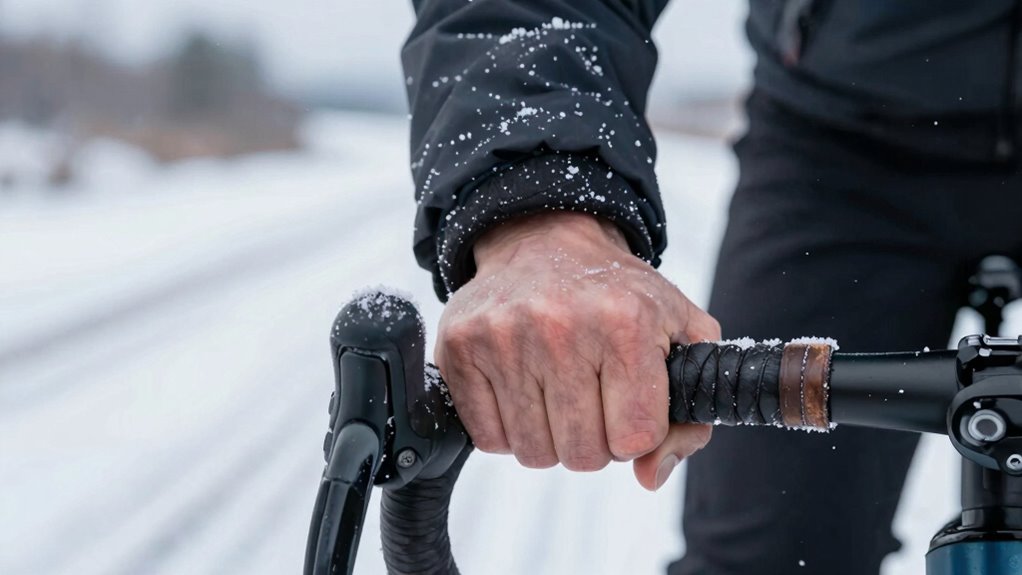
When your hands get cold during a ride, it’s easy to dismiss it as just an uncomfortable inconvenience. But the truth is, cold hands can signal more than discomfort—they can impact your overall performance and safety. At the core of this issue is your body’s ability to maintain thermal regulation, which involves controlling your core temperature and making sure your extremities stay warm. When you’re exposed to cold weather, your body prioritizes keeping your vital organs warm, which often means constricting blood flow to your extremities, including your hands. This process, known as blood circulation, becomes less efficient as your body redirects blood away from your fingers to preserve core temperature. As a result, your hands become colder and less responsive, making it harder to grip handlebars, shift gears, or brake accurately.
Reduced blood circulation isn’t just about feeling cold; it actually affects the functionality of your hands. When blood flow diminishes, your fingers receive less oxygen and nutrients, impairing their ability to perform fine motor tasks. This can lead to reduced dexterity, slower reaction times, and increased risk of losing control. Over time, persistent cold exposure without proper insulation can lead to numbness or even frostbite in extreme cases. But even in milder conditions, the effects of poor blood circulation can cause your hands to ache or feel stiff after your ride, making recovery uncomfortable. Additionally, inadequate thermal regulation can contribute to muscle stiffness and pain, further hindering your riding experience. Maintaining proper thermal regulation can help prevent these issues and keep your extremities healthy and responsive. Recognizing how body heat is conserved during cold exposure can help you better understand the importance of staying warm.
Poor blood circulation reduces hand dexterity, causes stiffness, and increases risk of numbness or frostbite over time.
Understanding how thermal regulation works helps you recognize why keeping your hands warm is essential. Your body’s natural response to cold involves constricting blood vessels in your extremities, which conserves heat but compromises blood circulation there. To counteract this, you need to wear appropriate gloves and clothing that insulate your hands without restricting blood flow. Better thermal regulation through proper gear ensures your blood vessels stay open enough to supply your fingers with adequate warmth and nutrients, maintaining dexterity and responsiveness. When your hands stay warm, your body can efficiently regulate its temperature, keeping you comfortable and safe on the road.
In addition, proper insulation is crucial because it helps prevent excessive heat loss and supports blood flow, which are vital for maintaining hand function during cold rides. Investing in high-quality thermal gear can make a significant difference in how well your body maintains circulation and keeps your extremities warm. Understanding your body’s responses to cold and taking proactive steps can greatly enhance your riding experience and safety. Being aware of the signs of poor circulation can help you address issues early before they become serious.
In short, cold hands aren’t just about feeling chilly—they reflect your body’s effort to regulate temperature and maintain essential blood circulation. By paying attention to these signals, you can take steps to protect yourself from the negative effects of cold, making sure that your ride remains safe, comfortable, and effective. Proper clothing, gloves, and awareness of your body’s responses help you stay in control, no matter the weather.
As an affiliate, we earn on qualifying purchases.
Frequently Asked Questions
Can Cold Hands Indicate Underlying Health Issues?
Cold hands can indicate underlying health concerns, so it’s important to pay attention to them. If your cold hands persist, it might signal issues like poor circulation, anemia, or thyroid problems. You should consult a healthcare professional if cold hands are accompanied by other symptoms like numbness, discoloration, or pain. Recognizing these signs early helps address potential health concerns before they worsen, ensuring your overall well-being.
How Can I Prevent Cold Hands During Winter Rides?
To prevent cold hands during winter rides, invest in good hand insulation and choose glove materials suited for cold weather, like wool, fleece, or waterproof options. Make sure your gloves fit well to trap heat effectively. You can also wear liner gloves underneath for extra warmth. Keep your hands dry and avoid sweaty gloves, as moisture can make your hands colder. Regularly check and adjust your gear for maximum warmth.
Do Cold Hands Affect Riding Performance or Safety?
Cold hands can definitely impact your riding performance and safety. When your hand circulation slows, you lose precision and grip strength, making it harder to control your bike. Additionally, cold hands increase rider fatigue because your muscles tire faster without proper blood flow. This combination can lead to slower reactions and increased risk of accidents. Staying warm with proper gloves and hand warmers helps maintain circulation, keeping you alert and in control.
What Are the Best Gloves for Extremely Cold Conditions?
When battling extreme cold, your gloves are like a fortress for your hands. The best gloves feature thick glove insulation to trap heat and advanced moisture management to keep sweat at bay. Look for gloves with windproof and waterproof layers, ensuring your hands stay warm and dry no matter how fierce the elements. These gloves turn icy battles into manageable rides, letting you focus on the road ahead.
How Long Does It Take for Cold Hands to Recover?
Cold hands typically recover within 10 to 15 minutes once you warm up and restore adequate circulation. Your thermal regulation and circulatory health play vital roles in this process. When exposed to cold, blood flow slows to conserve heat, which can prolong recovery. To speed up warming, keep moving, stay active, or use heat packs. Ensuring good circulatory health through proper diet, exercise, and staying dry helps your hands warm faster after cold exposure.
As an affiliate, we earn on qualifying purchases.
Conclusion
Think of your hands like tiny anchors, holding you steady through the storm of the ride. When they go cold, it’s not just comfort lost — it’s your connection to control and safety. Just as a lighthouse guides ships home, warm hands keep you confident and in command. So, treat your hands like treasured treasure, shielding them from the chill. Because in every ride, warm hands aren’t just comfort — they’re your silent guardians.
As an affiliate, we earn on qualifying purchases.
As an affiliate, we earn on qualifying purchases.
Fall Picks
fall essentials
As an affiliate, we earn on qualifying purchases.