
TL;DR

Get bike and ride gear delivered free with Prime
- Fast, free delivery on millions of items
- Prime Video, Amazon Music and more included
- Member-only deals all year
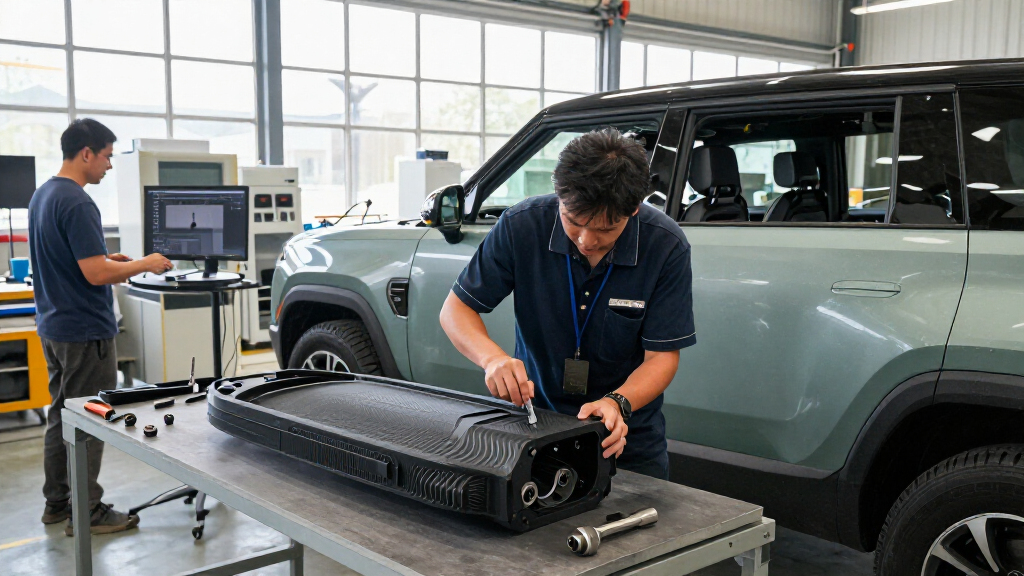
Rivian has invested more than $5 million in 3D printers and plans to expand their use from its Detroit facility to a new machine bay at its Normal, Illinois, factory. The company says the technology has produced savings of well over $1 million compared with traditional prototyping, but its broader rollout and future production uses have not been specified.
Rivian has spent more than $5 million on 3D printers and is adding a bay of machines at its Normal, Illinois, factory, extending a process it has used at its Detroit facility to make prototypes and some parts. The expansion is intended to make printed components more readily available to engineers and speed development, while Rivian’s head of additive manufacturing says the company plans to broaden access across the business.
Rivian has used additive manufacturing at a relatively small scale in Detroit, where the machines have helped produce parts for development and early builds. Examples include an initial 3D-printed version of the R2 steering wheel, which later became a metal part, as well as electric motors for fluid testing, screw guides for tooling and inserts for stamping presses. The company has also printed some trim pieces for early vehicle builds.
The next phase involves installing a new machine bay in Normal, where Rivian assembles its lineup. The report says the new equipment includes printers able to make flexible silicone parts. The planned setup is intended to let employees print components on demand, rather than wait for a traditional supplier process.
Jared Beck, Rivian’s head of additive manufacturing, told CNBC that the company aims to make the capability available more broadly. He said printed parts should be within reach of engineers so they can make a component and handle it quickly. The report says Rivian spends about $1.7 million a year on printing materials, in addition to the more than $5 million spent on printers.
Faster Parts for Rivian Engineers
Rivian’s stated case for expanding 3D printing is about development speed and cost, not a claim that the technology will replace conventional vehicle manufacturing. Building small batches on-site can reduce dependence on external suppliers and the specialized tooling often needed to make prototype parts. That may cut shipping and tooling expenses and shorten waits that can otherwise run into weeks.
Beck told CNBC that the savings compared with traditional prototyping methods have been well into the millions. That figure is Rivian’s assessment; the report does not give a detailed accounting, time period or independently verified calculation. The company’s annual materials bill also shows that the operation has ongoing costs, even as Rivian argues that quicker iteration and reduced supplier expenses make it worthwhile.
For engineers, having a part in hand sooner can help them test fit, function or design changes without waiting for a full production process. The potential business impact is therefore tied to how widely Rivian can use the machines and whether the time saved during development translates into lower costs or smoother vehicle programs. Those broader outcomes have not yet been quantified in the source material.
Popular right now

Breville BES870BTR Barista Express Espresso Machine, Black Truffle

Vitamix Propel Series 750 Professional-Grade Blender, 4 Programs, Black

Breville Barista Express Espresso Machine, Black Sesame
As an affiliate, we earn on qualifying purchases.
From Detroit Prototypes to Normal
Rivian’s 3D-printing work began on a limited basis at its Detroit facility, according to the report. The machines have supported a mix of engineering tasks, tooling needs and early-build components. The Normal expansion would move the capability closer to the factory where Rivian assembles its vehicles and make printed parts available to a larger group of employees.
The company is not alone in using additive manufacturing. The report names Tesla, Ford and General Motors among automakers that use the technology to make components more quickly or cheaply. Wider availability of printers and advances in speed and precision have made the process accessible to both industrial users and hobbyists, although an inexpensive consumer printer is not equivalent to the equipment or materials needed for automotive applications.
In this report, 3D printing is mainly presented as a way to produce prototypes, small batches and selected parts. Rivian’s example of a printed steering-wheel development part becoming metal illustrates that a printed prototype does not necessarily mean the final vehicle component will be printed. The company has not described a plan to use the new bay for large-scale production of finished vehicle parts.
“We’re going to be democratizing 3D printing for the entire company.”
— Jared Beck, Rivian’s head of additive manufacturing, in an interview with CNBC
Costs, Scale and Production Uses
The report does not specify when the Normal machine bay will be completed, how many printers it will contain, or how many employees will have access. Rivian also has not provided a schedule for extending the system across all departments, despite Beck’s stated intention to make the technology available company-wide.
The claimed savings are not broken down by vehicle program, year or cost category. It is also unclear how much of the reported benefit comes from avoided supplier tooling, reduced logistics costs or faster development. The source does not say whether Rivian expects to print more finished parts for customer vehicles, or whether the new silicone-capable machines will serve mainly prototypes and development work.
Rivian’s Normal Factory Rollout
The immediate next step is the installation and use of the new printers in Normal. The company’s stated goal is to let engineers request and make parts on demand, but the source provides no public installation deadline or specific performance targets.
Further details that would clarify the impact include the number and type of machines installed, the pace at which teams gain access, and measurable results for development time and costs. Rivian has not announced a date for a wider rollout or a change in its production strategy tied to 3D printing.
Key Questions
How much has Rivian spent on 3D printers?
The source report says Rivian has spent more than $5 million on printers. It separately reports about $1.7 million a year for the raw materials used in them.
Where is Rivian expanding its 3D-printing operation?
Rivian is adding a bay of machines at its Normal, Illinois, factory. The company has previously used printers on a smaller scale at its Detroit facility.
What has Rivian made with 3D printing?
Reported uses include a development version of the R2 steering wheel, electric motors for fluid testing, screw guides, stamping-press inserts and trim pieces for early builds. The steering wheel was later made as a metal part.
How much money has the technology saved Rivian?
Jared Beck described the savings compared with traditional prototyping as well into the millions. The report does not provide a calculation, time period or detailed breakdown, so the figure cannot be independently evaluated from the information provided.
Will Rivian 3D-print parts for customer vehicles?
The report describes prototypes, tooling items and some parts for early builds, but it does not establish a plan for large-scale 3D printing of finished customer-vehicle components. The extent of future production use remains unclear.
Source: insideevs.com